
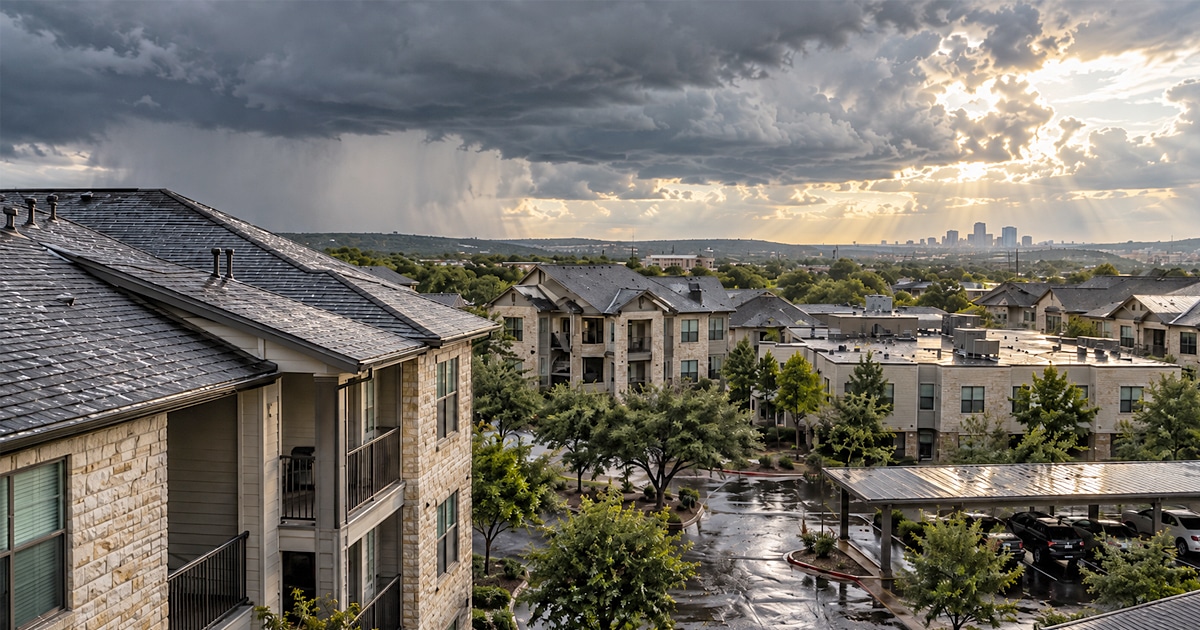
A hailstorm can cross an apartment community in a matter of minutes and leave property managers working through the effects for weeks or months. Unlike homeowners who may be dealing with a single roof and one building, a multifamily community can include dozens of roof sections, several roofing materials, hundreds of occupied units, carports, leasing offices, amenity buildings, drainage systems, rooftop equipment, windows, siding, and other exterior components that were all exposed to the same severe weather.
What should multifamily property managers check after a hailstorm? Start with resident and site safety, active water intrusion, broken windows, loose exterior materials, electrical hazards, and any condition that could cause additional damage. Once those immediate concerns are under control, document the storm, perform a ground-level inspection of every building, arrange a professional roof inspection, inspect gutters and drainage, track reports of interior water damage, and build a building-by-building record of the repairs that are needed.
Hail-related losses are substantial enough that large property owners cannot afford to treat storm documentation casually. State Farm alone reported approximately $3.5 billion in hail-related claims during 2022, illustrating the scale of damage these storms can produce. For multifamily property managers, however, the practical concern is much closer to home: knowing which buildings need attention first, which conditions are immediately visible, what may be hidden above occupied units, and how to protect the property from further damage while the full extent of the loss is being assessed.
Key Takeaways
- Begin with life safety and immediate hazards before inspecting roofs. Check for downed power lines, broken windows, active water intrusion, loose building materials, damaged carports, and other conditions that could put occupants or employees at risk.
- Perform a ground-level inspection of every building and document visible damage to roofs, gutters, siding, windows, exterior equipment, carports, and common-area structures.
- Schedule a professional roof inspection after a significant hail event even when roof damage is not immediately visible from the ground. Different roofing materials can hide hail impact in very different ways.
- Create an inspection and repair record by building rather than treating the entire multifamily property as one roof. Roof age, orientation to the actual storm, roofing materials, previous repairs, and building height can all affect the extent of hail damage.
- Separate emergency mitigation from permanent repairs. Temporary repairs and temporary fixes should protect people and property from further damage without making it harder to document the original condition.
- Keep photographs, videos, weather reports, inspection reports, work orders, repair invoices, and receipts organized if the property owner decides to open an insurance claim.
Immediate Steps for Multifamily Property Managers After a Hailstorm
After the storm passes and conditions are safe enough to begin walking the property, the first inspection should be about triage rather than trying to diagnose every roof. Property managers need to know whether anyone is in danger, whether water is actively entering occupied spaces, and whether damaged exterior components could create additional hazards.
Start with areas where a roof or exterior failure could affect people immediately. Walk top-floor corridors, stairwells, lobbies, mechanical rooms, elevator areas, leasing offices, clubhouses, laundry buildings, fitness centers, and other common spaces below roofing systems. Look for active water intrusion, ceiling material that is sagging or falling, broken skylights, wet electrical areas, and obvious structural issues that require professional evaluation.
Move next to a ground-level inspection of each building. Check the exterior for broken windows, loose siding, detached trim, damaged metal, pieces of roofing material on the ground, and debris that could interfere with walkways or drainage. A property with ten apartment buildings should have all ten checked rather than assuming that conditions observed at Building 1 represent what happened at Buildings 6 or 10.
Property managers should also establish a way for occupants to report problems immediately. Work orders involving water stains, active leaks, broken windows, damaged balconies, or ceiling concerns should be tagged to the specific hail event so they can be mapped by building and unit. That process becomes much more valuable when several reports begin pointing toward the same roof area or vertical unit stack.
These immediate steps protect people and property while creating the first useful picture of the storm damage. They also make it easier to decide which building should receive the first professional roof inspection once the emergency conditions have been stabilized.
Safety, Access, and Resident Communication Right After the Storm
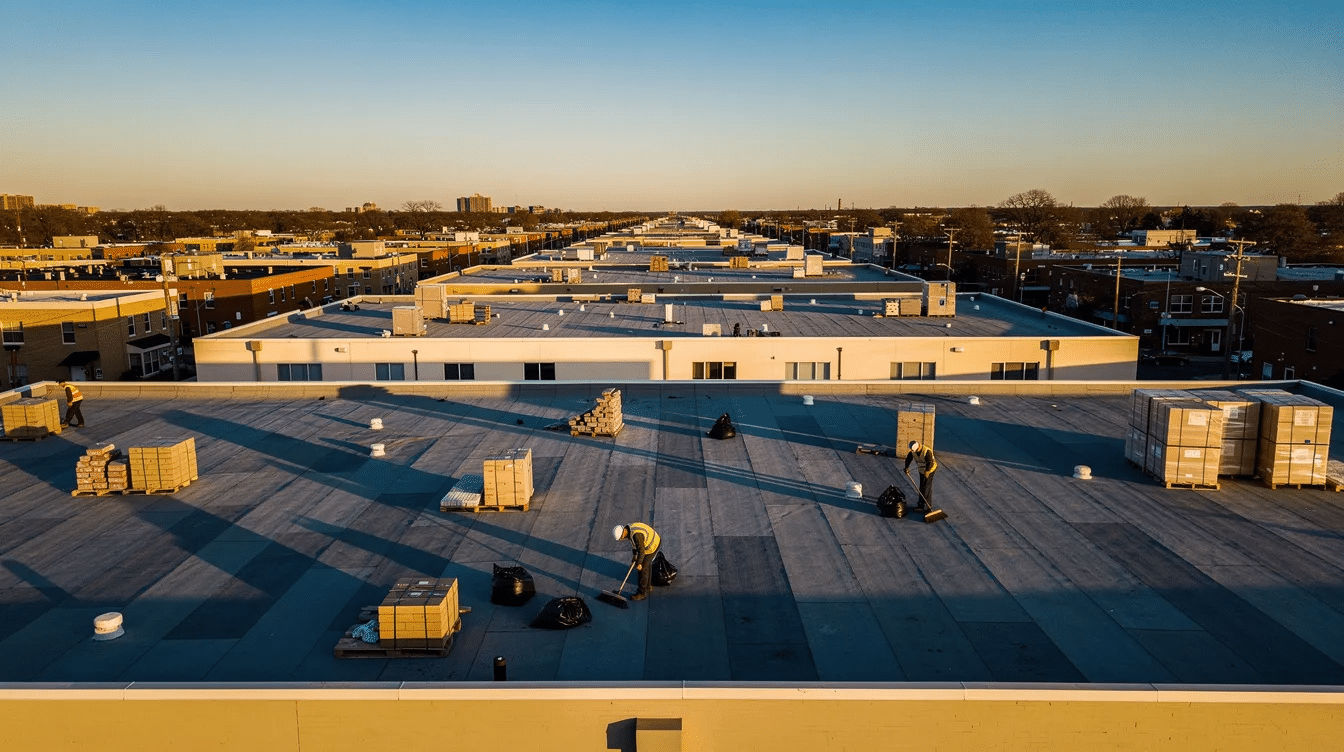
Occupied multifamily properties require more planning than an empty commercial building because people are moving through parking lots, breezeways, courtyards, stairways, balconies, and common areas while the management team is trying to understand what the storm did. The roof inspection process cannot create a second safety problem while everyone is responding to the first one.
Before roofing contractors, maintenance employees, or other vendors begin moving around the site, check for hazards such as:
- Downed, damaged, or sparking power lines near parking lots, sidewalks, fences, or buildings
- Broken glass around sidewalks, breezeways, balconies, patios, playgrounds, and entries
- Damaged carports, awnings, canopies, or metal panels that appear loose or unstable
- Loose soffit, fascia, siding, coping, gutters, or trim that could fall onto pedestrian areas
- Tree limbs, storm debris, or damaged fencing restricting emergency or resident access
- Standing water near electrical equipment, building entries, or other high-traffic areas
Multifamily property managers in Austin and throughout Texas should prioritize occupant safety after a hailstorm before worrying about cosmetic damage. Once immediate hazards have been identified, provide a short property-wide update through the resident portal, email, text messaging system, or whatever communication method the community normally uses.
The message does not need to speculate about how much hail damage occurred. Let people know that management is assessing the property, identify areas that should temporarily be avoided, explain how to report water intrusion or broken windows, and provide an update on when exterior or roof inspections are expected to begin.
Clear communication also helps the management team collect information that cannot be gathered from the ground. Someone living on the top floor may have noticed water entering during the storm even though the area is dry by the time maintenance arrives. Another occupant may have photographs showing hail size or broken glass while the storm was still underway.
Restrict access to pools, playgrounds, dog parks, rooftop amenities, balconies, or other areas when damage creates a legitimate safety concern. Those restrictions can be removed once the affected area has been assessed and made safe.
Document the Storm and Overall Property Conditions
Documentation matters because conditions begin changing almost immediately after severe weather. Hail melts, maintenance teams clear debris, damaged windows are boarded, roof repairs begin, vehicles move, broken materials are removed, and another rainstorm can alter water patterns across the property. Capturing the original condition gives property owners, contractors, and the insurance company a much clearer record of what was observed after the hail event.
Create a storm file for the property and record the basic information first:
- Date and approximate time the storm passed through the property
- Reported hail size, using reliable weather reports rather than estimates alone
- Approximate duration of the hail event
- Storm direction or wind direction when reliable weather information is available
- National Weather Service reports, radar information, or other weather reports confirming severe weather in the area
Photos and videos should establish location as well as detail. A close-up photograph of a dent means much less later if no one remembers whether it came from Building 2, Building 12, a carport, or the leasing office. Take wide shots of each building elevation, then move closer to photograph visible damage to siding, gutters, windows, downspouts, exterior equipment, roofing components that can be viewed safely, and other affected surfaces.
Use a consistent naming system. Something as simple as “Building 3 – South Elevation – Siding” or “Building 8 – Courtyard – Broken Window” makes hundreds of photographs easier to manage during the claims process.
Keep vendor reports, work orders, invoices, temporary repair receipts, weather information, and the professional inspection report in the same storm file. If the property owner later decides to file an insurance claim, this organization can make it easier to show when conditions were discovered and what work was performed afterward.
Track expenses associated with the hail event separately from normal maintenance whenever practical. A clogged drain that was already scheduled for routine cleaning is different from an emergency service call required because severe weather filled the drainage system with debris. Keeping those costs separated helps ownership understand the financial extent of the event even before any insurance coverage determination is made.
Ground-Level Exterior Inspection Across All Buildings
A ground-level inspection is one of the most useful early steps because it lets property managers assess the entire community without sending untrained employees onto roofs that may be wet, damaged, or unfamiliar. Walk every building systematically and use the same basic inspection sequence so obvious conditions are not missed.
Inspect the exterior for signs of hail damage including:
- Dented gutters and downspouts
- Loose, separated, or damaged gutter sections
- Dented metal fascia, coping, flashing, and trim
- Cracked, punctured, or chipped siding
- Damage to stucco, brick finishes, exterior coatings, or decorative elements
- Broken windows and damaged screens
- Dented HVAC housings and exterior mechanical equipment
- Damage to light fixtures, security cameras, satellite equipment, and signage
- Missing shingles or roofing debris visible on the ground
Examine roof, siding, and windows for hail-related damage promptly, but do not treat damage to one exterior component as proof that the roof above it has failed. A dented carport or downspout confirms that hail reached that part of the property and gives the roofing contractor useful context, but the roofing system still needs its own inspection.
Do not skip secondary structures. Mail kiosks, carports, detached garages, pool buildings, maintenance shops, dumpster enclosures, covered walkways, playground structures, storage buildings, and amenity roofs can all provide clues about the storm’s path while also having damage of their own.
Compare elevations and buildings for patterns. Instead of assuming the south or west elevation received the worst hail, identify the actual windward or storm-facing side from the damage pattern and reliable weather information. One hail event may approach from a very different direction than the next.
Dents in gutters, siding, trim, or soft metals are useful indicators of hail impact, while large accumulations of fresh shingle granules near downspouts can justify a closer look at steep-slope roofing. None of these conditions should be used as a substitute for a professional roof inspection, but they can help determine where the inspection process should begin.
Inspect Roofs by System Type and Building Priority
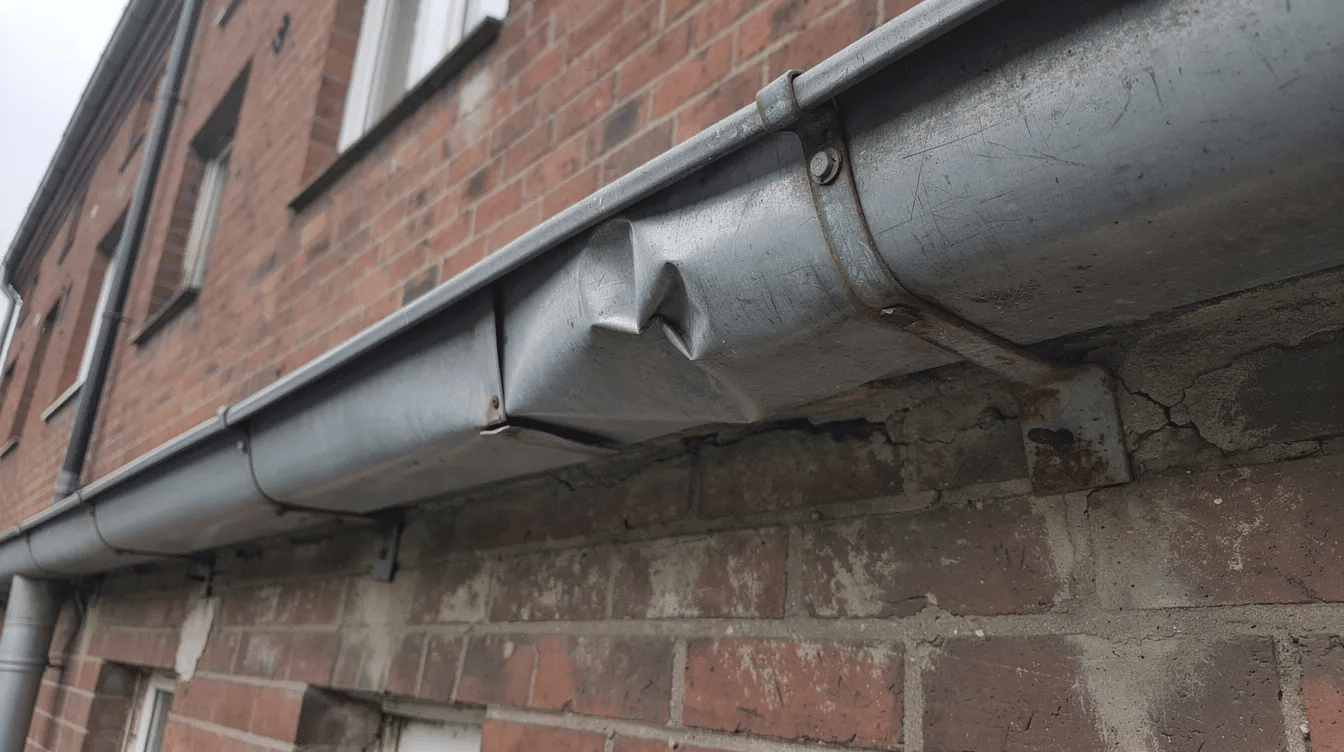
A multifamily community may contain several different roofing materials even when the property appears uniform from the street. Garden-style apartment buildings may have asphalt shingles, a mid-rise building may use TPO or PVC, a clubhouse may have standing seam metal, and maintenance or amenity buildings may use modified bitumen or roof coatings. Those roofing materials do not respond to hail in the same way.
Conduct a detailed roof inspection of every building that warrants evaluation after the storm, but prioritize the inspection process according to actual risk. Buildings with active water intrusion, known roof problems, visible exterior damage, older roofing systems, or reports from several units normally deserve attention before a newer building that shows no immediate warning signs.
Building priority can include:
- Buildings with active leaks, water stains, or interior water damage
- Older roofs or roofs with a known history of repairs and weak spots
- Buildings showing concentrated visible damage on the windward elevation
- Roof sections with substantial rooftop mechanical equipment or numerous penetrations
- High-occupancy common areas such as leasing offices, clubhouses, fitness centers, and laundry buildings
- Buildings where missing shingles, displaced roofing materials, or exterior damage are immediately visible from the ground
Asphalt Shingles
On asphalt shingles, inspectors should look for impact marks, bruising, displaced protective granules, cracks, damaged edges, missing shingles, damage around vents and pipe boots, and conditions that are inconsistent with normal aging.
Granule loss by itself does not establish hail damage because shingles naturally shed granules as they age. The inspection should consider the pattern of impact, the condition of nearby soft metals, roof age, previous documentation, and the broader storm evidence across the property.
Missing shingles can point to wind damage associated with the same severe weather event even when hail was the main concern that originally triggered the inspection. Since wind and hail frequently occur together, the roof inspection should look at the complete storm rather than isolating one cause too early.
TPO, PVC, and Modified Bitumen
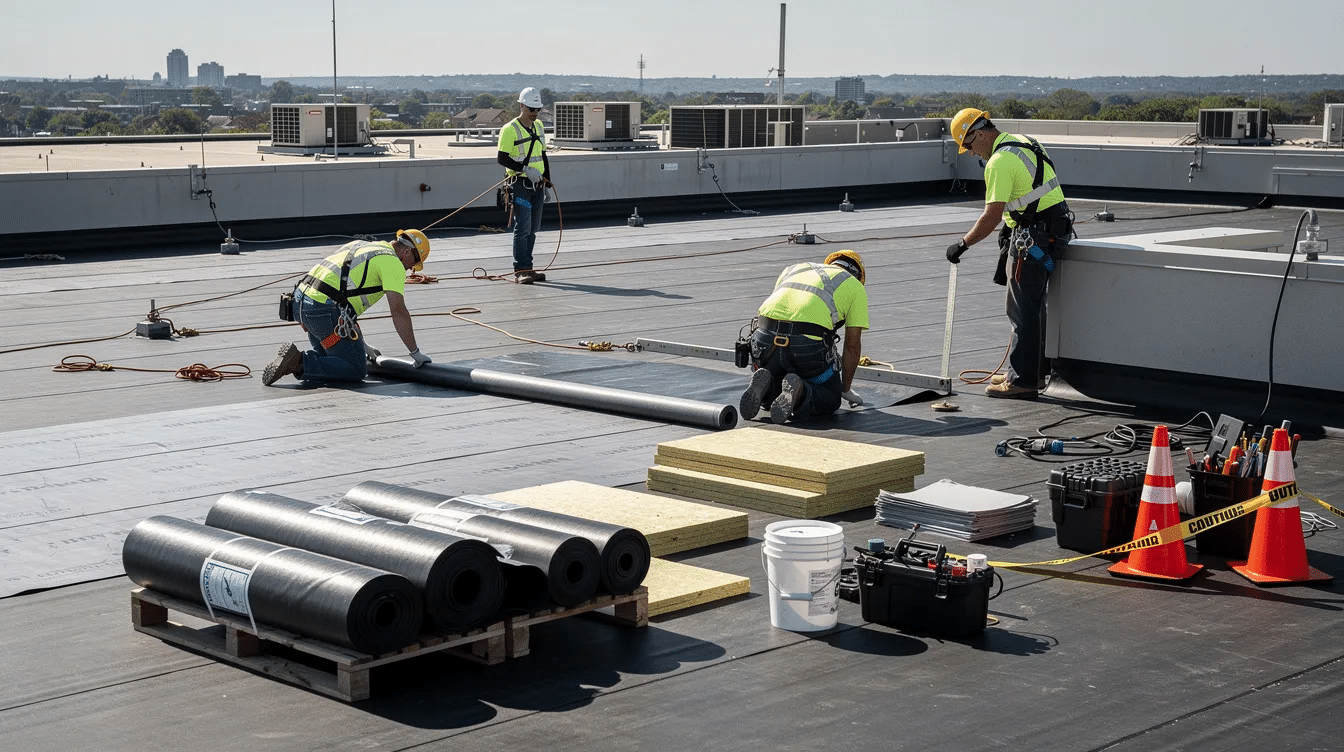
Single-ply and asphalt-based low-slope systems need a different inspection process. TPO and PVC may show punctures, fractures, depressions, damage near hard points, seam concerns, or signs that insulation or cover board below the membrane has been affected. Modified bitumen can show bruising, granule displacement, fractures, damaged laps, or impact around rigid transitions.
A RICOWI field investigation of a major North Texas hail event documented meaningful differences in how commercial roofing assemblies performed. One important finding was the influence of the materials beneath the membrane: systems incorporating higher-compressive-strength cover boards generally performed better than weaker assemblies under severe hail exposure. That is a more useful lesson for property managers than assuming one membrane type automatically performs well or poorly in every storm.
Hail damage isn’t always immediately visible on these systems. A membrane can rebound after impact while the cover board or insulation below it takes more of the force, which is one reason professional inspections sometimes include additional moisture testing or limited destructive evaluation when the surface findings justify it.
Metal Roofing
Metal roofing can make hail impact easy to see, but visible dents do not automatically establish functional roof damage. Inspect seams, panel locks, exposed fasteners where present, flashing, ridge and eave details, coatings, penetrations, and transitions in addition to looking at the field of the panel.
A cosmetic dent may change appearance without affecting watertightness, while another hail impact may distort a seam, damage a coating, loosen a fastener, or affect flashing in a way that requires repairs. Documenting the extent and location of the damage helps the property owner and insurance adjuster understand what is actually present without assuming every dent has the same significance.
Critical Roof Details: Flashing, Penetrations, and Rooftop Equipment
Many post-storm leaks develop around roof details rather than in the uninterrupted field of the roofing material. Multifamily buildings contain an unusually high number of penetrations because bathrooms, kitchens, laundry areas, mechanical systems, and stacked plumbing frequently require vents, exhausts, pipes, or rooftop equipment.
During the roof inspection, pay close attention to:
- Wall flashing and roof-to-wall transitions
- Step flashing on applicable steep-slope roof sections
- Pipe boots and plumbing vents
- Exhaust vents and dryer terminations
- Skylights and skylight curbs
- Roof hatches and access points
- HVAC curbs and mechanical equipment
- Satellite, solar, and communications penetrations
- Pitch pans, sealants, and previous repair locations
A compromised penetration above stacked units can allow water to travel into more than one floor depending on the building design and pathway the water follows. That possibility makes these details especially important in multifamily roofing, where one relatively small roof opening can create water damage in several interior areas before anyone realizes the source is overhead.
Weak spots around old sealant or previous repairs should be documented even when the condition cannot yet be attributed to the hail event. A storm inspection is still valuable when it identifies a pre-existing problem that needs necessary repairs before future storms put more water against the same detail.
Gutters, Downspouts, Drains, and Drainage Paths
Drainage problems can turn relatively small roof conditions into expensive repairs, especially on multifamily buildings with large low-slope roof areas. Hail often arrives with heavy rain, high winds, leaves, branches, roofing debris, and other material that can collect around gutters, drains, and scuppers while the storm is still underway.
Across the property, check:
- Dented, loose, or pulled-away gutters
- Crushed or disconnected downspouts
- Separated gutter joints allowing water to run down building façades
- Roof drains or strainers packed with storm debris
- Scuppers restricted by leaves, roofing materials, or accumulated hail
- Overflow drains and secondary drainage paths
- Areas of standing or ponding water that were not present before the hail event
Clear gutters and drains as soon as conditions are safe so water can leave the roof normally. On flat roofs, inspect both primary and secondary drainage components rather than assuming that clearing one drain solves the problem. Maintenance crews should watch drainage during the next rain where practical, especially around buildings that have a history of ponding or overflow.
On steep-slope buildings, gutters may also collect granules from damaged or aging shingles. Photograph unusual accumulations and note the building location, but remember that granule loss has several possible causes. The roof surface still needs to be assessed before anyone labels the condition hail damage.
Keeping drainage clear is one of the simplest proactive steps property managers can take to protect the property from further damage after severe weather and before future storms arrive.
Interior Checks: Units, Common Areas, and Hidden Signs of Water
The roof inspection and interior inspection should inform each other. A roof may look reasonably normal from above while occupants are reporting water stains in several top-floor units, or the roof may show clear impact without any interior symptoms yet. Looking at both sides gives the roofing contractor a better understanding of the extent of the problem.
Priority interior areas include:
- Top-floor units below roof areas showing impact or exterior damage
- Upper-level corridors and stair tower ceilings
- Areas below skylights, roof drains, valleys, and major penetrations
- Elevator lobbies and equipment areas where applicable
- Laundry rooms, mechanical closets, and utility spaces
- Clubhouses, leasing offices, fitness rooms, and other amenity buildings
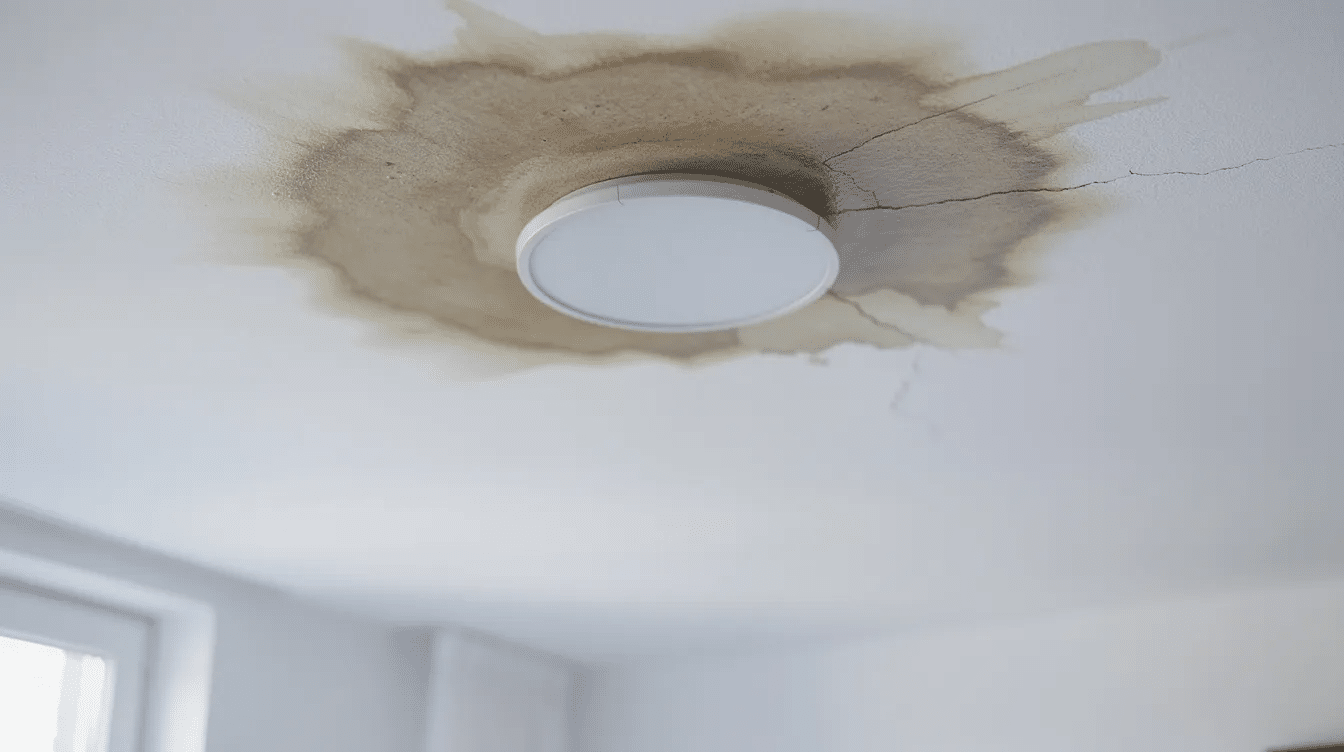
Look for water stains, softened drywall, sagging ceiling material, peeling or bubbling paint, wet carpet near exterior walls, dripping around fixtures, damp insulation where it can be observed safely, and unexplained moisture odors. Persistent moisture can contribute to material deterioration and mold growth, but mold growth should not automatically be attributed to a hailstorm that happened only a few hours earlier. Mold generally indicates that moisture conditions have existed long enough to support growth.
Map water damage by unit and building. If several vertically aligned units report similar conditions, the pattern may help identify a shared roof penetration, wall transition, plumbing vent, or other path allowing water into the building.
Hail damage isn’t always immediately visible from the interior either. A small opening may not show itself until the next heavy rain, which is why work orders received days after the storm should still be connected to the original hail event and evaluated rather than automatically treated as unrelated maintenance.
Minor Hail Damage vs. Emergency Repairs and Further Damage Prevention
Property managers need to distinguish conditions that require immediate mitigation from minor hail damage that can be documented and scheduled for later repair. Neglecting minor hail damage can eventually lead to costly repairs, but treating every mark as an emergency wastes resources and can disrupt an occupied property unnecessarily.
Conditions that normally warrant prompt attention include active water intrusion, damaged roofing that is allowing water into the assembly, broken windows exposed to additional rain, loose exterior materials over pedestrian areas, compromised roof openings, unsafe ceiling conditions, and water affecting electrical components.
Emergency mitigation may include a temporary dry-in, compatible temporary roof repairs, boarding a broken window, clearing a blocked drain, removing a loose hazard, or protecting an interior area from additional water damage. The appropriate temporary fixes depend on the roofing materials and the location of the problem; a method that works on asphalt shingles may be completely inappropriate on TPO, PVC, modified bitumen, or a coated roof.
Document temporary repairs before and after the work whenever it is safe to do so. Keep receipts, invoices, and photographs if the property owner plans to pursue an insurance claim. Texas insurance guidance generally advises policyholders to take reasonable steps to prevent further damage while maintaining records of those expenses, but reimbursement depends on the insurance policy and coverage determination.
Minor hail damage that may be scheduled rather than treated as an emergency can include limited cosmetic metal dents with no evidence of functional damage, superficial membrane marks that testing confirms have not compromised the roofing system, or minor exterior damage that does not expose the building to water.
Maintain a repair log by building so necessary repairs do not disappear once the immediate storm response slows down. Include the location, observed condition, temporary action taken, permanent repair recommendations, completion status, photographs, and the person or company responsible for the next step.
Why a Professional Roof Inspection Matters on a Multifamily Property
A professional roof inspection is especially valuable on a multifamily property because one management team may be responsible for thousands of squares of roofing spread across multiple buildings. A ground inspection can identify obvious damage, but it cannot reliably evaluate membrane fractures, seam conditions, flashing, substrate support, rooftop penetrations, drainage problems, or other hidden damage.
Professional inspections should cover the entire relevant property rather than only the buildings where occupants reported leaks. A roof inspection may reveal that Building 4 has no functional hail damage even though the carports nearby are heavily dented, while another building with little obvious exterior damage has membrane problems that deserve repair.
The roof inspection process should account for the age and type of roofing materials on every building. A contractor should know which structures have shingles, TPO, PVC, modified bitumen, coatings, or metal and should understand that the inspection method changes with the system.
A professional roof inspection may include:
- Building-by-building roof photographs
- Wide shots establishing location and close ups documenting specific conditions
- Inspection of seams, flashing, penetrations, roof edges, gutters, and drainage
- Assessment of rooftop HVAC and other equipment where it interfaces with the roof
- Moisture evaluation or infrared scanning when conditions and findings justify it
- Selective core samples or test cuts where necessary and appropriate
- A written inspection report identifying observations and repair recommendations
Core samples and test areas should not be treated as mandatory parts of every professional roof inspection. Destructive evaluation is useful in the right circumstances, but it should have a reason behind it and should account for manufacturer warranty requirements.
Ja-Mar provides multifamily roofing services for apartment communities and other multifamily properties, including inspections, repairs, maintenance, and replacement. Property managers managing larger portfolios can also use commercial roofing programs to create more consistent condition records before and after future storms.
Coordinating the Roof Inspection and Insurance Claims Process
If the property owner decides to file an insurance claim, organized documentation helps the insurance company and insurance adjuster understand what is being reported. A professional inspection report can support the claims process by documenting physical roof conditions, but the report does not determine coverage or guarantee that an insurance claim will be approved.
Commercial property policy terms can vary in Texas, including notice requirements, deductibles, exclusions, settlement provisions, cosmetic-damage language, and other coverage terms. Contact the insurance provider promptly after suspected covered damage and review the actual policy rather than relying on a universal hail-claim rule.
Property managers can make the claims process easier to follow by maintaining one organized file containing:
- Storm date and weather reports
- Timestamped photographs and video
- Ground-level inspection notes
- Professional roof inspection reports
- Resident or occupant work orders related to the event
- Invoices and receipts for temporary repairs
- Repair recommendations and estimates
- Correspondence with the insurance company
- Notes from discussions with the insurance adjuster
- A building-by-building damage and repair matrix
Take photographs and notes as soon as practical after the storm passes, particularly before temporary repairs or cleanup substantially change the condition. Document visible storm damage, but avoid making technical conclusions in the file that have not yet been confirmed by the roofing contractor or another qualified professional.
When the insurance adjuster visits, make sure the adjuster has access to the buildings, roof areas, photographs, inspection report, and relevant repair records needed to understand the loss. Professional inspections can provide useful technical documentation, while the insurance company remains responsible for determining whether the insurance claim falls within the policy’s coverage.
Track expenses related to the insurance claim separately from ordinary maintenance whenever possible. A clear process helps ownership see the extent of storm-related costs and prevents unrelated maintenance expenses from being mixed into the claim file.
| Building | Roof Type | Observed Damage | Immediate Need | Claim Status |
|---|---|---|---|---|
| Building 1 | TPO | Suspected punctures near penetrations | Temporary dry-in and detailed roof inspection | Under review |
| Building 2 | Asphalt shingles | Missing shingles and impact marks | Temporary weather protection where needed | Under review |
| Building 3 | Modified bitumen | Localized surface damage | Professional inspection and repair recommendations | Pending evaluation |
| Clubhouse | Standing seam metal | Dents with no immediately visible seam failure | Document and evaluate functional condition | Pending policy review |
| Carport A | Metal panels | Dented panels and loose fasteners | Secure loose components | Under review |
Why Property Managers Should Avoid Rushing Into Binding Agreements
The hours after severe weather are hectic, and storm activity often brings a large number of contractors, restoration companies, consultants, and other vendors into affected neighborhoods. Property managers still need to follow the property’s normal approval process before signing contracts that commit ownership to a large scope of work.
Emergency mitigation is different from authorizing a complete roof replacement. If temporary repairs are necessary to protect the building, document the reason for the work, what was authorized, and how much it will cost. Permanent repairs should follow a clear scope based on the extent of confirmed damage.
Review proposals carefully and understand whether the document is an inspection authorization, emergency-service agreement, repair contract, assignment of rights, or full replacement agreement. Ask ownership, the insurance provider, or legal counsel to review unfamiliar terms when appropriate.
Texas does not have a statewide occupational license specifically required for roofing contractors, so property managers should not rely on the phrase “licensed roofer” as the entire contractor-screening process. Verify appropriate insurance, commercial and multifamily roofing experience, references, manufacturer credentials where relevant, safety practices, and familiarity with local code and permitting requirements. Ja-Mar also holds an RCAT roofing contractor license/credential through the Roofing Contractors Association of Texas, an industry organization rather than the state occupational licensing agency.
Operational Planning: Access, Parking, Repairs, and Resident Impact
Once the extent of the damage is known, multifamily repairs require a level of logistical planning that is easy to underestimate. Crews need space for materials, dumpsters, equipment, ladders, lifts, and safety zones while occupants still need access to their homes, parking spaces, mail, amenities, sidewalks, and emergency routes.
Before major repairs begin, determine where materials and dumpsters can be staged without blocking fire lanes, accessible parking, primary entrances, or emergency access. Parking restrictions should be communicated in advance and kept as limited as practical. Vehicles near active roofing work may need to be temporarily relocated to protect them from falling debris.
Repairs can often be phased building by building according to severity. Buildings with water intrusion, missing shingles, open membrane damage, compromised flashing, or other conditions allowing water into the structure should usually move ahead of buildings with confirmed cosmetic-only damage.
Resident communication should explain the schedule, expected working hours, temporary parking changes, balcony or amenity restrictions, noise expectations, and how to report a problem during the project. The message should be practical rather than technical; most occupants do not need a lesson in roofing materials, but they do need to know whether their parking space will be unavailable Wednesday morning.
Property owners should also receive regular progress reports that separate completed repairs, temporary fixes, pending repairs, unresolved insurance issues, and capital decisions such as roof replacement. A large multifamily property may have different solutions for different buildings after the same hail event.
Maintain a Repair Log for Every Building
A building-by-building repair log is one of the simplest ways to keep a complicated storm response from becoming a collection of emails, work orders, handwritten notes, and photographs that no one can reconcile three months later.
The log can track:
- Building and roof section
- Roofing materials and approximate roof age
- Date of the roof inspection
- Visible damage and hidden damage identified
- Interior water damage or occupant reports
- Temporary repairs completed
- Permanent necessary repairs
- Repair recommendations and estimated costs
- Insurance claim or claims process status
- Insurance adjuster inspection date
- Repair completion date
- Follow-up roof inspection date
For communities with several roof systems, this record becomes useful long after the immediate hail event. A future manager can see that Building 5 received shingle repairs after one storm while Building 7 had no functional damage, or that a particular low-slope roof has needed repeated repairs across several severe weather events.
That historical information helps management plan capital projects, prioritize maintenance, and take proactive steps before future storms rather than beginning every roof discussion from scratch.
Preventing Mold Growth and Additional Water Damage
Hail itself does not cause mold growth, but water entering through hail-damaged roofing, broken windows, siding, or flashing can create moisture conditions that eventually support mold. The priority is to find and stop the source of water intrusion, remove standing water where safe, and dry affected materials appropriately.
Wet ceiling tile, insulation, drywall, flooring, and wall cavities should not be ignored simply because the roof repair has been completed. Interior water damage may need separate drying, removal, or restoration work depending on how long the materials remained wet and the extent of saturation.
Property managers should also continue watching repaired areas during subsequent rain. A temporary fix may have stopped the immediate water intrusion without resolving every source, particularly on a complicated roof with several penetrations or drainage problems.
Taking these proactive steps protects occupied spaces and helps keep a manageable repair from developing into mold growth, material deterioration, or more expensive repairs after future storms.
Preparing the Property for Future Storms
Once the immediate hail damage has been addressed, the storm provides useful information about where the property may be vulnerable next time. Review which buildings leaked, which roof sections required emergency repairs, where gutters overflowed, which siding or windows sustained significant damage, and whether certain roofing assemblies performed better than others.
That information can guide future capital planning. A building approaching roof replacement may benefit from upgraded roofing materials, a higher-compressive-strength cover board, improved drainage, impact-rated shingles, or another system selected for the building’s actual exposure and use.
Routine professional inspections also create a pre-storm baseline. Photos showing roof condition before the next hail event make it much easier to distinguish old wear from new roof damage, while maintenance records show which repairs were already completed.
Ja-Mar’s commercial roofing programs provide property managers with options for planned inspections, maintenance, and documented service. Property teams that want more guidance on inspection frequency can also review how often commercial roofs should be inspected and adapt that approach to the age, system type, warranty, and exposure of each building.
Working With an Experienced Multifamily Roofing Contractor
A roofing contractor working on a multifamily community needs more than the ability to repair a roof. The contractor has to understand occupied properties, communication with on-site management, building-by-building documentation, parking and staging, safety around pedestrian areas, multiple roofing systems, and the operational effect of repairs on people living directly below the work.
Look for experience with the actual roofing materials on the property. That may include asphalt shingles, TPO, PVC, modified bitumen, roof coatings, and several types of metal roofing. Ask how the contractor approaches a professional roof inspection, whether photographs are organized by building, how hidden damage is evaluated, and how repair recommendations are prioritized.
The contractor should also be comfortable distinguishing hail damage from age-related wear. An older patch, existing granule loss, deteriorated sealant, or pre-existing ponding problem should not automatically be labeled storm damage simply because a hail event occurred nearby.
Ja-Mar Roofing & Sheet Metal works with multifamily and commercial properties across Texas and can inspect, document, maintain, repair, or replace roofing systems while coordinating around occupied buildings. Property managers can review Ja-Mar’s Texas service areas or request a professional roof inspection for a specific property.
The goal is not to find the contractor who promises the largest insurance claim. It is to find a roofing partner who can assess the roof accurately, explain the extent of the damage, recommend necessary repairs, document the work clearly, and help protect the investment through future storms.
Frequently Asked Questions: Multifamily Hail Damage Management
How soon should I inspect a multifamily property after a hailstorm?
Begin the safety and ground-level assessment as soon as the storm passes and conditions are safe. Active water intrusion, broken windows, electrical hazards, loose exterior materials, or structural issues should be addressed promptly. A professional roof inspection should be scheduled as soon as reasonably practical when the property experienced significant hail, displays visible damage, or has interior signs of water intrusion. There is no universal 24- or 72-hour rule that applies to every property.
Do all buildings in a multifamily community receive the same hail damage?
No. The extent of roof damage can vary because building height, actual storm direction, roof age, prior repairs, roof slope, roofing materials, cover-board type, and surrounding structures can all change how an individual building experiences the hail event. Each building should be assessed based on its own conditions rather than assuming uniform damage across the property.
What if I only see minor hail damage from the ground?
Minor hail damage at ground level does not tell you exactly what happened on the roof. Dented gutters, damaged siding, impact marks on exterior equipment, or scattered granules confirm that the property was exposed, but hail damage isn’t always immediately visible on the roofing system itself. A professional roof inspection can determine whether the roof has functional damage, cosmetic damage, or no significant roof damage at all.
Why are professional inspections important after hail?
Professional inspections can identify roof damage that a ground-level walk cannot reliably evaluate, including seam problems, flashing damage, membrane fractures, weak spots, drainage concerns, and conditions below the exposed roof surface. The inspection also creates documentation that can be compared against later conditions and used to develop repair recommendations.
Does a professional inspection report strengthen an insurance claim?
A professional inspection report can support an insurance claim by documenting the physical condition of the roof, where damage was found, and what repairs the roofing contractor recommends. It does not guarantee coverage or determine what the insurance company will pay. The insurance provider applies the policy terms and makes the coverage decision.
Should I contact the commercial insurance provider immediately after a hailstorm?
If the property has suspected covered damage, review the policy and notify the insurance provider promptly according to its requirements. Commercial property policies are not standardized in Texas, so property managers should not assume every company uses the same notice deadline, deductible, or claims process. Keep photographs, inspection records, weather reports, and receipts for temporary repairs as part of the claim file.
What should I give the insurance adjuster?
Provide organized information that helps the insurance adjuster understand the reported damage. This can include building maps, timestamped photographs, weather reports, work orders, the professional inspection report, temporary repair documentation, invoices, prior maintenance records where relevant, and access to affected roof areas. Avoid telling the adjuster what coverage the policy should provide unless ownership or the appropriate insurance professional has made that determination.
How should I handle reports of leaks that appear days after the storm?
Connect those work orders to the original hail event and investigate them. Hail damage can create conditions that are not immediately visible or that do not allow water into the building until later rainfall or thermal movement affects the damaged area. Mapping reports by building and vertical unit stack can help identify a shared roof area, wall transition, drain, or penetration.
Can I wait until the next budget cycle to address minor hail damage?
Some confirmed cosmetic conditions can be monitored and incorporated into planned maintenance, but damage that creates a path for water intrusion should not be postponed simply because the next capital cycle is more convenient. Minor hail damage can become more costly when it affects a seam, flashing detail, exposed substrate, drainage component, or another area that allows water into the building.
What temporary repairs should be made after hail?
Temporary repairs should address immediate hazards and protect the property from further damage until permanent repairs can be completed. That might include an appropriate temporary roof repair or dry-in, boarding a broken window, clearing blocked gutters, securing loose metal, or containing interior water. The method should match the roofing materials and building condition rather than applying the same temporary fix to every roof.
Should property managers clear gutters and drains after severe weather?
Yes, once the work can be done safely. Hail, leaves, branches, shingle granules, and other debris can block gutters, scuppers, and roof drains, allowing water to pond or overflow against vulnerable areas. Drainage should be included in both the immediate inspection and later professional roof inspection.
How can I protect the property from future storms?
Keep roof condition records, complete necessary repairs, maintain gutters and drainage, address known weak spots, and schedule professional inspections based on roof age and system type. When replacement is necessary, ask whether upgraded roofing materials, cover boards, impact-rated systems, or improved drainage could make sense for that building. These proactive steps help protect the property and provide better documentation when future storms occur.
Should every damaged roof be replaced after hail?
No. Repair recommendations should be based on the extent and type of functional damage, roof age, moisture conditions, existing repairs, remaining service life, and whether the proposed repair can restore reliable performance. One building in the community might need targeted repairs while another requires a larger restoration or replacement.
How should damage be tracked across a large multifamily property?
Use a building-by-building matrix or repair log that records roof type, inspection findings, interior water damage, emergency work, temporary fixes, repair recommendations, claim status, insurance adjuster activity, and completion dates. This process prevents outstanding repairs from getting lost and gives property owners a clear picture of the entire storm response.
Protect the Property by Knowing What Actually Happened
Hail damage isn’t always obvious, and a multifamily property can have several different outcomes from the same storm. One building may need little more than gutter repairs, another may have missing shingles, and a low-slope roof across the parking lot may have damage that is not immediately visible from the ground.
The most effective response is an organized one: protect people first, document the hail event, inspect each building, address water intrusion and other immediate hazards, arrange a professional roof inspection, keep the insurance and repair records organized, and follow through on necessary repairs before future storms put additional stress on the same areas.
Ja-Mar Roofing & Sheet Metal works with property managers and property owners across Texas on multifamily inspections, maintenance, repairs, and roof replacement. If severe weather has affected an apartment community or other multifamily property, contact Ja-Mar Roofing & Sheet Metal to schedule an inspection and get a documented assessment of what the roofing systems actually need.

