
Austin Solar Roofing & Solar Shingles
Austin solar roofing gives homeowners another option when it is time to replace the roof: build solar energy generation directly into the new roofing system instead of mounting a separate rack of panels over an existing roof.
Ja-Mar Roofing & Sheet Metal offers GAF Energy Timberline Solar® roofing for qualifying residential projects in Austin and Central Texas. Timberline Solar® ES 2 energy shingles install directly to the roof deck alongside compatible Timberline® asphalt shingles, creating one integrated roofing and solar system.
Solar roofing makes the most sense when you are already planning a new roof or roof replacement. The roof, solar layout, available sunlight, electrical requirements, and projected energy production can then be evaluated together instead of treating the roofing and solar systems as unrelated projects.

What Is a Timberline Solar® Roof?
Traditional rooftop solar and solar roofing take different approaches. Conventional solar panels are normally mounted above an existing roof on a separate racking system. Timberline Solar® makes the solar-generating component part of the roofing system itself.
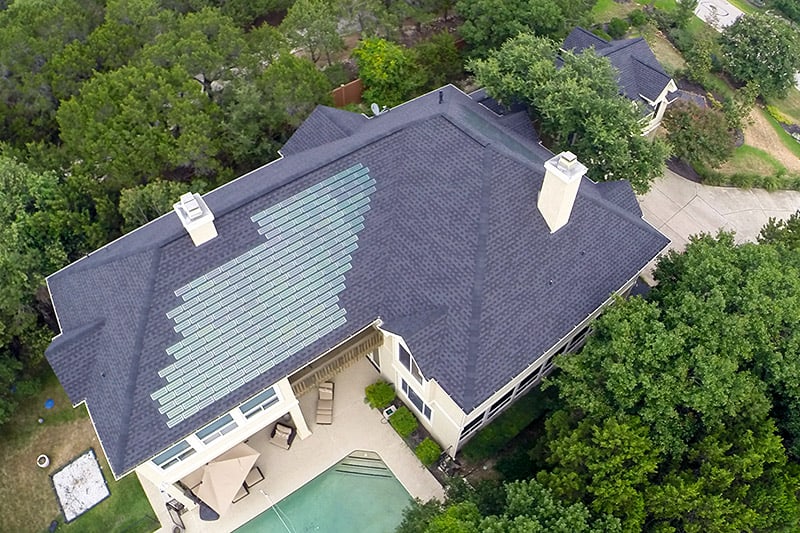
The current Timberline Solar® ES 2 energy shingle is installed directly to the roof deck and works alongside compatible Timberline® roofing shingles. The finished system maintains the lower-profile appearance of a shingle roof while producing electricity from sunlight.
Nailable Energy Shingles
Timberline Solar® ES 2 is designed to be installed with roofing tools and techniques rather than mounted to a separate rack above the finished roof.
Integrated With the Roof
The energy shingles and compatible Timberline® asphalt shingles are planned as parts of the same roofing system instead of treating solar equipment as an attachment added later.
57 Watts per Energy Shingle
Each current-generation Timberline Solar® ES 2 energy shingle is rated at 57 watts. The total system size depends on how many energy shingles can appropriately fit the home’s solar layout.
Low-Profile Appearance
The energy-producing portions of the roof sit close to the roof deck rather than standing above the shingles on visible racks and mounting hardware.
The Best Time to Consider Solar Roofing Is When You Need a New Roof
Timberline Solar® is not a solar product that is simply fastened over the shingles already on your house. It is a complete roofing system and is installed as part of a new roof or roof replacement.
You Cannot Add Timberline Solar® Over an Existing Roof
The energy shingles install directly to the roof deck. If your existing roof still has years of useful service remaining, a different solar approach may make more sense than removing a good roof solely to install solar shingles.
Roofing and Solar Can Be Planned Together
If the roof already needs replacement, Timberline Solar® allows the roofing materials, solar array, flashing, penetrations, ventilation, and electrical work to be coordinated as part of the same overall project.
Not Every Austin Roof Is Equally Suited for Solar Shingles
A solar roof has to work as both a roofing system and an energy-producing system. Before deciding whether Timberline Solar® makes sense, the house needs to be evaluated for roofing conditions as well as its ability to capture useful sunlight.
Sun Exposure
Solar shingles need access to sunlight to generate electricity. Heavy shade from neighboring buildings or dense tree cover can reduce the amount of useful solar exposure available on the roof.
Roof Shape & Available Area
Roof size, slope, hips, valleys, dormers, vents, chimneys, skylights, and other features help determine where energy shingles can be placed and how large the solar array can be.
Roof Replacement Timing
Because Timberline Solar® is installed as part of a new roof, it is especially worth considering when the existing roofing system is already approaching replacement.
Electrical & Utility Requirements
The roofing installation is only one part of the project. Electrical equipment, connection to the home’s electrical system, permitting, and utility requirements also need to be coordinated for the specific property.
How Are Solar Shingles Different From Rack-Mounted Solar Panels?
Both approaches use sunlight to produce electricity, but they interact with the roof differently. The better option depends on the home, condition of the existing roof, available solar exposure, project timing, budget, and homeowner preferences.
Solar Shingles Become Part of the Roof
Timberline Solar® energy shingles are installed directly to the roof deck as part of a complete roofing system rather than sitting above an already finished roof.
Traditional Panels Are a Separate System
Rack-mounted solar panels are generally installed above an existing roofing system using mounting equipment designed for the solar array.
Solar Roofing Requires a Reroof
Timberline Solar® is intended for new or replacement roofing projects. Traditional panels may be installed while an existing roof remains in place if that roof is otherwise suitable for the installation.
Appearance Is Different
Solar shingles provide a lower-profile appearance because the energy-generating components are integrated into the roof rather than elevated above it on racks.
How Does a Solar Shingle Roof Power a Home?
Timberline Solar® energy shingles convert sunlight into direct-current electricity. The solar system then uses an inverter to convert that electricity into alternating current that can be used by the home’s electrical system.
The system is designed to operate connected to the electrical grid. Actual energy production varies from house to house because the number of energy shingles, roof orientation, shading, weather, available roof area, and other site conditions are different on every property.
Energy Shingles Generate Electricity
The active portions of the roof capture solar energy and convert it into electricity while also serving as part of the water-shedding roofing system.
The Inverter Converts the Power
Electricity generated on the roof is converted from DC power into AC power that can be used by the home’s electrical system.
The Home Uses Solar Production
Electricity produced by the solar roof can reduce the amount of electricity the home needs to draw from the grid. Actual utility-bill savings vary by system production and household energy use.
Production Can Be Monitored
Homeowners can monitor system production so they can see how much solar energy the roof is generating over time.
to Production
A Beautiful Roof Is Not Automatically a Good Solar Roof
Austin has plenty of sunlight, but that does not mean every section of every roof receives enough direct exposure to make the same solar layout practical.
Large trees, nearby buildings, chimneys, roof orientation, and the geometry of the house can create shade at different times of day. Heavy permanent shading can make a portion of a roof unsuitable for solar shingles, while lighter or moving shade may simply affect projected production.
A solar roofing evaluation should account for those conditions before the energy-shingle layout and expected production are determined.
What Affects the Cost of an Austin Solar Roof?
There is no useful flat price for a Timberline Solar® roof because the project combines a roof replacement with an energy system. Roof size and complexity matter, but so do the number of energy shingles, available sunlight, electrical work, and the solar-production goals for the home.
Roof Size & Complexity
Roof area, slope, valleys, hips, penetrations, stories, access, tear-off requirements, and existing roof conditions all affect the roofing portion of the project.
Solar Array Size
The number of energy shingles needed depends on the proposed system design, available roof area, solar exposure, and expected energy production.
Electrical Work
Inverter equipment, wiring, electrical connections, permitting, and utility-related requirements contribute to the complete solar roofing project.
Existing Roof Conditions
Decking repairs, unusual roof construction, previous alterations, and other conditions discovered during replacement can affect the final scope.
A note about solar tax incentives: the federal Residential Clean Energy Credit that previously provided a 30% credit for qualifying residential solar expenditures ended for expenditures made after December 31, 2025. Other state, local, utility, or future incentives can change, so homeowners should verify current programs and discuss tax questions with a qualified tax professional rather than relying on older solar marketing information.
Timberline Solar® Includes Roofing and Solar Warranty Coverage
Timberline Solar® energy shingles are backed by a limited warranty that includes coverage related to the solar roofing components and energy output. Current Timberline Solar® product documentation provides a 25-year warranty term for the energy shingles, subject to the manufacturer’s terms, exclusions, registration requirements, and the specific warranty selected for the project.
Warranty coverage can vary between roofing components, solar components, electrical equipment, workmanship, and enhanced GAF warranty options. The exact coverage should be reviewed for the system proposed for your home rather than assuming every component has identical terms.
Does a Timberline Solar® Roof Include a Home Battery?
No. Timberline Solar® is designed as a grid-connected solar roofing system, and a battery is not automatically included with the roof.
GAF Energy states that Timberline Solar® can be compatible with many energy-storage products, but battery selection and installation are separate considerations. Compatibility depends on the solar equipment, electrical system, battery technology, and what the homeowner wants the storage system to do.
If backup power or battery storage is part of your goal, that should be identified early so the electrical and solar portions of the project can be evaluated accordingly.
Timberline Solar® Is Currently a Residential Roofing System
GAF Energy currently identifies Timberline Solar® as a residential solar roofing product. That makes this page specifically about solar roofing for homes rather than commercial photovoltaic roofing systems.
Ja-Mar also provides a full range of traditional residential roofing services for Austin homeowners, including asphalt shingles, standing seam metal, roof repair, roof replacement, inspections, and specialty roofing work.
See Our Solar Roofing Work


Solar Roofing Is Still a Roofing Project First
Ja-Mar Roofing & Sheet Metal has worked on Austin and Central Texas roofs for decades. Timberline Solar® adds energy production to the roof, but the project still depends on proper decking, underlayment, flashing, ventilation, valleys, penetrations, roof edges, water management, and installation workmanship.
- Roofing experience since 1970. Ja-Mar brings decades of residential roofing experience to projects where the roofing and solar systems have to work together.
- GAF Master Elite® contractor. Our GAF credentials are part of a long-standing relationship with one of the country’s major roofing manufacturers.
- Complete roof replacement capabilities. Solar roofing can be coordinated with the other components required when the existing roof is removed and rebuilt.
- Experience with complex roofs. Valleys, hips, penetrations, ventilation, multiple slopes, and architectural details all matter when determining how much roof area is usable for solar.
- Roofing and sheet metal knowledge. Flashing and transitions remain critical parts of the finished roof even when solar generation is added.
- Local Austin experience. Our team understands Central Texas roofing conditions, including heat, storms, hail, tree cover, and the wide range of homes found throughout the Austin area.
You can also read Ja-Mar Roofing & Sheet Metal customer reviews or see completed roofing work in our project gallery.
Solar Roofing for Austin & Central Texas Homes
Ja-Mar works with homeowners throughout Austin and surrounding Central Texas communities who are considering solar roofing as part of a residential roof replacement.
Timberline Solar® availability and project suitability can depend on the specific address, roof design, solar exposure, electrical conditions, and current GAF Energy service availability. A property evaluation is the best way to determine whether the system is a practical fit for your home.
Talk With Ja-Mar About Solar Roofing in Austin
If you are planning a roof replacement and want to know whether solar shingles make sense for the property, Ja-Mar can help evaluate the roof and discuss Timberline Solar® as part of the project.
Ja-Mar Roofing & Sheet Metal – Austin
4101 Parkstone Heights Dr
Ste 250
Austin, TX 78746
(512) 441-8437
Austin Solar Roofing FAQs
Answers to common questions from Austin homeowners considering GAF Energy Timberline Solar® as part of a roof replacement.
What are solar shingles?
Solar shingles are roofing components that also generate electricity. Timberline Solar® ES 2 energy shingles install directly to the roof deck alongside compatible Timberline® asphalt shingles as part of an integrated roofing system.
Can Timberline Solar® be installed over my existing shingles?
No. Timberline Solar® is a whole-roof system. The energy shingles install directly to the roof deck, so the system is installed as part of a new roof or roof replacement rather than over an existing finished roof.
How are solar shingles different from traditional solar panels?
Traditional solar panels generally sit on a rack mounted above an existing roof. Timberline Solar® energy shingles are part of the roofing system itself and sit directly on the roof deck alongside compatible roofing shingles.
How much electricity does one Timberline Solar® ES 2 shingle produce?
The current Timberline Solar® ES 2 energy shingle is rated at 57 watts. Total system production depends on the number of energy shingles, roof orientation, sunlight, shade, weather, and other conditions specific to the home.
Does shade affect solar shingles?
Yes. Solar shingles need sunlight to generate electricity. Trees, nearby buildings, chimneys, and other sources of shade can affect production and may influence where energy shingles can be placed on the roof.
Does a Timberline Solar® roof include battery backup?
No. Timberline Solar® is designed as a grid-connected system and does not automatically include battery storage. GAF Energy indicates that the system can work with many energy-storage products, but compatibility and battery design are specific to the electrical and solar installation.
Is there still a 30% federal solar tax credit in 2026?
No. The federal Residential Clean Energy Credit is not available for residential clean-energy expenditures made after December 31, 2025. Other incentives may vary by location and can change, so homeowners should verify current programs and consult a qualified tax professional about their individual situation.
What warranty comes with Timberline Solar®?
Current Timberline Solar® product documentation provides a 25-year limited warranty term for the solar roofing shingles. Coverage varies by component and warranty option, so the specific warranty documents for the proposed system should be reviewed before installation.
Is Timberline Solar® available for commercial buildings?
GAF Energy currently identifies Timberline Solar® as a residential installation product. Commercial properties should be evaluated for other roofing and solar options appropriate for the building.
How do I know whether my Austin home is a good candidate for solar roofing?
The evaluation should consider whether the roof needs replacement, roof size and slope, usable roof area, orientation, shade, roof penetrations, electrical conditions, projected production, and current product availability for the address.
Replacing Your Roof? See if Solar Roofing Fits the Project.
If your Austin home needs a new roof and you are considering solar, Ja-Mar Roofing & Sheet Metal can help determine whether Timberline Solar® makes sense for the roof, property, and energy goals.

