
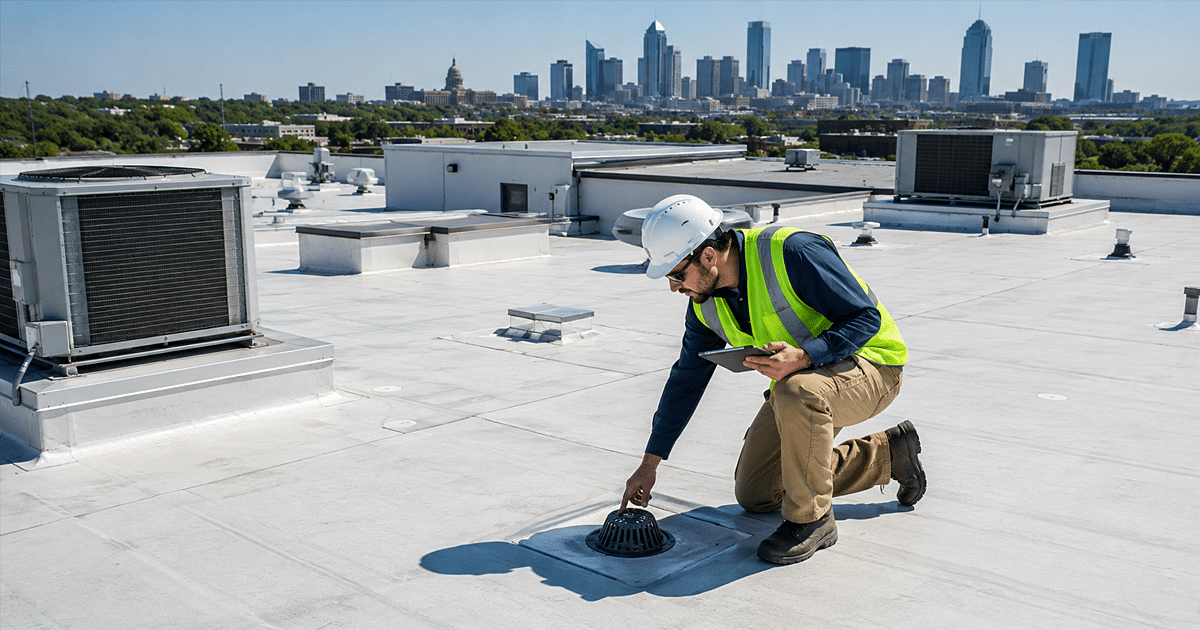
Austin’s combination of extreme summer heat, spring hailstorms, and sudden downpours puts commercial roofs under constant stress. Knowing how often to get your roof inspected can mean the difference between affordable repairs and a six-figure emergency. Here’s what every Austin property owner and facility manager needs to know.
Key Takeaways
- Commercial roofs in Austin, TX should receive professional roof inspections at least twice per year, ideally in early spring and fall, plus post storm inspections after any major storm involving hail, high winds, or heavy rain.
- Older roofs over 10–15 years, flat roofs prone to ponding water, and buildings with frequent rooftop traffic should move to quarterly commercial roof inspection schedules.
- Central Texas weather drives roof surface temperatures past 160°F in summer, and Austin experiences 4–6 significant hail events each spring, making regular inspections critical.
- Regular inspections can extend a roof’s lifespan by 5–10 years and help avoid costly repairs and business interruptions.
- Ja-Mar Roofing & Sheet Metal offers scheduled maintenance programs and storm-response inspections for commercial properties across Austin and central texas.
Why Inspection Frequency Matters for Austin Commercial Roofs
Austin’s climate combines triple-digit summer highs, spring hail, sudden downpours, and strong wind events that regularly exceed 60 mph. These forces don’t just cause one-time damage-they create cumulative wear that quietly shortens your roof’s life. Over 70% of commercial roof leaks in Austin are caused by thermal shock, where daily heating and cooling cycles stress seams, flashings, and membranes until they fail.
Commercial roofs protect inventory, tenants, mechanical equipment, and daily operations. A single undetected failure can shut down a business and cause tens of thousands of dollars in interior damage. Frequent inspections can identify small issues-loose flashing, minor membrane punctures, early rust-before they escalate into emergency repairs or a full replacement. Many manufacturer warranties and insurance policies also require documented maintenance to remain valid, making routine commercial roof inspection a financial safeguard as much as a physical one.
Recommended Inspection Schedule for Commercial Roofs in Austin, TX
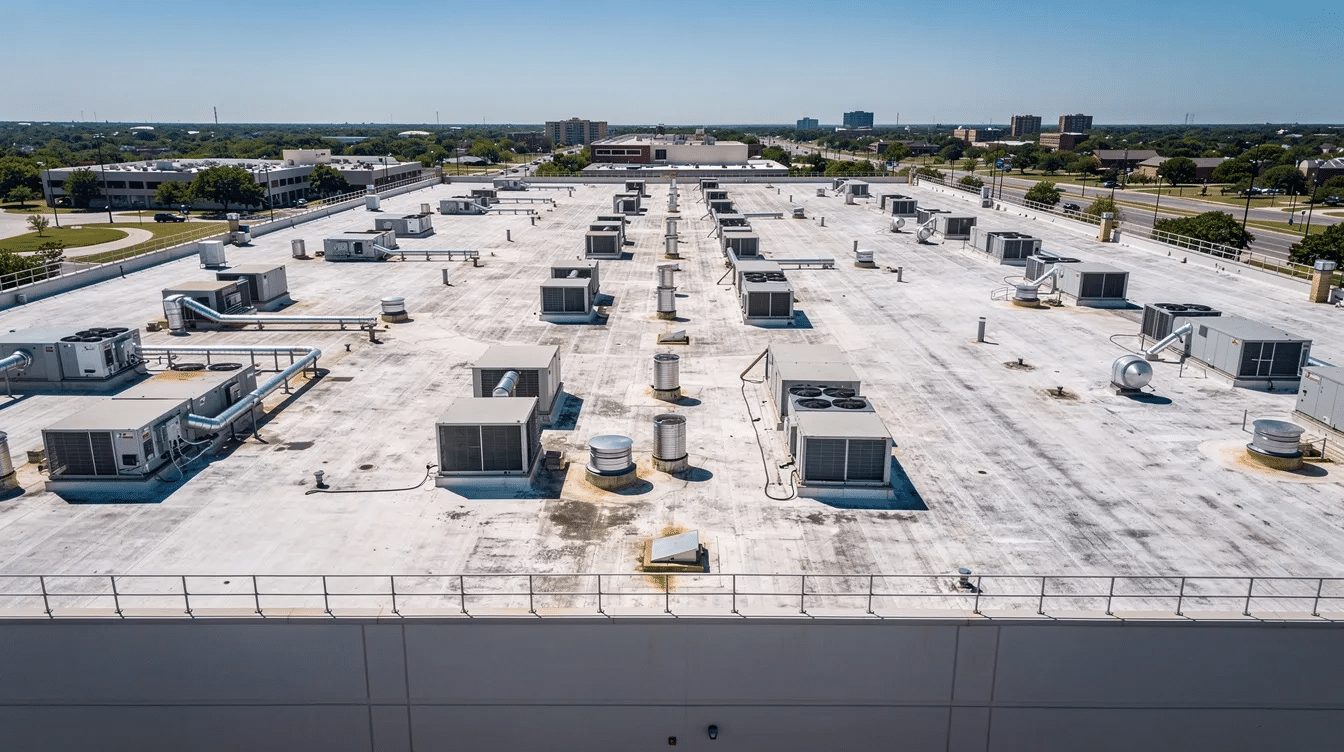
Most commercial roofs in Austin should be professionally inspected twice per year. The best timing is early spring (March–April) before storm season and fall (October–November) to prepare for winter temperature swings. Spring inspections help catch issues before the worst weather arrives, and fall visits confirm the roof survived summer heat without hidden damage.
Increased inspection frequency is advised for roofs over ten years old. Once a roof passes 15 years of service, quarterly inspections become the smarter investment. Buildings with prior leak history or heavy rooftop traffic from HVAC technicians and telecom crews also benefit from more frequent visits. Post-storm inspections are mandatory after severe weather events-any hail large enough to bruise roofing materials, wind gusts above roughly 60 mph, or multi-inch rainfall that can overwhelm drainage.
It’s worth distinguishing between quick owner walk-throughs (monthly visual checks for debris accumulation, obvious damage, and clogged drains) and full, documented commercial roof inspections performed by professional roofers like Ja-Mar Roofing & Sheet Metal.
The payoff is measurable. A well-maintained roof with twice-yearly inspections and minor repairs routinely lasts 20-plus years. A neglected roof often needs major roof repairs or replacement in under 10 years.
How Roof Type and Age Affect Inspection Frequency
Different roofing materials age at different rates under Austin’s conditions, so inspection schedules should be tailored to the specific roofing system on your building.
- Single-ply membranes (TPO, PVC, EPDM): Under 10 years old and in good shape, annual inspections may suffice. Once past 12–15 years, intense uv exposure and thermal cycling increase the risk of seam failures, so biannual or quarterly inspections are recommended-especially on flat roofs.
- Built-up roofing (BUR) and modified bitumen roofs: These systems are vulnerable to alligatoring, granule loss, and seam deterioration in central texas heat. At least two inspections per year are standard regardless of age. Older roofs in hail corridors benefit from biannual inspections at minimum.
- Metal roofs: Properly installed metal roofs can last 40-plus years. However, Austin’s summer heat and hail cause fastener back-out, rust at panel laps, and sealant breakdown. Semi-annual checks keep these minor problems from becoming structural issues.
Rooftop equipment and foot traffic can cause punctures and damage to any system, so you should inspect roofs before and after adding roof mounted equipment for potential damage.
General age bands:
| Roof Age | Recommended Frequency |
|---|---|
| Under 10 years | Annual to biannual |
| 10–20 years | Biannual minimum |
| 20+ years | Biannual + post-storm + targeted quarterly checks |
Central Texas Weather Pressures on Commercial Roofs
Austin’s weather works against commercial roofs in nearly every season. March through June is peak hail season, and Austin experiences 4–6 significant hail events each spring. These storms bruise and puncture TPO and PVC membranes, dent metal panels, and create micro-tears that may not leak immediately but shorten the roof’s lifespan over time.
Temperatures can exceed 100°F for weeks in summer, pushing roof surface temperatures to 150–160°F on dark membranes. This intense uv radiation and heat can accelerate roofing membrane degradation, dry out sealants, and induce expansion-contraction cycles that stress every seam and flashing points on the roof. Austin’s roofs face intense UV exposure and severe hailstorms as a combined, year-round challenge.
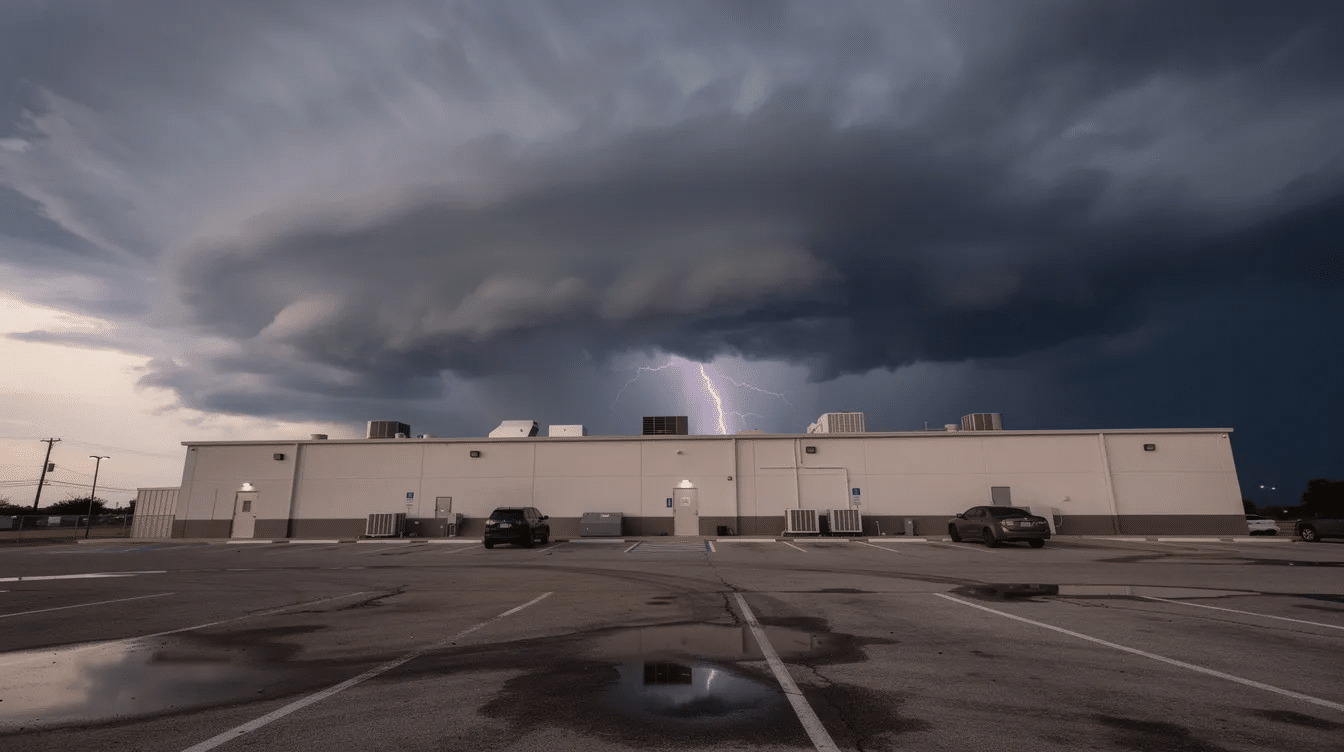
Wind-driven rain exploits weaknesses at terminations, roof penetrations, and parapets. Even in relatively mild years, cumulative uv degradation, thermal shock, and debris accumulation justify sticking to a routine inspection schedule rather than waiting for visible roof leaks.
What a Professional Commercial Roof Inspection Covers
A thorough inspection from Ja-Mar Roofing & Sheet Metal covers far more than a quick glance. For commercial roofs in Austin, TX and greater central texas, each professional inspection follows a structured process:
- Surface and membrane condition: Inspectors evaluate the membrane for tears and blisters, as well as cracks, punctures, shrinkage, and granule loss flashing deterioration.
- Seams and laps: Inspectors must evaluate seams and membrane integrity during inspections, checking for fish-mouths, adhesive failures, and heat-weld problems.
- Flashings and edge metal: Flashing around roof penetrations is inspected for damage, including wall flashings, parapet caps, and metal coping. Loose flashing and corroded fasteners are flagged.
- Drainage: Drainage systems are checked for clogs and proper slope, covering roof drains, scuppers, gutters, and downspouts. Proper drainage is confirmed, and evidence of standing water is documented.
- Penetrations and equipment: Since 90% of commercial leaks occur at roof penetrations, inspectors give close attention to HVAC curbs, vent pipes, conduits, and skylights.
- Interior correlation: Inspectors look for signs of mold or water stains indoors-ceiling tiles, walls, and mechanical rooms are reviewed where accessible.
- Documentation: Every professional roof inspection produces a detailed report with dated photos, a map of problem areas, and prioritized recommendations. Inspection reports establish the baseline condition of the roof for insurance claims.
Core samples may be taken to assess insulation condition on older or suspect roofs. Non-destructive moisture scans should be considered for older roofs to reveal hidden damage beneath the surface. Inspectors also assess compliance with energy codes regarding thermal performance, and inspections should include assessments after severe weather events.
Ponding Water, Drainage, and Flat Roof Risks in Austin
Ponding water-standing water present 48 hours or more after rainfall-is one of the most damaging conditions for commercial flat roofs. Low-slope roofs must be checked for standing water and drainage issues at every inspection.
Heavy downpours can clog drainage systems leading to ponding water, especially when Austin’s oak pollen, leaves, and general debris accumulation block internal drains and scuppers. Structural settling or poor original slope design makes the problem worse. Repeated ponding accelerates membrane deterioration, causes blistering and seam separation, and can saturate underlying insulation.
When moisture penetrates the insulation and roof deck, isolated roof repairs are no longer sufficient, and the building faces a full replacement. This is why proper ventilation and proper drainage verification during inspections matter so much.
Austin facility managers should schedule inspections before the spring rain cycle and again in fall to clear drainage systems and catch ponding areas early. Documenting low spots and checking for vegetative growth or staining rings helps Ja-Mar track the roof’s condition over time.
Financial Benefits of Regular Commercial Roof Inspections
Regular inspections are far less expensive than the alternatives. A $200 repair now can prevent a $5,000 emergency later-and that’s a conservative example. Emergency leak events that damage interior finishes, inventory, and mechanical systems regularly exceed $30,000 in Austin.
Regular maintenance can add 5–10 years to your roof’s lifespan, and proactive maintenance can save thousands in capital expenditures over the life of a building. Well-maintained white membranes and properly sealed roofs reduce heat gain, helping control energy bills during Austin’s brutal summers when asphalt shingles and dark surfaces drive cooling costs skyward.
Documented commercial roof inspections support insurance claims after hail damage or wind events. Adjusters want evidence needed to confirm that damage is storm-related, not due to neglect. Without clear documentation, claims get denied. Documented maintenance also increases the resale value of commercial properties. Spring inspections catch early UV damage before it worsens, keeping affordable repairs on the table instead of forcing expensive repairs down the road.
Ja-Mar Roofing & Sheet Metal provides formal inspection reports and photo documentation that satisfy manufacturer warranty requirements and strengthen your position with insurers.
Owner & Maintenance Staff: What You Can Safely Check Between Professional Inspections
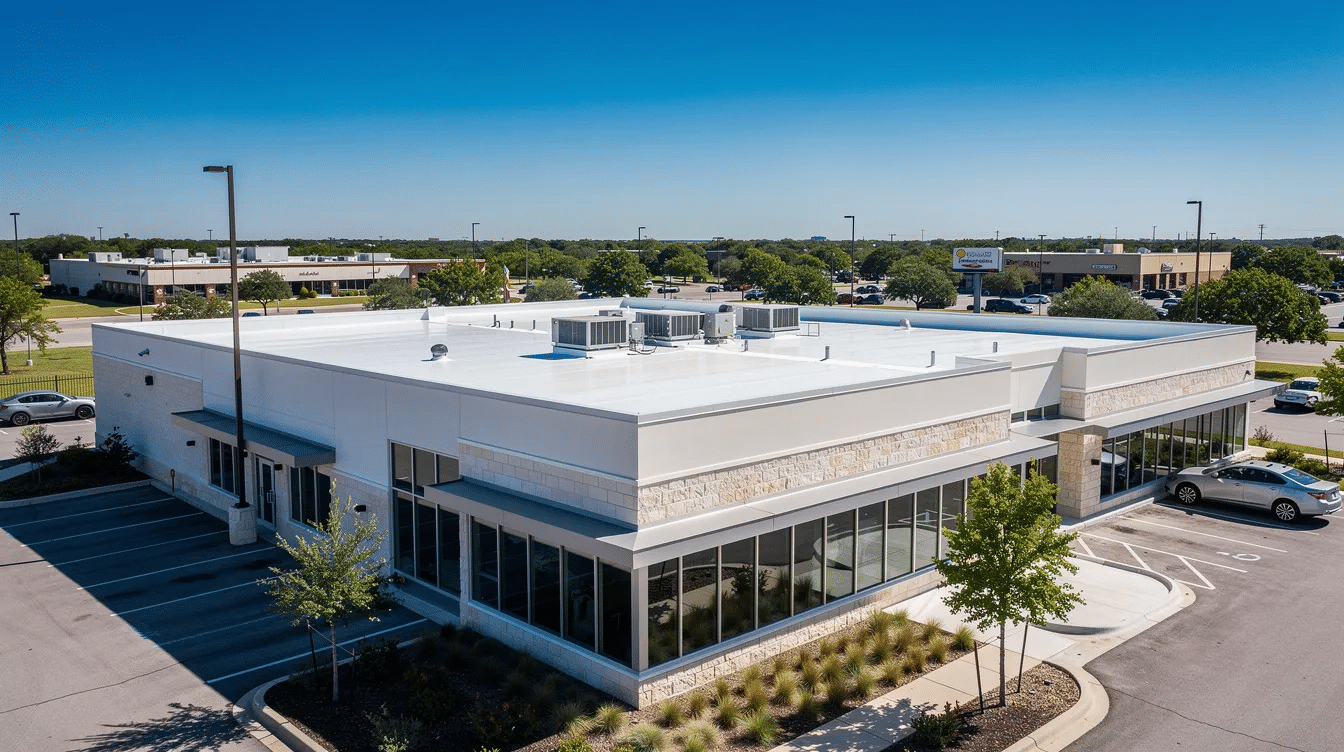
While Ja-Mar should handle formal commercial roof inspections, building owners and facility staff can perform simple visual checks between scheduled visits. Austin homeowners and commercial operators alike benefit from this proactive approach.
Monthly checklist for staff:
- Confirm drains and scuppers are not visibly clogged
- Look for large debris (branches, trash, loose shingles or panels)
- Check for obvious membrane damage or open seams from a safe vantage point
- Note any water stains on interior ceilings or walls
Safety matters. Untrained staff should not walk near roof edges, disturb ballast, or attempt repairs on membranes, flashing, or penetrations-doing so can cause additional damage or void warranties. Staff should document what they see with dated photos and brief notes, then send findings to Ja-Mar Roofing & Sheet Metal if anything looks suspicious, such as recurring ponding water or new ceiling stains.
These walk-throughs are not a substitute for a professional inspection, but they help catch problems early and inform when to call for an immediate expert assessment.
How Ja-Mar Roofing & Sheet Metal Handles Commercial Roof Inspections in Austin
Ja-Mar Roofing & Sheet Metal is a central texas commercial roofing specialist serving Austin and surrounding communities like Round Rock with decades of hands-on experience in local conditions.
The typical inspection process includes:
- Scheduling around your building’s operational needs
- On-site walk-through covering every section of the roof
- Photo documentation and infrared moisture scans where appropriate
- Detailed report with prioritized repair or maintenance recommendations
Ja-Mar builds inspection schedules around each building’s use (office, retail, industrial, multifamily), roofing system type, age, and any prior leak history. This determines whether semiannual, annual inspections, or quarterly visits are the right fit.
Inspections integrate seamlessly into a preventative maintenance program that includes minor repairs, debris removal, sealant touch-ups, and preparation for Austin’s spring hail season. Documented inspections help maintain roofing warranties and keep your property protected year-round.
Ready to protect your investment? Contact Ja-Mar Roofing & Sheet Metal to set up a commercial roof inspection plan tailored to your Austin or central texas property.
When Inspection Findings Mean Repair vs. Full Replacement
The goal of regular inspections is to keep your roof in the “repairable and efficient” category for as long as possible. Regular maintenance helps extend the lifespan of commercial roofing systems and delays the capital expense of replacement.
Repair is typically recommended when:
- Isolated punctures or minor seam separation exist
- Small flashing cracks or limited ponding areas are found
- Insulation remains dry and structurally sound
- Minor problems haven’t spread across the roof
Full replacement may be necessary when:
- Recurring roof leaks appear in multiple areas
- Large sections of insulation are saturated (confirmed by core samples)
- Widespread membrane shrinkage or structural damage is present
- Chronic ponding water cannot be corrected with simple drainage fixes
Ja-Mar Roofing & Sheet Metal uses inspection data, core samples when needed, and life-cycle cost analysis to advise owners whether continued repairs or a planned full replacement makes more financial sense. Sticking to a regular maintenance schedule maximizes the time your roof stays in good shape and keeps costly repairs at bay. A recent storm or a stretch of severe weather can accelerate the timeline, which is why consistent monitoring matters.
Frequently Asked Questions About Commercial Roof Inspections in Austin
Below are answers to common questions we hear from Austin and central texas property owners. For property-specific guidance, contact Ja-Mar Roofing & Sheet Metal directly.
How often should a new commercial roof in Austin, TX be inspected?
Even newer roofs should have at least annual inspections, ideally timed for spring or fall, to establish a performance baseline. Some manufacturers require an inspection within the first year or two to keep long-term warranties valid. Ja-Mar can coordinate inspections that satisfy those requirements from day one.
Can regular inspections really lower my building’s energy bills?
Yes. Well-maintained reflective membranes, properly sealed penetrations, and intact coatings reduce heat gain, lowering cooling costs during Austin’s hottest months. Inspections often identify opportunities like re-coating weathered areas or repairing loose seams that restore reflectivity and improve HVAC efficiency.
Do I need an inspection before renewing my commercial property insurance?
While not always required, having a recent, documented commercial roof inspection strengthens your position with insurers and may be requested during underwriting or policy renewal. Ja-Mar provides detailed reports with photos and condition summaries that support insurance discussions and future insurance claims.
How long does a typical commercial roof inspection take in Austin?
Smaller buildings under roughly 15,000–20,000 square feet often take 1–3 hours. Larger retail centers or industrial facilities may require half a day or more. Additional time is needed when moisture scans, core samples, or interior assessments are included as part of a thorough inspection to identify hidden damage.
Can inspections be scheduled outside normal business hours?
Ja-Mar Roofing & Sheet Metal can often accommodate early-morning, evening, or weekend inspections to avoid interrupting tenants and operations. This is especially helpful for busy retail or healthcare facilities. Reach out in advance so the inspection plan aligns smoothly with your business schedule.

