

The “25% rule” gets repeated a lot in roofing conversations across Texas, but there’s a problem with how it’s used: homeowners, property owners, contractors, and insurance adjusters don’t always mean the same thing when they say it. This article explains what the 25% rule for roofs in Texas actually refers to, why the rule keeps showing up in search results, and when roof replacement, partial roof repair, or full roof replacement may really be required.
Key Takeaways
- Texas does not have one statewide law saying that damage to 25% of a roof automatically requires roof replacement, full slope replacement, or replacement of the entire roof.
- The 25% rule is often described online as an International Residential Code requirement, but the commonly cited 2018 IRC Section R908.3.1 does not contain a universal 25% or 12-month roof replacement rule.
- Percentage-based roofing requirements do exist in some building codes and jurisdictions. Florida is an important example, but Florida’s rules do not automatically apply to Texas roofs.
- Florida Senate Bill 4-D changed how the state’s 25% rule applies to certain roofing systems or roof sections that already complied with the 2007 Florida Building Code or a later edition.
- Austin currently has a specific 50% roof replacement provision for properties within its Wildland-Urban Interface Code Area. Older Austin WUI guidance referenced a 25% threshold, which is one reason outdated information can still appear online.
- Insurance claims and building codes are separate issues. Crossing a code threshold is not a guarantee that an insurance company will pay for full roof replacement.
- A partial repair may still make sense when the damaged area is limited, matching materials are available, the surrounding roof remains repairable, and the work meets current building codes and code requirements.
What People Mean by the “25% Rule” for Roofs in Texas
When homeowners or property owners hear “25% rule,” they’re usually hearing several different ideas blended together. A roofing contractor may be talking about a percentage-based reroofing requirement, while an insurance adjuster may be discussing how much storm damage appears on one slope or across several roof slopes. Someone else may simply be using the 25 rule as a practical guideline when comparing a partial repair with roof replacement.
Then there’s the version that gets repeated in sales pitches and online discussions: “If more than a quarter of the roof is damaged, the whole roof has to be replaced.”
That is not a guarantee, and it is not a statewide Texas rule.
The phrase may refer to:
- A building-code requirement adopted by a specific jurisdiction
- A local ordinance or amendment setting a percentage threshold for certain repairs or replacement work
- An insurance discussion involving the amount and location of documented damage
- A contractor rule of thumb used when comparing partial roof repair with full roof replacement
Those aren’t interchangeable. A building code can affect what work is legally required. An insurance policy controls what an insurance company agrees to cover. A roofer determines whether a specific roof can physically be repaired and what scope of work is appropriate.
Does the 25% Rule Actually Come From the IRC?
This is one of the biggest sources of confusion. The 25 rule is frequently attributed to older versions of the International Residential Code, particularly Section R908.3.1 of the 2018 IRC, but the commonly cited section does not contain the 25% and 12-month language that many roofing articles say it does.
Section R908.3.1 deals with conditions affecting whether a roof recover can be installed over an existing roof covering. A roof recover is different from a partial repair, a tear off, slope replacement, or full roof replacement.
That doesn’t mean percentage-based roofing rules are imaginary. They exist. The problem comes from assuming one particular rule applies everywhere simply because similar wording has appeared in other building codes.
For a Texas homeowner, the better question is:
Which current building codes and local amendments actually apply to this specific roof?Why Does Florida Keep Appearing in Searches About the 25% Rule?
Florida is one of the clearest examples of an actual percentage-based roof rule, which helps explain why Google’s AI results and roofing articles frequently connect the number 25% with roof replacement.
Florida code historically included a provision stating that more than 25% of the total roof area or a roof section could not be repaired, replaced, or recovered during a 12-month period unless the existing roofing system or roof section was replaced to meet the applicable code. That’s a real 25% rule, but it is a Florida rule.
It should not be copied into a Texas roofing article and presented as though Texas adopted the same requirement.
What Did Florida Senate Bill 4-D Change?
Another statement now appearing in Google AI results involves Florida Senate Bill 4-D. That statement has a real basis, but the Florida context matters.
Under the change enacted through SB 4-D, if an existing roofing system or roof section was built, repaired, or replaced in compliance with the requirements of the 2007 Florida Building Code or a later edition, repairing, replacing, or recovering 25% or more does not automatically require replacement of the entire existing roofing system or roof section. Only the portion undergoing the work is required to comply with the Florida Building Code currently in effect.
In practical terms, Florida created an exception for certain roofs that were already built to newer Florida code standards. That’s why search results may describe “newer roofs” differently from older roofing systems when discussing the 25% rule.
There are two important limits to that information:
- It concerns Florida law and the Florida Building Code.
- It does not create a Texas roof replacement requirement or exception.
A Texas homeowner seeing that answer in Google should not assume a roof permitted after 2007, 2009, or any other date receives the same treatment here.
Does Texas Have a Statewide 25% Roofing Rule?
No. Texas does not have one statewide roofing law saying that 25% damage triggers replacement of the entire roof. There also isn’t a statewide Texas rule saying more than a quarter of damage to one slope automatically requires replacement of the entire slope.
Roofing requirements can come from several places:
- State laws and agency regulations
- Locally adopted building codes
- Local code amendments
- Permit requirements
- Manufacturer installation requirements
- Insurance policy provisions when an insurance claim is involved
Texas municipalities can adopt different editions of model building codes and modify those codes through local amendments. As a result, the current code for one Texas property may differ from the current code for another.
That’s why homeowners should be cautious about statements such as “Texas follows the 25% rule” or “all Texas cities calculate the threshold by slope.” Neither statement should be assumed without checking the jurisdiction.
Why Search Results Can Make the Texas 25% Rule Look More Clear-Cut Than It Is
Search engines have a difficult job with this topic because several similar questions get mixed together. A search for “25% roofing rule Texas” can surface information about:
- Florida’s 25% rule
- Older Florida requirements
- Florida Senate Bill 4-D
- Older local Texas code guidance
- Insurance claims
- Contractor repair-versus-replacement recommendations
Those sources can all contain the number 25%, but they aren’t necessarily talking about the same rule. Florida’s SB 4-D exception, for example, says something very specific about roofing systems or roof sections that already met the 2007 Florida Building Code or a later edition.
That statement is accurate in its Florida context. The problem starts when the same answer is shown to someone asking about a roof in Texas and the location distinction gets lost.
How Austin Handles Roof Repair and Roof Replacement
Austin makes the issue a little more interesting because the local rules have changed over time. Current City of Austin guidance says the city uses the 2024 International Residential Code along with local amendments, and Austin does not currently publish a general citywide rule saying 25% roof damage requires full replacement.
The city does, however, have a specific requirement within its Wildland-Urban Interface Code. For properties subject to that code, replacement of 50% or more of the roofing requires full replacement.
That 50% threshold is specific to the WUI requirement. It does not mean:
- Every Austin roof follows a 50% rule
- Every Texas roof follows a 50% rule
- Damage to half of one slope automatically means full slope replacement
- An insurance company automatically owes full roof replacement at 50%
Did Austin Ever Use a 25% Roofing Threshold?
Yes, and this matters because older Austin information can still show up in search results. Earlier City of Austin Wildland-Urban Interface guidance stated that roof repair involving replacement of 25% or more of the roof, or a total roof replacement, had to use a Class A-rated roofing material and meet the applicable WUI installation requirements.
Current Austin WUI guidance now states that replacement of 50% or more requires full replacement. That change is a good example of why an older article can sound authoritative and still be wrong for a roof being repaired today.
Building codes and local amendments change over time, so a percentage that appeared in an older city document should not automatically be applied under current building codes. For code compliance, the version in force when the work is performed is what matters.
What About Austin’s Permit Process?
Austin’s permit process has its own set of rules. Current city guidance generally exempts replacement of an existing roof covering from a building permit when the work does not adversely affect the structure, with a specific exception for certain work in the Wildland-Urban Interface area.
Roof decking is addressed separately. Austin’s current code materials identify roof decking work that does not exceed 128 square feet as permit-exempt, while larger roof decking work may require permitting through the appropriate city process.
That square-foot limit is unrelated to the 25 rule. Roof covering, roof decking, structural repairs, and WUI roof replacement requirements are separate code issues.
Roof Slope, Roof Plane, Roof Section, and Total Roof Area
A lot of misinformation around the 25% rule comes from treating these terms as though they all mean the same thing. They don’t necessarily.
A roof slope or roof plane is generally one continuous roofing surface. A simple gable house may have two major roof slopes, while a complicated home can have many slopes, hips, valleys, dormers, and smaller roof areas.
Roofers commonly document storm damage by slope because it helps show where hail or wind damage occurred. One slope might have substantial hailstorm damage while another has very little, but that does not mean the percentage threshold in every building code is calculated separately for each slope.
A code may refer to:
- One slope
- A single roof slope
- A roof section
- Total roof area
- An entire roofing system
- Another specifically defined roofing area
The actual definition in the applicable code controls. A “roof section” should not automatically be interpreted as one slope. Likewise, a damaged slope does not automatically require entire slope replacement, and damage across several slopes does not automatically require replacement of the whole roof.
What Happens If Only One Slope Is Damaged?
Storm damage rarely distributes itself neatly. Wind damage might affect one slope more than another, while hail can hit a north-facing or west-facing roof plane harder because of the direction of the storm. A falling limb can damage one specific roof section and leave the rest of the roof untouched.
That’s why a contractor may document:
- Damage on one slope
- A single roof slope with concentrated impacts
- Several damaged slopes
- A damaged area near a valley or penetration
- An entire slope with severe aging or widespread damage
That documentation matters, but damage to more than a quarter of one slope is not, by itself, proof that Texas code requires full slope replacement.
A local code could contain a specific requirement that changes the repair scope. If it does, that actual code language should be used. Otherwise, the contractor still needs to decide whether a partial repair can be completed successfully.
What Is Full Slope Replacement?
Full slope replacement means removing and replacing the roof covering across an entire roof slope or plane rather than repairing only the damaged area. There are legitimate situations where full slope replacement can make sense.
Damage may be spread throughout the slope, old shingles may be too brittle for a partial repair, or the matching materials may no longer be available. A specific building code could also require a larger scope of work under particular circumstances.
But full slope replacement is not automatically required simply because someone measures 25% damage. Slope replacement and full roof replacement are also not the same thing. Replacing one entire slope does not automatically require replacing the entire roof.
Can a Partial Roof Repair Still Be Done?
Yes. A partial roof repair can be a good option when the damaged area is limited, the existing roofing is still serviceable, matching materials are available, and the repair can meet current building codes.
A partial repair might include:
- Replacing several wind-damaged shingles
- Repairing flashing at a wall or chimney
- Replacing a failed pipe boot
- Repairing a small damaged roof section
- Correcting a localized leak
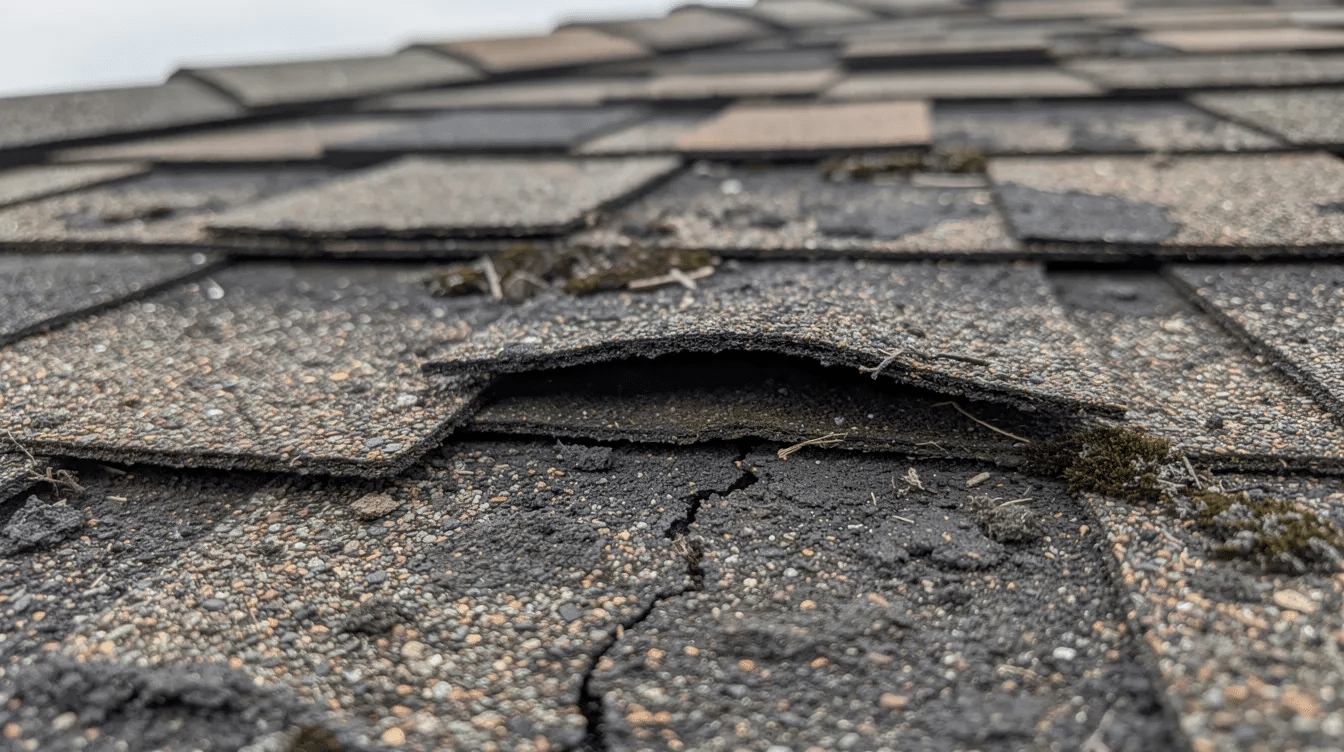
The condition of the surrounding roof matters just as much as the size of the repair. Old shingles exposed to years of Central Texas heat can become brittle, and replacing one damaged shingle usually requires the contractor to lift the shingles around it. If those old shingles crack or tear during the repair, the damaged area can grow.
That doesn’t mean a 25 rule caused the roof replacement. It means the physical condition of the roofing system made a partial repair less practical.
What About Roofs With Two Layers?
Two layers of roofing can complicate repair and replacement decisions. A roof recover places a new roof covering over an existing covering rather than completing a full tear off, and current building codes place limits on when a roof recover is allowed.
If the existing roofing system already has two layers, has moisture problems, or does not provide a suitable base, a new recover may not be permitted. In that situation, a tear off may be required even though the reason has nothing to do with a 25% threshold.
This is another example of why roof replacement decisions shouldn’t be reduced to one percentage.
Repairability Is Not the Same as a Code Trigger
A roof can be a poor candidate for repair even when no percentage-based rule applies. Consider an older roof with:
- Brittle shingles
- Heavy granule loss
- Multiple repairs
- Damaged flashing
- Deteriorated decking
- A discontinued shingle line
- Damage spread across several roof slopes
A contractor may recommend full roof replacement because another partial repair is unlikely to provide a reliable result. That recommendation is not the same as saying code requires a full roof.
The opposite can happen too. A specific roof may look repairable until the damaged area is opened and deteriorated decking or another hidden problem is discovered.
- Can this roof physically be repaired?
- Does the current code allow the proposed repair?
- Would a partial roof repair or roof replacement make more sense?
- If an insurance claim is involved, what does the insurance company actually cover?
How Code Compliance Can Affect Roof Replacement
Code compliance becomes more noticeable as the scope of roofing work grows. A full roof replacement generally requires the newly installed roofing system to comply with the current code requirements applicable to the project.
Depending on the roof and jurisdiction, code upgrades may involve:
- Roof covering installation
- Underlayment
- Drip edge
- Flashing
- Fastener patterns
- Roof decking
- Ventilation
- Ice and water shield where required
These current standards can change how a roof replacement is installed compared with the old roofing system, but code upgrades should not be confused with a rule saying damage triggers full replacement.
The damaged area may begin the repair conversation. The current building codes determine what construction standards apply to the work that follows.
Does Crossing 25% Automatically Create an Insurance Claim Payout?
No. This is one of the more important misconceptions to clear up because variations of it now appear in search results.
A statement such as “older roofs that cross the 25% threshold usually receive a full roof replacement from insurance because code requires it” combines two separate issues. First, the applicable building code has to actually require the additional work. Second, the insurance policy has to provide coverage for that work.
One does not automatically establish the other. Even if a local building official requires a larger replacement scope for code compliance, the insurance company still evaluates the insurance claim under the terms of the policy.
There is no automatic rule saying an insurance adjuster must approve full roof replacement whenever 25% damage is documented.
What the 25% Rule Has to Do With Insurance Claims
Insurance claims can overlap with building-code requirements, but they remain separate systems. A building official determines code compliance, a roofing contractor evaluates damage and recommends repairs or replacement, and an insurance adjuster evaluates the claim on behalf of the insurance company.
Insurance does not automatically cover full roof replacement based on the 25% rule. Homeowners should review their insurance policy in the context of the 25% rule rather than treating the percentage as a coverage guarantee.
An insurance claim can depend on:
- The cause of loss
- The terms of the insurance policy
- The roof age
- The condition of the roofing system
- The deductible
- Actual cash value or replacement-cost coverage
- Depreciation
- Cosmetic-damage exclusions
- Ordinance or law coverage
- The insurance company’s evaluation of the claim
The Texas Department of Insurance specifically advises homeowners that an insurance company may not pay to replace the entire roof when only part is damaged. That can be true even if the replacement shingles do not perfectly match the existing shingles.
For that reason, property owners should be cautious about any contractor or other party who presents the 25 rule as a guaranteed insurance outcome.
What Is Actual Cash Value?
Actual cash value often becomes part of the discussion during roof claims involving older roofs. An actual cash value policy accounts for depreciation, so the age and condition of the roof can affect what the insurance company initially pays on a covered claim.
Replacement-cost coverage works differently, although depreciation may still be withheld until the roof replacement is completed and documentation is submitted. The exact process depends on the policy, and roof age can also affect underwriting and coverage options.
That’s another reason an insurance adjuster, contractor, or homeowner cannot use one percentage to predict the outcome of every roof claim.
Can Code Upgrades Be Included in Insurance Claims?
They can be in some situations. If storm damage creates a covered claim and current building codes require additional work, some insurance policies provide ordinance or law coverage for qualifying code upgrades.
The presence of a code requirement is still not a guarantee that those costs will be paid.
Insurance carriers may evaluate:
- The covered cause of loss
- The policy language
- The ordinance or law coverage available
- The specific code requirements
- The damaged area
- The proposed repair or replacement scope
Good documentation helps explain why certain line items are included in the contractor’s estimate. It does not create coverage by itself.
What About Multiple Repairs or Multiple Roof Claims?
Multiple repairs are another reason the 25 rule gets mentioned. Some percentage-based roofing provisions have historically measured cumulative work over a 12-month period, which is where statements about several repairs “adding up” to more than 25% often come from.
Homeowners shouldn’t assume a 12-month cumulative rule exists everywhere in Texas, though. Whether multiple repairs are counted together depends on the actual local code.
The same caution applies to roof claims. Multiple roof claims do not automatically require full replacement of the roof, and filing repeated small insurance claims simply to reach a percentage threshold is not how code or insurance coverage should be approached.
If an older roof has needed multiple repairs in a relatively short period, that may instead be a sign that the roofing system deserves a broader evaluation.
Matching Materials and a Discontinued Shingle Line
Matching materials can make a partial repair more complicated, especially on older roofs. The original shingle line may no longer be manufactured, and even if a similar product is still available, years of sun exposure can make new shingles look noticeably different beside the old shingles.
A roofing contractor may:
- Search for the closest available matching materials
- Document that the original shingle line has been discontinued
- Photograph the existing roof condition
- Determine whether surrounding shingles can tolerate a partial repair
- Provide repair and replacement line items
Matching problems do not automatically mean the whole roof has to be replaced. They also do not automatically require an insurance carrier to approve full roof replacement.
Texas Department of Insurance guidance specifically warns that an insurance company may not replace the entire roof simply because the new shingles do not perfectly match.
What About Hailstorm Damage and Wind Damage?
Hailstorm damage and wind damage are two of the most common reasons Central Texas homeowners end up hearing about the 25 rule. Hail can affect one slope more heavily than another, while wind damage can affect a specific roof section, ridge, eave, or single roof slope and leave other parts of the roofing system untouched.
A contractor should document the pattern. That may include:
- The number and location of damaged areas
- Which roof slopes show storm damage
- Whether one slope has substantially more damage than another
- The condition of the surrounding shingles
- Whether a partial repair is feasible
Storm damage does not automatically require full roof replacement, and it does not automatically require full slope replacement either. The local code determines code requirements, while the insurance company separately evaluates any insurance claim.
Does More Than a Quarter of Damage Ever Matter?
Yes, where the applicable rule says it matters. The key phrase is applicable rule.
Some roofing provisions use more than a quarter of a roof area or roof section as a threshold. Florida provides a clear example, but that does not mean all Texas roofs use the same calculation.
If a percentage-based rule exists, property owners and contractors need to know:
- What percentage applies
- What portion of the roof is being measured
- Whether the measurement is based on one slope, a roof section, or total roof area
- Whether multiple repairs are counted together
- Whether a 12-month or another time period applies
- What work is required after the threshold is reached
Without those details, saying “the 25 rule applies” doesn’t answer much.
How a Central Texas Roofer Evaluates a Specific Roof
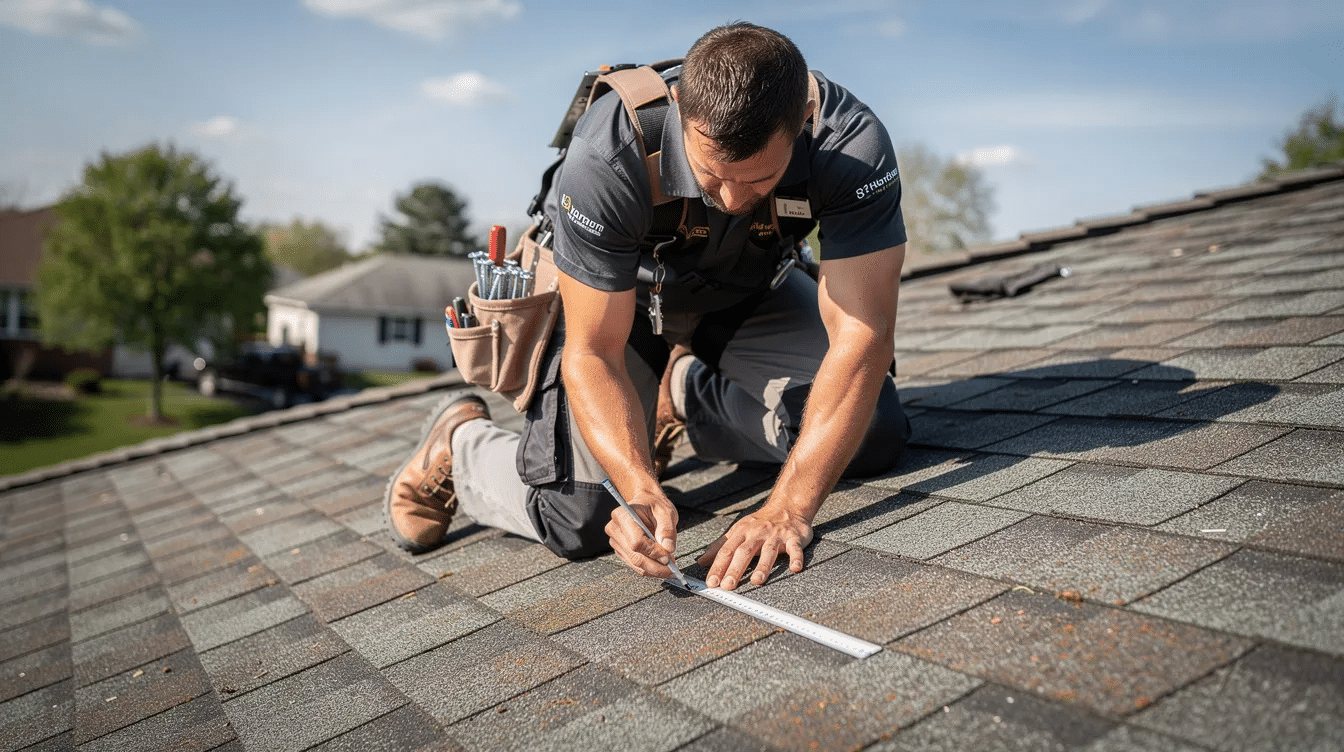
A useful inspection doesn’t start by trying to make the roof fit a percentage. It starts with the roof itself. The contractor looks at each accessible roof slope and roof section to determine where the damage begins, where it ends, and whether the surrounding roofing can remain in place.
That inspection may include:
- Shingles or other roof covering
- Roof slopes and planes
- Flashing
- Valleys
- Ridges
- Pipe boots
- Other penetrations
- Fasteners
- Visible decking conditions
- Previous repairs
- Storm damage
- Signs of normal roof age and wear
Measurements and photographs can then show the damaged area and the condition of the rest of the roofing system.
- Can a partial roof repair work?
- Is the damage isolated to one slope or spread across several roof slopes?
- Are the old shingles too brittle to repair without causing more damage?
- Are matching materials still available?
- Do current building codes change the required scope of work?
- Would full slope replacement make more sense than another repair?
- Is roof replacement a better long-term option?
- If an insurance claim is involved, is there clear documentation supporting the actual storm damage?
Ja-Mar Roofing & Sheet Metal has served Central Texas for decades and works with roofing systems exposed to the region’s heat, hail, wind, and severe thunderstorms. Ja-Mar can inspect and document the roof, explain repair and roof replacement options, and identify code requirements that may affect the work.
The local building authority has the final say on code compliance, while the insurance company determines coverage under the policy.
What Should Homeowners Ask If Someone Says the 25% Rule Applies?
If someone tells you the 25% rule requires a certain repair, full slope replacement, or full roof replacement, you don’t have to take the statement at face value. Ask for the actual rule.
- Which current code or insurance policy provision are we talking about?
- What code edition and section contains the 25% requirement?
- Is this a Texas requirement, a local city requirement, or a rule from another state?
- Does the rule apply to one slope, a roof section, or the total roof area?
- How does the code define the area being measured?
- Does the rule require full slope replacement, full roof replacement, or only code compliance for the repaired area?
- If insurance is involved, where does the policy say this work is covered?
- If Florida Senate Bill 4-D is being cited, how does a Florida law apply to this Texas property?
Those aren’t confrontational questions. They simply separate an actual code requirement from something that may have been repeated so often that it now sounds official.
What to Do If You’re Not Sure Whether the Rule Applies
Homeowners don’t need to become building-code experts. Start with a documented roof inspection.
That can establish:
- The location of the damaged area
- The roof age and overall condition
- Whether one slope or several roof slopes are affected
- Whether matching materials are available
- Whether the existing roof can support a partial repair
Then:
- Confirm which current building codes and local amendments apply to the property.
- Check whether a percentage-based roofing rule actually exists.
- Determine how that rule defines the affected roof section, roof slope, or total roof area.
- Compare partial roof repair, slope replacement, and full roof replacement based on the actual condition of the roof.
- Review the insurance policy separately if an insurance claim is involved.
For Austin and surrounding Central Texas property owners, Ja-Mar can document the specific roof, explain partial roof repair and roof replacement options, and identify code requirements that may affect the proposed work. That gives you a much stronger answer than relying on “25%” without knowing where the number came from.
Frequently Asked Questions About the 25% Rule for Roofs in Texas
What is the 25% rule for roofs in Texas?
Texas does not have one statewide 25% rule requiring full roof replacement whenever more than a quarter of a roof is damaged. The phrase generally refers to percentage-based reroofing provisions used in some building codes or jurisdictions. The current code and local amendments where the property is located determine whether such a rule exists.
Does Texas have a statewide 25% roof replacement rule?
No. There is no universal Texas rule stating that 25% roof damage automatically requires replacement of the entire roof or entire roofing system.
Did Texas adopt the 25% rule from the 2018 IRC?
Not in the way the claim is commonly presented online. The frequently cited 2018 IRC Section R908.3.1 concerns roof recover conditions and does not contain the universal 25% and 12-month roof replacement language often attributed to it.
Is Google’s statement about Florida Senate Bill 4-D accurate?
In the Florida context, yes. Florida law provides an exception for an existing roofing system or roof section that was built, repaired, or replaced in compliance with the 2007 Florida Building Code or a later edition. If 25% or more is then repaired, replaced, or recovered, only the portion being worked on must meet the current Florida code. That Florida exception does not apply to Texas roofs.
Do newer Texas roofs get the same 25% exception as newer Florida roofs?
No automatic Texas equivalent should be assumed. Florida Senate Bill 4-D deals specifically with the Florida Building Code. Texas homeowners need to check the current building codes and local amendments governing their own property.
Did Austin ever have a 25% roof rule?
Older Austin Wildland-Urban Interface guidance did reference roof repair involving 25% or more of the roof. Current Austin WUI guidance instead states that replacement of 50% or more requires full replacement. This is why current code should be checked rather than relying on older search results.
Does Austin currently have a 25% roofing rule?
Austin’s current WUI guidance uses a 50% threshold in that specific Wildland-Urban Interface context. That should not be interpreted as a general citywide 25% rule or 50% rule for every Austin roof.
Does the 25% threshold apply to one slope?
Not universally. Roofers often document damage by slope, but a building code may refer to a roof section, total roof area, roofing system, or another defined area. The applicable code determines what is measured.
Does more than 25% damage require full slope replacement?
Not as a blanket Texas requirement. Full slope replacement may be appropriate or required under certain circumstances, but more than a quarter of damage by itself does not establish a universal Texas code trigger.
What is the difference between full slope replacement and full roof replacement?
Full slope replacement replaces the roof covering across one entire slope or plane. Full roof replacement replaces the roof covering across the entire roof. Replacing one slope does not automatically require replacement of the whole roof.
Can I still have a partial roof repair?
Yes. Partial roof repair can be appropriate when damage is localized, the surrounding roofing remains serviceable, matching materials are available, and the repair complies with current building codes and manufacturer requirements.
Can multiple repairs trigger a percentage-based rule?
They can where the applicable code contains a cumulative repair provision. Some roofing rules outside Texas have used a 12-month period, but homeowners should not assume that every Texas jurisdiction counts multiple repairs the same way.
Does the 25% rule always use a 12-month period?
No. Some percentage-based provisions have used a 12-month period, but there is no universal Texas 12-month rule that should be applied to every roof.
Does crossing 25% guarantee an insurance payout for full roof replacement?
No. A code requirement and an insurance claim are separate issues. Even when current building codes require additional work, an insurance company evaluates coverage according to the policy, covered cause of loss, roof age, condition, deductible, exclusions, depreciation, and any applicable ordinance or law coverage.
Must an insurance adjuster approve full roof replacement after 25% damage?
No. An insurance adjuster evaluates the claim under the insurance policy. A percentage by itself does not require the insurance company to approve full roof replacement.
Can insurance claims pay for code-required roof replacement?
Insurance claims may include qualifying code-upgrade costs when the policy provides applicable ordinance or law coverage and the underlying damage resulted from a covered loss. Code compliance alone does not guarantee insurance coverage.
What is actual cash value on a roof claim?
Actual cash value generally accounts for depreciation, so roof age and condition can reduce the amount initially paid on a covered claim. Replacement-cost coverage works differently and depends on the specific policy.
Can matching materials affect an insurance claim?
Yes. A discontinued shingle line or inability to find matching materials can complicate a partial repair. That does not automatically require an insurance carrier to pay for replacement of the whole roof.
Does storm damage automatically require roof replacement?
No. Storm damage may affect one slope, several slopes, or a small roof section. The location and severity of damage, roof age, condition, repairability, current code requirements, and insurance policy all matter.
Can wind damage be repaired on one slope?
Sometimes. Localized wind damage on one slope may be repairable if the surrounding shingles remain serviceable and current building codes allow the repair. More widespread damage or brittle old shingles can make slope replacement or full roof replacement more practical.
Does roof age affect whether a partial repair will work?
Yes. Older roofs may have brittle shingles that crack when lifted, making a clean partial repair difficult. Roof age can also affect how an insurance company evaluates roof claims and coverage.
Who decides if code requires full replacement?
The local building department or code official interprets and enforces building codes. A contractor evaluates the specific roof and proposes a repair or replacement scope. An insurance company separately determines what an insurance claim covers.
What should property owners do before relying on the 25% rule?
Verify the current building codes and local amendments for the property, document the roof condition, determine whether a partial repair is physically possible, and review the insurance policy separately if a claim is involved. The actual rule matters more than the percentage repeated online.

