
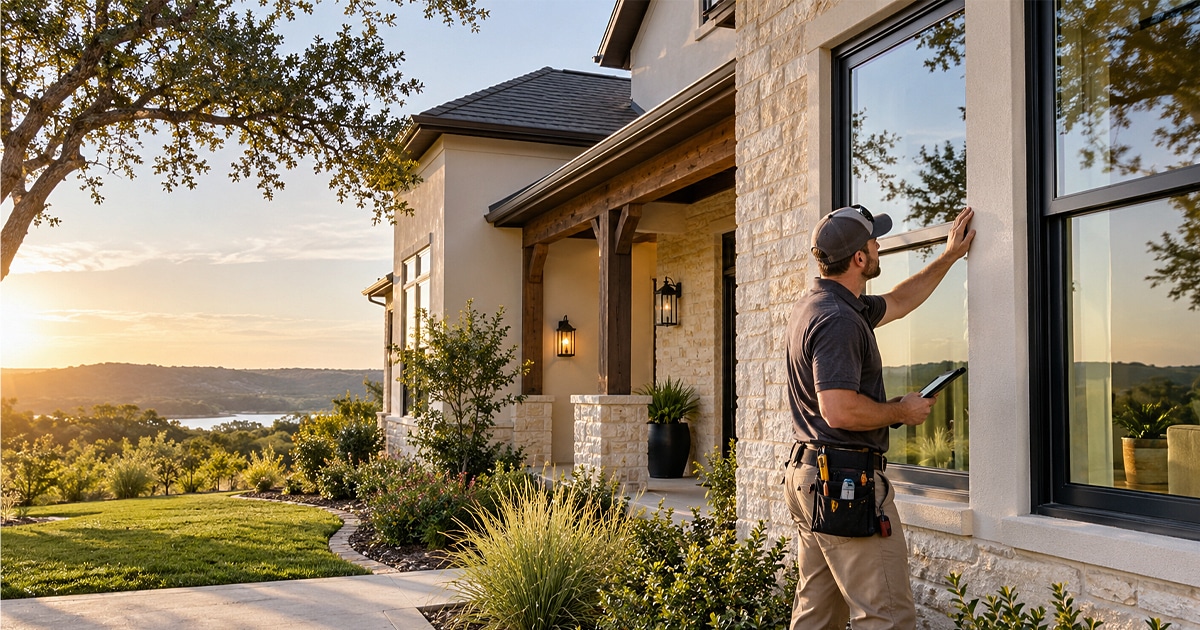
Window replacement isn’t something most homeowners think about until a window starts leaking, fogging between the panes, sticking when it opens, or making a room noticeably harder to keep comfortable. The tricky part is knowing when a simple repair is enough and when replacing the window makes more sense.
Age can be part of that decision, but it shouldn’t be the only factor. The condition of the frame, glass, seals, hardware, and installation all matter, especially in Central Texas where long stretches of heat, strong sun, wind-driven rain, and storms can put added stress on older windows. Knowing what to look for can help you decide when it’s time to repair a problem and when replacement is the better long-term move.
Window Replacement Key Takeaways
- Recurring drafts, leaks, foggy glass panes, damaged frames, poor energy efficiency, and noticeable outside noise are some of the strongest signs your windows need attention.
- Window replacement makes sense when problems are showing up across several existing windows, repairs aren’t holding, or frames and sills are deteriorating—not simply because your windows hit a certain age.
- Rising energy bills, uncomfortable rooms that never seem to cool down, and outdoor noise bleeding through the glass can point to windows that need to be replaced rather than just re-caulked.
- Moisture trapped between glass panes, soft or rotted window frame areas, or water intrusion around a window usually call for a professional inspection and may point toward a replacement window.
- Central Texas sun, heat, and storms are hard on windows, so homeowners in areas like Austin, Buda, and San Antonio should pay closer attention to seal condition, frame integrity, installation quality, and overall performance.
Window Replacement: When Should You Replace Your Windows?
You should consider window replacement when you notice recurring drafts, condensation or foggy glass between panes, windows that won’t open or lock properly, rotting or warped frames, water getting inside around the frame, excessive outdoor noise, or consistently poor energy performance. Age matters—windows can last roughly 15 to 50 years depending on material—but condition, installation quality, climate exposure, maintenance, and frame material are just as important as the number on the calendar.
- Multiple windows showing the same problems, such as fogging, drafts, or sticking, can mean it’s time to replace your windows rather than continuing to patch individual units.
- If repairs keep failing or costs are stacking up across several openings, a planned window replacement project may make more sense than repeatedly repairing the same problems.
- Homes exposed to strong sun, prolonged heat, storms, and other harsh conditions may develop window problems sooner than homes in milder environments.
Drafty Windows and Air Leaks: Is It Time to Replace Your Windows?
Drafty windows and air leaks around the window frame rank among the clearest signs that existing windows are underperforming. If you notice curtains moving on their own near a closed window, or you feel cold air creeping past the frame edges on a January evening, something isn’t sealing the way it should.
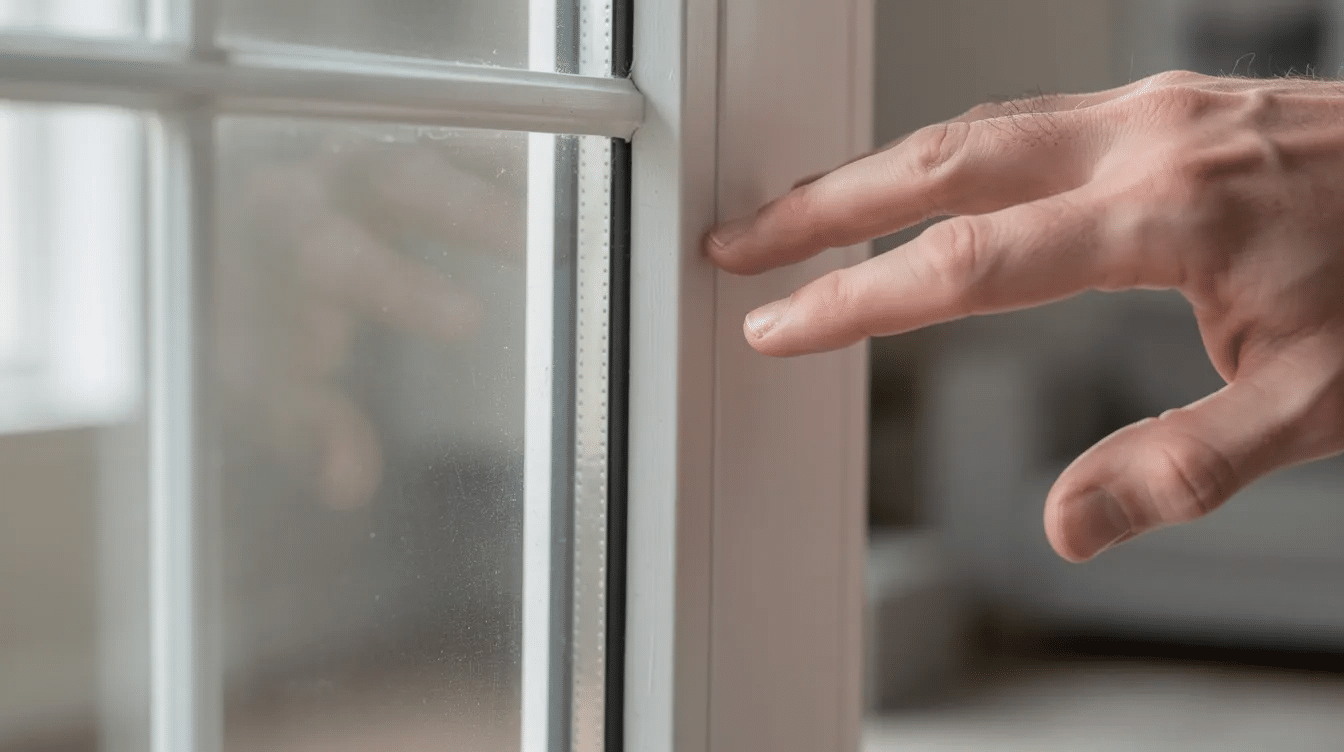
Spotting drafts can be fairly straightforward. On a windy day, slowly move a lightweight tissue or an incense stick near the edges of a closed window and watch for movement that may indicate unwanted airflow. Common causes include worn weatherstripping, gaps between the frame and wall framing, warped sashes, shrinkage in older wood, or poor original installation that left unsealed cavities around the rough opening.
Some of these issues are fixable. Replacing weatherstripping or re-caulking exterior joints on a frame that’s still solid can help. But when you’re chasing drafts in multiple rooms and fixes don’t last, the windows may need to be replaced. Drafty windows and leaky windows can contribute to higher energy bills because unwanted air leakage forces your HVAC system to work harder to maintain comfortable indoor temperatures.
The U.S. Department of Energy estimates that heat gain and heat loss through windows account for about 25% to 30% of residential heating and cooling energy use. That doesn’t mean drafty windows alone increase an energy bill by 25% to 30%, but persistent air leaks are still worth addressing because they can reduce comfort and waste conditioned air.
Rising Energy Bills: Can Window Replacement Improve Energy Efficiency?
If your summer electric bills have been climbing steadily over the past few years and your HVAC system checks out fine, your windows deserve a closer look. Old windows can contribute to higher energy bills and poor energy efficiency, especially when they combine single-pane glass, failed seals, deteriorated weatherstripping, or significant air leaks.
Windows overall account for roughly 25% to 30% of residential heating and cooling energy use through heat gain and heat loss, according to the U.S. Department of Energy. That figure applies to window-related heat transfer overall, not simply to old or drafty windows.
Single-pane windows, clear glass without Low-E coatings, loose sashes, and older aluminum frames without thermal breaks generally allow more heat gain in summer and heat loss in winter than modern energy efficient insulated units. Single-pane windows are less energy efficient than double-pane windows by a wide margin. But windows are only one piece of the puzzle—attic insulation, duct leaks, air sealing elsewhere in the building envelope, and the condition of your heating and cooling systems all play a role.
Signs that windows may be contributing to rising energy bills include rooms near west-facing or south-facing windows that stay noticeably hotter than the rest of the house, drafts you can feel even with the AC running, or interior glass temperatures that make rooms uncomfortable during weather extremes.
Comparing energy bills year over year and noting changes after other home upgrades can help determine whether new windows would deliver meaningful energy savings or whether you need to address other weak spots first. A professional home energy assessment can also help separate window-related problems from issues involving insulation, ductwork, or the HVAC system.
Foggy Glass and Condensation: When Replacement Windows May Be Needed
Modern double-pane windows and triple-pane windows use insulated glass units made with two or three glass panes sealed around the edges with an air- or gas-filled space between them. That perimeter seal helps keep moisture out and, where used, insulating gas inside. When the seal fails, the insulating glass unit can lose some of its intended performance.
There’s an important difference between three types of condensation. Moisture on the exterior glass surface on a cool morning can be normal and harmless. Condensation on the interior surface usually points to indoor humidity or surface-temperature conditions and may be improved through ventilation or humidity control.
But foggy glass trapped between the panes that you can’t wipe away from either side usually indicates seal failure in the insulated glass unit. Windows with broken seals can develop condensation between glass panes that repeatedly returns or never fully clears.
An isolated seal failure on a single, relatively new window doesn’t always mean you need to replace the entire window. If the window frame, sash, and surrounding components remain in good condition, replacing the insulated glass unit may be an option.
But if you’re seeing several replacement windows or older units fogging up across the home, continuing to replace individual glass panes one at a time may become less practical. The condition, age, warranty status, and construction of each damaged window should be considered before deciding between glass repair and full replacement.
Hard-to-Open Windows: Repair or Window Replacement?
Double-hung windows that require both hands and real effort to slide, casements that won’t crank all the way open, or locks that miss the keeper by a quarter inch are more than annoyances. Windows that stick or are hard to open may need repair or replacement depending on the cause.
Problems can come from worn balances and springs in older double-hung windows, warped vinyl or wood frames, house movement that throws an opening out of square, or corroded and broken hardware. In some cases, the same window has simply been painted shut or has debris packed into its track.
There’s also a safety concern when a window that is intended to serve as an emergency escape and rescue opening can’t open properly. This is especially important in sleeping rooms where applicable building codes require qualifying emergency escape openings. Windows that won’t lock properly may also create a security issue.
Replacing hardware on an otherwise sound frame may be adequate. Start with basic maintenance such as cleaning the tracks, checking the lock alignment, and lubricating approved moving components. But when operational problems affect multiple windows, balances repeatedly fail, or warped frames prevent the units from closing correctly, it may be time to replace your windows.
Damaged Window Frames: When to Replace Your Windows
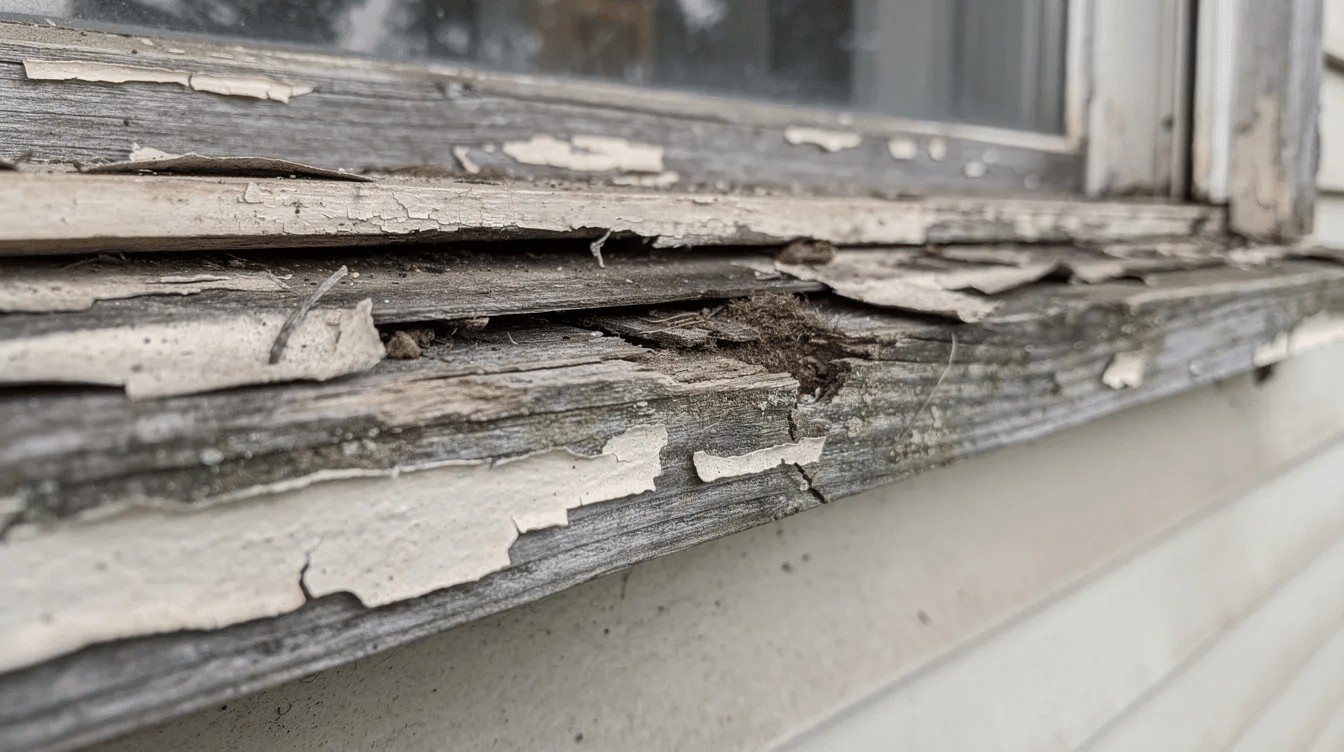
Frame deterioration is hard to miss once it gets going. Soft spots in wood sills that give under light pressure, peeling paint that reveals dark or crumbly material underneath, warped frames pulling away from surrounding finishes, or cracked and damaged window components can all indicate that the structure supporting the glass needs attention.
Years of water exposure, failed exterior caulk, intense sun on south- and west-facing elevations, insect damage, installation problems, and natural aging can all contribute. Deteriorating frames and warped frames generally get worse if the underlying cause isn’t corrected.
A small, localized patch of wood deterioration at a sill corner may sometimes be repairable. But extensive rot around the entire window frame, structural softness, or a frame that’s significantly deformed can make repair impractical.
When the window frame itself is failing, swapping in new glass panes won’t restore the frame’s strength, air seal, or weather resistance. Rotted frames often require window replacement. Homeowners can visually inspect suspect areas and document visible damage, but a contractor should determine how far deterioration extends behind the trim before deciding whether the damaged window can be repaired.
Leaky Windows and Water Intrusion: Repair or Replace?
Stained drywall below a window after a thunderstorm, bubbling paint on the interior sill, or water appearing around the opening after heavy wind-driven rain are signs that something in the window or surrounding wall system is failing. But not every leak means the window itself is the problem.
Failed flashing above or beside the window, cracked siding or trim, roof runoff being directed toward the opening, missing sealant, or problems with the surrounding weather-resistant barrier can allow water to reach the opening from outside. Some window types also include drainage paths or weep systems that need to remain unobstructed.
A targeted repair, such as correcting flashing, replacing failed sealant, or repairing a localized drainage problem, may solve an isolated issue. But chronic water intrusion, hidden rot behind the casing, a damaged window frame, or recurring leaks across several openings may mean the windows need to be replaced.
A qualified exterior contractor should trace the source of water before recommending full replacement. Replacing the window without correcting an exterior flashing or wall problem can allow the same leak to return.
Replacement Windows for Noise Reduction, UV Protection, and Curb Appeal
When outdoor noise from traffic, noisy neighbors, lawn equipment, or nearby construction seems louder than it should be, your windows may be part of the reason. Thin single-pane glass, loose seals, and some older window systems provide limited resistance to sound waves compared with tighter modern assemblies designed with noise reduction in mind.
New windows won’t make a home soundproof. Outside noise can also move through walls, doors, attic assemblies, vents, and other openings. Still, certain glass configurations, laminated glass options, tighter seals, and better installation can noticeably improve noise reduction.
UV exposure through older glass can also contribute to fading of hardwood floors, rugs, furniture, curtains, artwork, and other interior finishes. Low-E coatings available on many replacement windows can reduce a significant amount of UV exposure while also helping control solar heat gain.
Then there’s curb appeal. Cloudy glass, dented frames, peeling paint, damaged screens, and mismatched replacement windows from earlier projects can give a home a tired look. Outdated style choices can distract from a home’s design, while aging single-pane windows may affect both curb appeal and energy efficiency.
Poor curb appeal can influence the way prospective buyers perceive a property. While appearance alone doesn’t mean you need to replace windows immediately, it can make sense to address outdated style at the same time you’re correcting performance problems.
New windows can improve curb appeal and may contribute to property value, but homeowners shouldn’t expect a fixed percentage increase in the home’s total value. Remodeling’s 2025 Cost vs. Value data for Austin estimated that a vinyl window replacement project recouped about 69.6% of its cost at resale. Actual resale value varies with the property, neighborhood, housing market, window type, and quality of installation.
How Long Do Windows Last Before Window Replacement?
There’s no single expiration date stamped on a window. How long windows last depends on the frame material, product quality, maintenance, installation quality, glass system, and the conditions they’ve faced over the years.
Pella’s current homeowner guidance gives broad planning ranges by material:
| Frame Material | Typical Lifespan | What Can Affect It |
|---|---|---|
| Vinyl windows | 20–40 years | Product quality, UV exposure, installation, maintenance, and heat exposure |
| Fiberglass windows | Up to 50 years | Installation quality, maintenance, weather exposure, hardware, and glass performance |
| Wood / wood-clad windows | 30+ years with proper maintenance | Moisture protection, exterior finish, painting or sealing, and maintenance |
| Aluminum windows | 15–30 years | Exposure, corrosion, thermal movement, installation quality, and maintenance |
Those ranges are useful for planning, but they aren’t automatic replacement dates. How long windows remain serviceable varies considerably from one home to another.
Central Texas conditions can put plenty of stress on residential windows. Intense sunlight, prolonged summer heat, UV exposure, thunderstorms, wind-driven rain, and repeated temperature changes can contribute to wear on seals, finishes, hardware, and surrounding materials.
That doesn’t mean windows in Austin automatically need to be replaced after 15 or 20 years. Some aging windows may still operate and perform well, while others develop seal failure, deteriorating frames, air leaks, or poor energy efficiency sooner.
Age plus performance signs—drafts, foggy glass, operation problems, damaged components, and deteriorating frames—tell a more complete story than age alone. That’s the better way to decide when it’s time to replace.
Window Repair vs. Window Replacement: How to Decide
This is one of the most practical decisions a homeowner faces. Spending money on a repair that holds for years is smart. Spending money on costly repairs that fail within a season isn’t. Repeated repair costs approaching the cost of replacement can indicate that it’s time to replace the affected windows.
Problems often repairable:
- Replacing weatherstripping on solid frames
- Swapping broken locks, latches, balances, or tilt mechanisms when compatible parts are available
- Replacing damaged insect screens
- Re-caulking minor exterior gaps where sealant failure is actually the source of the problem
- Replacing a cracked pane or insulated glass unit in an otherwise sound window
Problems that may point toward replacement:
- Widespread frame rot or structural softness
- Multiple failed insulated glass units across aging windows
- Chronic drafts in several rooms despite repeated sealing
- Warped frames that won’t hold proper hardware alignment
- Broad comfort and energy complaints across many windows
- Recurring water intrusion tied to deteriorated window components
| Problem | Repair May Be Enough | Replacement May Make More Sense |
|---|---|---|
| Drafty around one window | Replacing weatherstripping or correcting an isolated air-sealing problem | Drafts occur throughout the home and frames are shifting or deteriorating |
| Single foggy glass unit | Insulated glass unit replacement if the frame and sash remain sound | Several aging units have recurring seal failure |
| Broken lock or latch | Hardware replacement | Locks won’t align because of warped frames or structural movement |
| Minor sill deterioration | Localized repair where appropriate | Extensive rot around the entire window frame or structural damage |
| Hard to open | Clean tracks, service hardware, or replace worn components | Several windows are stuck, warped, or repeatedly failing |
| Rising energy bills | Check insulation, air sealing, ductwork, and HVAC performance first | Old single-pane windows or failed insulated windows are widespread |
| Water leak at one window | Correct an isolated sealant, drainage, siding, or flashing issue | Recurring leaks are tied to damaged frames or several deteriorated openings |
Repair is viable for minor issues like replacing weatherstripping, hardware, or an isolated glass unit. Full replacement becomes more reasonable when multiple performance problems are occurring at the same opening or when the frame itself is damaged.
If several aging windows are failing at once, phased or whole-house replacement may also be more practical than a long series of one-off repairs. Deteriorating frames or significant warping can make window repair impractical.
Benefits of Window Replacement and New Windows
Once you’ve moved past the “should I or shouldn’t I” phase, the practical benefits of new windows are worth understanding without the hype.
Comfort comes first. Fewer drafts, more even temperatures from room to room, and better control of brutally hot west-facing rooms in August can make a noticeable difference. Improved energy efficiency can also translate into energy savings.
ENERGY STAR reports that replacing old single-pane windows with ENERGY STAR certified replacement windows can lower household energy bills by an average of up to 13% nationwide. Actual energy savings depend on the existing windows, climate, amount of glass in the home, HVAC system, insulation, air sealing, utility costs, and whether the new windows are installed properly.
That distinction matters. New energy efficient windows aren’t a magic fix for every high utility bill, but replacing poorly performing single-pane windows or failed units can improve a home’s energy efficiency when the windows are a meaningful part of the problem.
Quieter interiors matter too, especially for homes near busy streets, schools, or growing neighborhoods where outside noise is a daily frustration. Better locking hardware may improve security. Certain double-hung windows include tilt-in sashes that make exterior glass easier to clean from inside. New windows can also improve curb appeal by replacing outdated, faded, damaged, or mismatched units.
From a financial perspective, window replacement cost varies considerably from one home to another. Current 2026 Austin cost data puts a typical window replacement project at about $5,990, with reported project costs commonly ranging from roughly $3,344 to $9,128.
On a per-window basis, current Austin estimates span a much broader range of roughly $300 to $2,000 depending on window type, size, frame material, glass package, accessibility, and installation complexity. Larger windows, specialty shapes, upgraded materials, and more involved installation details can increase the window replacement cost.
Window replacement may also retain a meaningful portion of its cost at resale. Austin’s 2025 Cost vs. Value data estimated about 69.6% cost recouped for a vinyl window replacement project. That isn’t a guarantee of increased property value, but it provides a more realistic benchmark than claiming that new windows automatically increase a home’s value by a fixed percentage.
Choosing Replacement Windows for a Central Texas Home
Central Texas conditions—long hot seasons, strong sun, and sudden storms—make window selection different from what homeowners might prioritize in cold climates. The wrong glass package on a heavily exposed wall can allow substantial solar heat into the home during summer.
Local climate factors matter: prolonged summer heat, strong UV exposure, wind-driven rain during thunderstorms, temperature swings, and occasional hail throughout portions of Central Texas. Installing energy efficient windows with the right specifications for the home can help manage heat transfer and indoor comfort.
Homeowners in Austin, Buda, San Antonio, Temple, Round Rock, Dripping Springs, and nearby communities should pay close attention to Low-E glass coatings, which can help reduce unwanted solar heat gain, along with the Solar Heat Gain Coefficient of their replacement windows. Homeowners comparing products can also review Ja-Mar’s Pella window replacement options for more detail on window materials, styles, glass packages, and replacement methods.
The Solar Heat Gain Coefficient, or SHGC, describes how much solar radiation passes through a window. Lower numbers generally mean less solar heat enters through the glass, which can be useful in cooling-dominated climates. U-factor measures the rate of non-solar heat transfer through the window; lower numbers indicate better insulating performance.
For homes located in ENERGY STAR’s South-Central climate zone, current ENERGY STAR criteria call for a U-factor of 0.28 or lower and an SHGC of 0.23 or lower. Homeowners should verify the ENERGY STAR climate zone for their specific location and choose windows certified for that zone rather than assuming the same window specification is ideal everywhere.
A local contractor familiar with Central Texas housing, sun exposure, and weather conditions can help match replacement windows to the home’s architecture, orientation, and performance goals.
What to Look for in Replacement Windows
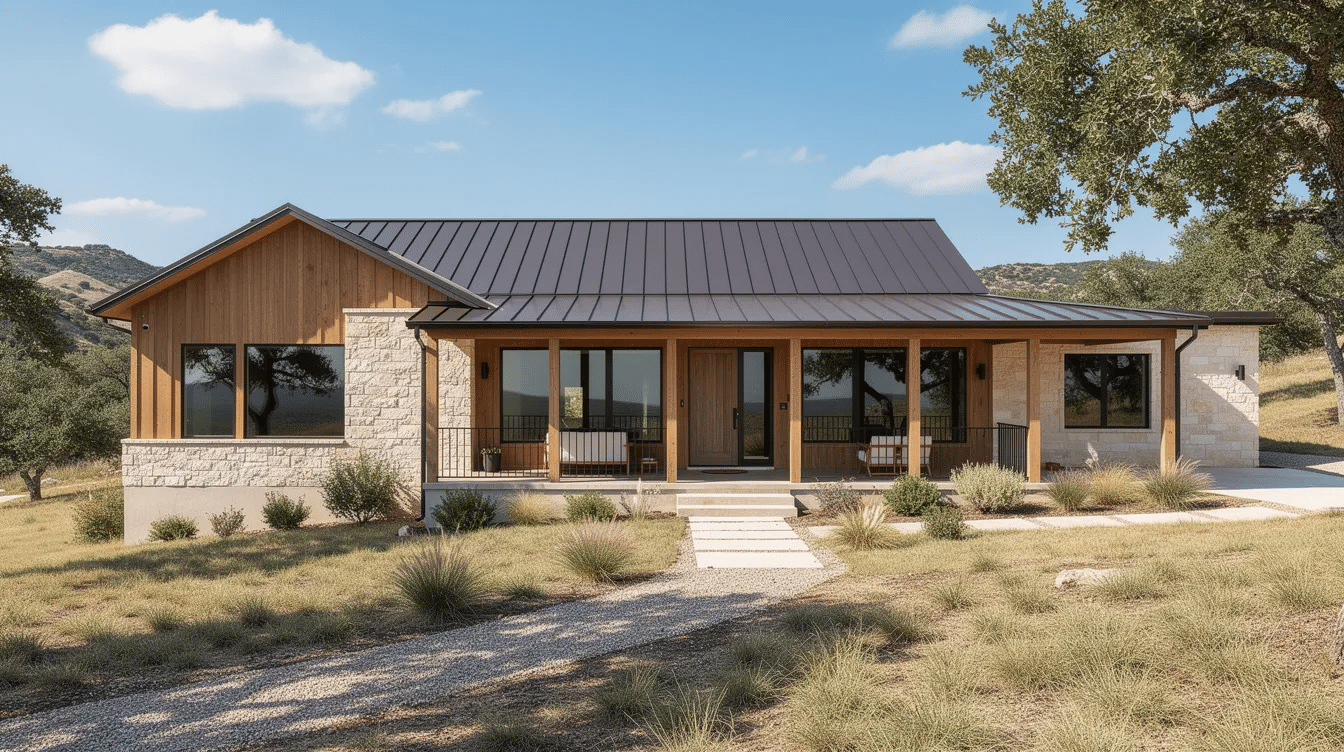
Not all new windows perform the same. Features should be matched to the home, budget, window opening, and local climate rather than chosen on price alone.
Frame material options can include vinyl windows, fiberglass windows, wood, aluminum-clad wood, aluminum, and composite products depending on the manufacturer. Every material has trade-offs involving durability, maintenance, cost, appearance, and thermal performance.
Vinyl windows are popular because they can provide a balance of affordability, energy efficiency, and low maintenance. Fiberglass windows offer strong dimensional stability and resistance to expansion and contraction. Wood windows provide a traditional appearance and good insulating qualities but generally require more attention to moisture protection and maintenance.
Glass package choices can include double-pane windows, triple-pane glass, Low-E coatings, gas fills such as argon, laminated glass, and options intended to improve UV protection or sound performance. Dual-pane windows generally provide better insulation than single-pane windows. Triple-pane configurations can provide additional insulating performance and may improve noise control depending on the complete glass package.
The right number of glass panes isn’t the only thing that matters. Spacer design, Low-E coatings, frame performance, air leakage ratings, and the quality of installation all affect how the entire window performs.
Performance metrics are easier to understand once you know what they measure. U-factor describes heat transfer through the window, with lower numbers indicating better insulating performance. Solar Heat Gain Coefficient measures how much solar heat enters through the window, and lower values generally reduce unwanted solar gain. Visible Transmittance describes how much visible light passes through.
Consider window type as well—double-hung, single-hung, casement, slider, awning, picture window, or specialty shape—along with hardware quality, operation, cleaning features, the manufacturer’s warranty, and how each unit will integrate with the existing trim, siding, and wall system.
The best replacement window isn’t necessarily the most expensive one. It should fit the opening, match the home’s needs, provide appropriate performance for the climate, and be installed properly.
Window Replacement Installation: Why Quality Matters
A high-quality replacement window can underperform or leak if it isn’t installed properly. Proper installation significantly affects window performance, water management, air leakage, operation, and long-term durability.
The best glass package in the world won’t solve a frame that’s installed out of square, poorly flashed, or surrounded by unsealed gaps.
Good installation begins with accurate measurements and proper preparation of the opening. The new unit should be installed square, level, and plumb as required by the manufacturer, then shimmed and fastened according to the specific installation instructions.
Air sealing around the opening may involve approved methods such as low-expansion window-and-door foam, backer rod and sealant, or other manufacturer-approved materials. The goal is to limit uncontrolled air movement without distorting the window frame.
Water management is equally critical. Depending on the wall construction and installation method, the job may involve sill flashing, jamb flashing, head flashing, integration with the home’s weather-resistant barrier, and exterior sealants placed in a way that manages rather than traps water.
Poor installation can contribute to drafts, water intrusion, frame stress, operational problems, and premature deterioration—even with brand-new replacement windows. Air leaks around a poorly installed opening can also increase the workload on the HVAC system and reduce some of the improved energy efficiency the homeowner expected from the project.
Ask potential contractors how they handle unexpected framing damage discovered during removal, what flashing process they use for your specific wall assembly, how they air-seal the opening, and who’s responsible for interior finishing and cleanup.
Replacing One Window vs. Multiple Replacement Windows
A single broken window after a storm is a different situation than a home full of aging builder-grade units that are all beginning to fail.
Replacing one damaged window makes sense when the rest of your current windows are relatively new and performing well. Budget constraints are real, and there’s no rule that says every existing window has to be replaced at the same time.
Can you replace just one? Absolutely.
But replacing multiple windows during the same project can have advantages: a more consistent appearance, easier matching of styles and colors, fewer separate installation visits, and potentially lower per-window labor or mobilization costs in some projects.
That doesn’t mean every contractor automatically provides a bulk pricing discount for replacing all windows at once. The actual savings depend on product pricing, labor, access, window type, installation details, and the number of units involved.
A practical middle ground is phased replacement—tackling the worst-performing elevation or rooms first and planning the remaining windows over time. West- and south-facing larger windows may deserve extra attention when heat gain is a major concern.
Consider the age and condition of the remaining windows, the potential energy savings from upgrading the weakest performers first, your budget, and whether mixing old and new windows will affect the exterior appearance.
Pella Replacement Windows and Ja-Mar Roofing & Sheet Metal
Once homeowners decide their windows need to be replaced, they don’t have to sort through product choices and installation details alone.
Ja-Mar Roofing & Sheet Metal provides residential window replacement services using Pella Windows, giving Central Texas homeowners access to established window products along with professional local installation.
Pella offers new windows and replacement windows in several window types and materials, including double-hung windows, casement windows, sliding windows, picture windows, specialty shapes, vinyl windows, fiberglass windows, and wood windows. Available options vary by product line and can include different glass packages, Low-E configurations, finishes, hardware, and design choices.
Ja-Mar can help homeowners measure existing windows and openings, compare window type and frame material, select finishes that fit the home’s architecture, review appropriate Low-E and glass options for Central Texas conditions, and plan the interior and exterior finishing details of the window replacement project.
Proper installation remains just as important as product selection. Removal of old windows should be coordinated with protection of surrounding siding and trim, inspection of the opening, correction of damaged materials where necessary, proper flashing and sealing, and cleanup once the new windows are installed.
Homeowners should also review the manufacturer’s warranty for the specific Pella product being considered rather than assuming every Pella window carries the same warranty coverage.
Best Time for Window Replacement in Texas
Window replacement projects can be completed year-round in Central Texas when weather conditions are suitable. There isn’t one universal season when every homeowner should schedule the work.
Milder temperatures during portions of spring and fall can make the installation process more comfortable because openings may be temporarily exposed during removal and replacement. However, spring and fall can also bring thunderstorms and changing weather, so scheduling still depends on the forecast.
Summer installations are also possible. Experienced installers generally limit how many openings are exposed at once so rooms aren’t unnecessarily left open to extreme heat. Winter weather in Central Texas is often mild enough for work to continue, although cold fronts, rain, wind, or freezing conditions can occasionally affect scheduling.
If you’re coordinating window replacement with an Austin roof replacement, siding project, exterior painting, or door replacement, discuss project sequencing before work begins. Proper sequencing can matter where flashing, trim, siding, a patio door, or adjoining exterior finishes interact with the window openings.
Custom-sized replacement windows may also require manufacturing lead time before installation. Project timing should account for measurement, product ordering, delivery, weather, and crew availability rather than choosing a season based only on temperature.
Questions to Ask a Window Replacement Contractor
Don’t just pick the lowest bid. Installation quality, product specifications, communication, and service matter just as much as the price on the estimate.
Key questions to ask:
- Who manufactures the replacement windows you’re recommending, and why are those products appropriate for my home?
- What window type, frame material, and glass package are included in the quote?
- What are the U-factor and Solar Heat Gain Coefficient for the proposed new windows?
- Are the products ENERGY STAR certified for my climate zone?
- How will the existing windows be removed?
- Will you inspect the opening after the old window is removed?
- How will the opening be flashed, air-sealed, and protected against water intrusion?
- What happens if you find damaged or rotted framing behind the existing window?
- Does the scope include repair of a damaged window opening if hidden deterioration is discovered?
- What interior and exterior finishing is included in the window replacement cost?
- Who handles debris disposal and cleanup?
- What manufacturer’s warranty applies to the specific product?
- What workmanship warranty applies to the installation?
- Is there a free in-home consultation before committing to the project?
Homeowners in Central Texas can ask Ja-Mar Roofing & Sheet Metal these same questions when discussing Pella replacement windows so they understand exactly what is being installed, how the installation will be handled, and what is included in the proposed window replacement project.
Homeowners who aren’t sure whether a troublesome window needs a simple repair or full replacement can have the condition evaluated before making the investment. Ja-Mar Roofing & Sheet Metal provides window replacement services using Pella Windows and can help Central Texas homeowners compare options based on the home, existing windows, energy goals, design preferences, and budget. You can contact Ja-Mar Roofing & Sheet Metal to discuss the condition of your current windows and available replacement options.
Window Replacement FAQs
How Do I Know if Window Replacement Could Help With High Energy Bills?
Compare rooms with lots of glass—especially west- and south-facing rooms—to interior rooms with fewer or smaller windows. If rooms with more glass are consistently harder to keep comfortable, the windows may be part of the problem. Check for air leaks near the window frame and review past energy bills for gradual increases.
That said, attic insulation gaps, air leakage elsewhere in the home, an aging HVAC system, inefficient cooling systems, and leaky ductwork can also cause higher energy bills. A home energy assessment can help determine which improvements are most likely to save money and whether the window replacement cost is justified by comfort improvements and potential energy savings.
Can Foggy Double-Pane Windows Be Repaired Instead of Replaced?
Some services can reduce the visible moisture in a foggy glass unit, but removing the moisture doesn’t necessarily restore the original insulating seal or replace insulating gas that may have escaped.
If only one insulated glass unit has seal failure and the window frame and sash are still in good condition, glass-unit replacement may be possible. If foggy glass appears across several aging windows along with drafts, operational problems, or deteriorating frames, replacement windows may make more sense than repeatedly repairing individual units.
Are Single-Pane Windows Worth Replacing With New Windows?
Stand near the glass during a hot afternoon or a cold morning and compare how the area feels with the center of the room. Single-pane glass provides far less insulating performance than modern double-pane or triple-pane glass systems.
You may also notice more outdoor noise, greater temperature differences near the glass, drafts around aging frames, or uncomfortable rooms with large areas of single-pane glass.
ENERGY STAR reports that replacing old single-pane windows with ENERGY STAR certified windows can lower household energy bills by an average of up to 13% nationwide. Actual savings depend on the home, climate, HVAC system, amount of window area, insulation, and the replacement windows being installed properly.
Will Replacement Windows Fix Outside Noise Problems?
No. Better glass packages, tighter frames, and improved air sealing can meaningfully reduce outdoor noise, but replacement windows won’t create complete silence.
Sound waves also travel through walls, doors, your attic, vents, and other parts of the home. If you live near a highway, school, construction area, or noisy neighbors, certain new windows with laminated glass, different glass thicknesses, or other sound-control options may improve noise reduction. The entire building envelope still plays a role.
How Long Does a Window Replacement Project Usually Take?
Installation time varies by window type, number of openings, accessibility, whether the existing windows are difficult to remove, and whether any hidden framing damage is discovered.
A small group of windows may sometimes be completed in a day, while a larger whole-house window replacement project may take several days or longer. Custom replacement windows also require manufacturing and delivery time before installation begins.
Installers generally work through the project in stages so the home isn’t left with numerous openings exposed at once.
When Is It Time to Replace Your Windows Instead of Repairing Them?
It may be time to replace your windows when several problems occur together, such as recurring air leaks, failed insulated glass, warped frames, deteriorating frames, water intrusion, poor operation, and poor energy efficiency.
A broken lock, damaged screen, worn weatherstripping, or an isolated glass failure may still be repairable. But once problems involve the entire window or multiple components, full replacement may provide a more reliable long-term solution.
Do Rising Energy Bills Mean I Need Window Replacement?
Not automatically. Rising energy bills can be caused by windows, but they can also come from HVAC problems, duct leakage, inadequate insulation, changes in thermostat settings, utility-rate increases, or other sources of air leakage.
If your current windows are old, single pane, noticeably drafty, or have failed seals, they may be contributing to poor energy efficiency. Evaluate the house as a system before assuming new windows alone will solve the problem.
Are Double-Pane Replacement Windows More Energy Efficient?
Generally, yes. Double-pane windows use two glass panes separated by a sealed space, which provides better insulating performance than a single layer of glass. Modern double-pane windows may also include Low-E coatings and insulating gas fills that further improve energy performance.
However, a high-quality window still needs to be installed properly. Poor installation and air leaks around the frame can reduce the benefit of even an energy efficient window.
Do I Need Triple-Pane Replacement Windows in Central Texas?
Not necessarily. Triple-pane windows can provide better insulation than comparable double-pane windows, but climate, cost, glass coatings, SHGC, U-factor, noise concerns, and the overall window design all matter.
In Central Texas, controlling solar heat gain is especially important. A properly selected double-pane window with an appropriate Low-E coating and low SHGC may be a strong option for many homes. Compare the full performance ratings instead of choosing solely by the number of glass panes.
Should I Replace All My Windows at the Same Time?
Not always. If most windows are performing well and only one or two are damaged, replacing those individual units may be reasonable.
If most existing windows are similar in age and several are developing drafts, failed seals, warped frames, or operational problems, replacing multiple windows within the same project may make more sense. Some homeowners prefer phased replacement so they can prioritize the worst-performing windows while spreading the window replacement cost over time.
Can New Windows and Window Replacement Improve Curb Appeal?
Yes. New windows can update faded frames, mismatched styles, damaged screens, outdated configurations, and other issues that contribute to poor curb appeal.
Replacement windows also give homeowners an opportunity to coordinate frame colors, grille patterns, proportions, and window styles with the home’s architecture. Curb appeal can influence how buyers perceive a property, although no specific increase in property value is guaranteed.
How Much Does Window Replacement Cost in Austin?
Window replacement cost varies widely based on window type, size, frame material, glass package, number of windows, accessibility, and installation complexity.
Current 2026 Austin data places a typical window replacement project around $5,990, with reported project costs commonly ranging from approximately $3,344 to $9,128. Individual units can range broadly from roughly $300 to $2,000, and larger windows, specialty shapes, upgraded glass, or complicated installation conditions can cost more.
The most useful figure is a written estimate based on your actual openings rather than a national per-window average.
Can Energy Efficient Replacement Windows Save Money?
Energy efficient replacement windows can reduce heating and cooling energy use when they’re replacing poor-performing existing windows, especially single-pane windows.
ENERGY STAR reports average household energy-bill savings of up to 13% nationwide when old single-pane windows are replaced with ENERGY STAR certified windows. Actual energy savings vary based on local climate, utility rates, HVAC equipment, insulation, window area, installation quality, and the condition of the original windows.
Does Foggy Glass Mean the Entire Window Needs Replacement?
No. Foggy glass between panes usually indicates seal failure within an insulated glass unit, but that doesn’t automatically mean the entire window needs replacement.
If the frame, sash, hardware, and surrounding installation are still in good condition, an insulated glass unit may sometimes be replaced separately. If the window also has a deteriorating frame, air leaks, operational problems, water intrusion, or repeated seal failure, replacing the entire window may make more sense.
What Type of Replacement Windows Are Best for Central Texas?
There’s no single window type that’s best for every home. Double-hung windows, casement windows, sliders, awning windows, and fixed picture windows each work differently and suit different rooms and architectural styles.
For Central Texas, homeowners should pay particular attention to energy performance, Low-E glass, Solar Heat Gain Coefficient, U-factor, air leakage, frame material, sun exposure, and installation quality in addition to the operating style.
Does Ja-Mar Roofing & Sheet Metal Provide Window Replacement?
Yes. Ja-Mar Roofing & Sheet Metal provides residential window replacement services for Central Texas homeowners and works with Pella Windows as a Pella Windows contractor.
Homeowners can review Ja-Mar’s Pella replacement window services to compare available window materials, styles, glass options, replacement methods, and installation considerations before deciding which openings need to be replaced.
Why Use a Pella Windows Contractor for Window Replacement?
Working with a contractor familiar with Pella products can help homeowners compare appropriate window styles, frame materials, glass packages, finishes, and energy-performance options while also planning for the installation itself.
The product is only one part of the project. Accurate measurements, proper removal of the existing windows, preparation of the opening, flashing, air sealing, exterior integration, interior finishing, and installation according to manufacturer requirements all affect how the new windows ultimately perform.

