
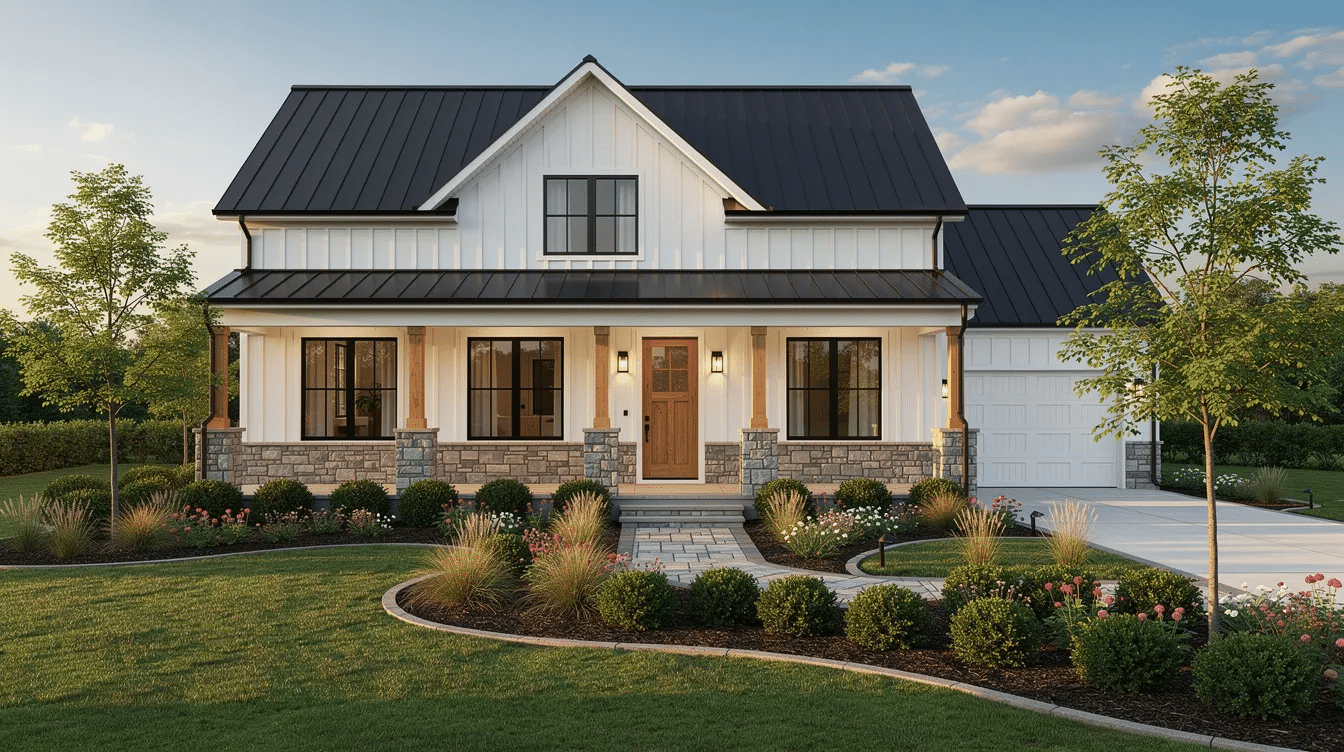
If you’re weighing a roof replacement in Texas, galvalume metal roofing deserves a serious look. Between punishing Texas heat, annual hail seasons, and rising insurance costs, more homeowners across the state are choosing this roofing material over traditional asphalt shingles. This guide breaks down everything you need to know: what galvalume actually is, what it costs in 2026, where it performs best across Texas, and where it falls short.
Key Takeaways
- Galvalume metal roofing is steel coated with an aluminum zinc alloy coating (roughly 55% aluminum, 43.5% zinc, 1.6% silicon). It has been the dominant metal roof substrate for Texas homes since the 1990s thanks to its superior corrosion resistance over older galvanized steel roofing in hot, semi-humid climates.
- Galvalume roofs typically last 40 to 70 years in most inland Texas locations, far outlasting asphalt shingles (20–30 years) but costing roughly 2–3x more upfront. Galvalume roofing costs $8 to $12 per square foot installed, compared to about $4.50–$8.50 per square foot for quality asphalt shingles.
- Galvalume’s corrosion resistance makes it ideal for central Texas, North Texas, the Hill Country, and most inland regions. It is not recommended for coastal environments due to salt exposure, where an aluminum roof or engineered coastal steel is the better material choice.
- Homeowners planning to stay 15+ years who want energy efficiency, low maintenance, and long service life should strongly consider galvalume. Those on very tight budgets, selling soon, or living right on the Gulf Coast may be better served by asphalt shingles or aluminum roofing systems.
What Is Galvalume Metal Roofing? (And Why Texans Hear About It So Much)
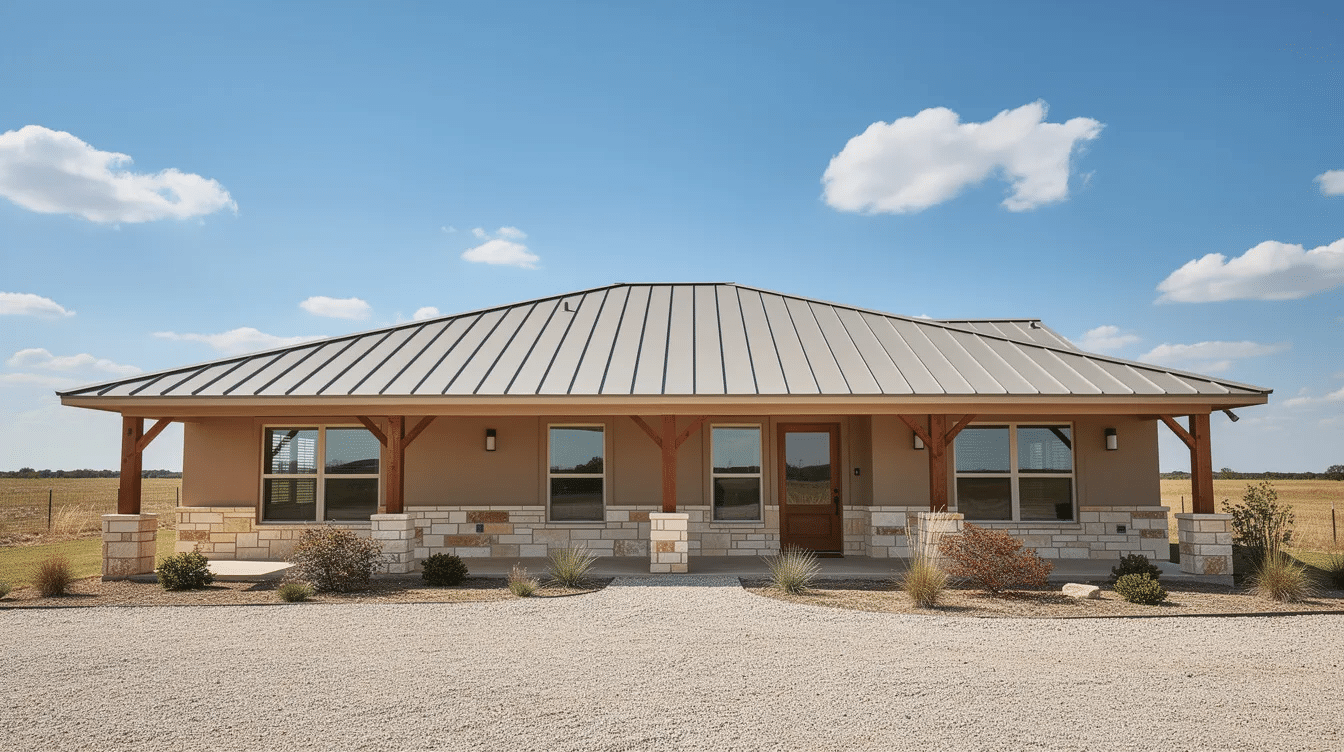
Galvalume is a steel sheet continuously hot-dip coated with an alloy of approximately 55% aluminum, 43.5% zinc, and about 1.6% silicon. The process was originally commercialized by Bethlehem Steel in the early 1970s and is governed today by ASTM A792. That aluminum and zinc alloys combination is what sets galvalume apart: the aluminum provides barrier protection against oxidation, while the molten zinc component acts sacrificially to protect cut edges and scratches, giving galvalume its self healing properties that prevent rust spread.
How does this differ from traditional galvanized metal? A galvanized steel roof uses a pure zinc coating. While that zinc coating offers decent short-term protection, it corrodes faster in hot, humid conditions. Galvalume offers superior corrosion resistance compared to galvanized steel, which is why it largely replaced galvanized roofs as the go-to substrate for residential metal roofing across inland Texas by the 2000s. For context, galvanized roofing lasts 20 to 50 years depending on conditions, while galvalume roofs can last 40 to 70 years.
The most common galvalume roofing panels Texans encounter fall into two categories: standing seam systems (snap-lock or mechanical lock, with concealed fasteners) and exposed fastener systems like R-panels or AG-panels. Standing seam metal roof profiles dominate residential projects, while exposed fasteners are more common on barns, shops, and commercial buildings.
One important clarification: galvalume metal refers to the substrate, not the color or paint system. Galvalume steel can be left bare with a metallic mill finish, or it can be painted with SMP or premium PVDF finishes for colored “cool roof” performance.
Galvalume vs Asphalt Shingles in Texas: Quick Comparison
For most Texas homeowners, the real decision comes down to a galvalume steel roof versus a quality shingle roof. Here’s how they stack up:
- Lifespan: Galvalume roofs last 40 to 70 years. An asphalt roof with architectural shingles typically lasts 20–30 years in Central Texas before needing a full roof replacement.
- Upfront cost: Galvalume standing seam runs roughly $8–$12 per square foot installed; quality asphalt shingles come in at $4.50–$8.50 per square foot. The higher upfront cost of galvalume is real.
- Energy efficiency: Galvalume reflects more solar radiation than dark asphalt shingles, reducing cooling loads. Asphalt absorbs heat.
- Maintenance: Galvalume roofing requires minimal maintenance over its lifespan. Shingles need periodic inspection for granule loss, lifted tabs, and storm damage.
- Curb appeal: Standing seam offers a clean, modern look. Asphalt shingles provide more traditional color and texture variety.
Noise is a common concern: without proper insulation and solid decking, a metal roof can be louder in rain. Installation time is also longer for standing seam (typically 3–7 days for galvalume roofing installation versus 1–3 days for shingles). Some HOAs still restrict visible metal, though that’s changing fast across Texas neighborhoods.
How Galvalume Handles Texas Climate: Heat, Sun & Storms
The Texas climate throws everything at a roof: intense UV, summer surface temperatures exceeding 150°F, seasonal hail, and wind events from thunderstorms and tropical systems. Here’s how galvalume responds.
Heat and solar radiation. Galvalume is highly reflective and acts as a cool roof that reduces cooling loads. When paired with a light-colored PVDF paint system, a galvalume roof reflects significantly more solar radiation than dark asphalt shingles, lowering attic temperatures and reducing HVAC strain. Some Texas roofing guides estimate cooling bill savings of 10–25% when combined with proper attic insulation and ventilation.
Thermal cycling. Texas roofs expand and contract daily. Galvalume coatings resist cracking and oxidation under repeated thermal expansion better than pure galvanized steel, particularly when panel profiles and clip systems allow for movement.
Hail resistance. Standing seam systems enhance galvalume’s performance against severe weather conditions. A 24-gauge galvalume standing seam metal roof often achieves a UL 2218 Class 4 impact rating, meaning it can take hits equivalent to a 2-inch steel ball. Panels may dent cosmetically but usually remain watertight. Asphalt shingles, by contrast, lose granules, crack, and sometimes tear under the same impacts.
Wind resistance. Galvalume provides protection against high winds up to 140 mph and has a high fire rating. Texas building codes often require roofs to resist 110–130 mph uplift in high-wind zones. Properly installed standing seam metal with concealed fasteners regularly exceeds those requirements. Galvalume performs well against UV exposure, heavy rain, and strong winds, making it a reliable choice across most of the state.
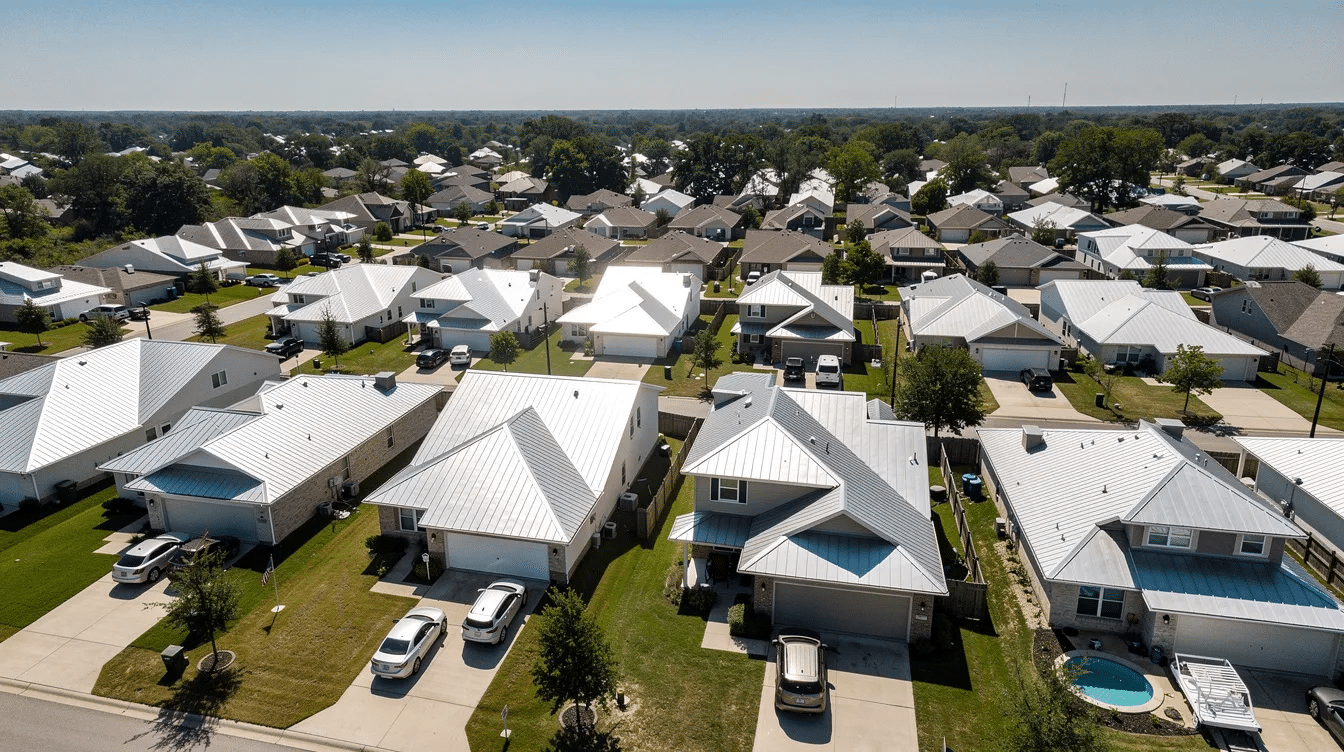
Corrosion Resistance: Where Galvalume Shines in Texas (and Where It Doesn’t)
In practical terms, corrosion resistance means how long your roof stays structurally sound and free of red rust before the coating breaks down. Galvalume’s aluminum-zinc coating enhances durability in various climates by forming a protective aluminum oxide layer that resists environmental degradation. Galvalume roofs resist environmental degradation better than galvanized roofs in comparable conditions.
Where galvalume excels. Inland Texas environments-the Hill Country, North Texas, West Texas, and most of central Texas-offer relatively low salt exposure and moderate humidity. In these areas, galvalume steel with an AZ50 or AZ55 coating weight delivers decades of reliable performance. Galvalume can also self-heal minor scratches, preventing rust spread through its zinc sacrificial action at exposed steel edges.
Where galvalume struggles. Galvalume is not recommended for coastal environments due to corrosion from salt spray. Within approximately 1,500 feet of saltwater (think Galveston beachfront, Corpus Christi bayfront, Port Aransas), chlorides attack the coating aggressively. Most manufacturers void or heavily restrict substrate warranties in these zones.
Other corrosive scenarios to avoid:
- Animal confinement buildings (galvalume is not ideal for buildings housing livestock due to ammonia exposure)
- Direct contact with treated lumber containing copper biocides
- Contact with copper flashing or pipes (galvanic corrosion)
- Wet concrete or mortar touching panels (alkaline attack)
For coastal Texas homes, many roofers recommend an aluminum roof or engineered coastal steel products from manufacturers like Sheffield Metals, which offer enhanced protection and full coastal warranties that standard galvalume panels cannot match.
Pros of Galvalume Metal Roofing for Texas Homes
Galvalume metal roofing is an excellent choice for Texas due to high reflectivity and durability. Here are the specific advantages that matter most in this state.
Exceptional longevity. Galvalume roofs can last 40 to 70 years with proper installation. In central Texas subdivisions, original 1990s galvalume roofs are still performing with minimal corrosion. Compare that to asphalt shingles that often need a full metal roof replacement or re-roof at the 20-year mark.
Strong corrosion resistance inland. Galvalume offers better corrosion resistance than galvanized steel in comparable conditions, lasting 2–4x longer in field studies. Galvalume is recommended for structural applications in hot, sunny climates such as Texas.
Energy savings. Galvalume roofs reflect solar radiation, improving energy efficiency. Light-colored galvalume coatings on a standing seam profile, paired with good attic insulation, can reduce cooling costs meaningfully during Texas’s long, brutal summers. The roof acts as a first line of defense against solar heat gain.
Additional benefits:
- Fire resistance: Class A fire rating makes galvalume valuable in drought-prone and wildfire-risk areas like the Hill Country
- Solar panel compatibility: Standing seam profiles allow clamp-on solar panels mounts with no new roof penetrations
- Insurance savings: Galvalume has potential insurance savings due to its durability and impact resistance-many Texas insurers offer 15–35% premium discounts for Class 4 metal roofs
- Low maintenance: No granule loss, minimal leak risk, less moss or fungal growth than other materials
- Sustainability: Galvalume roofing systems demonstrate lower environmental impact over 50 years, and galvalume is recyclable with recovery rates exceeding 85%
Galvalume’s lifespan makes it a valuable long-term investment for homeowners who plan to stay in their home.
Cons and Limitations of Galvalume Metal Roofing in Texas
No roofing material is perfect for every situation. Here’s where galvalume falls short.
Higher upfront cost. Galvalume roofing is typically 5% to 15% more expensive than galvanized roofing, and roughly 2–3x the cost of quality asphalt shingles. For homeowners planning to sell within 5–10 years, that upfront cost may not pay back before closing.
Coastal and corrosive-environment risk. Standard galvalume panels carry warranty exclusions for installations within about 1,500 feet of saltwater. Coastal and lakeside Texans risk premature failure and denied warranty coverage if they install standard galvalume instead of aluminum or coastal-engineered steel.
Aesthetic and practical drawbacks. Wide, flat surfaces on standing seam panels can develop oil canning-visible waviness that doesn’t affect function but is an aesthetic concern for some homeowners. Color options may be more limited than asphalt shingles in certain HOA-governed neighborhoods. The look of exposed fastener panels on barndominiums reads “agricultural” rather than “residential” to some buyers.
Noise. Without solid decking, quality underlayment, and proper insulation, rain and hail noise can be noticeably louder than under a shingle roof. This is especially true for barndominiums or buildings with exposed metal ceilings.
Denting. Very large hailstones or falling tree branches can dent galvalume panels. While watertightness usually holds, cosmetic damage is more visible on bare metallic finishes. Thicker gauge steel (24 vs. 26) reduces this risk.
Installer skill matters. Seams, penetrations, and flashing details require experienced crews. Poor installation leads to leaks, premature corrosion, and voided warranties.
Cost of Galvalume Metal Roofing in Texas (2026 Numbers)
Costs vary by region, roof complexity, and panel type, but here are solid 2026 ballpark ranges for Texas.
Installed price ranges:
| System | Installed Cost per Square Foot |
|---|---|
| Galvalume standing seam (24–26 gauge) | ~$8–$12 |
| Exposed-fastener galvalume panels (R-panel, AG-panel) | ~$6.50–$11 |
| Asphalt shingles (architectural, Class 4) | ~$4.50–$8.50 |
| Aluminum standing seam | ~$16–$24 |
| These ranges typically include tear-off, underlayment, standard flashing, and labor. Galvalume panels weigh between 1 and 1.5 pounds per square foot, making them lighter than many other materials and manageable for most existing decking. |
Worked example: A 2,400 square foot roof on a two-story home in central Texas:
- Galvalume standing seam at $10/sq ft: ~$24,000
- Architectural asphalt shingles at $6.50/sq ft: ~$15,600
Key cost factors: gauge (24 gauge costs more than 26), panel profile, paint system quality (SMP vs. PVDF/Kynar 500), roof pitch, number of penetrations (vents, chimneys, skylights), whether you need to install metal over existing decking or replace it, and regional labor rates. Steel tariffs in 2026 (~50% on imports) have pushed prices up, though Texas’s domestic steel production in Houston and Beaumont helps moderate galvalume costs for locally made roofing products.
Lifetime Value: Galvalume Roof vs Asphalt Shingles Over 30+ Years
Evaluating roofing cost in Texas on just upfront price misses the bigger picture. Here’s what a 30-year ownership horizon looks like.
Year 0: You install a galvalume standing seam roof for ~$24,000 on a 2,400 sq ft home. Your neighbor installs architectural asphalt shingles for ~$15,600.
Years 1–20: Your galvalume roof needs minimal maintenance-occasional gutter cleaning, a sealant check every few years. Your neighbor’s shingle roof takes hail damage in year 8 (partial repair: $3,000) and needs full replacement around year 18–20. By then, material and labor inflation push that new roof to roughly $20,000+, plus tear-off and disposal.
Years 20–30: Your galvalume roof is still performing. Your neighbor is on roof number two, which may itself face another hail event. Your cumulative spend: ~$24,000 plus minor maintenance. Your neighbor’s cumulative spend: $38,000+ and climbing.
Factor in energy efficient cooling savings (potentially several hundred dollars annually), insurance premium discounts of 15–35% in hail-prone counties, and the avoided hassle of coordinating a second full re-roof, and galvalume offers lower life-cycle costs due to reduced maintenance over the long haul.
Who benefits most? Homeowners planning to stay put for 15–20+ years, those in hail-prone areas tired of repeated shingle claims, and anyone focused on total cost of ownership rather than minimum upfront spend.
Galvalume vs Aluminum Roofs in Texas
Both galvalume and aluminum compete for Texas metal roofing projects, but they serve different zones.
Corrosion: An aluminum roof forms a natural oxide layer that regenerates even when scratched, giving it unmatched corrosion resistance in salt-laden coastal air. Galvalume’s aluminum-zinc coating reduces environmental degradation effectively inland but can fail within a few miles of the Gulf.
Weight and denting: Aluminum is lighter, which can be an advantage for retrofits over existing decking. But aluminum is softer-it dents more easily unless heavier gauges (.032 or .040) are specified. Galvalume steel in 24 gauge offers greater tensile strength and better dent resistance.
Thermal expansion: Aluminum expands and contracts more than steel with temperature swings, requiring careful clip and fastener engineering to avoid noise and panel distortion.
Cost: Installed aluminum standing seam in Texas typically runs $16–$24 per square foot versus $8–$12 for galvalume. That’s a significant premium that most inland homeowners don’t need to pay.
Recommendation: Favor aluminum within roughly 1–2 miles of the coast or in harsh industrial atmospheres. For standard central Texas, North Texas, and Hill Country residential projects, galvalume delivers a better cost-to-performance ratio.
Where Galvalume Metal Roofing Works Best in Texas
Galvalume’s performance varies meaningfully across the state. Here’s a region-by-region look.
Central Texas (Austin, Round Rock, Georgetown, San Marcos, Waco). Hot summers, periodic hail, and intense UV make this galvalume’s sweet spot. The roofing material performs exceptionally well here, and standing seam profiles have become a signature look on modern farmhouses and Hill Country homes. Galvalume roofing is a strong match for energy efficiency and long-term durability in this region.
North Texas (DFW, Denton, Fort Worth) and West Texas (Abilene, Midland, Lubbock). These areas sit in “Hail Alley.” Class 4 galvalume standing seam in 24 gauge is arguably the smartest new roof investment here. Insurance discounts are significant, and the material handles dust, wind, and intense sun without issue.
East Texas and Piney Woods. Higher humidity and more rainfall, but still generally suitable. Pay extra attention to roof slope, drainage, debris clearance, and ventilation. PVDF finishes resist mildew and staining better than bare galvalume in this zone.
Gulf Coast and barrier islands (Galveston, Corpus Christi, South Padre). This is where galvalume is risky. Within approximately 1,500 feet of saltwater, standard galvalume warranties are typically voided. Choose aluminum or an engineered coastal steel product instead. The same applies to corrosive agricultural or industrial environments.
Curb Appeal, Style & Neighborhood Fit
Roofing material directly influences curb appeal and resale value in Texas cities and suburbs.
Standing seam galvalume delivers clean vertical lines that suit modern farmhouse, contemporary, and Hill Country architectural styles. It reads as a deliberate design upgrade. Exposed fastener panels, on the other hand, are more utilitarian-ideal for barndominiums, ranch structures, and commercial buildings, but less common on residential streets.
Asphalt shingles still offer a broader range of traditional colors and textures, making them the default in many 1990s–2010s subdivisions around Austin, Dallas, San Antonio, and Houston. However, newer communities increasingly welcome standing seam metal as a premium feature rather than restricting it.
HOA considerations: Some HOAs still require specific colors or finishes, or prohibit visible metal altogether. Check your CC&Rs before committing.
Color guidance for Texas:
- Lighter colors maximize energy efficiency by reflecting more solar heat
- Darker tones create bold, modern contrast but show fading sooner
- Mid-tones (bronze, charcoal, slate) balance aesthetics and longevity
- Coordinate your metal roof color with your home’s brick, stone, or siding palette
Installation, Maintenance & Typical Issues With Galvalume Roofs
A quality installation of galvalume roofs significantly impacts their longevity. Even the best galvalume steel can fail if installed poorly.
Installation basics for a Texas home: The typical process includes tear-off of the old roof (if applicable), inspection and repair of existing decking, application of high-temperature underlayment, flashing at all penetrations and transitions, panel layout, and fastening. Standing seam takes longer than shingles-galvalume roofing installation typically takes 3 to 7 days depending on roof size and complexity. You want a crew experienced with metal, not a shingle crew trying metal for the first time.
Maintenance by panel type:
- Standing seam: Check sealants at penetrations and endlaps every 2–3 years. Clean gutters and valleys. Inspect for any coating damage or scratches after storms.
- Exposed fastener systems: Neoprene washers on screws degrade over time and need periodic replacement (often every 15–20 years). Fastener-related leaks are the most common failure mode.
Common issues to watch for:
- Oil canning (cosmetic waviness on flat surfaces) that doesn’t affect performance but bothers some homeowners
- Minor denting from large hail-functional but visible
- Thermal expansion noise if clips aren’t properly installed
- Corrosion at points where dissimilar metals (copper, exposed steel) or treated lumber contact galvalume panels
Recommended inspection schedule: Every 2–3 years, and after any severe hail or high-wind storm. A strong workmanship warranty (10+ years) from your installer is just as important as the material warranty from the panel manufacturer.
How to Decide if Galvalume Metal Roofing Is Right for Your Texas Home
Here are the key questions to ask yourself:
- How long will you stay? If 15+ years, galvalume’s lifetime value strongly favors it over asphalt shingles.
- How close to the coast? Within 1–2 miles of saltwater, skip galvalume and look at aluminum.
- What are your cooling bills? If high, a galvalume roof with a reflective finish and good attic insulation can meaningfully reduce them. Galvalume is energy efficient in Texas’s long cooling season.
- What does your HOA allow? Verify before getting quotes.
- What’s your budget? If you can afford the upfront cost, galvalume wins on total cost of ownership. If budget is very tight and you’re selling soon, quality asphalt shingles remain sensible.
Scenario-based guidance:
- Long-term owner in a central Texas suburb → galvalume standing seam is hard to beat
- Rural barndominium builder → exposed-fastener galvalume panels offer great value
- Urban infill remodel in Austin or Dallas → standing seam adds curb appeal and resale value
- Coastal homeowner in Galveston → choose aluminum, not galvalume
When gathering quotes, insist that each contractor specifies substrate (galvalume vs aluminum), gauge, coating weight (AZ50 vs AZ55), finish (SMP vs PVDF), and warranty terms. That’s the only way to compare apples-to-apples offers from Texas roofers and make a confident material choice for your next roof.
FAQ: Galvalume Metal Roofing in Texas
Here are answers to common questions Texans ask that weren’t fully covered above.
Are galvalume metal roofs loud in Texas storms?
With modern assemblies-solid decking, high-temperature underlayment, and R-38+ attic insulation-interior noise from rain and hail on a galvalume roof is usually comparable to or only slightly louder than on an asphalt shingle roof. Barndominiums and metal buildings with exposed metal ceilings can be significantly louder, so budget for additional sound-dampening layers if that applies to your build. Most Texas homeowners who reroof from shingles to galvalume over wood decking report minimal change in everyday noise levels.
Do metal roofs attract lightning in Texas?
Galvalume metal roofs do not attract lightning. Strike likelihood is driven by building height, location, and surrounding terrain-not roofing material. If a strike does occur, a steel roof can actually be safer than combustible materials because the metal helps dissipate energy and is non-flammable. Homeowners in lightning-prone areas of Texas should discuss grounding and surge protection with a qualified electrician, regardless of roof type.
Is galvalume roofing a good base for solar panels in Texas?
Standing seam galvalume roofs allow clamp-on solar panels mounts that avoid new roof penetrations entirely, which many Texas solar installers prefer for watertightness and simplicity. Exposed-fastener galvalume systems can also support solar but require more penetrations and careful flashing. Matching the solar array lifespan (often 25–30 years) with a galvalume roof that lasts 40–70 years means you likely won’t need to remove panels mid-life for re-roofing-a significant advantage over shingles.
Can a galvalume roof be installed over existing asphalt shingles?
Some Texas codes and manufacturers allow installing metal roofing over one layer of sound shingles using purlins or direct-attachment systems, which reduces tear-off costs and debris. However, drawbacks include hidden deck damage going unnoticed, potential ventilation issues, and higher total roof assembly weight. Have a roofer thoroughly inspect your existing decking and attic, and verify local code and warranty requirements before choosing an overlay versus a full tear-off.
How well do galvalume roof colors hold up in Texas sun?
High-quality PVDF/Kynar 500 paint systems on galvalume panels are specifically engineered to resist chalking and fading under intense UV. These finishes often carry 30–40 year color-fade warranties in non-coastal Texas. Lower-cost polyester or SMP coatings fade faster, especially in darker colors under relentless Texas sun. Very deep, saturated hues will show fading sooner than light or mid-tone shades, so factor long-term appearance into your finish selection-not just day-one curb appeal.

