

Texas homeowners deal with hail, high winds, and severe storms year after year, which makes keeping accurate roof documents homeowners should keep more important than many people realize. Without organized roof documentation, a single storm can lead to insurance claim disputes, HOA delays, warranty questions, and unnecessary headaches. This guide explains exactly what belongs in a roof ownership file, from warranties and inspection reports to storm photos, repair records, insurance paperwork, and replacement documents, so you have the information you need when it matters most.
Key Takeaways
- A roof ownership file is a single, organized folder (digital and paper) that every Texas homeowner should keep to protect themselves during insurance claims, HOA approval requests, resale negotiations, and storm damage disputes.
- The file should track the roof’s entire life: installation date, materials, warranties, inspections, storm dates, claim paperwork, and photos before and after any work. A roof ownership file can help streamline insurance claims in Texas by putting every critical document in one place.
- Having this file ready before the adjuster arrives or before filing a claim can be the difference between a denied claim and a full roof replacement covered at replacement cost value.
- A complete roof file speeds up HOA approval, helps justify replacement cost with your carrier, and proves you maintained the roof properly when selling the home.
What Is a “Roof Ownership File” and Why Texas Homeowners Need One
A roof ownership file is a dedicated folder – a physical binder plus a mirrored cloud folder – that holds every important document, photo, and note related to your roof from the day you buy the home or install a new roof. Think of it as the medical chart for your roof: it records what was installed, when it was installed, what happened to it, and what was done about it.
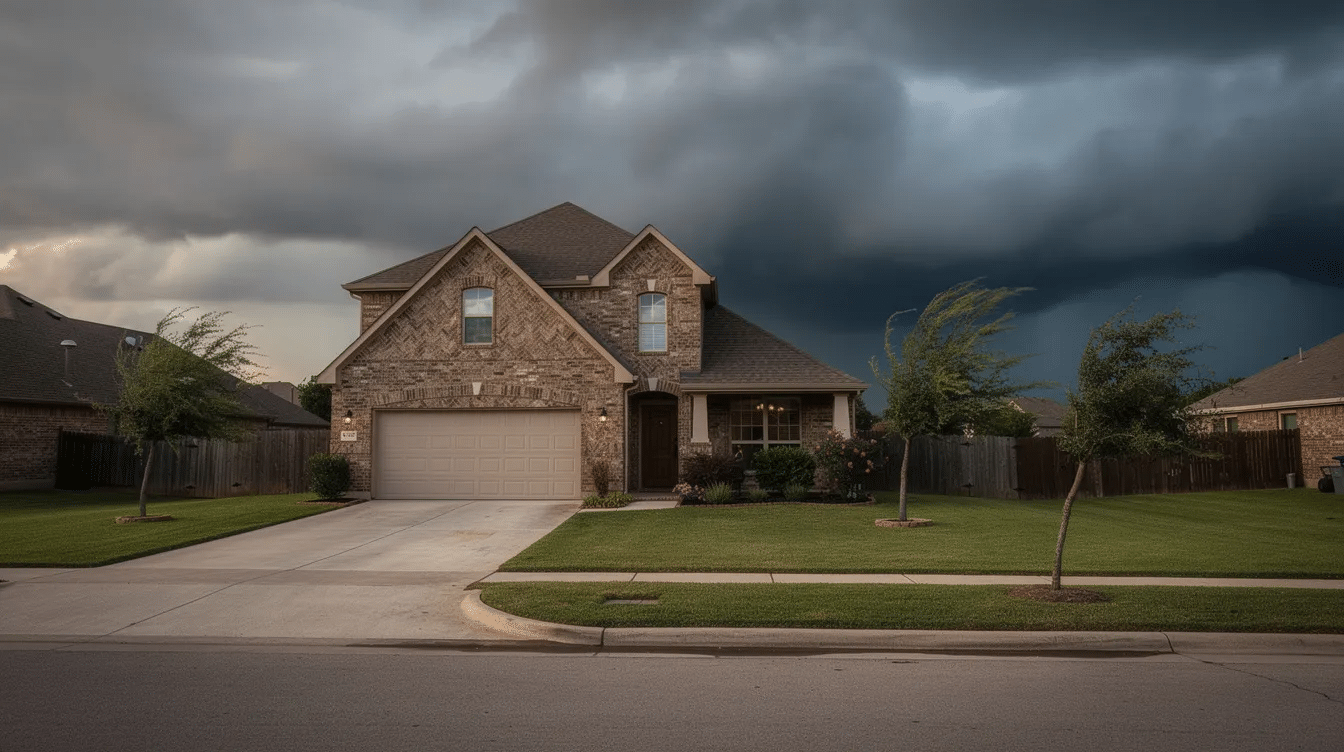
Texas homeowners experience severe hail and windstorms more frequently than homeowners in most other states. Texas leads the U.S. in hail claims, and wind and hail account for roughly 60–65% of all homeowner insurance losses in the state. That volume means your insurance company, your adjuster, and even your HOA management company are accustomed to asking for documentation – and they expect you to have it.
The file helps in three concrete scenarios. First, when storm damage hits and you need to file an insurance claim, the file provides proof of your roof condition before the storm, the date of loss, and every piece of paperwork the claims process requires. Second, when your roof needs to be replaced and your HOA requires HOA approval, the file contains material specs, past approvals, and governing documents that speed up the review. Third, when you’re selling the house, a complete roof file simplifies resale by documenting roof history, warranty transfers, and past repairs.
This article walks you step-by-step through each section of the file. We’ll reference real-world examples like a hail storm near Austin on April 28, 2024, or a San Antonio wind event in March 2025 to show why each piece of documentation matters.
Section 1: Core Roof Identity – Basics Every File Must Start With
This section sits at the front of your file and summarizes the identity of the roof at a glance. Anyone picking up the file – your contractor, your insurance adjuster, a buyer’s inspector – should understand what’s on your house within 30 seconds.
Key details to capture:
- Property address and county
- Roof type: standard architectural shingles (e.g., 30-year laminate), standing seam metal, tile, or other
- Number of layers on the existing roof (one layer vs. overlay)
- Slope complexity and number of multiple slopes, valleys, hips, and ridges
- Total roof area in squares, if available from a past estimate
- Installation date and installer name – example: “Installed August 12–14, 2019 by ABC Roofing, permit #2029-12345, City of Austin, TX”
- Shingle or panel brand, product line, and color – example: “GAF Timberline HDZ, Weathered Wood” – so future roof replacement or HOA approval can match or upgrade correctly
Asphalt shingles hold 73% of the U.S. residential roofing market, making them the most common roofing material you’ll document here. Metal roofing market share increased from 3% to 17% from 2020 to 2024, so if you have metal panels, capturing gauge, profile, and coating type is equally important.
Section 2: Purchase Records, Contracts, and Receipts for Your Roof
This section stores the financial backbone of your roof history, dating back to at least the last full roof replacement.
Documents to keep:
- Signed contracts and detailed written proposals from your qualified roofing contractor
- Final invoices showing replacement cost, itemized materials and labor
- Proof of payment – checks, credit card statements, or wire confirmations. Proof of payment for roofing work is essential in Texas due to laws regarding insurance deductibles, and accurate financial records ensure compliance with Texas law regarding what you actually paid
- City or county permits and final inspection sign-offs (e.g., Austin inspection card, permit closed October 21, 2022). Texas municipalities require permits for full roof replacements under the International Residential Code
- Change orders and supplement invoices – extra decking replaced, upgraded underlayment, ventilation changes. These matter if an adjuster later questions why the new roof cost more than the initial estimate
- Drip edge specifications and any added components not in the original scope
Scan all these documents into PDFs and save them in a named cloud folder like “RoofFile_TexasHome[Address]” alongside the paper copies.
Section 3: Roof Warranty Documents and What They Actually Cover
Texas roofs often have multiple overlapping warranties. Understanding what each one covers – and what voids it – is critical. Maintaining a roof history file helps document essential information for warranty claims, so this section should be thorough.
A manufacturer material warranty protects against defects in the product itself: premature granule loss, blistering, or splitting. Standard shingles might carry a 25-year warranty; premium lines offer 50-year prorated or “lifetime” terms. A contractor workmanship warranty covers installation errors – improper nailing, flashing failures, ventilation issues – and typically runs 1 to 10 years in Texas. Extended system warranties (like GAF Golden Pledge or Owens Corning Platinum Protection) bundle materials and labor for 25–50 years but require installation by a certified contractor and timely registration.
Documents to include:
- Manufacturer warranty registration with registration date and confirmation email
- Contractor workmanship warranty with coverage period and limitations
- Any upgraded system or lifetime warranty terms and conditions
- A plain-language summary noting coverage lengths and limitations, such as “10-year workmanship, 50-year prorated material, wind coverage to 130 mph, algae resistance for 10 years”
- Warranty phone numbers, claim website URLs, and policy or registration numbers on a one-page summary for quick access after storm damage
- Copies of original shingle bundle labels or manufacturer product information sheets to verify eligibility if a future warranty claim conflicts with an insurance claim
Keep in mind: warranties can be voided by improper ventilation, incorrect underlayment, overlays on the existing roof, or failure to register within the required window.
Section 4: Insurance Policy Pages That Impact Your Roof
Homeowners rarely read their full policies. This section should contain only the specific pages that affect roof coverage and insurance claims.
Pages and details to store:
- Your declarations page showing Coverage A dwelling limit and your deductible
- Endorsements that change roof coverage – specifically whether you have replacement cost value (RCV) or actual cash value (ACV) coverage. Many Texas roofing policies differentiate between actual cash value and replacement cost value, and this distinction determines whether you recover depreciation or pay out of pocket
- Cosmetic damage exclusions or matching limitations (some policies exclude cosmetic hail marks if functional damage hasn’t occurred)
- Wind and hail deductible amounts – often 1% or 2% of Coverage A rather than a flat dollar amount
- Separate named storm or hurricane deductibles if you’re in coastal Texas
- Any exclusions for older roofs (e.g., ACV-only coverage after 15 years)
Texas homeowners can save 10% to 30% on premiums with Class 4 impact-resistant shingles, so note whether your policy includes a discount for impact-resistant material choices and verify that with your insurance provider at each renewal.
Create a one-page “plain English summary” that says something like: “Storm damage from hail and wind is covered at RCV. Wind/hail deductible is 2% of Coverage A ($6,000 on a $300,000 policy). Roof is under 15 years, so full replacement cost applies.”
Section 5: Annual and Post-Storm Roof Inspection Reports
This section holds all professional roof inspection paperwork plus notes from your own visual checks, organized chronologically by year.
Regular roof inspections should occur every year and after storms. A thorough inspection includes checking shingles, flashing, and gutters. Inspections should identify active problems and early warning signs – not just confirm that the roof “looks fine.” Waiting for leaks before inspecting can lead to costly repairs that could have been prevented.
Documents to keep from each roof inspection:
- Written report with date, inspector or roofing company name, and summary of roof condition (e.g., “no functional damage, minor granule loss on north slope, recommend resealing chimney flashing”)
- Recommended repairs and whether they were completed
- Post-storm inspections documented with specific storm references – for example, “Hailstorm – Austin, TX – May 6, 2023, quarter-size hail recorded by NOAA.” Initial inspection should occur within 14 days of damage to preserve your claim timeline
- Clear distinction between “maintenance items” (resealing flashings, replacing a pipe boot) and “storm damage” (missing shingles, cracked decking) so later insurance claims don’t confuse wear-and-tear with sudden loss
Documenting roof conditions helps with warranty and insurance claims. Keeping 5–10 years of inspection history shows the carrier and potential buyers that you did not neglect the roof and responded promptly to issues.
Section 6: Photo and Video Evidence – Before and After Storm Damage
This section is visual and should be organized into dated subfolders: “Pre_Storm_2024-03,” “Hail_2024-04-28,” “Post_Replacement_2024-06.”
What to photograph under normal conditions:
- Wide shots of each full slope from the ground
- Close-ups of shingles, flashing, ridge vents, pipe boots, skylights, and gutters
- Attic photos of decking and ventilation where accessible
- Window screens and soft metals (downspouts, AC fins) that show hail impact patterns
Post-storm documentation:
- Clear photos showing missing shingles, lifted shingles, or creased shingles
- Hail hits on shingles and soft metals – dime-sized hail can bruise asphalt shingles, and quarter-sized hail fractures the mat of shingles
- Wind can lift, crease, or blow off shingles, so document damage to every affected area and note which direction the wind damage is concentrated
- Interior signs like ceiling stains with date and room location noted
- Hail damage typically requires replacement if over 10% of shingles are affected across a full slope, so document damage density carefully
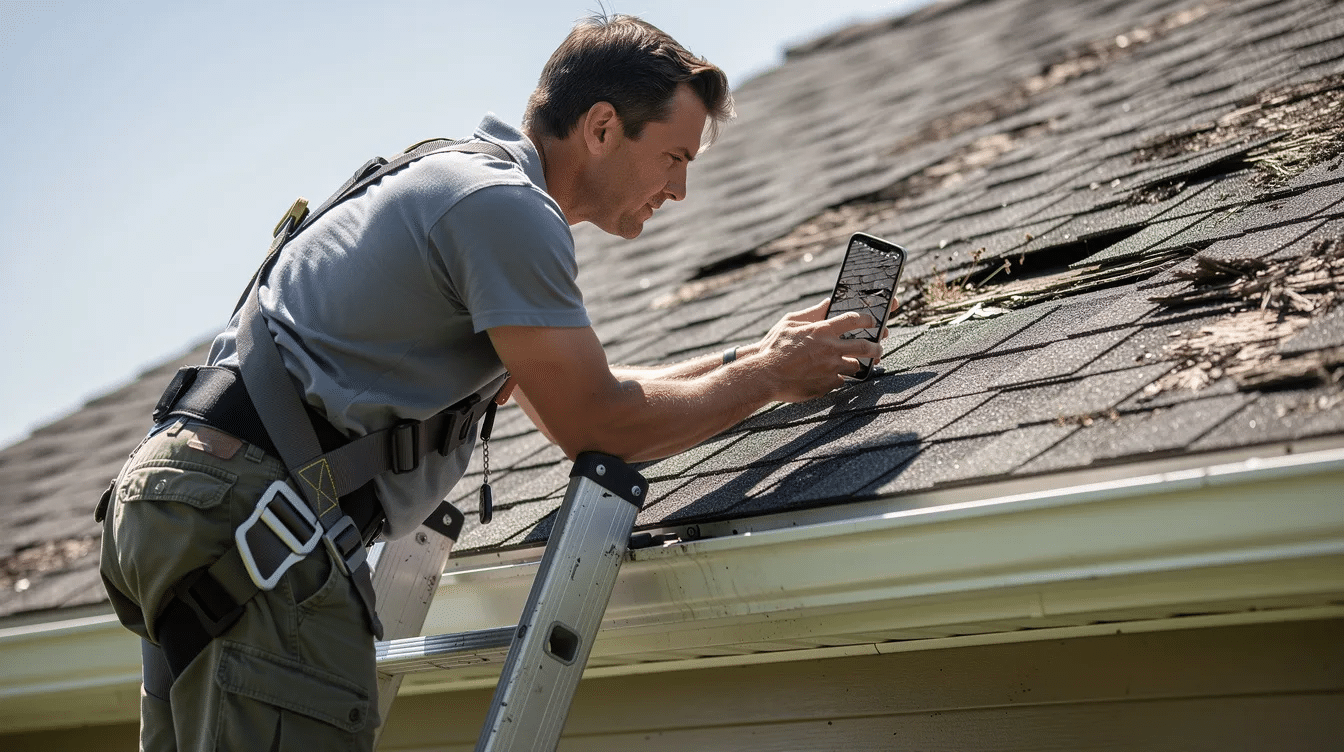
Short smartphone videos walking the roof perimeter or attic – narrating the date, storm name or date, and observed damage – supplement still photos and help your roofer and adjuster quickly distinguish cosmetic marks from functional storm damage.
Organized, timestamped photos significantly strengthen an insurance claim. They document damage in a way that words alone cannot.
Section 7: Storm Event Log and Timeline of Roof-Related Incidents
This is a simple, running log of significant events affecting your roof from the time you own the home.
For each entry, capture:
- Storm date, type (hail, straight-line wind, hurricane, tornado, ice), and severity
- Size of hail or wind speeds if known
- Source of data (NOAA, local news, weather app)
- Whether a free inspection or professional roof inspection was done afterward
- Any emergency temporary repairs or tarping
- Leaks discovered, interior water damage, and the date you first noticed each problem
- Fallen trees can cause significant roof damage – note any tree impacts separately
This log supports the “date of loss” for an insurance claim. Texas insurance carriers require documentation of the date and cause of loss for claims, and this log prevents disputes when carriers question whether damage occurs from a recent covered storm or from older, unreported minor damage.
Mark clearly in this log when the adjuster arrives, when estimates are received, when storm claims are filed, and when roof replacement or major repairs were completed. Every storm season in Texas generates potential entries – even if your roof is fine, logging “inspected after April 28 storm, no damage found” is valuable.
Section 8: Insurance Claim Records – From First Call to Final Check
This is where all documents from each individual claim are grouped together, clearly labeled by claim number and date of loss.
Items to file:
- Claim number, date filed, date of loss, adjuster name and contact info
- Copies of all emails or letters from the insurance company about coverage, approvals, or denials
- The insurance adjuster’s written scope and estimate
- Your qualified roofing contractor’s competing estimate
- Supplement requests and any revised scopes of work – these are critical to justify a full roof replacement versus patch repairs
- ACV payment check stub (the initial pay amount, which is replacement cost minus depreciation, minus deductible)
- Depreciation holdback payment once work is completed and final invoices submitted
- Any explanation of benefits documents
Documentation of construction details impacts the ability to recover depreciation on roof claims. If you can’t show what was installed, insurers may refuse to release the recoverable depreciation.
Critical timelines to track:
- Texas homeowners have one year to file a claim from the date of loss
- Adjuster inspection can take 7 to 45 days after filing
- Claims can take 60 to 120 days to complete
- Deadlines for submitting final invoices for recoverable depreciation vary by carrier
Missing these dates can cost you thousands. If your insurance company recommends a specific process for supplement submissions, note that process here.
Section 9: HOA, ARC, and Neighborhood Approval Documents (If Applicable)
Many Texas subdivisions – especially in Austin, San Antonio, and nearby cities – require HOA approval and sometimes Architectural Review Committee (ARC) sign-off before a new roof or major roof replacement.
HOA rules dictate roofing material and appearance standards, and homeowners must obtain HOA approval before replacing roofs. Failure to get HOA approval can result in fines or forced removal of the new roof at your expense.
Documents to keep:
- Completed architectural applications and emails submitting the request
- Written approvals or denials, and any conditions (color requirements, specific shingle profile, underlayment type, or HOA-approved contractors)
- Relevant sections of the CC&Rs or governing documents that address roofing so future projects don’t restart research from scratch
- Tracking dates: date application submitted, date HOA responded, and approval effective date. Under Texas law, the architectural committee must act on a complete application within 45 days or approval is deemed granted
- HOA violation letters or compliance letters related to roof appearance or maintenance
HOA governing documents define roof responsibility for homeowners, and most HOAs require early planning for roofing projects. Class 4 impact-resistant shingles reduce storm damage risk, and Texas Property Code § 202.011 prohibits HOAs from banning wind- and hail-resistant materials that meet aesthetic requirements. However, HOA approval does not guarantee warranty eligibility for roofs – that depends on the manufacturer’s installation requirements being met.
Section 10: Maintenance, Repairs, and Leak Fix History
Insurers increasingly look for lack of maintenance as the most common reason to reduce or deny roof claims. This section shows a clear history of responsible upkeep. Texas roof files should include maintenance and inspection logs to address insurance claims proactively.
Entries to track:
- Date of repair, contractor name, invoice, and photos of the leak or defect before repair
- Photos of completed work (e.g., replaced pipe boot, resealed chimney flashing, corrected ventilation)
- DIY maintenance with dates and brief notes – gutter cleaning, debris removal, small caulking work – even if no invoice exists
- Recurring problems identified (like a chimney that leaks every heavy rain), which helps a future roofer diagnose issues and shows an adjuster that a new leak is linked to recent storm damage rather than years of neglect
A simple annual maintenance checklist stored here adds credibility:
“Spring 2025: cleaned gutters, checked for missing shingles, inspected attic for moisture, no issues found.”
Section 11: Resale, Appraisal, and Disclosure Documents Related to Your Roof
This section supports home resale, appraisals, and legal disclosure requirements when you sell in Texas. A comprehensive roof file can simplify home resale by documenting roof history transparently.
Items to include:
- Home inspection reports that commented on the roof
- Appraiser notes about roof age or roof condition
- Buyer requests for repairs or credits tied to the roof
- Copies of seller’s disclosure forms where roof age, known leaks, past insurance claims, and repairs were declared, with the date signed
- A concise one-page “Roof Summary for Buyers” outlining installation date, any full replacement history, storm damage repairs, existing warranties transferable to the new owner, and personal property distinctions (like removable solar panels)
A detailed roof ownership file supports a higher asking price and faster buyer confidence, especially in markets hit hard by hail where buyers worry about hidden roof problems.
Section 12: How to Set Up, Organize, and Keep Your Roof File Updated
Starting the file takes about an hour. Keeping it current takes minutes per event.
Recommended structure:
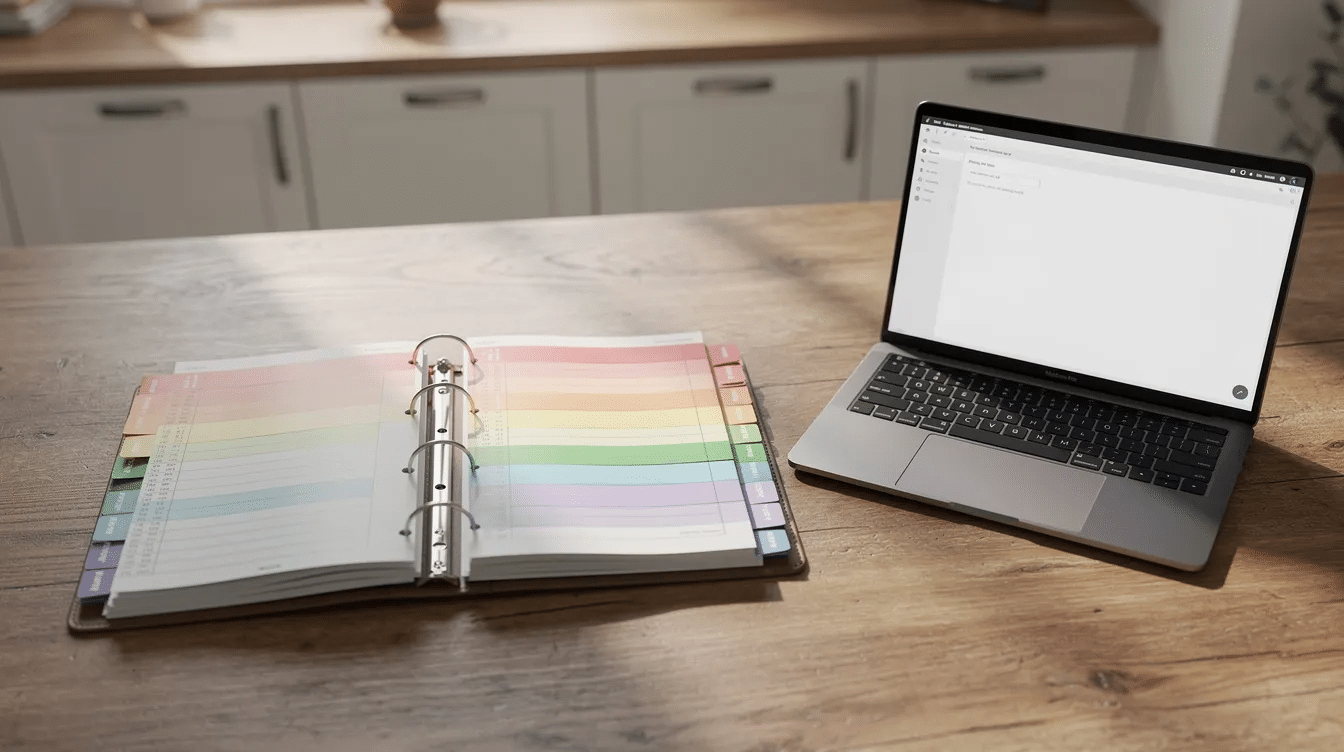
- One physical binder with labeled dividers for each section above
- A mirrored digital folder in cloud storage (Google Drive, Dropbox, OneDrive) using clear naming conventions and dates
- File-naming format: “2024-04-28Hail_Damage_Photos_NorthSlope” or “2025-03_Annual_RoofInspection_Report[CompanyName].pdf”
- Schedule a “Roof Check & File Update” reminder every spring and after any major Texas storm – hail, hurricane, strong wind event – to add new photos, inspection reports, or claim paperwork
- Share file access with trusted family members or whoever would handle the property in an emergency, so documentation isn’t locked behind one person’s email account
Section 13: Using Your Roof Ownership File Strategically (Claims, HOAs, and Negotiations)
The real power of the file is how you use it before problems escalate – not as passive storage.
Before filing a claim:
- Review your storm log for the exact date of loss
- Compare pre-storm and post-storm photos to document damage clearly
- Meet your roofer with the file handy so they can prepare a complete written scope of damage rather than guessing at history
When the adjuster arrives:
- Provide printed inspection reports showing pre-storm roof condition
- Show photos of functional storm damage – not just cosmetic marks
- Walk through warranty limitations and the roof’s full history so the insurance adjuster understands why a full roof replacement, not spot repair of minor damage, may be appropriate
- Be aware of storm chasers who promise a free roof – work with a qualified roofing contractor who operates in good faith and provides a written report
For HOA approval:
- Attach manufacturer specs, color samples, proof of impact-resistant rating, and past approvals to fast-track the process and avoid delays with your HOA management company
For negotiations and appeals:
- Homeowners can request a re-inspection after a claim denial. A public adjuster can also review the file and advocate on your behalf
- A well-kept roof file supports supplement requests, re-inspections, and even appraisals if a claim is underpaid. Insurance fraud is easier to combat – and easier for carriers to allege – when documentation is thin. A complete file protects you on both sides
- If you need to tear off the existing roof and the carrier only approved a repair, your file’s documentation of older roofs with widespread damage across every full slope strengthens your case for full replacement
A well-maintained roof ownership file is one of the most valuable hidden assets a Texas homeowner can maintain. It doesn’t cost anything to keep – but it can save you tens of thousands when it matters.
Frequently Asked Questions
How often should I update my roof ownership file in Texas?
Update the file at least once a year, typically after a spring roof inspection, and immediately after any major event: hail storm activity, strong wind events, hurricanes, or noticeable leaks. Even a quick note saying “inspected after storm, no damage found” adds value over time.
Can my roof ownership file really change the outcome of an insurance claim?
No file guarantees approval, but detailed documentation of pre-storm condition, storm damage, and maintenance history often leads to smoother claims, stronger arguments for full roof replacement at replacement cost rather than actual cash minus depreciation, and fewer disputes over wear-and-tear versus covered damage. The Texas Department of Insurance publishes guidance encouraging homeowners to keep these records for exactly this reason.
Do I still need a roof file if my HOA or condo association technically owns the roof?
Yes. Even in condos or townhomes where the association owns the roof, keeping your own mini file with storm dates, leak reports, HOA communications, and interior damage photos protects you during master policy claims and resale disclosures. It also helps if your insurance provider needs documentation of how damage to the building affected your unit or personal property.
What if my current roof is already 15–20 years old and I have no past paperwork?
Start the file today. Schedule a roof inspection to establish a baseline, take photos of every slope, create a new storm log going forward, and contact prior owners, your agent, or your city’s permitting office for any available past roof replacement records. Even a partial file is dramatically better than nothing when you need to pay a deductible and recover the rest from your carrier.
Is it better to keep my roof ownership file on paper or digitally?
A hybrid approach works best. Keep a simple physical binder for quick reference when the adjuster arrives at your door, and maintain a secure cloud folder with scanned copies and high-resolution photos so documents are safe if the home suffers severe storm damage or fire. Use clear file names with dates so anyone accessing the folder can find what they need without your help.

