
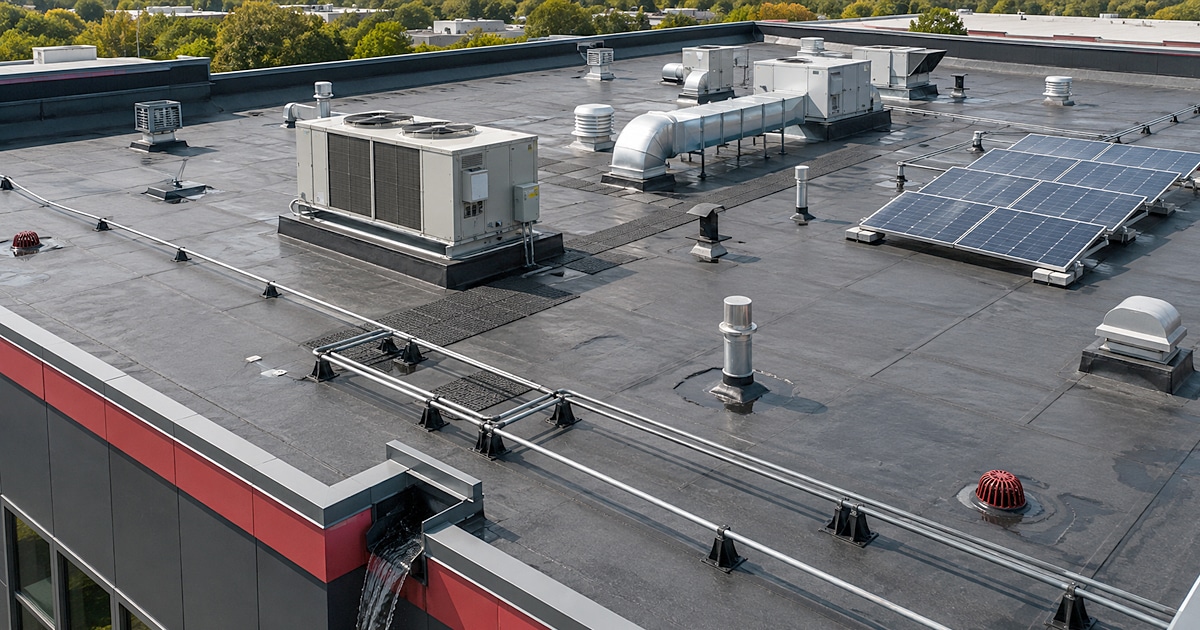
Understanding how rooftop equipment affects commercial roof performance starts with recognizing that every piece of rooftop equipment changes the way a commercial roof handles weight, wind, water, heat, and routine maintenance. Roof mounted equipment such as HVAC units, solar panels, exhaust fans, ductwork, and communication systems can place additional loads on the roof structure, introduce new roof penetrations, alter drainage across the roof surface, and create areas where the roof membrane and insulation require additional protection. When equipment installation is properly designed and coordinated with the roofing system, these components can operate without compromising the building envelope or the long term performance of the roof.
Problems usually develop when equipment is added without considering the entire roof assembly. Concentrated loads can affect structural supports, poorly located units can interfere with drainage, and improperly sealed penetrations can allow moisture intrusion into insulation and the building interior. Wind loads around larger equipment can also place additional stress on curbs, fasteners, roofing materials, and anchorage connections, particularly on low slope roofs exposed to high winds and wind driven rain.
Energy efficiency is another part of the equation. Rooftop HVAC systems, roof insulation, solar panels, reflective roofing materials, and properly sealed building envelope components all influence heat transfer and energy loss. For building owners and facility managers, coordinating equipment placement, structural support, waterproofing, maintenance access, and material selection helps protect roof durability while reducing the risk of premature repairs or shortened service life.
Key Takeaways
- Rooftop equipment such as HVAC units, solar panels, and antennas can significantly affect roof performance, the roofing system, and the building envelope, depending on how the equipment is designed, installed, supported, and maintained.
- Most commercial roof failures during high winds begin at vulnerable roof perimeters, edges, flashing, and attachment points, while roof penetrations, curbs, and roof mounted equipment can create additional weak points in the roofing system and roof membrane.
- Wind loads and wind pressures on low slope roofs can be several times higher at equipment locations than at ground level, making anchorage and supports critical. In fact, FM Global reported that 80% of wind-loss dollars among its insured clients from 2000–2019 were associated with roofing system failures, reinforcing why wind loads, wind pressures, and properly anchored rooftop equipment matter to commercial roof performance.
- Rooftop equipment directly impacts energy efficiency, waterproofing, and maintenance costs over the 20–30+ year service life of a commercial roof.
- Owners should coordinate roofing, structural, and mechanical design together-especially on new installs or re-roofs-to avoid premature roof failure.
Why Rooftop Equipment Matters for Roof Performance
Modern commercial roofs-especially low slope roofs-are crowded with HVAC units, ductwork, solar panels, cables, conduit runs, and vents. Each piece of equipment changes how the roofing system behaves under load, weather, and time. Every penetration and support for rooftop equipment is a potential weak point for leaks, wind uplift, and thermal bridging in the building envelope.
This is not a theoretical concern. During Gulf Coast storms in the 2010s and early 2020s, large HVAC units broke loose and tore roof membranes, causing extensive water intrusion and damage to the building interior. Poorly designed rooftop installations can result in increased maintenance and repair costs that dwarf the original equipment investment. This article walks building owners, facility managers, and designers through the main ways rooftop equipment affects roof performance-and what to consider when adding or upgrading equipment. The focus is on commercial roof assemblies, but many principles also apply to larger residential flat or low slope roofs.
Types of Rooftop Equipment Commonly Found on Commercial Roofs
Different categories of roof mounted equipment affect the roof in different ways-by weight, vibration, heat output, and wind profile. Understanding the equipment mix on your roof is the first step before evaluating wind loads, drainage impacts, or maintenance access requirements.
Major categories include:
- Packaged HVAC units and exhaust fans – typically sit on curbs; heavy, vibration-producing
- Make-up air units and walk-in cooler/freezer condensers – significant point loads, refrigerant line penetrations
- Solar panels and mounting racks – ballasted or mechanically attached systems covering large areas
- Satellite dishes, antennas, and communication cabinets – smaller but often added piecemeal over years
- Plumbing vents and lightning protection – low-profile but require membrane penetrations
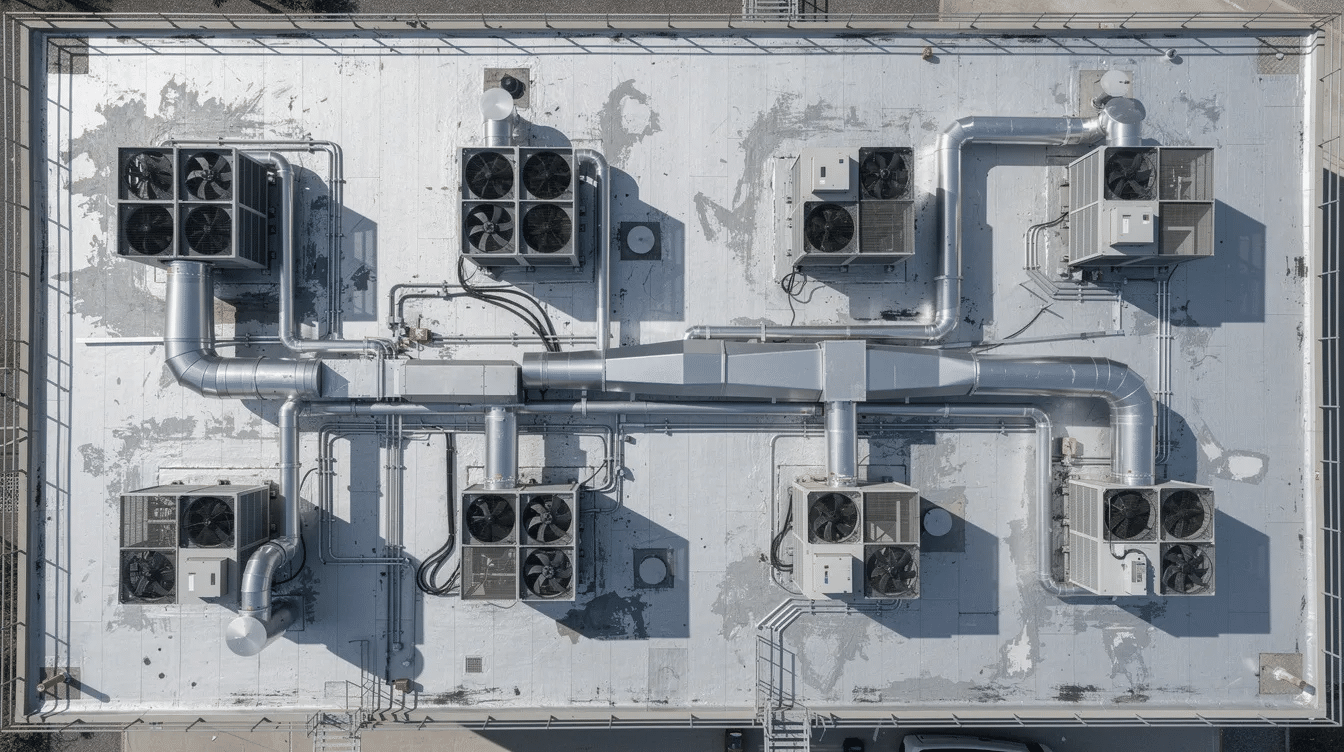
- Ductwork and piping – rely on sleepers or support frames across the roof surface
Each type interacts with the roofing system differently. HVAC systems produce constant vibration and heat. Solar panels alter wind pressures across wide areas. Antennas catch wind at height. Ductwork on sleepers creates distributed loads and can obstruct drainage. Knowing what you have up there-and how each unit connects to the roof structure-is essential before making any changes.
Structural Loads: Weight, Point Loads, and Roof Framing Impacts
Commercial roofs are designed for specific live and dead loads. Installing rooftop equipment alters a roof’s structural performance, and concentrated loads from heavy units can exceed the original design capacity if not planned correctly.
Large HVAC units, generators, or mechanical platforms impose significant point loads on deck and joists. Heavy equipment introduces localized dead loads and dynamic loads that older buildings-originally designed for light equipment-may not handle. Heavy equipment concentrates loads that can deform or damage roofing membranes beneath supports.
The cumulative effect is often overlooked. A building might receive its original HVAC systems in the 1990s, satellite antennas in the 2010s, and solar panels in the 2020s. Without a structural review at each stage, these additions can overstress the roof framing. Deflection from under-designed support causes ponding water on low slope roofs, which further increases load and accelerates membrane aging-a self-reinforcing cycle.
Any new major rooftop equipment after initial construction, or any relocation of heavy units, should trigger a structural engineer review and coordination with the roofing contractor. The cost of this review is minor compared to the cost of a structural failure or chronic ponding.
Wind Loads and Wind Pressures on Roof Mounted Equipment
Design wind pressures can be significantly higher at roof corners, edges, and around rooftop equipment than across the open field of a commercial roof. Roof mounted equipment can also alter local airflow and create additional turbulence, making wind loads, wind pressures, anchorage, and roofing system attachment especially important in these high-stress areas.
Standards like ASCE 7-16 and ASCE 7-22 provide methods to calculate design wind loads on buildings and roof-mounted structures. ASCE 7-05 provides wind load recommendations for rooftop equipment as well, and these have evolved through subsequent editions. FM 4450 evaluates wind uplift at the system level, adding another layer of performance verification. Wind loads vary based on equipment elevation and geometry-a tall, box-shaped unit near a roof corner faces dramatically higher uplift than a low-profile vent in the center field.
Wind loads on rooftop equipment can cause significant damage when anchorage is insufficient. Wind loads on roof-mounted equipment must be resisted by anchorage connections designed for worst-case pressures, not just the unit’s static weight. During Hurricane Katrina, estimated uplift pressures on the Louisiana Superdome reached roughly 80–100 psf, placing extreme stress on the roofing system, roof membrane, rooftop equipment, and anchorage connections. Windborne debris and displaced roof components also contributed to membrane damage and water intrusion across the roof.
The statistic bears repeating: FM Global reported that 80% of wind-loss dollars among its insured clients from 2000–2019 were associated with roofing system failures. Cover boards improve the performance of roofing assemblies against wind uplift and should be considered in high-wind regions. Designers and contractors should verify that curbs, bases, and fasteners are sized and spaced to handle worst-case wind pressures in every zone of the roof.
Roof Penetrations, Curbs, and Waterproofing Vulnerabilities
Most leaks on commercial roofs originate at terminations, seams, and roof penetrations created to serve rooftop equipment-not in the membrane field. Poorly sealed penetrations are a leading cause of water infiltration in commercial buildings.
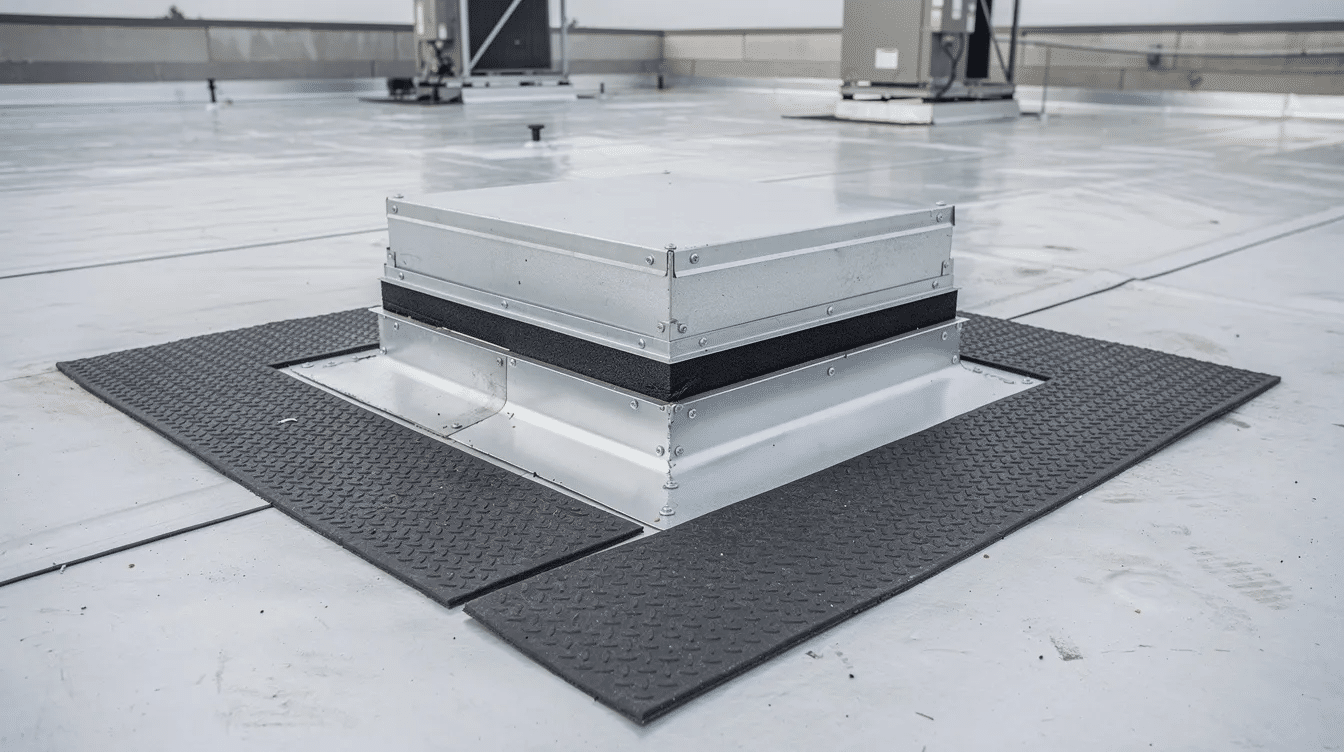
Curbs for HVAC units, pipe penetrations, electrical conduits, and vent stacks interrupt the continuity of the roof membrane and require precise flashing and counterflashing details. Proper flashing details around penetrations are critical to maintaining roof integrity. Gaps and seams must be sealed to prevent air leakage and moisture intrusion, especially where wind driven rain can be forced into even small openings under pressure.
Cutting in new penetrations for additional equipment after the roof is installed-for example, during a future tenant improvement-is especially risky if not coordinated with the original roofing contractor. Compatible sealants, pre-manufactured boots, pitch pans, and properly flashed metal curbs all play a role in maintaining the building envelope. The choice of materials and method matters: pitch pans are notoriously failure-prone unless well constructed and overflashed, while factory boots tend to perform better.
Repeated re-roofing without reworking or replacing aging curbs and penetration flashings can trap moisture and create chronic leak paths. Material selection for flashings and sealants should account for UV radiation exposure, vibration, and temperature cycling at each location.
Drainage Patterns, Ponding Water, and Debris Accumulation
Any rooftop equipment placed near drains, scuppers, or gutters can disrupt water flow on low slope roofs and lead to ponding water. Equipment can obstruct drainage paths on flat roofs, and rooftop equipment can reduce membrane lifespan by obstructing natural water flow over time.
Support rails, conduit racks, and solar panel arrays can act as dams that catch leaves, branches, and debris, backing up water around equipment bases. Equipment placement should be coordinated with existing drainage systems to prevent standing water. When units or supports are properly positioned relative to drainage paths, this risk drops significantly.
The long-term effects of ponding are serious:
- Added rainwater loads on the building structure, with rooftop equipment also capable of creating localized snow loads and drifting in colder climates
- Accelerated membrane degradation and seam failures
- Algae and biological growth that holds moisture against the roof surface
- Increased risk of leaks at laps and flashing joints
We recommend setting minimum clearances from internal drains and scuppers, keeping primary flow paths open, and integrating protective crickets to divert water around large units. Regular commercial roof inspections should include verifying that equipment platforms, cables, and conduit supports have not sagged or shifted into drainage paths over time.
Energy Efficiency, Heat Gain, and Building Envelope Performance
The layout and detailing of rooftop equipment directly influence the thermal and air barrier performance of the building envelope. Poor installation can lead to significant energy loss-and the effects compound over years.
Penetrations for ductwork, conduits, and refrigerant lines can become uncontrolled air leakage paths if not sealed correctly at both the roof membrane and the interior air barrier layers. Where the roof assembly includes a vapor barrier, equipment installation should preserve the continuity of that vapor barrier, insulation, and other building envelope components to help prevent moisture intrusion and energy loss around new roof penetrations. A well-installed roof system acts as a continuous barrier against heat transfer and air movement. When that barrier is compromised, energy loss climbs. Roof insulation significantly affects energy loss control, and any compression of insulation under heavy equipment reduces its effectiveness.
Heavy rooftop units increase the risk of thermal bridging, impacting insulation effectiveness. Poorly insulated curbs and metal sleepers create thermal bridges that allow heat to bypass insulation. Compressed or interrupted roof insulation around rooftop equipment can also reduce the effective performance of the insulation, especially where equipment supports, curbs, and roof penetrations interrupt the continuity of the roofing system. Research has shown that thermal bridging can significantly reduce insulation effectiveness and increase heating and cooling loads, with the impact depending on the roofing system, materials, construction details, and the extent of the thermal bridge. Localized heat from rooftop equipment can lead to accelerated thermal shock in roofing materials, and equipment can generate localized hot spots affecting the roof materials beneath them.
Roofing materials impact HVAC system efficiency and lifespan as well. High-reflective roofing materials reduce heat absorption, while dark roofing materials increase cooling demand in buildings. High roof temperatures and repeated heating and cooling cycles can create thermal cycling that stresses roofing materials over time. The top surface of the roof plays a direct role in how hard your HVAC systems work-and how long your roofing materials last in different environments.
Thoughtful ventilation beneath equipment, combined with proper insulation and air sealing at every penetration, can make the difference between a building that performs efficiently and one that bleeds energy through its roof.
Solar Panels on Commercial Roofs: Unique Effects on Roof Performance
The rapid growth of rooftop solar on commercial buildings after 2015 has increased the complexity of roof design and maintenance. Solar panels interact with the roofing system in ways that are distinct from traditional mechanical equipment.
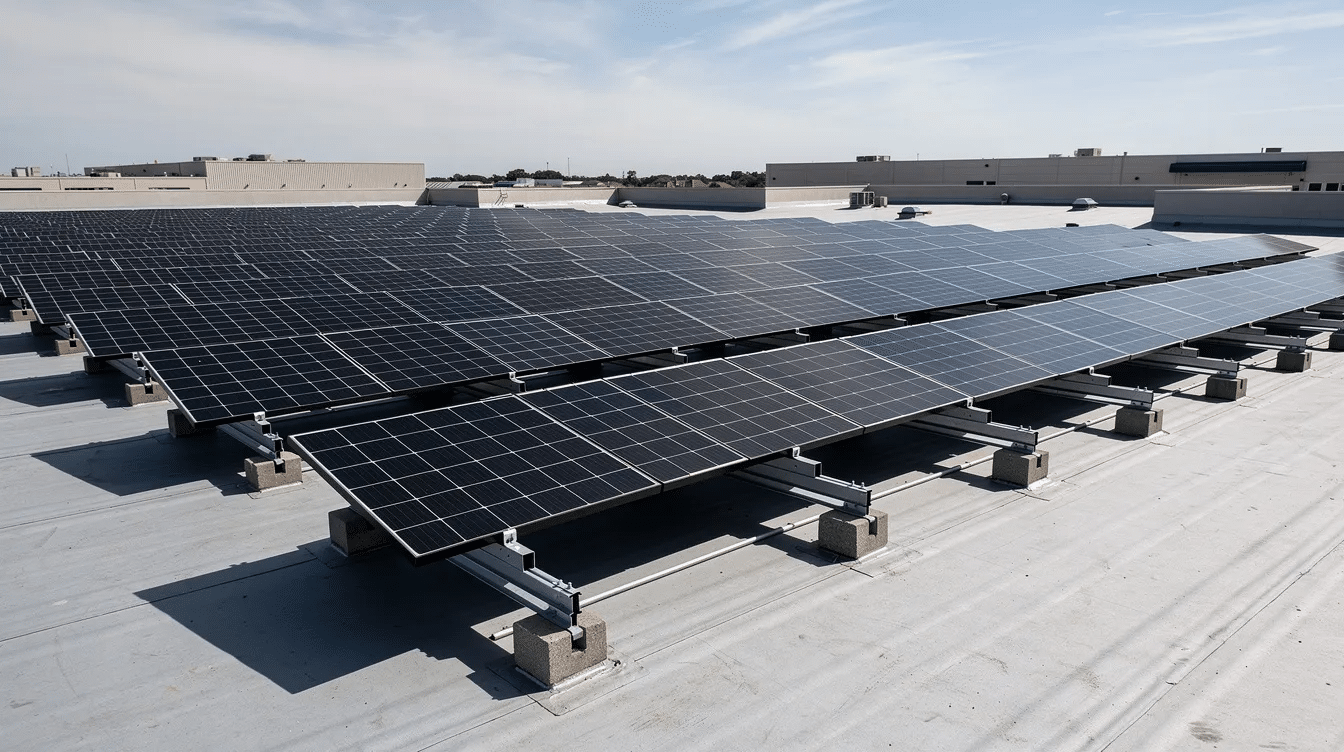
On low slope roofs, the main mounting systems are ballasted racks (which rely on weight and friction to stay in place) and mechanically attached systems (which anchor through the membrane into the roof structure). Ballasted systems avoid penetrations but add dead load and can shift if not properly engineered for wind uplift. Mechanically attached systems require careful flashing at each anchor point to protect against water intrusion.
Solar arrays change wind pressures on the roof. Under panel edges, localized uplift and suction can develop if the layout, spacing, and ballast are not designed per current standards. ASCE 7-16 Section 29.4.4 provides wind-pressure provisions for certain solar panels installed parallel to the roof surface and no more than 10 inches above it, with panel gaps and perimeter setbacks that help account for wind loads and edge effects on commercial roof assemblies.
Dense arrays shade the membrane, which can slow UV degradation-a benefit. But trapped moisture under panels, combined with poor drainage, can promote mold growth and fastener corrosion. The construction of supports exposed to these conditions must resist corrosion over the array’s full lifespan.
Before installation, the roof’s remaining service life should be evaluated. Placing a 25–30 year solar investment on a roof that may need replacement within 5–10 years is rarely cost-effective. Removing and reinstalling arrays for re-roofing is expensive and risks damaging the membrane. Combining re-roofing and solar installation is often the smarter approach.
Foot Traffic, Vibration, and Maintenance Access Around Equipment
Roofs with extensive rooftop equipment see far more foot traffic than simple roofs, increasing wear and the risk of damage from dropped tools, dragged filters, and repeated walking paths. Service technicians frequently walk to and around units, and without protective walkways, they can cut or puncture the membrane.
Mechanical vibrations from rooftop units can fatigue roofing materials over time. Running fans, compressors, and cooling towers produce cyclic movement that loosens fasteners, degrades sealant joints, and can cause flashing to separate from curbs. This is especially problematic on exterior walls of parapet-mounted equipment where vibration transfers into the structure.
Best practices include:
- Installing designated walk pads and service platforms along access routes
- Keeping access paths clear of drains and fragile membrane areas
- Coordinating with mechanical contractors to route piping and conduits on elevated supports
- Ensuring technicians can inspect and clean the roof surface beneath raised components
These measures protect the membrane, extend its durability, and reduce repair costs over the roof’s life.
Designing and Installing Proper Roof Equipment Supports
The interface between rooftop equipment and the roof membrane is where long term performance is often won or lost. Engineered supports-pre-fabricated equipment supports, curbs, pipe stands, and sleepers-distribute loads, maintain watertightness, and protect the roofing system from damage. Proper installation also helps protect roof assemblies, roofing materials, insulation, and other building components from moisture intrusion while supporting the long term performance and durability of commercial roofing systems.
Properly designed supports help keep HVAC units stable, level, and properly positioned above the roof surface. Adequate clearance around rooftop equipment supports proper airflow, drainage, and maintenance access, while installation quality, sealed connections, and correctly supported HVAC systems can help reduce unnecessary energy loss and protect long term roofing system performance.
Best practices for support design include:
- Using non-penetrating supports where possible, within load and wind limits
- Isolating vibration with appropriate pads or spring mounts
- Selecting materials compatible with the roofing system (treated steel, UV-stable plastics, aluminum)
- Ensuring curbs extend above the finished roof surface by the minimum height required by building code-often 8 inches or more
- Insulating curbs to break the thermal bridge and prevent condensation
All supports and attachment details should be coordinated with the roof system manufacturer. Unauthorized rooftop equipment, roof penetrations, or equipment supports can affect roofing system warranty coverage, so installation details should be coordinated with the roof manufacturer and roofing contractor before work begins. The ability to maintain fire resistance ratings at penetrations and curbs also depends on using approved details and components.
Lifecycle Planning: Coordination, Inspections, and Re-Roofing
Rooftop equipment has a lifecycle-often 15–25 years for HVAC units and 25–30+ years for high-quality commercial roofs. Regular commercial roof maintenance is essential to prevent damage from rooftop equipment and to catch small problems before they become costly failures. Aging roofs lose their ability to control air and temperature, making coordination between roof and equipment lifecycles even more important.
We recommend aligning major roof projects-re-roofing, overlay, or coating-with planned mechanical and solar upgrades to minimize rework. For many existing commercial buildings, this alignment window falls in the late 2020s to mid-2030s.
Inspection practices should include:
- At least annual roof inspections, plus checks after major storms or hail events
- Focus on equipment anchorage, flashing condition, sealant integrity, and drainage paths
- Documenting environmental factors like corrosion patterns or UV exposure levels
Maintaining a roof asset register-documenting equipment locations, curb types, penetration details, and installation dates-guides future modifications and helps every contractor who touches the roof understand what they are working with.
When re-roofing, it is often wise to replace deteriorated curbs, re-route abandoned lines, and rationalize the equipment layout instead of simply roofing around old installations. The process of re-roofing is the best opportunity to upgrade walls and flashing details, improve insulation, and reset the clock on your roof’s performance.
FAQ
These FAQs address common practical questions building owners and facility managers ask about how rooftop equipment affects roof performance.
Does adding new rooftop equipment always require structural and roofing review?
Any significant new rooftop equipment-such as a new 10-ton HVAC unit, generator, or large solar array-should be reviewed by a structural engineer and the roofing contractor to confirm load capacity, attachment methods, and flashing details. Even smaller items like multiple antennas or condensers added over several years can accumulate loads that affect the building structure. These additions should be coordinated rather than installed piecemeal to protect the roof and preserve its warranty.
Can I install solar panels on a commercial roof that is more than 15–20 years old?
While it is technically possible, it is rarely ideal to place a 25–30 year solar investment on a roof that may need replacement within 5–10 years. We recommend assessing roof condition, warranty status, and remaining service life first. Often, combining re-roofing and solar installation in a single project is more cost-effective and avoids the expense and risk of tearing off and reinstalling panels later. Manufacturers of both roofing and solar systems generally prefer this approach.
How close can rooftop equipment be to roof drains or gutters?
Good practice is to keep equipment, supports, and conduit racks several feet away from primary drains and scuppers, leaving clear and unobstructed flow paths for rain and snowmelt. Local codes, manufacturer guidelines, and the roof designer’s layout should all be consulted. Crowding drains with equipment increases the risk of ponding and leaks-two of the most common and preventable problems on low slope roofs.
Will adding more rooftop HVAC units hurt my building’s energy efficiency?
Additional rooftop HVAC units do not automatically reduce energy efficiency, but poorly planned penetrations, uninsulated curbs, and longer duct runs across hot roof surfaces can increase energy loss. Any expansion of rooftop mechanical systems should include details for air sealing, curb insulation, and minimized duct exposure. When these details are handled correctly, new equipment can actually improve overall building efficiency.
How often should rooftop equipment and related flashings be inspected?
We recommend at least an annual inspection of all rooftop equipment penetrations, curbs, and supports, plus inspections after severe weather conditions-particularly high winds or hail. Buildings in harsher climates (coastal wind zones, high UV areas, or regions with frequent storms) benefit from semiannual inspections. Catching a cracked sealant or loosened fastener early is always less expensive than repairing the water damage that follows.

