
Most homeowners don’t realize how expensive waiting can be when it comes to roof damage. A loose shingle, a small flashing gap, or a faint ceiling stain feels easy to brush off, especially when there’s no active leak yet. But quick roof repairs are often the difference between spending a few hundred dollars today and facing a five-figure repair bill down the road. Roof problems rarely stay small, and once moisture gets past the surface, the costs start stacking up fast.
This article breaks down why acting early matters so much. You’ll see how minor issues quietly turn into structural damage, mold problems, higher energy bills, and even denied insurance claims when repairs are delayed. The numbers make it clear: fixing problems early isn’t just good maintenance, it’s one of the smartest financial decisions you can make for your home.
Key Takeaways
- Fixing a $150–$500 leak or shingle issue now often prevents $3,000–$15,000+ in structural, mold, and interior damage within 6–24 months.
- Prompt repairs preserve warranties and insurance coverage, avoiding denied claims after major storms.
- Early fixes keep energy bills lower by preventing hidden drafts, wet insulation, and heat loss that force your HVAC system to work overtime.
- Quick professional repairs extend your roof’s lifespan by 5–10 years, delaying a full $10,000–$25,000 replacement.
- The National Roofing Contractors Association reports that 80% of full roof replacement services stem from ignored minor problems.
How Fast Roof Repairs Directly Save You Money
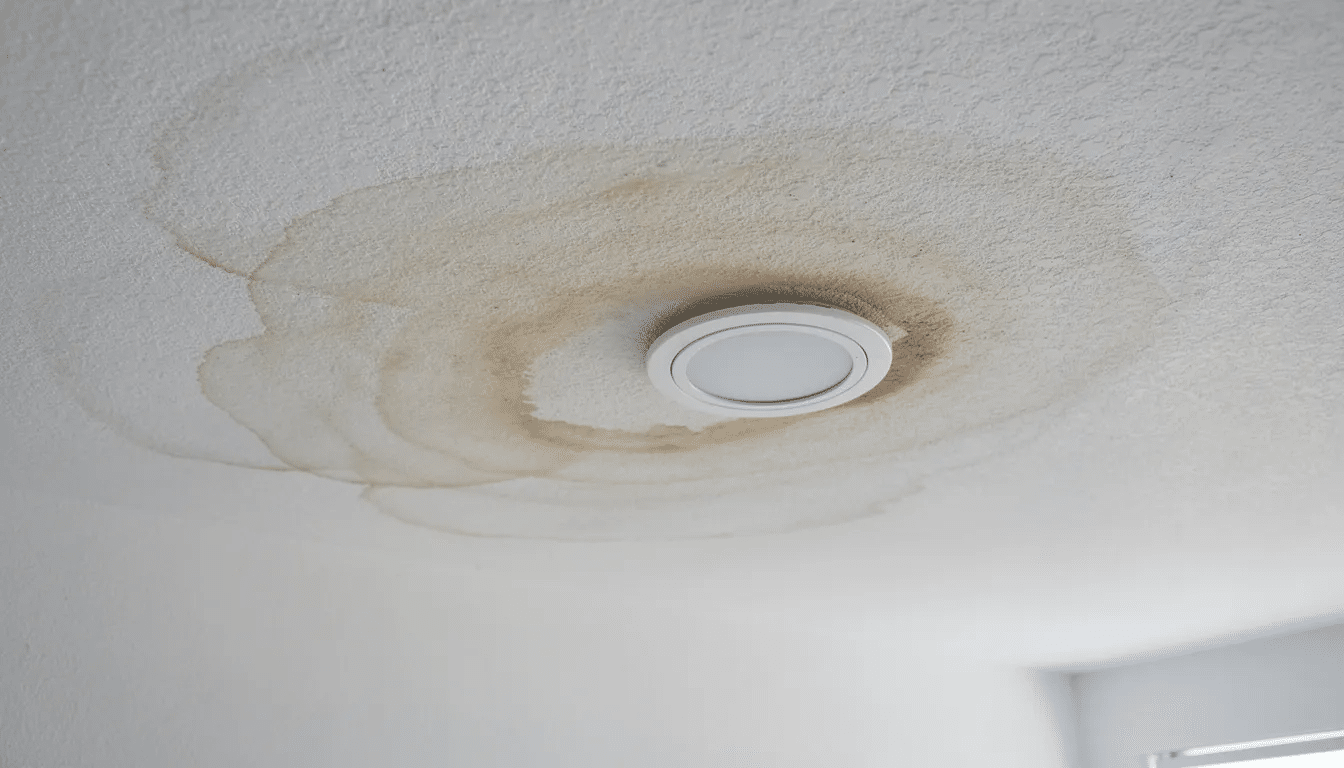
Picture this: a small leak appears after a March storm. You notice a faint water stain on the ceiling but decide to wait until summer to deal with it. By winter, that $300 fix has ballooned into a $7,000 nightmare involving rotted decking, ruined insulation, and drywall replacement throughout an entire bedroom.
This scenario plays out in thousands of homes every year. The math is brutally simple:
| Repair Type | Quick Action Cost | Delayed Action Cost |
|---|---|---|
| Shingle replacement | $150–$800 | N/A |
| Structural repairs | N/A | $3,000–$8,000+ |
| Drywall/ceiling fixes | N/A | $1,500–$4,000 |
| Mold remediation | N/A | $2,000–$30,000 |
| Total | $150–$800 | $5,000–$20,000+ |
Water doesn’t stay put. Once it penetrates your roofing system, it spreads sideways through decking and insulation within weeks. A 10-square-foot section of damaged shingles left for six months can easily expand the affected area to 50 square feet or more, multiplying both labor and material costs.
Every month of delay usually increases both labor and material scope—not just the price per hour.
Common “Small” Roof Problems That Turn Into Big Bills
Many issues homeowners dismiss in the first 30 days are the ones that become $10,000+ repairs. Here are the most common culprits:
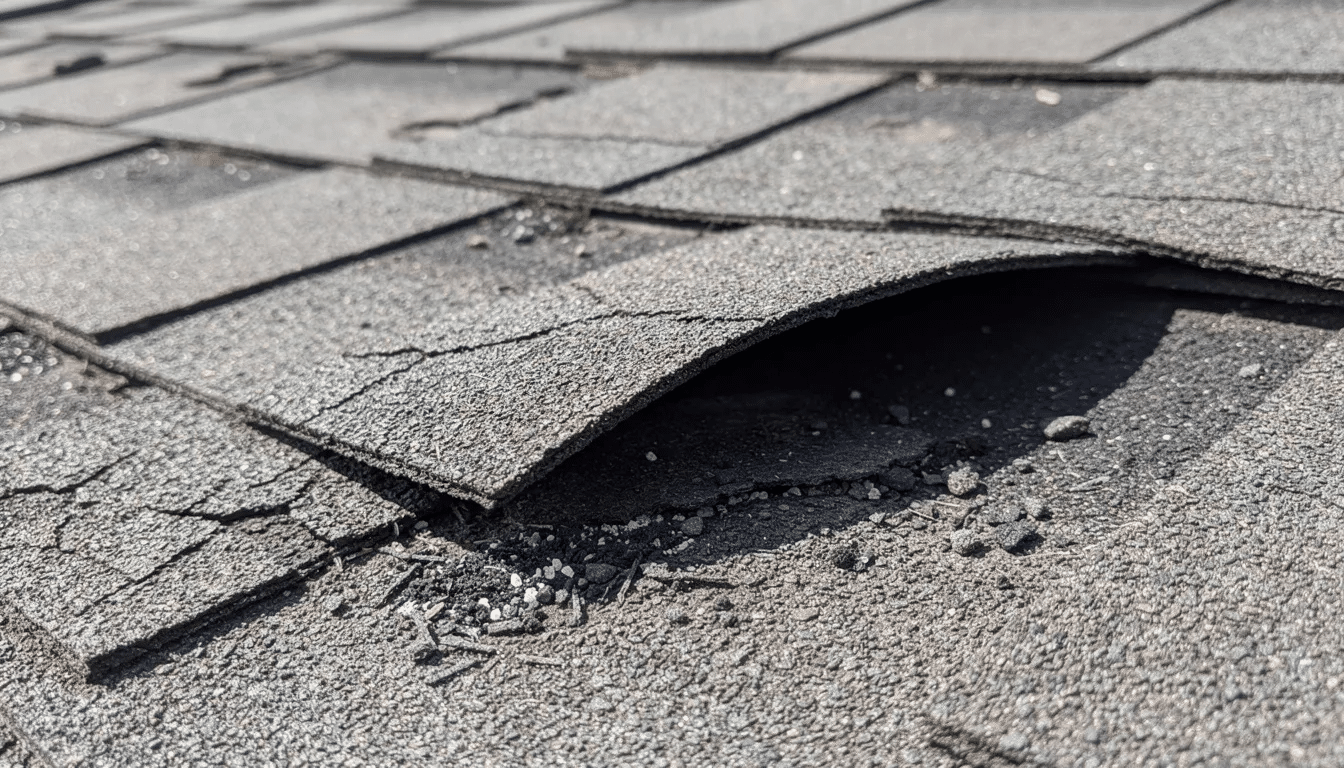
Missing or Damaged Shingles
What it looks like: A shingle lying in the yard after an April windstorm, or a bare patch visible from your driveway.
How long it’s ignored: Often an entire rainy season while homeowners “wait for better weather.”
The downstream damage: Exposed underlayment degrades within weeks, allowing water to reach decking. Within 3–6 months of repeated rain, you’re looking at rotted sheathing and compromised attic insulation.
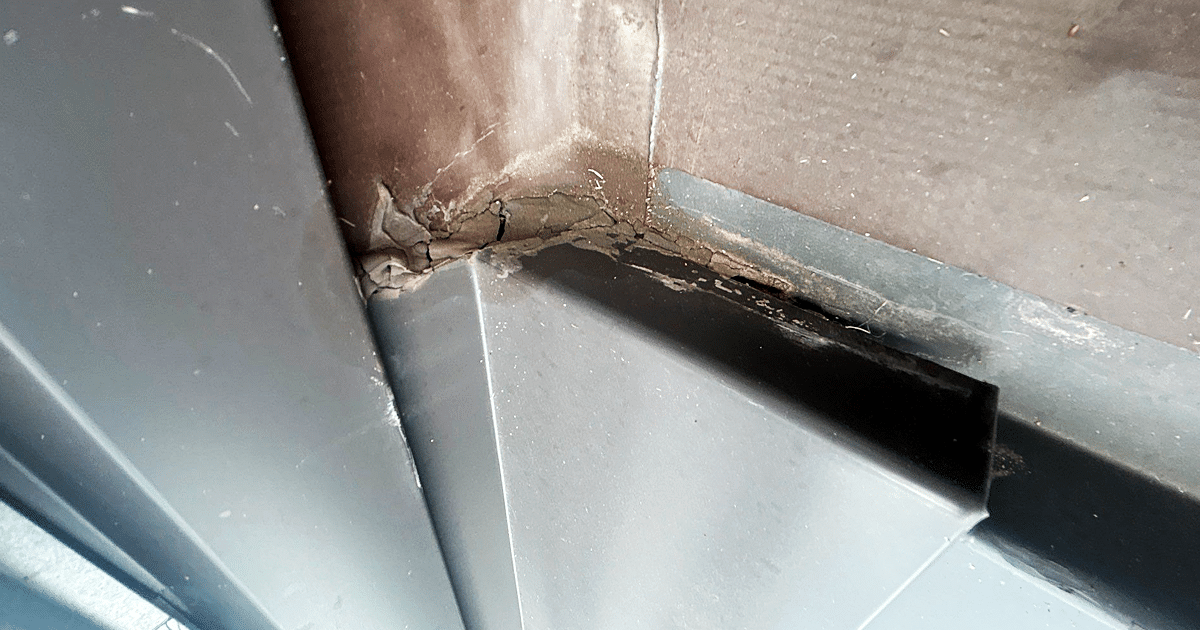
Cracked Flashing Around Chimneys and Vents
What it looks like: Rust stains on bricks, gaps between metal and roof surface, or dried-out caulking around a 2010-era chimney.
How long it’s ignored: Years, because it’s not visible from the ground.
The downstream damage: Water enters the building envelope at every rainfall, causing extensive damage to framing and interior walls before any stain appears inside.
Nail Pops and Exposed Fasteners
What it looks like: Small bumps on the roof surface or visible nail heads.
How long it’s ignored: Until the next thorough inspection—sometimes years.
The downstream damage: Each exposed nail is a direct water entry point. By the next freeze-thaw cycle, ice expansion widens the hole, accelerating rot.
Minor Hail Bruises
What it looks like: Subtle dents or granule loss that’s hard to spot without climbing up.
How long it’s ignored: Often until the next severe weather event when insurance adjusters finally inspect.
The downstream damage: Compromised shingles lose their weather resistance. Heavy rain penetrates the weakened areas, leading to minor leaks that become major over one winter.
Small Skylight Leaks
What it looks like: Faint moisture on skylight frames or slight discoloration on surrounding ceiling.
How long it’s ignored: Months, because it “only happens during heavy rain.”
The downstream damage: Water travels along rafters, damaging areas far from the skylight. Mold growth starts within 24–72 hours of moisture exposure.
Loose Ridge Caps
What it looks like: Lifted or crooked caps along the roof peak.
How long it’s ignored: Until high winds tear them off completely.
The downstream damage: Ridge areas are critical for proper ventilation. Failure here leads to both water intrusion and trapped moisture that accelerates shingle deterioration.
How Quick Repairs Prevent Water, Mold, and Structural Damage
Water damage is the main reason a $300 repair can become a $10,000 restoration within a year. Understanding how water travels through your home reveals why timely roof repairs are so critical.
Here’s the typical progression:
- Shingles fail → Water reaches underlayment
- Underlayment degrades → Water soaks into sheathing
- Sheathing absorbs moisture → Rot begins, water drips into attic
- Attic insulation gets wet → Loses R-value, mold spores activate
- Moisture reaches ceiling joists → Spreads to drywall and walls
- Interior damage becomes visible → By now, extensive damage has occurred
Over a 2–3 year neglect period, structural impacts compound: delaminated roof decking, sagging rafters, rusting metal fasteners, and compromised trusses. Studies show wood rot can progress at rates up to 1 inch per year in moist conditions.
Trapped moisture creates mold growth behind walls and in attics after just 24–72 hours of exposure. Professional mold remediation costs $2,000–$30,000 depending on extent—far more than the small repairs that would have prevented it.
Fast repairs after the first signs of stains, peeling paint, or attic dampness keep damage limited to the roof surface instead of the entire roof and building envelope.
Protecting Your Home’s Interior Finishes
Quick roof repairs protect the visible parts of your home that you interact with daily: ceilings, paint, hardwood or laminate floors, carpeting, and built-in cabinetry.
Consider this real-world scenario: a small leak above a second-floor bathroom goes unaddressed for one rainy season. The result?
- Ceiling collapse requiring full replacement
- Tile damage from water pooling
- Vanity cabinet swelling and warping
- Subfloor rot requiring tear-out
Cost comparison:
| Early Repair | Delayed Repair |
|---|---|
| Patch leak + repaint 10×10 ceiling: $500–$900 | Replace drywall, insulation, flooring, vanity: $3,000–$8,000 |
Secondary costs pile up too: temporary relocation from a bedroom, hotel stays during costly repairs, disruption to work schedules, and the stress of living in a construction zone. Peace of mind has real value.
Preserving Structural Integrity and Safety
Delayed repairs can weaken roof sheathing, rafters, and even load-bearing walls over several seasons of moisture exposure. The serious consequences often don’t become visible until damage is severe:
Warning signs that appear late:
- Soft or “spongy” spots when walking the roof
- Sagging rooflines visible from the street
- Doors and windows sticking from shifting framing
- Cracks appearing in interior walls
Structural repairs are a different category of expense entirely. They typically involve:
- Partial or full roof tear-off
- New framing lumber installation
- Engineering inspections
- Building permits and inspections
- Extended project timelines
Addressing roof leaks and missing shingles within days or weeks prevents this expensive structural work in most cases. Quick repairs aren’t just about saving money—they’re about avoiding safety hazards from compromised framing that could eventually fail.
Saving on Energy Bills With Timely Roof Repairs
Your roof does more than keep rain out—it’s a critical component of your home’s energy efficiency. Roof gaps, wet insulation, and attic air leaks increase monthly utility bills year-round, turning a roof damage problem into an ongoing expense.
Quick repairs stop conditioned air from escaping through damaged areas, especially around vents, chimneys, and skylights. The U.S. Department of Energy reports that air leakage can increase energy demand by up to 15%.
Here’s what happens when small leaks go unaddressed:
- Saturated insulation loses much of its R-value, sometimes dropping effectiveness by 50% or more
- Your HVAC system runs longer cycles trying to maintain temperature
- Higher utility bills become the new normal without an obvious cause
Simple math example:
A typical home’s energy bills might increase $20–$50 per month due to roof-related heat loss. Over a full year, that’s $240–$600 in hidden costs—often more than the repair that would have fixed the problem.
In areas like New York with already-high energy costs averaging $304/month, even small efficiency losses compound into serious money.
Restoring proper ventilation and sealing during a repair can also lower attic temperatures in hot months, extending shingle life and reducing cooling costs. A well maintained roof plays a direct role in keeping your home’s energy efficiency where it should be.
Preventing Hidden Moisture and Condensation Issues
Small roof penetrations and damaged underlayment can lead to condensation problems in cold months, even when no obvious leak is visible inside. This hidden moisture is particularly insidious because homeowners don’t realize there’s a problem.
Quick repairs to vents, flashing, and ridge caps help maintain correct airflow and reduce moisture buildup in the attic. Controlling moisture prevents both mold growth and rusting of metal components like nails, hangers, and HVAC ducts.
Real-world example: A homeowner notices what seems like a “minor draft” coming from an upstairs closet during winter. They add weatherstripping and forget about it. The actual cause? A damaged vent boot allowing warm, moist interior air into the cold attic space, where it condenses on roof sheathing. By spring, the sheathing shows early signs of rot and the attic has visible mold patches requiring $4,500 in remediation.
The fix for that vent boot? About $150–$300 if caught early.
Insurance, Warranties, and Why Speed Matters Financially
Insurers and manufacturers increasingly deny claims when there’s clear evidence of neglect or delayed repairs. Understanding these requirements can save you tens of thousands when you need coverage most.
Many homeowner policies require “reasonable maintenance” and timely action after storms to remain in good standing. If you neglect roof maintenance for years, don’t expect a warm reception when you file a claim for storm damage.
Manufacturer warranties on roofing materials—those 20–30 year asphalt shingles installed around 2015—often become void if obvious roof damage is left unrepaired. The fine print typically requires prompt attention to visible problems.
Example scenario: After a June 2023 hailstorm, two neighbors suffer similar roof damage. Neighbor A calls a roofing contractor within 48 hours, documents damage, and completes repairs within two weeks. Neighbor B waits until fall “when it’s more convenient.”
When a second storm hits in October:
- Neighbor A: Full coverage for new damage, clean claim history
- Neighbor B: Claim denied due to pre-existing unrepaired damage, must pay out of pocket
Spending a few hundred dollars on immediate repairs can preserve tens of thousands in potential insurance and warranty benefits later.
Avoiding Denied or Reduced Insurance Claims
Insurance adjusters routinely look for signs of long-term neglect when evaluating claims:
- Multiple layers of water stains (indicating repeated leaks)
- Heavy granule loss beyond normal aging
- Moss growth and debris buildup on shingles
- Rotten decking visible from the attic
- Previous amateur patch jobs
Insurers typically pay only for “sudden and accidental” damage—not for pre-existing deterioration caused by years of ignored minor problems.
Protect your claim position by:
- Keeping records of quick repairs and regular roof maintenance
- Saving inspection reports with dates
- Taking photos after each major storm
- Addressing visible issues promptly
Contact your insurer promptly after severe storms and schedule rapid roof inspections to document damage while it’s clearly storm-related.
The financial risk of delay is significant: partial payouts, higher deductibles applied to “maintenance-related” portions of damage, or complete denial due to lack of maintenance evidence.
Keeping Manufacturer and Workmanship Warranties Valid
Shingle and roofing system warranties often specify maintenance and prompt repair requirements that homeowners overlook. Ignoring these voids your coverage when you need it most.
Common warranty-voiding issues:
- Lifted shingles left unaddressed for months
- Exposed nails not re-sealed
- Damaged flashing around penetrations
- Debris buildup preventing proper drainage
- Improper ventilation causing moisture damage
Regular roof maintenance ensures your warranty remains valid. Schedule professional roof repair within days or weeks of noticing problems to align with typical warranty requirements.
Best practices:
- Save invoices and reports from each repair visit
- Request written documentation of work performed
- Keep photos showing roof condition before and after service
- Maintain a “roof file” with all warranty documents
A valid warranty can cover a large portion of future repairs—sometimes including both material and labor costs—if issues arise later. That coverage is worth protecting.
Quick Repairs vs. Full Replacement: The Long-Term Math
Understanding when to repair versus replace requires looking beyond immediate costs to lifetime expenses. Here’s how the numbers typically break down:
| Service Type | Typical Cost Range |
|---|---|
| Spot repairs (patching, few shingles) | $200–$1,500 |
| Partial section replacement | $1,500–$5,000 |
| Full roof replacement | $10,000–$25,000+ |
Consistent quick repairs can often extend the life of a 20–25 year asphalt shingle roof by 5–7 years, delaying major expense significantly.
Lifetime cost example:
| Approach | 25-Year Cost |
|---|---|
| Proactive: $500–$1,000 repairs every 2–3 years | ~$4,000–$8,000 total in repairs + replacement at year 25 |
| Reactive: Ignore issues until forced replacement | Replacement at year 17 + emergency repairs = $15,000–$30,000+ |
The Firestone-ProLogis study tracking commercial roofs over 15 years found that proactive maintenance at 14 cents per square foot annually versus reactive at 25 cents yielded $236,750 in savings on a 25,000-square-foot roof over 21 years. The roof also lasted 8 years longer.
A trustworthy roofing contractor will advise when your roof has reached the point where roof replacement is more economical than continued patching.
When Fast Repairs Are Enough—and When They’re Not
Quick repairs are typically sufficient for:
- Isolated missing shingles after a storm (affecting a few shingles or small area)
- Minor flashing damage around a single vent or pipe
- Small localized leak caught within days of starting
- Damaged shingles in one section while rest of roof remains solid
- Sealing leaks around a chimney or skylight
Full replacement is often more cost-effective when:
- Widespread granule loss on a 20+ year roof
- Curled or brittle shingles across large areas
- Multiple leaks appearing in different sections
- Decking damage requiring extensive tear-off
- Previous repairs haven’t resolved recurring problems
Transparency matters here. Repeatedly repairing a failing entire roof every few months can cost more than timely replacement. If you’re scheduling repair services multiple times per year for the same issues, it’s time for a different conversation.
Before committing to a large replacement project:
- Get multiple professional opinions
- Ask contractors for both repair and replacement estimates
- Compare 5-year projected costs for each approach
- Consider the contractor’s reliability and warranty offerings
Acting quickly—whether for small repairs or a planned replacement—always costs less than waiting until emergency conditions force rushed decisions. Emergency repairs typically cost 25–100% more than scheduled work.
Practical Tips for Catching Issues Early and Acting Fast
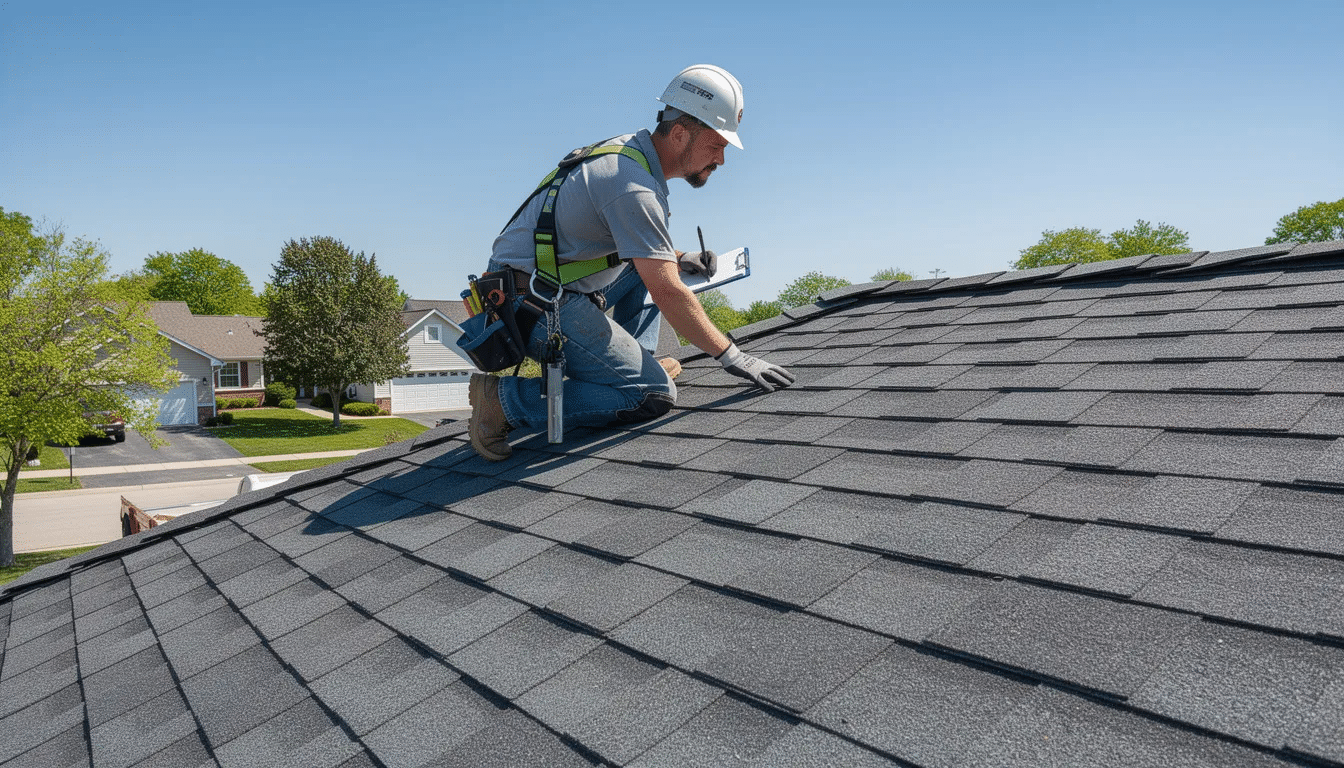
Homeowners can dramatically reduce long-term costs by combining regular checks with prompt calls to a pro. Early detection is the foundation of a proactive maintenance approach.
Recommended inspection schedule:
- Professional roof inspections every spring and fall
- Personal visual checks after significant weather events
- Immediate inspection after high winds, heavy snow, or hail
Easy DIY observations (from ground and attic):
- Shingles or roofing materials on the lawn
- Sagging gutters or visible debris buildup
- Interior stains appearing after a recent storm
- Daylight visible through attic roof boards
- Musty smells in upper floor rooms or attic
- Damaged shingles visible from driveway
Create a “roof file” containing:
- Photos from each inspection (dated)
- Written notes on any issues spotted
- All repair invoices and receipts
- Warranty documents for materials
- Insurance claim records
This documentation supports future insurance claims and proves regular roof inspections occurred if warranty issues arise.
Contact a professional within 24–72 hours of spotting a potential issue rather than attempting risky DIY fixes on steep or high roofs.
Choosing the Right Professional for Fast, Effective Repairs
Not all contractors handle minor repairs well—some focus exclusively on full installations. Finding the right partner for ongoing roof maintenance makes a difference.
What to look for:
- Local, licensed, and insured contractors
- Specific experience in repair work, not just installations
- Recent reviews from the past 12–24 months
- Clear communication about response times for leaks
- Written warranty terms on repair labor
Questions to ask:
- “How quickly can you inspect after I call about a leak?”
- “Do you provide written estimates before starting work?”
- “What warranty do you offer on repair labor?”
- “Can you document the repair with photos for my records?”
Reliable contractors often offer emergency or same-week service after major storms to prevent roof damage from spreading. This responsiveness is worth paying a small premium for—it can save money in the long run by preventing further damage during delays.
Request written estimates that detail scope, quality materials to be used, and expected timelines. This protects you from scope creep and ensures everyone understands the work being performed.
FAQ
How quickly should I repair a roof leak once I notice it?
Visible leaks or fresh water stains on ceilings should be inspected by a professional within 24–72 hours. Even after rain stops, moisture remains trapped in insulation, decking, and framing, continuing to cause damage for weeks.
Tarps or temporary covers provide only short-term protection. They prevent new water entry during the next storm but don’t stop moisture already in the system from spreading. Schedule permanent repairs as soon as possible after any temporary measures.
Can I wait until next season to fix minor shingle damage?
Waiting through a full rainy or snowy season dramatically increases the risk of roof leaks, rot, and mold—even if damage looks small from the ground. What appears to be a few missing shingles often signals compromised underlayment or flashing that will fail during the next heavy rain.
Repair missing, cracked, or curled shingles before the next severe weather event, ideally within a few weeks of noticing the problem. A professional inspection can reveal whether that “minor” visible damage indicates more serious underlying structural issues.
Are quick roof repairs always cheaper than replacement?
Quick repairs are usually cheaper in the short term but may not be the best long-term value if your roof is already near the end of its lifespan. A 22-year-old roof with 25-year shingles showing multiple problem areas may cost more to repeatedly patch than to replace.
Use the roof’s age and the number of existing problem areas to guide your decision. Ask roofing contractors for both repair and replacement estimates when the roof is older—comparing 5-year projected costs often clarifies which approach actually saves you money in the long run.
Will my insurance cover quick roof repairs after a storm?
Many policies cover sudden storm damage—like hail or wind from a specific dated event—but not long-term wear and tear or neglected maintenance. The key distinction is “sudden and accidental” versus “gradual deterioration.”
Document roof damage with photos immediately after severe storms, file claims promptly (ideally within days), and keep invoices for any emergency repairs or tarping. Acting quickly and showing proof that you prevented further damage strengthens your claim and reduces the chance of denial. Home insurance coverage works best when you demonstrate responsible maintenance.
How often should I schedule professional roof inspections to avoid expensive repairs?
For most asphalt shingle roofs, schedule a minimum of two professional inspections per year (spring and fall), plus checks after major storms. This regular roof inspection schedule catches minor issues before they escalate.
Older roofs (15+ years) or homes in harsh climates with heavy snow, hail, or high winds may benefit from more frequent checks—quarterly isn’t excessive for a 20-year-old roof in challenging conditions. Many contractors can address small issues during the same inspection visit, making regular roof maintenance ensures problems get fixed before they become expensive repairs requiring extensive work.
Can small roof repairs really be done year-round, even in winter or extreme heat?
Yes. Most quick roof repairs can be completed year-round as long as conditions are safe. Cold temperatures may limit certain sealants or adhesives, but experienced roofing contractors use materials designed for seasonal work. Waiting for “perfect weather” often causes more damage than the weather itself.
What’s the biggest mistake homeowners make after noticing minor roof damage?
The most common mistake is assuming the problem is “too small to matter.” Homeowners often wait for visible dripping or ceiling damage, not realizing that water can travel through insulation and framing long before it shows inside. By the time you see stains, the expensive damage has already started.
How can I tell if a repair is truly minor or a sign of a bigger problem?
A single missing shingle or small flashing gap may be minor, but repeated issues in the same area often signal deeper problems like failing underlayment or poor ventilation. If you’ve repaired the same spot more than once, it’s time for a professional inspection rather than another patch.
Do quick roof repairs increase home resale value?
They can. While buyers may not “see” repairs, inspection reports will. A documented history of prompt roof maintenance reduces red flags during a sale and can prevent price reductions or repair credits demanded by buyers. Deferred roof issues often come out of the seller’s pocket at closing.
Is it safe to DIY small roof repairs to save money?
Minor repairs might look simple, but climbing on a roof carries real safety risks. Beyond that, improper repairs often cause more harm than good, such as driving nails into the wrong area or sealing over moisture that’s already trapped. Many insurance claims are denied when DIY repairs worsen damage.
How fast can mold start forming from a roof leak?
Mold can begin developing within 24 to 72 hours after moisture exposure, especially in warm or humid conditions. Even if a leak seems small, damp insulation and wood framing create an ideal environment for mold growth long before you smell or see it.
Will delaying repairs affect my home insurance premiums?
It can. A history of denied or partially denied claims due to maintenance neglect may result in higher premiums or difficulty renewing coverage. Insurers track claims patterns, and repeated issues tied to poor upkeep can label a property as higher risk.
Are emergency roof repairs more expensive than scheduled repairs?
Yes. Emergency repairs often cost 25 to 100 percent more due to after-hours labor, rushed material sourcing, and safety risks. Scheduling quick repairs early keeps costs predictable and avoids emergency pricing altogether.
What documentation should I keep after a roof repair?
Save invoices, inspection reports, photos before and after repairs, and any warranty paperwork. This documentation protects you during insurance claims, warranty disputes, and future home sales by proving responsible maintenance.
How long can quick roof repairs realistically extend roof life?
When done consistently, quick professional repairs can extend a roof’s lifespan by 5 to 10 years. That delay alone can mean tens of thousands of dollars in savings by pushing back a full replacement.
Contents
- How Fast Roof Repairs Directly Save You Money
- Common “Small” Roof Problems That Turn Into Big Bills
- How Quick Repairs Prevent Water, Mold, and Structural Damage
- Saving on Energy Bills With Timely Roof Repairs
- Insurance, Warranties, and Why Speed Matters Financially
- Quick Repairs vs. Full Replacement: The Long-Term Math
- Practical Tips for Catching Issues Early and Acting Fast
- FAQ

