
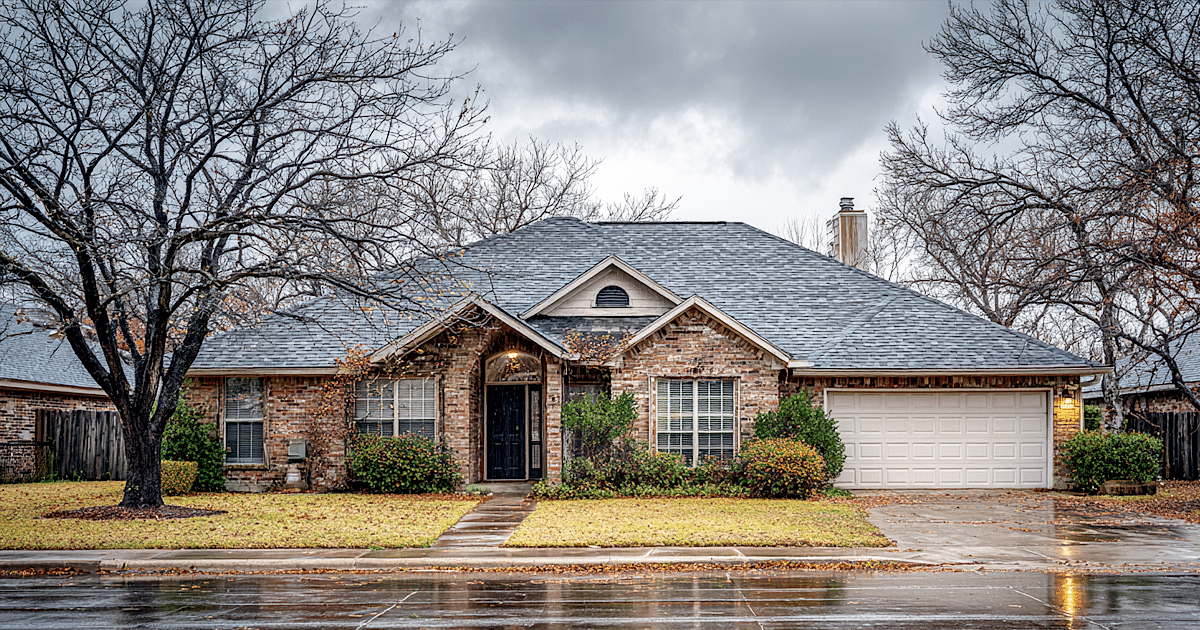
Winter Roofing Problems in Central Texas don’t usually come from heavy snow or long stretches of ice like they do up north. Instead, they creep in quietly through sharp temperature swings, cold rain, and strong north winds that hit roofs over and over again between December and February. One day it’s 70 degrees, the next morning it’s below freezing—and your roof feels every bit of that stress. Shingles tighten and loosen, sealants crack, flashing shifts, and small gaps open up in places most homeowners never think to look.
What makes winter roof issues tricky in this region is how subtle they can be. A roof might look fine from the yard, yet weeks later a faint ceiling stain shows up after a cold front rolls through. Moisture builds in attics, gutters back up, and wind-driven rain finds paths it didn’t have before. Understanding how Central Texas winters actually affect your roof—and knowing what problems tend to show up first—can help you stay ahead of leaks, avoid emergency repairs, and protect your home through the cold season and beyond.
Key Takeaways
- Central Texas winters stress roofs through rapid temperature swings and freeze-thaw cycles rather than heavy snow, causing shingles, flashing, and sealants to crack and separate over weeks of repeated cold fronts.
- Most winter roof problems in Austin, Round Rock, Georgetown, and San Marcos are leak-related—damaged or missing shingles, failing flashing, clogged gutters, and attic condensation are the primary culprits.
- A pre-winter inspection in October or November, combined with post-storm checks, dramatically reduces emergency leak calls during December through February.
- Many fixes involve straightforward seasonal maintenance like clearing gutters, resealing flashing, and improving attic ventilation, but structural or safety-related issues require a professional roofing contractor.
- Local Central Texas roofers understand regional weather patterns and can diagnose winter-specific problems more effectively than out-of-area contractors unfamiliar with our unique climate.
Unlike northern states where heavy snowfall and thick ice define winter roof problems, Central Texas homeowners face a different set of challenges. Our mild winters might seem harmless, but the combination of cold snaps, strong winds, and occasional rain creates conditions that quietly damage roofing systems over time.
If you’ve ever noticed a water stain on your ceiling weeks after a cold front or discovered damp insulation in your attic during a routine check, you’ve experienced the sneaky nature of winter roof damage in this region. The good news is that understanding these common winter roof problems—and knowing how to address them—can save you from costly repairs and protect your home through multiple storm seasons.
This guide covers everything Austin homeowners and residents throughout Central Texas need to know about winter roofing challenges, from the science behind freeze-thaw damage to practical fixes you can implement before the next Arctic front arrives.
How Central Texas Winters Affect Your Roof
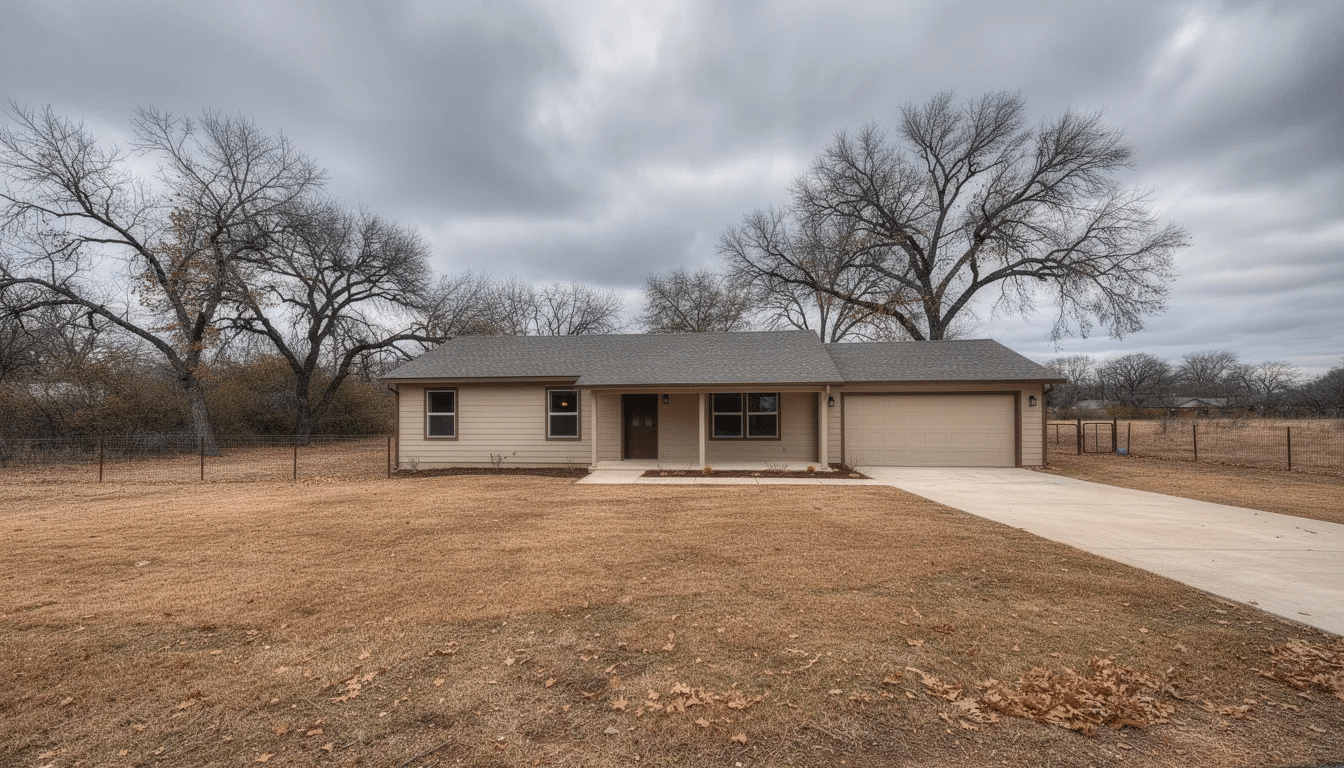
A typical Central Texas winter looks nothing like what you’d find in Chicago or Minneapolis. In Austin, Round Rock, and Cedar Park, you might experience a 70°F afternoon followed by a hard freeze in the 20s within 24 hours. Add cold rain and strong north winds to the mix, and you have conditions that stress roofing materials in ways many homeowners don’t anticipate.
Here’s what makes our Texas winters particularly tough on roofs:
- Freeze-thaw cycles between December and February cause roofing materials to expand during warmer daytime highs and contract during overnight lows. This repeated movement opens small gaps in shingles, nails, sealants, and metal flashing.
- Cold rain combined with wind creates moisture intrusion opportunities that don’t require snow or prolonged freezing. Water seeps into micro-cracks, and when temperatures drop overnight, that moisture freezes and expands by up to 9% in volume, widening gaps further.
- El Niño or La Niña patterns (like those seen in 2020–2021 and 2023–2024) bring more frequent rain events to the region, increasing stress on aging roofs and vulnerable flashing around roof penetrations.
- Homes built between the late 1980s and early 2000s in subdivisions around Austin often have ventilation and flashing details that underperform during cold, damp stretches. These older roofing systems weren’t always designed with Central Texas temperature swings in mind.
NOAA data confirms that Central Texas experiences multiple freeze events annually, and these rapid shifts stress roofing materials far more than the consistent cold of northern winters. Even without regular snow, our winter weather creates conditions ripe for leaks—especially on roofs older than 10–12 years.
Most Common Winter Roofing Problems in Central Texas Homes
Serious roof problems often appear after a couple of strong Arctic fronts push through, usually between late December and February. Rather than dramatic single-storm damage, Central Texas roofs typically suffer cumulative wear from repeated temperature swings and wind driven rain events.
The most prevalent issues include:
| Problem | Primary Trigger | Common Locations |
|---|---|---|
| Lifted, curled, or cracked shingles | 25–40 mph north winds after cold fronts | Entire roof surface, especially edges |
| Flashing gaps and cracked sealant | 30°F–70°F daily swings | Chimneys, skylights, vent pipes |
| Ridge cap and hip separation | Aged adhesive strips in cold conditions | Roof peaks and corners |
| Gutter overflow and freeze pockets | Debris accumulation plus overnight freezes | Eaves and downspouts |
| Attic condensation | Warm indoor air meeting cold roof deck | Under-ventilated attics |
| Low-slope ponding | Poor drainage on add-on roofs | Sunrooms, patio covers, converted garages |
Let’s examine each of these in detail.
Lifted, Curled, or Cracked Shingles
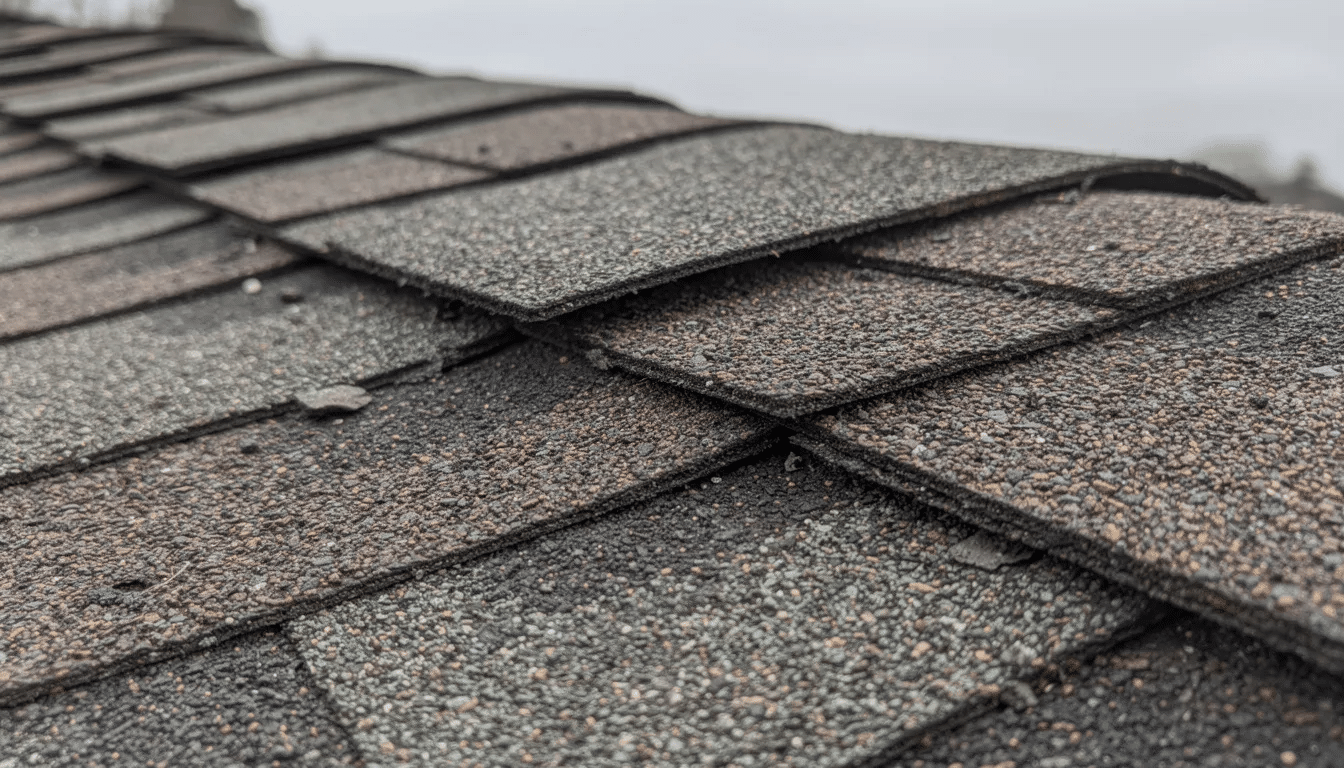
Asphalt shingles—found on roughly 80% of Central Texas homes—stiffen significantly when cold temperatures drop into the 30s. This makes them prone to cracking and lifting when high winds sweep through after cold fronts. Winter gusts of 25–40 mph are common in the Austin area, and each strong wind event can loosen or damage shingles that were perfectly fine the week before.
From the ground, you might spot:
- Uneven shingle lines across the roof surface
- Corners lifting or curling upward
- Patches that look rough or mottled after a January wind event
- Missing shingles or pieces in your yard after a storm
Even a few loose shingles can allow wind-driven rain to penetrate the underlayment. The tricky part is that roof leaks may not show up on your ceilings for weeks, as water slowly migrates through the roof deck and attic before reaching visible surfaces.
Homeowner response: Safely observe your roof from the ground after each major cold front. If you notice broken shingles, torn edges, or misaligned sections, contact a roofing contractor before the next rain event.
Flashing Gaps and Cracked Sealant
Flashing—the metal pieces installed around chimneys, skylights, wall transitions, and vent pipes—protects some of the most vulnerable spots on your roof. During Central Texas winters, the daily temperature swings from 30°F mornings to 70°F afternoons create significant differential expansion between metal, masonry, and roofing materials.
Common trouble spots include:
- Brick chimneys on older homes in Central Austin
- Skylights on 1990s builds in Round Rock and Pflugerville
- Plumbing vent stacks on one-story ranch homes throughout the region
Old caulk and sealant often fractures during freeze-thaw cycles, leaving hairline gaps that admit rainwater during long, cold rain events. These failures at roof penetrations are among the most frequent causes of winter leaks.
Early warning signs:
- Faint water rings on ceilings near chimneys or skylights
- Damp drywall corners in upstairs rooms
- A musty smell in closets or rooms located near roof penetrations during mid-winter
Ridge Cap and Hip Shingle Separation
Ridge caps and hip shingles are the finishing pieces installed along roof peaks and corners. They’re held in place partly by adhesive strips that can lose effectiveness as they age and stiffen in cold snaps.
Roofs older than 10–15 years in neighborhoods like Pflugerville, Hutto, and Leander commonly show ridge cap separation during January cold fronts. When these pieces lift or separate, they create narrow gaps where sideways-blown rain can enter—even when the main field of shingles looks perfectly intact.
What to look for: From your yard, check for shadows or visible gaps along ridgelines and hip edges. If you notice lifted sections along the peaks, schedule an inspection before the next storm.
Gutter Overflow and Small Freeze Dams
While Central Texas rarely experiences the prolonged ice dams that plague northern states, clogged gutters can still cause significant problems. When leaves from live oaks and cedar elms fill your gutters during November and December, water backs up during winter rainstorms. If temperatures drop overnight, that standing water can freeze briefly, creating small “freeze dams” that push moisture under shingles and encourage mold growth behind fascia boards.
The downstream effects include:
- Rotted fascia boards along roof edges
- Peeling paint at eaves
- Moisture working behind siding around the roofline
- Water damage to soffit vents and the underlying structure
Visual checks after heavy rain:
- Watch for waterfalls spilling over the gutter edge
- Look for standing water in downspout outlets
- Check for staining on siding below eaves
Regular maintenance of your drainage systems, particularly clearing debris accumulation in fall, prevents most gutter-related winter problems.
Attic Condensation and “Mysterious” Winter Moisture
Attic condensation is one of the least understood winter roof problems, yet it causes significant damage in Central Texas homes with poor ventilation. Here’s how it happens:
- Warm air from showers, cooking, and heating rises into under-ventilated attics
- When outdoor temperatures drop during a freeze, the roof deck becomes cold
- Warm indoor air contacts the cold surface and releases moisture
- This trapped moisture condenses on the underside of roof decking and on attic nails
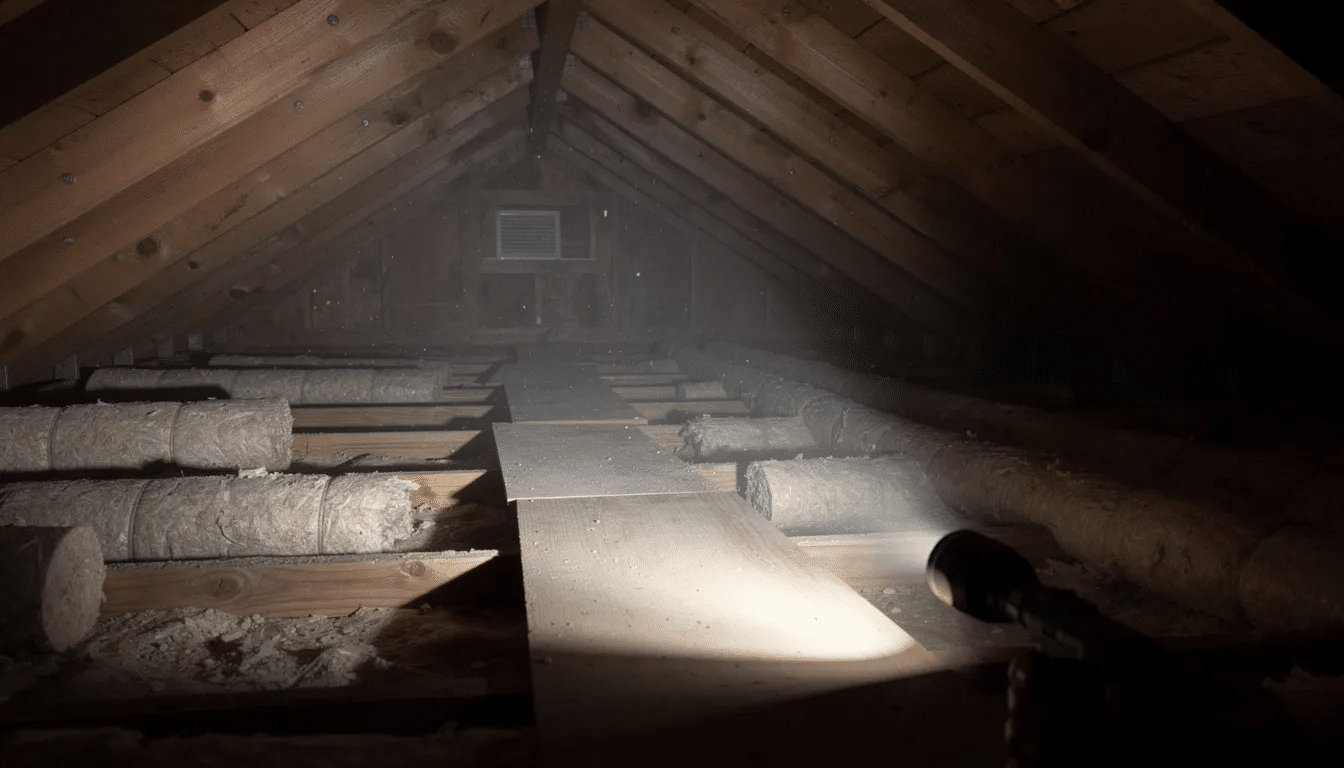
A typical scenario: A hard freeze follows several damp days, causing moisture beads to form on the underside of roof decking in homes throughout North and South Austin. This attic moisture can soak insulation, drip onto ceilings, and create conditions that encourage mold growth on rafters and decking.
Subtle signs of attic condensation:
- Musty odor in upstairs rooms
- Small dark spots on ceiling drywall around vents or light fixtures
- “Frosty” nails visible from the attic when temperatures drop into the 20s
- Damp or compressed insulation during attic inspections
Repeated winter condensation can flatten attic insulation (reducing its effectiveness by up to 50%), shorten the lifespan of decking and shingles, and create health hazards from mold—all without obvious active leaks.
Ponding on Low-Slope and Add-On Roofs
Many Central Texas homes have low-slope additions—sunrooms, converted garages, or patio covers—built during the 1980s through 2000s. These structures are particularly vulnerable to water ponding, where rainwater sits on the surface for more than 24–48 hours after a winter rain.
When temperatures dip overnight, ponded water can freeze into thin sheets that stress membrane seams and accelerate material degradation. Common trouble spots include:
- Older ranch homes in South Austin with flat-roof additions
- Converted patios in Round Rock and Kyle
- Detached garage roofs in Georgetown and Leander
Warning signs: Visible puddles remaining days after rainfall or algae staining on flat roof surfaces signal drainage problems that need professional evaluation before repeated winter storms hit.
Warning Signs Your Roof Has a Winter Problem
Winter roof issues often start subtly. Catching them early—ideally in December or January—keeps repair costs manageable and prevents structural damage.
Interior warning signs:
- New water stains on ceilings, especially after cold rain events
- Spreading brown rings that grow larger with each storm
- Bubbling or peeling paint near exterior walls
- Damp spots that appear after a cold rain and disappear when conditions dry
Attic clues:
- Visible daylight through the roof deck (check during daytime)
- Damp or compressed insulation
- Frost on nail tips during freezing mornings
- Mold spots on rafters or decking discovered during a flashlight inspection
Exterior hints:
- Missing shingles visible from the ground after a cold front
- Sagging or clogged gutters
- Dark streaks below eaves and roof edges
- Exposed nail heads on ridges or hips
Documentation tip: Take dated photos of any issues you find and note the weather event that preceded them (for example, “brown stain appeared after January 2025 freeze and rain”). This information helps a professional roofing contractor diagnose the cause accurately and recommend appropriate repairs.
How to Fix Common Winter Roofing Problems
Safety comes first when addressing roof problems. Homeowners should stick to ground-level inspections and attic checks, leaving roof-walking and structural repairs to licensed contractors who understand both the hazards and the technical requirements for proper installation.
The fixes below range from quick homeowner actions to professional roof repair work. Cost varies significantly: minor sealant touch-ups are typically inexpensive, while widespread shingle replacement or deck repairs represent more significant investments.
Quick Homeowner Actions After a Winter Storm
Within 24–48 hours of a significant cold front or winter storm:
- Walk the perimeter of your home looking for shingle pieces in the yard, displaced ridge caps, or bent metal around chimneys and vent pipes.
- Check interior ceilings and top-floor rooms for fresh stains or damp drywall, paying particular attention to areas below known roof penetrations.
- Conduct a safe attic inspection using a sturdy ladder and adequate lighting. Stay on joists (not insulation) and look for active drips, wet insulation, or stained decking.
- Implement temporary measures only if you discover active leaks—place buckets under drips and move valuables away from affected areas.
Critical safety note: Do not attempt DIY tarp installations on roofs during high winds or when surfaces are icy or wet. Cold mornings make shingles brittle and extremely slippery, creating serious fall hazards.
Seasonal Maintenance to Prevent and Limit Damage
Prevention beats emergency repairs every time. These maintenance tasks protect your roofing system through multiple winters:
| Task | Timing | Why It Matters |
|---|---|---|
| Clean gutters thoroughly | October–November | Removes oak and cedar elm leaves before storm season |
| Trim tree branches | Fall, before first freeze | Keeps tree limbs several feet from roof to prevent damage and debris accumulation |
| Clear roof valleys | After leaf drop | Removes trapped organic material that holds moisture |
| Install gutter guards | Any dry weather | Reduces debris buildup and improves drainage |
| Check downspout extensions | Before winter hits | Directs water away from foundation and fascia |
For ground-level valley clearing, tools like roof rakes or blowers can remove accessible debris without requiring ladder work. Avoid climbing onto roofs when surfaces are wet, icy, or when temperatures drop, as asphalt shingles become dangerously brittle.
Adding simple gutter guards or downspout extensions improves drainage around your foundation and reduces fascia rot over multiple winters—a modest investment that prevents costly repairs.
Repairs Best Left to Roofing Professionals
Certain repairs require professional expertise, proper tools, and knowledge of manufacturer requirements:
- Replacing damaged shingles or missing shingles with matching materials
- Resecuring loose or separated ridge caps
- Reworking chimney and skylight flashing using roofing cement and corrosion-resistant materials
- Correcting low-slope ponding with tapered insulation or improved membranes
- Addressing roof deck damage from moisture infiltration
In cold weather, shingle and sealant products must be handled carefully and installed correctly within manufacturer temperature guidelines. Improper installation in cold conditions can void warranties and lead to premature failures.
A qualified roofer will inspect the entire roofing system—decking, underlayment, flashings, gutters, and check attic ventilation—rather than simply patching obvious leaks. This comprehensive approach catches problems that homeowners might miss.
When seeking estimates:
- Request written quotes with detailed repair scopes
- Ask for photos of problem areas
- Verify that the contractor is licensed and insured
- Confirm they have experience with winter-specific diagnostics
This documentation becomes especially valuable when issues arise after notable events like the February 2021 freeze or subsequent winter storms.
Improving Your Roof’s Winter Resilience in Central Texas
Modest upgrades during mild weather—spring or early fall—make roofs far more resistant to future winter leaks and wind damage. These improvements pay off over multiple winters rather than serving as emergency-only measures.
Key strategies include:
- Upgrading attic ventilation and insulation
- Reinforcing vulnerable flashing details
- Choosing better roofing materials at replacement time
- Establishing a regular inspection schedule
Ventilation and Insulation Upgrades
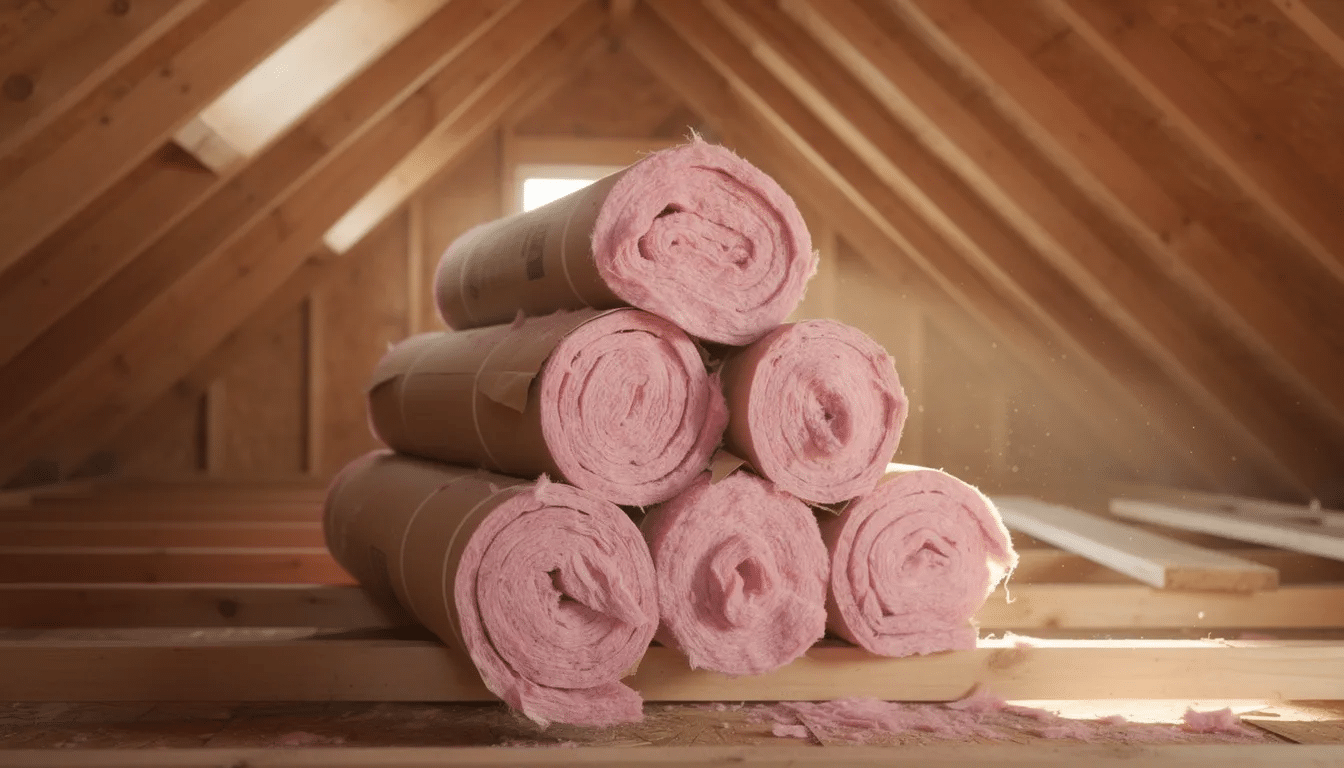
Balanced attic ventilation—with proper airflow through intake vents (soffits) and exhaust vents (ridge vents or box vents)—keeps attic temperatures closer to outdoor conditions. This reduces condensation during freezes and prevents the moisture buildup that leads to mold and decking rot.
Common ventilation improvements:
- Clear blocked soffit vents: Many older Central Texas homes have undersized or paint-clogged soffit vents. Opening these and ensuring proper airflow can significantly reduce winter moisture problems.
- Add ridge vents or roof vents: These provide exhaust pathways for warm, humid air that rises into the attic.
- Install rigid foam baffles: These prevent insulation from blocking airflow at the eaves.
Insulation upgrades:
- Top off blown-in attic insulation to R-38 or higher (recommended for this climate zone)
- Consider blown-in cellulose or fiberglass for complete coverage
- Air seal around light fixtures, attic hatches, and duct penetrations to cut humid indoor air leakage
Proper insulation and ventilation work together to stabilize attic temperatures, keeping them within 10°F of outdoor conditions and dramatically reducing condensation issues.
Choosing More Durable Materials for Future Re-Roofs
When planning a roof replacement, material choices affect long-term performance through Central Texas temperature swings:
Impact-resistant asphalt shingles (Class 4):
- Better handle hail, strong winds, and thermal movement
- May qualify for insurance discounts
- Cost more upfront but reduce damage from environmental elements
Standing seam metal roofs:
- Excellent lifespan (40–70 years when properly maintained)
- Handle thermal cycling well
- Higher initial cost but minimal long-term maintenance
- Popular for Texas heat reflection in summer while performing reliably in winter
Tile roofing:
- Long lifespan (50+ years for clay tiles)
- Fire resistant (Class A rating)
- Heavier than other options—verify structural capacity
- S-tile profiles shed water faster during winter rains
Underlayment and detail upgrades:
- Synthetic underlayments resist moisture better than traditional felt
- Ice-and-water membranes in valleys and around penetrations contain leaks during severe storms
- Quality starter strips and proper installation techniques prevent edge failures
Color and reflectivity considerations: Lighter-colored roofs reduce summer heat load while still performing reliably during our mild winters—an important factor in Central Texas’s hot-summer, mild-winter climate.
Material and installation choices should account for your specific location: tree cover from nearby trees, wind exposure, neighborhood characteristics, and HOA requirements all influence the best approach.
Scheduling Regular Roof Checkups
Proactive inspections catch problems when they’re still inexpensive to fix:
- Annual professional inspection: Schedule for late October or early November, before the first big cold front pushes through Central Texas. This timing allows for repairs before storm season intensifies.
- Post-event inspections: After large hail, straight-line wind storms, or prolonged freezing rain, have a professional check your roof even if no interior leaks are visible. Hidden damage often worsens over subsequent storms.
- Maintain a roof health log: Track your installation date, major repairs, inspection findings, and notable storms. This documentation helps plan regular maintenance and eventual replacement timing.
Many local roofing companies offer photo-documented inspections, allowing homeowners to see and understand problems without climbing onto the roof. This transparency helps you make informed decisions about repairs and upgrades.
When to Call a Central Texas Roofing Professional
Winter is not the time to ignore roof issues. Repeated storms over a single season can quickly turn minor problems into significant structural damage requiring extensive repairs.
Contact a professional when you observe:
- Active dripping during or after a winter storm
- Recurring ceiling stains that reappear after each rain event
- Visible missing or damaged shingles from ground level
- Loose or rattling metal flashing
- Sagging gutters and fascia boards
Safety thresholds requiring professional evaluation:
- Any sign of structural sagging in the roofline
- Widespread shingle loss across multiple sections
- Suspected roof deck damage after ice or heavy rain events
Avoid climbing onto your roof during winter conditions. Cold temperatures make shingles brittle and slippery, and even thin layers of frost or moisture dramatically increase fall risk.
Choosing the right contractor:
- Select a company based in the Central Texas area (Austin, Round Rock, San Marcos, Temple, etc.) with verifiable references and proper insurance
- Look for experience with winter-specific diagnostics
- Ask about emergency service availability during winter storms
- Inquire about typical response times and whether they provide temporary protections (like professionally installed tarps) until full repair is completed
Local contractors who regularly work in this region understand our unique winter conditions far better than out-of-area companies unfamiliar with the challenges of Texas winters.
Addressing winter roof concerns before they escalate protects both your home and your budget. Central Texas winter conditions may seem mild compared to northern climates, but the cumulative effect of temperature swings, inadequate insulation, and occasional rain takes a real toll on roofing systems over time.
If you haven’t had your roof inspected this season, now is the time to schedule a professional evaluation. A local Central Texas roofing contractor can identify vulnerabilities, recommend targeted fixes, and help you avoid the higher energy bills and extensive repairs that come from neglected winter damage. Take action before the next cold front arrives—your roof will thank you for the attention.
Frequently Asked Questions About Winter Roofing in Central Texas
Do I really need to worry about winter roof damage if we rarely get snow in Central Texas?
Yes. In this region, most winter roof damage comes from cold rain, strong north winds, and rapid temperature swings—not snow. These conditions stress shingles, flashings, and sealants, often leading to winter leaks that appear weeks after a storm rather than immediately.
What month is best for a roof inspection to prepare for winter in the Austin area?
Aim for late October or early November, before the first strong Arctic fronts typically arrive. This timing gives enough lead time to fix loose shingles, clean gutters, and reseal flashing before repeated winter projects become necessary.
Can roof repairs be done effectively during cold snaps in Central Texas?
Many repairs can be completed safely in winter if temperatures stay within manufacturer guidelines for adhesives and sealants. Experienced local roofers adjust techniques and scheduling around cold mornings and damp conditions to ensure long-lasting repairs.
How can I tell if a ceiling stain is from a winter roof leak or old damage?
New damage usually has a sharply defined edge and feels damp or cool after a storm. Older stains tend to be dry and may have been painted over. A roofer can use moisture meters and attic inspections to confirm whether the leak is active and identify its source.
Is it safe for me to go on the roof to check for damage after a freeze?
It is not recommended. Shingles can be brittle and slippery when cold, and even thin layers of frost or moisture increase fall risk significantly. Homeowners are safer regularly inspecting from the ground and checking the attic, then hiring professionals for any close-up roof work.
Contents
- How Central Texas Winters Affect Your Roof
- Most Common Winter Roofing Problems in Central Texas Homes
- Warning Signs Your Roof Has a Winter Problem
- How to Fix Common Winter Roofing Problems
- Improving Your Roof’s Winter Resilience in Central Texas
- Choosing More Durable Materials for Future Re-Roofs
- When to Call a Central Texas Roofing Professional
- Frequently Asked Questions About Winter Roofing in Central Texas

