
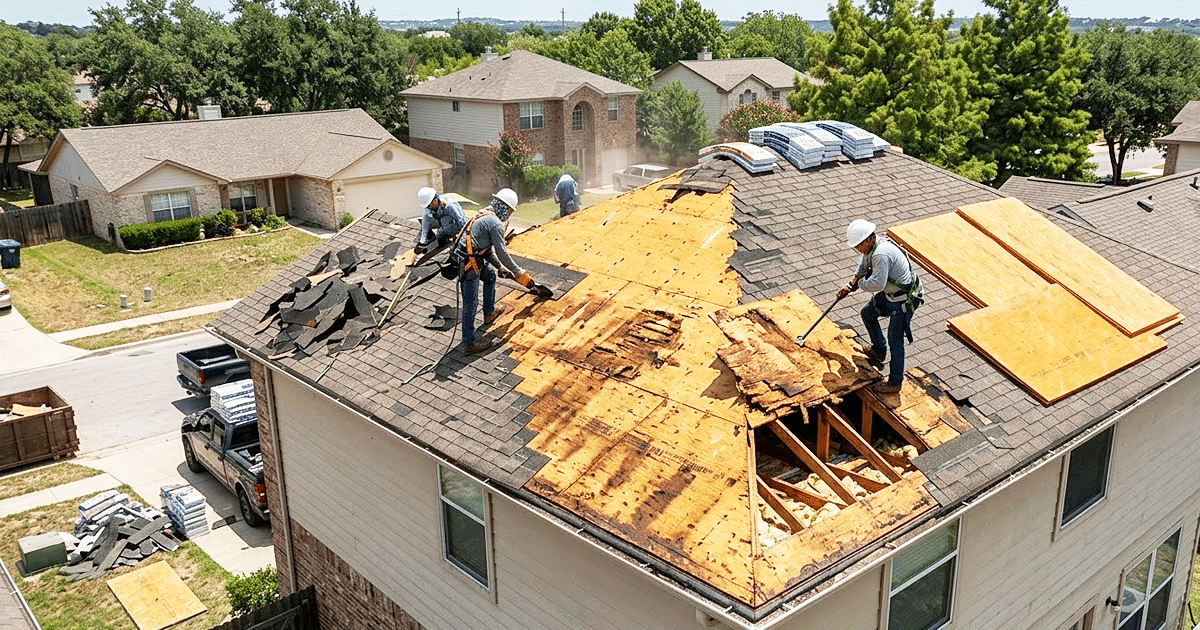
Most homeowners planning a roof replacement expect the price they were quoted to stay fairly close to the final invoice. Unfortunately, that is not always how roofing projects play out in Central Texas. One of the most common reasons budgets change mid-project is simple but frustrating: rotten decking adds to roofing bills once the old shingles are removed and the wood beneath is finally visible. What looked like a straightforward roof replacement can quickly turn into a larger repair when sections of the roof deck have softened, warped, or deteriorated from years of hidden moisture.
Across Austin, Round Rock, Pflugerville, and the surrounding communities, this scenario happens more often than many homeowners realize. The roof deck is the structural layer that supports every shingle, vent, and flashing component above it. When that wood begins to rot, roofing crews cannot safely install new materials until the damaged sections are replaced. Contractors often discover these problems during the tear-off stage, which explains why rotten decking adds to roofing bills in Austin, TX more frequently than expected. Even a small area of compromised decking can require multiple panels to be replaced before the new roofing system goes on.
The challenge is that decking problems usually stay hidden for years. Minor leaks around flashing, gradual moisture intrusion, or poor attic ventilation can slowly weaken wood panels without creating obvious signs from the ground. By the time a homeowner schedules a roof replacement, the damage may already be present beneath the shingles. Roofing professionals have long warned that many structural roof problems remain invisible until the roof covering is removed, which is why inspections and maintenance play such an important role in protecting a home’s structure over time.
Austin’s climate only makes the situation more complicated. Extreme summer heat, seasonal hailstorms, and lingering moisture from events like the 2021 winter storm have all contributed to accelerated wear beneath many Central Texas roofs. As a result, homeowners replacing aging shingles today sometimes uncover decking damage that began years earlier but only becomes visible once work begins.
Understanding why rotten decking develops, how contractors calculate repair costs, and what steps you can take to prepare financially can help prevent unpleasant surprises during a roofing project. The sections below explain how decking rot forms, why it increases roofing costs, and what Austin homeowners should know before scheduling an Austin roof replacement with Ja-Mar Roofing & Sheet Metal or any professional contractor in the region.
Key Takeaways
- Rotten roof decking commonly adds $800–$3,000 to a 2026 roof replacement invoice in Austin, with severe cases pushing costs even higher.
- Most rot stays hidden until tear-off begins, so original quotes from roofing companies in Austin, Pflugerville, and Round Rock often increase mid-project.
- Central Texas factors—including the 2021 ice storm legacy damage, repeated hail seasons, and 100°F+ summers—rapidly accelerate decking rot beneath shingles.
- Local building codes and shingle manufacturer warranties require contractors to replace structurally compromised decking, making it impossible to skip this work.
- Proper inspections, clear contracts with per-sheet pricing, and a 10–15% contingency budget can help Austin homeowners control decking-related cost overruns.
How Rotten Decking Turns a “Simple” Austin Roof Replacement Into a Big Bill
You’ve done your research. You’ve gotten three quotes for a new roof, budgeted around $12,000–$15,000 for architectural asphalt shingles, and scheduled the work for next month. Then your roofing contractor calls on day one of the tear off begins phase with unexpected news: there’s rotten decking underneath those old shingles, and your bill just went up by $1,800.
This scenario plays out across Austin, TX every week. Here’s what’s happening and why it catches most homeowners off guard.
What is roof decking?
The roof deck is the wood foundation beneath your shingles—typically 7/16-inch to 5/8-inch sheets of oriented strand board (OSB) or plywood nailed to your rafters or trusses. It creates the solid deck that supports everything above it: underlayment, shingles, flashing, and the load of rain, hail, and foot traffic.
Why quotes underestimate decking work
In 2026, many Austin-area roof replacement quotes in the $9,000–$18,000 range assume only “minor” decking repair—perhaps 5–15 sheets budgeted at $500–$1,500 total. Contractors can’t see what’s actually under the shingles until old materials come off. Once they do, crews often discover large rotten areas spanning one or two entire roof slopes.
Why rotten decking must be replaced
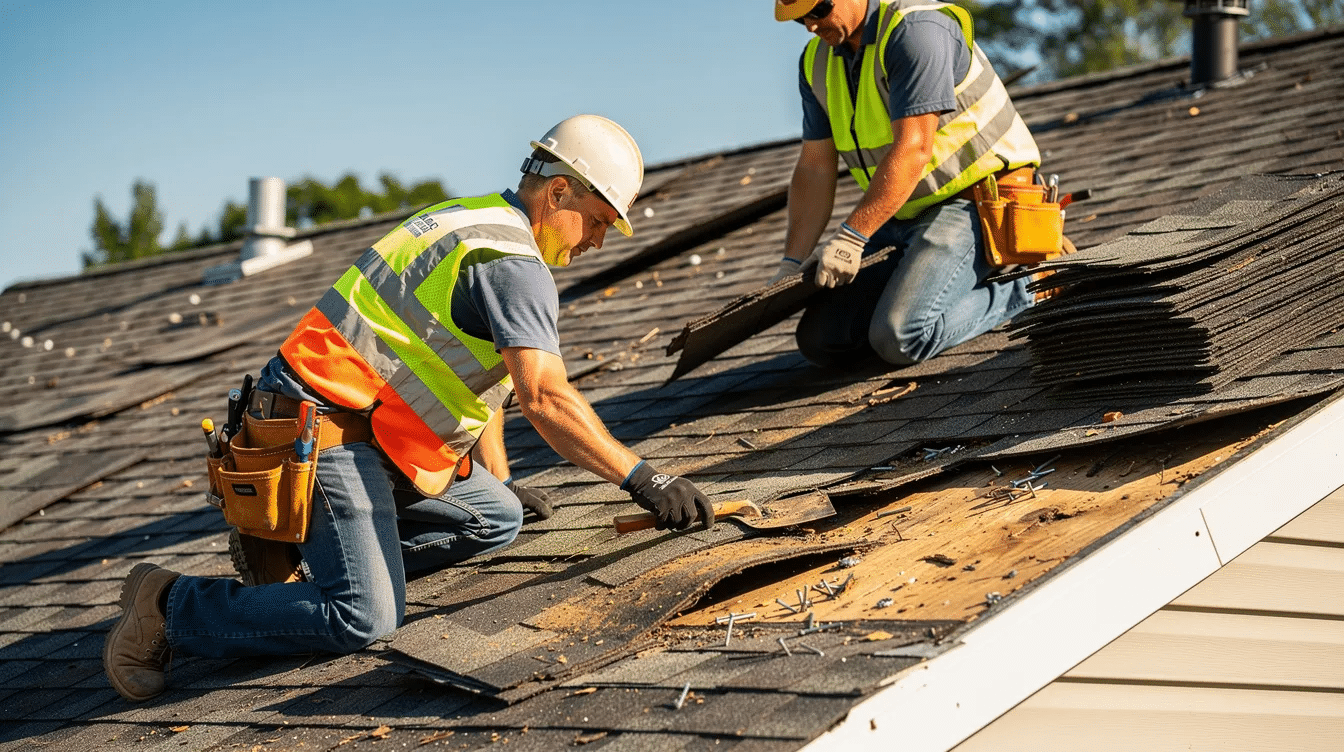
Shingles cannot be installed over rotten or spongy wood. Period. Here’s why:
- Safety codes prohibit structurally compromised sheathing
- Shingle manufacturer warranties (GAF, Owens Corning) require a solid, code-compliant deck
- City of Austin and surrounding jurisdiction inspectors will fail the job if deteriorating decking remains
The result: your “simple” roof replacement becomes a significantly more expensive one, with crews stopping work to replace affected decking beneath before they can proceed.
What Exactly Is Roof Decking and Why Does It Rot in Central Texas?
Most homeowners never see their decking—it’s hidden between the attic and the roof surface. But this structural layer is the backbone of your entire roofing system.
Decking materials explained
| Material Type | Description | Common In |
|---|---|---|
| OSB (Oriented Strand Board) | Compressed wood strands bonded with resin | Most homes built 1990–present |
| Plywood | Layered wood sheets cross-laminated | Premium installations, older homes |
| Plank/Skip Sheathing | 1×6 or 1×8 solid wood boards | 1950s–1970s Austin homes (Hyde Park, Allandale) |
| The most common decking materials today are OSB panels, which use compressed wood strands formed into rigid sheets. Older Austin neighborhoods still have original plank decking that rots faster due to wider gaps allowing deeper moisture penetration. |
Why decking rots
Contrary to popular belief, most rot isn’t caused by one big storm. It’s chronic moisture intrusion from:
- Failing flashing around chimneys and skylights
- AC condenser penetrations that weren’t sealed properly
- Poorly maintained roof valleys
- Improper installation of vents or solar panels
Once water seeps into plywood or oriented strand board, Austin’s extreme heat creates a destructive cycle. Panels absorb moisture, then bake at 100–110°F roof surface temperatures, crack, absorb more moisture, and continue weakening. Over several years, this turns solid wood into spongy, delaminated material, and addressing Texas summer roof heat and cooling strategies becomes an important part of protecting your decking.
What rotted decking looks and feels like
If you’ve walked on a roof with bad decking, you might notice:
- Soft spots that give slightly underfoot
- Visible sagging lines in the shingle pattern
- Musty odors in the attic below
- Water stains on rafters or insulation
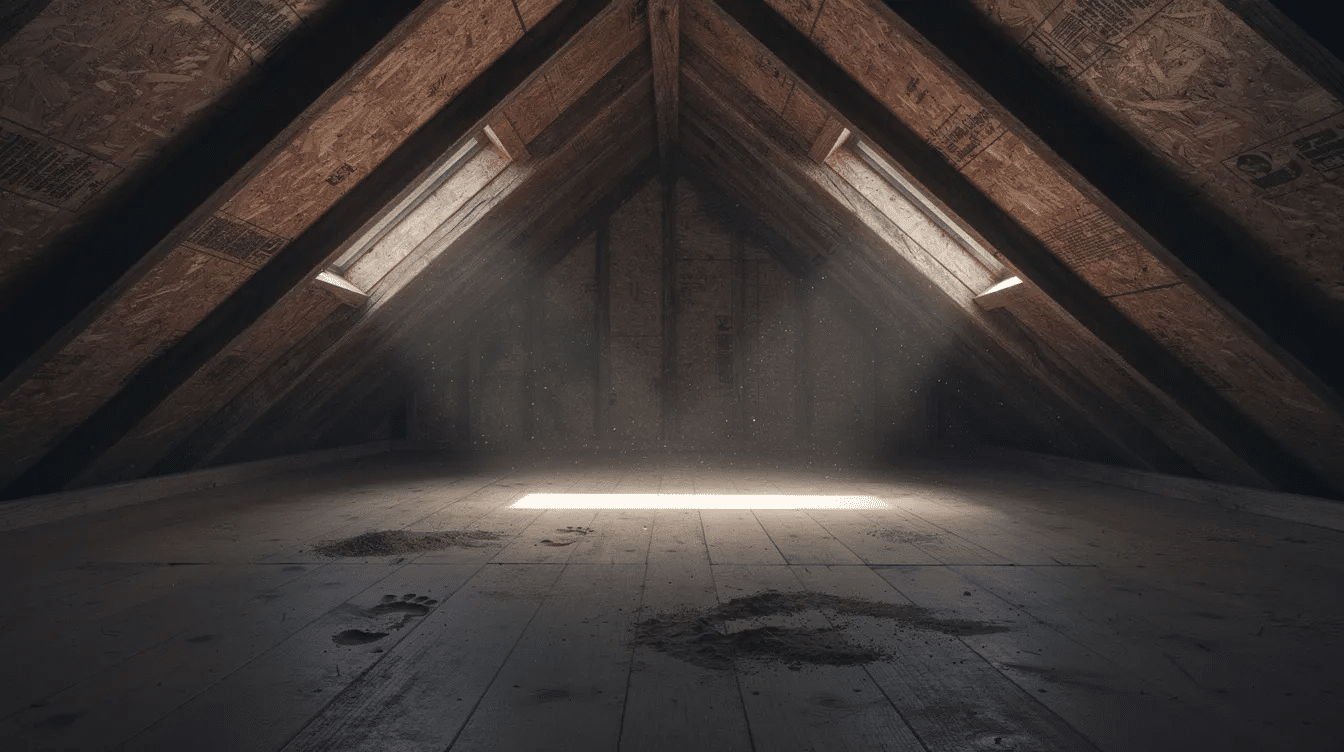
- Daylight visible through cracks from inside the attic
Why Austin’s Climate and Weather Make Decking Rot (and Costs) Worse
Living in Travis, Williamson, and Hays Counties means your roof endures weather extremes that attack the deck from above and below simultaneously. This isn’t just bad luck—it’s a predictable pattern that makes decking damage more common here than in many other Texas cities.
Central Texas climate stressors
| Weather Event | Impact on Decking |
|---|---|
| Summer heat (100–110°F surface temps) | Accelerates bake-and-dry cycles, cracks panels |
| February 2021 ice storm | Caused ice damming, saturated decking for weeks |
| 2022–2024 hail seasons | Bruised shingles, created micro-cracks for water entry |
| Poor attic ventilation | Traps humid air, condenses on deck underside |
| The February 2021 hard freeze and ice storm caused particularly severe storm damage. Ice damming forced meltwater under shingles where it saturated decking for extended periods. This legacy damage is still showing up in 2026 roof tear-offs, sometimes on homes that appeared fine from outside. |
Hail damage you can’t see
When hail hits Cedar Park, Leander, or Buda, it doesn’t always create missing shingles or obvious damage. Instead, it bruises or granule-strips damaged shingles, opening micro-cracks that allow slow seepage for months. By the time you see a ceiling stain, the decking beneath the shingles has been rotting quietly.
The ventilation problem
Many 1980s and 1990s subdivisions in North Austin and Pflugerville were built with inadequate attic ventilation—undersized ridge vents, soffit intakes blocked by insulation, or no balanced airflow at all. In summer, attics can reach 130°F+. Humid air condenses on the decking underside, creating mold growth and rot from below while sun damage attacks from above.
Where Austin roofers find the worst rot
Based on 2024–2026 project patterns, these areas consistently show the most rotten decking:
- South-facing slopes over garages (intense solar heating masks leak signs)
- Low-slope porch tie-ins (prone to ponding water)
- Valley sections near live oaks (debris shades and retains moisture)
- Areas around old HVAC penetrations and outdated skylights
How Rotten Decking Specifically Adds Dollars to Your Austin Roofing Bill
Understanding the math behind decking replacement costs helps you evaluate quotes and budget realistically for your roof replacement project.
2026 Austin decking pricing
Most Austin contractors charge per sheet for decking replacement:
| Cost Component | Typical Range |
|---|---|
| Per 4×8 OSB or plywood panel | $90–$140 (includes labor, nails, disposal) |
| Per square foot | $3–$6 |
| Labor rate | $2–$4.50 per square foot |
| Realistic cost scenarios |
Here’s how decking adds to your total roof replacement cost depending on damage severity:
| Damage Level | Sheets Replaced | Added Cost |
|---|---|---|
| Light | 4–8 sheets | $400–$1,100 |
| Moderate | 10–15 sheets | $1,000–$2,100 |
| Severe | 15–25 sheets | $1,500–$3,500+ |
| Full re-deck | 40+ sheets | $4,000–$8,000+ |
| Hidden additional charges |
Beyond panel replacement cost, widespread roof decking damage triggers:
- Extra dumpster fees for debris disposal
- Extended crew time (adding 1–2 days to standard 1–3 day projects)
- Additional underlayment at exposed areas
- Supplemental flashing repairs at valleys and transitions
- Engineering consultation for structural concerns (rare but expensive)
A baseline $12,000–$15,000 architectural shingle replacement on a 2,000 sq ft roof can realistically reach $15,000–$18,000 with moderate decking work—and significantly higher for older homes requiring full re-decking to meet codes. Proactive DIY roof waterproofing and protection steps can reduce the risk of small leaks turning into the kind of chronic moisture intrusion that drives these costs up.
Austin Building Codes, Inspections, and Why You Can’t Ignore Rotten Decking
Austin, Round Rock, Cedar Park, and surrounding jurisdictions follow the International Residential Code (IRC 2021 edition as locally adopted), which sets minimum standards for roof sheathing. These aren’t suggestions—they’re enforceable requirements.
What inspectors look for
City and county inspectors will fail a roofing system if:
- Decking thickness falls below code minimums (typically 3/8” minimum)
- Panels span beyond code tables for the material type
- Rotten, punky, or structurally weak wood remains under new shingles
- Nailing patterns don’t meet manufacturer specifications
A failed inspection means work stops until the contractor fixes the problem. You can’t simply cover up damaged decking to pass.
Manufacturer warranty requirements
Beyond local building codes, shingle manufacturers have tightened their terms. GAF Timberline HDZ and Owens Corning Duration warranties explicitly require:
- Solid, code-compliant decking
- Proper nailing patterns (typically 6-inch edges, 12-inch field)
- Correct underlayment installation over sound sheathing
If you file a warranty claim later and the manufacturer discovers decking wasn’t properly installed or rotted decking was left in place, your claim gets denied.
What this means for homeowners
Ethical Austin roofing contractors cannot legally or safely shingle over visibly rotten wood. “Skipping” decking work to save money isn’t a realistic option—it creates structural issues, voids warranties, and fails inspection, which is why learning how to find reputable roofing companies and avoid scams is essential after major storms.
Before signing a contract, ask your professional roofer:
- How do you handle decking damage discovered during tear-off?
- What’s your per-sheet pricing?
- How will you communicate and get approval for additional work?
Insurance in Austin: When Rotten Decking Is Covered and When It’s Not
Many homeowners assume their homeowners insurance will pay for all decking replacement discovered during a 2026 roof project. The reality is more complicated.
When insurance typically covers decking
Your insurance company generally covers damaged decking when roofing damage is addressed quickly through Austin emergency roof repair services and the loss is tied to a specific covered event:
- Damage ties directly to a recent covered peril (hail, windstorm, falling tree)
- The covered event is documented with dated storm reports and photos
- The claim is filed promptly after the storm damage occurred
Replacement Cost Value (RCV) policies pay to replace decking at current prices for storm events. Actual Cash Value (ACV) policies depreciate materials—potentially paying only 40–60% on a 12-year-old roof.
When you pay out-of-pocket
Insurance typically excludes:
- Long-term rot from age and wear
- Damage from poor maintenance or neglected repairs
- Slow leaks from HVAC, plumbing, or poor ventilation
- Pre-existing conditions not tied to a specific covered peril
If rot developed gradually over years from a slow leak, that’s considered maintenance neglect—not a covered event.
Ordinance or Law coverage
One policy feature worth checking: Ordinance or Law coverage (sometimes called law coverage). This endorsement helps pay for additional decking or upgrades when local codes require more work than just replacing the damaged portion. Since Austin codes may require thicker decking or larger replacement areas than what was actually damaged, this coverage can be valuable.
Documentation matters
To support any valid claim:
- Request daily tear-off photos from your contractor
- Document each rotten panel discovered
- Save photos showing connection to storm damage patterns
- Keep copies of storm reports for your area
Your dwelling coverage won’t help if you can’t prove damage relates to a specific covered event.
How to Limit Rotten-Decking Surprises Before You Replace Your Roof
Before signing a roofing contract in 2026, take these steps to identify potential decking problems and avoid costly repairs later.
Conduct your own attic inspection
Grab a flashlight and check your attic for warning signs:
- Water stains on rafters or insulation
- Mold or mildew growth
- Sagging deck boards visible from below
- Daylight penetrating through cracks or around vents
- Musty or damp odors
Any of these suggest decking beneath the shingles may be compromised.
Schedule a professional inspection
A thorough pre-project inspection from a professional roofer should include the kinds of checks offered by top Austin roof repair services and should cover:
- Moisture meter readings in suspect areas
- Thermal imaging to identify hidden water intrusion
- Photos documenting any soft or sagging sections
- Written assessment of expected decking condition
This upfront investment can prevent unexpected expenses during construction.
Get clear, itemized estimates
Your roofing estimate should separate decking as its own line item:
| What to look for | Why it matters |
|---|---|
| Per-sheet price listed | You know exact cost if more sheets are needed |
| Included allowance | Example: “up to 10 sheets included in base price” |
| Change order process | How you’ll be notified and approve additional work |
| Avoid estimates that lump everything together or don’t mention decking at all. |
Budget for contingencies
Even with inspection, some rot only appears when the roof is fully exposed. Budget a 10–15% contingency for hidden decking damage on any roof replacement project. This protects you from financial strain if moderate damage appears mid-project.
Choosing an Austin Roofer Who Handles Decking Issues Transparently
The right roofing contractor makes all the difference in how fairly rotten decking is identified, priced, and repaired. In Austin, TX, not all roofing companies handle this work the same way.
What to look for
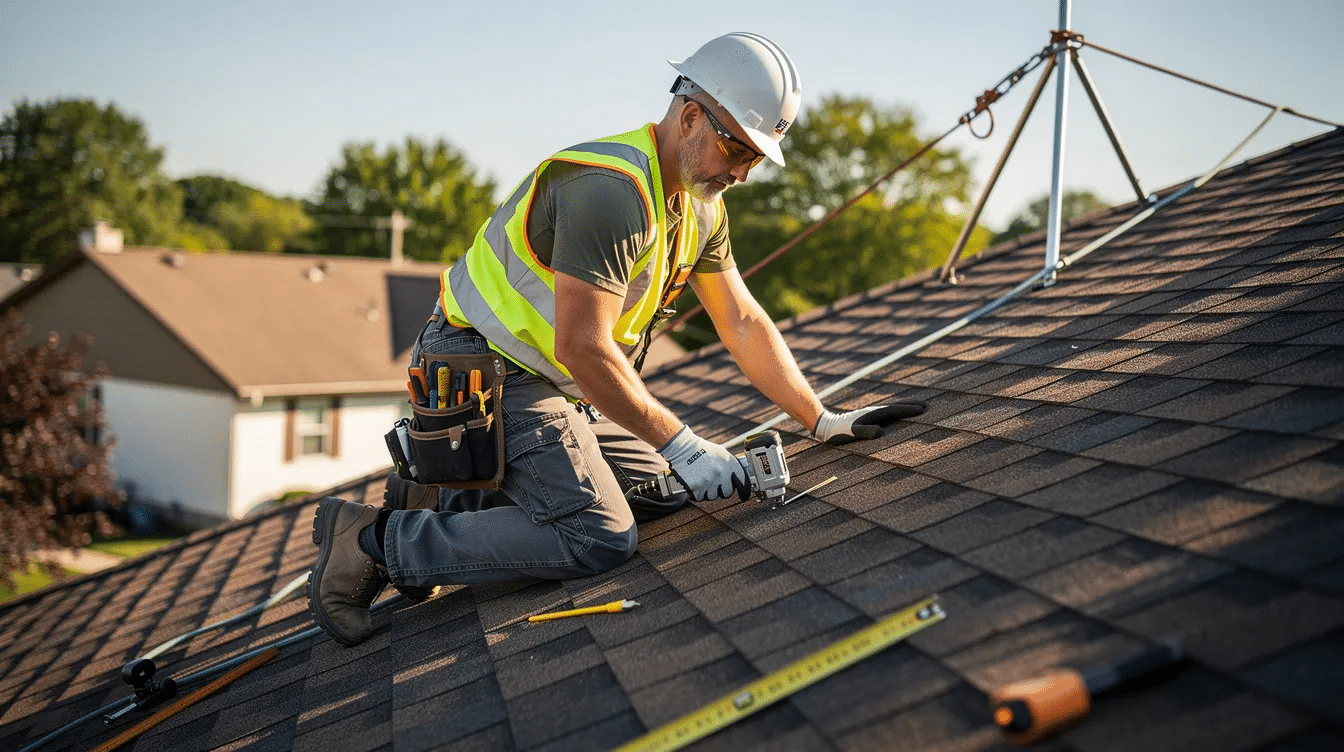
Choose a roofing contractor who is:
- Fully insured and licensed in Texas
- Experienced with Austin and Central Texas codes
- Familiar with common decking problems in local subdivisions
- Willing to explain their process in detail
Specific expectations for quality contractors
| Good Practice | What It Looks Like |
|---|---|
| Detailed written estimate | Separate line items for shingles, underlayment, decking, flashing |
| Photo documentation | Daily tear-off photos sent to homeowner |
| Approval process | Contractor calls before exceeding decking allowance |
| Clear warranty terms | Written warranty covering both new decking and roofing material |
| Red flags to avoid |
Be cautious of bids that seem unrealistically low compared with other local quotes. These often:
- Omit any realistic decking allowance
- Assume zero rot (unlikely in Austin’s climate)
- Rely on later upcharges when “surprises” appear
A quote of $8,000 when others are $12,000–$14,000 likely excludes roof decking materials or uses poor installation practices.
Examples of good contractor behavior
- Sending daily tear-off photos showing progress and any issues discovered
- Walking the homeowner through each rotted panel on-site before proceeding
- Providing written change orders with photos before additional repair costs are incurred
- Documenting work for potential insurance supplements (typically yielding 15–20% claim boosts)
Long-Term Maintenance to Prevent Future Rotten Decking in Austin
Once your strong roof is installed correctly, smart maintenance keeps the decking solid and future roofing bills lower. These steps protect your investment in Central Texas conditions.
- Professional roof inspections every 2–3 years, and for commercial and industrial properties, following industrial roof maintenance best practices to stay ahead of leaks and structural issues
- Additional checks after major hail, wind, or ice events (March–June is peak storm season in Austin)
- Quick homeowner attic walk-throughs twice per year
Address ventilation issues
Poor ventilation destroys decking from the inside. Consider working with experienced Austin commercial roofing specialists for larger buildings and taking steps to:
- Adding or upgrading ridge vents
- Clearing blocked soffit intakes
- Installing attic fans for extreme heat periods
- Radiant barrier options (popular in Austin for 10–20°F attic temperature reduction)
Proper ventilation improves energy efficiency while protecting your roof’s lifespan.
Maintain water management systems
- Clean gutters before heavy fall storms
- Ensure downspouts direct water away from foundation and eaves
- Seal all plumbing and HVAC penetrations
- Replace failing flashing around chimneys and skylights promptly
Control vegetation
Live oaks and elms common in central and South Austin create specific challenges, especially for homeowners in nearby communities looking for reliable Cedar Park roofing companies:
- Trim overhanging branches to reduce debris accumulation
- Remove leaf buildup that retains moisture
- Reduce shade-related humidity on flat roofs and low-slope sections
Document everything
Keep records of all maintenance and minor roof repair work. This documentation helps:
- Distinguish sudden storm events from long-term neglect in insurance claims
- Demonstrate responsible maintenance if you sell the home
- Track patterns that might indicate developing problems
FAQ
How much rotten decking is “normal” to find during an Austin roof replacement?
For business owners, partnering with professional commercial roofing services in Austin can help assess and plan for decking replacement on larger commercial roofs.
Many Austin reroofs in 2024–2026 uncover 4–10 bad sheets on an average-size home, particularly near valleys, chimneys, and eaves where water tends to collect. Older homes or roofs with long-standing leaks may require 15–25 sheets or even full re-decking, which significantly increases cost but is sometimes unavoidable for structural integrity. Anything beyond the allowance in your contract should be clearly documented with photos and discussed before proceeding with costly repairs.
Can I just patch rotten decking instead of replacing whole sheets?
Small, localized decking damage can sometimes be repaired with properly supported patches, but most Austin inspectors and manufacturers prefer full-sheet decking replacement when rot is extensive. Patchwork on larger rotten areas creates weak spots, uneven surfaces for shingle installation, and future leak points. Following both local building code requirements and manufacturer guidance provides better long-term results than short-term savings that risk structural damage and early failure.
Does replacing rotten decking make my home more energy efficient?
Replacing rotten or delaminated decking can improve overall roof performance, especially when new panels include a radiant barrier—a popular upgrade in the Austin market. While decking itself isn’t insulation, solid, dry sheathing combined with better ventilation and optional radiant-barrier roof decking materials can meaningfully reduce attic temperatures during Austin summers. If you plan to stay in your home for 5+ years, discuss thicker decking options and ventilation upgrades with your roofer for improved indoor air quality and lower cooling costs.
How often should I have my roof and decking checked in Austin, TX?
Aim for professional inspections every 2–3 years in Central Texas, plus a check after any major hail, wind, or ice event affecting the Austin metro area including San Antonio and surrounding Texas cities. Quick attic walk-throughs by the homeowner once or twice a year—looking for stains, musty smells, or daylight penetration—can catch early decking problems before they become expensive. Schedule inspections before listing a home for sale, since bad decking discovered by buyers’ inspectors can complicate closings and negotiations.
Is it safe to live in my house while rotten decking is being replaced?
In most residential roofing projects across Austin, homeowners can safely remain in the house while roofers replace rotten decking. Work is done from the exterior, and properly installed tarps protect exposed sections overnight if needed. Expect noise, vibration, and some dust in the attic during active work. Move valuables away from attic areas under work zones, cover items in rooms below with sheets, and ask your contractor how they protect interiors and landscaping during multiple layers of material removal and decking replacement.
Will my homeowners insurance cover rotten decking replacement?
Homeowners insurance typically covers roof decking damage only when it results from a covered event such as hail, wind, or fire. Damage caused by age, neglect, or gradual deterioration is usually excluded. It’s important to review your policy carefully and consult with your insurance company and roofing contractor to understand what’s covered and what you may need to pay out-of-pocket.
What role do local building codes play in decking replacement?
Local building codes in Austin and surrounding areas require that any structurally compromised decking be replaced to meet minimum thickness, fastening, and material standards. Inspectors will fail roofing projects that attempt to cover up rotten decking or use substandard materials. Compliance ensures structural integrity, code adherence, and eligibility for manufacturer warranties.
How do labor costs affect the total roof replacement cost when rotten decking is involved?
Labor costs for decking replacement can significantly add to the total roof replacement cost, especially when extensive decking must be removed and replaced. Labor rates in Austin typically range from $2 to $4.50 per square foot for decking work, which includes removal, disposal, and installation. Extended project time due to decking repairs also increases labor expenses.
Can rotten decking cause health issues in my home?
Yes. Rotten decking often leads to moisture intrusion that promotes mold growth, which can degrade indoor air quality and pose health risks, especially for people with allergies or respiratory conditions. Addressing rotten decking promptly helps prevent mold spread and protects your family’s health.
How can I prevent rotten decking from developing under my roof?
Regular roof and attic maintenance is key. Ensure proper attic ventilation to reduce moisture buildup, promptly repair leaks or damaged flashing, clean gutters and downspouts, and schedule professional roof inspections every few years. Taking these steps can extend your roof’s lifespan and minimize the risk of costly decking rot in Austin’s challenging climate.
Contents
- How Rotten Decking Turns a “Simple” Austin Roof Replacement Into a Big Bill
- What Exactly Is Roof Decking and Why Does It Rot in Central Texas?
- Why Austin’s Climate and Weather Make Decking Rot (and Costs) Worse
- How Rotten Decking Specifically Adds Dollars to Your Austin Roofing Bill
- Austin Building Codes, Inspections, and Why You Can’t Ignore Rotten Decking
- Insurance in Austin: When Rotten Decking Is Covered and When It’s Not
- How to Limit Rotten-Decking Surprises Before You Replace Your Roof
- Choosing an Austin Roofer Who Handles Decking Issues Transparently
- Long-Term Maintenance to Prevent Future Rotten Decking in Austin
- FAQ

