

Roof Anatomy might sound like something only contractors care about, but it’s really just a simple way to describe how all the layers above your head work together to keep water, heat, and moisture out of your home. From the deck and underlayment to shingles, flashing, and ventilation, each layer has a specific job—and when even one of them fails, you can end up with leaks, higher energy bills, or hidden damage you don’t see until it’s expensive to fix.
Once you understand what’s actually under your shingles, it gets a lot easier to spot early warning signs, ask smart questions during an inspection, and decide whether you’re getting solid recommendations during a roof repair or roof replacement. This guide walks through each layer step by step so you can look at your roof as a complete system, not just a surface, and feel more confident the next time a storm rolls through or a roofer climbs the ladder.
Key Takeaways
- A typical residential roof consists of 6-8 distinct layers, each serving a critical protective function that prevents costly repairs when working properly
- The roof deck (plywood or oriented strand board) forms the structural foundation that all other roofing materials depend on for stability and performance
- Underlayment and ice and water shield act as secondary barriers preventing water infiltration if the main roofing material fails during harsh weather conditions
- Proper ventilation layers regulate temperature and humidity levels in your attic space, preventing moisture damage that can lead to expensive repairs
- Understanding each component of your roof system helps homeowners spot problems early and communicate effectively with a professional roofing contractor during roof repairs or roof replacement projects
Why Understanding Roof Layers Matters for Homeowners
Most homeowners never think about what’s above their ceiling until water starts dripping through it, but understanding your roof anatomy can save you thousands of dollars in major repairs. Your entire roof system is a complex assembly of interconnected layers, each designed to work together in protecting your home from weather damage and maintaining energy efficiency.
When you understand the anatomy of a roof, you become empowered to spot potential problems before they escalate into basement leaks or require expensive repairs. A small issue with roof flashing, for instance, can be addressed with minor repairs if caught early, but left unchecked, it can lead to water infiltration that damages multiple roof layers and requires a complete roof replacement.
Knowledge of your roof structure also improves communication with roofing professionals. Instead of simply nodding when a roofing contractor mentions issues with your roof sheathing or roofing underlayment, you’ll understand exactly what components need attention and can make informed decisions about repair versus replacement options.
Additionally, understanding each layer helps you evaluate warranty coverage more effectively. Different components of your roof system carry different warranty periods, and knowing which layer is failing helps you understand what costs might be covered and what you’ll need to budget for out-of-pocket.
Layer 1: The Foundation – Roof Decking and Sheathing
The roof deck forms the structural backbone of your entire roof system, installed directly over the roof structure of ceiling joists or pre fabricated triangular structures called trusses. This critical foundation layer must support the weight of all other roofing materials while providing a solid surface for proper installation.
Most residential roofing uses either plywood or oriented strand board (OSB) for roof sheathing. Plywood, typically 1/2” or 5/8” thick, offers superior moisture resistance and holds fasteners more securely than OSB. However, OSB costs less and performs adequately in most applications when properly protected from moisture exposure.
Building codes specify minimum thickness requirements based on rafter spacing. For rafters spaced 16 inches on center, 1/2” sheathing meets most code requirements, while 24-inch spacing typically requires 5/8” material. The roof deck must be installed correctly with proper gaps between sheets to allow for thermal expansion during temperature changes.
Identifying damaged roof sheathing requires looking for several warning signs. From inside your attic space, check for sagging areas, soft spots that compress when pressed, or dark staining that indicates water damage. Exterior signs include visible sagging between rafters or areas where the main roofing material appears to dip or create uneven surfaces.
When roof sheathing becomes compromised, replacement becomes necessary before installing any new roofing material. Attempting to install asphalt shingles or metal roofing over damaged decking will void manufacturer warranties and create immediate failure points in your roof covering. Quality roofing contractors always assess and replace damaged sheathing as part of any major roofing project.
Layer 2: The Protective Barriers – Underlayment and Ice & Water Shield
The protective barrier layer serves as your roof’s secondary defense system, designed to prevent water infiltration if the outer roofing material fails during harsh weather conditions. This critical layer consists of roofing underlayment and ice and water shield, each serving specific protective functions.
Roof Underlayment Types and Functions
| Underlayment Type | Material | Lifespan | Cost | Best Applications |
|---|---|---|---|---|
| 15-lb Felt | Organic/Fiberglass | 15-20 years | Lowest | Basic protection, budget builds |
| 30-lb Felt | Organic/Fiberglass | 20-25 years | Low | Standard residential applications |
| Synthetic | Polypropylene/Polyethylene | 25-30 years | Medium-High | Premium installations, extreme weather |
| Peel-and-Stick | Modified bitumen | 20-25 years | Highest | Steep slopes, high-wind areas |
Traditional felt underlayment has protected homes for decades, available in 15-pound and 30-pound weights that indicate the material density. The heavier 30-pound felt offers better protection and durability but costs more than the lighter option. Both types consist of organic or fiberglass mats saturated with asphalt for water resistance.
Synthetic underlayment represents the premium option for roofing underlayment, manufactured from polypropylene or polyethylene materials that resist tearing and UV exposure. These materials maintain their integrity even when exposed to weather during installation delays, unlike felt that can deteriorate rapidly when wet.
Installation requires proper overlap patterns specified by building codes. Most underlayment should overlap 6 inches at horizontal seams and 4 inches at vertical seams, with additional overlap at roof edges and roof valleys where water concentrates.
Ice and Water Shield Protection
Ice and water shield consists of a self-adhering waterproof membrane that bonds directly to the roof deck, creating an impenetrable barrier against ice and water penetration. This material becomes essential in regions experiencing freeze-thaw cycles that can create ice dams along roof edges.
Building codes require ice and water shield installation in specific locations regardless of climate. These include roof valleys where two roof slopes meet and concentrate water flow, along roof edges extending 24 inches from the exterior wall, and around all roof penetrations including vents, chimneys, and skylights.
The material costs significantly more than standard underlayment but provides superior protection where your roof faces the greatest water infiltration risks. Premium ice and water shield products offer enhanced flexibility and easier installation, while economy versions provide adequate protection at lower cost.
Climate considerations determine how extensively you should use ice and water shield. Homes in northern climates benefit from coverage extending 36 inches from roof edges, while southern regions may only require the minimum 24-inch coverage specified by code.
Layer 3: The Weather Shield – Primary Roofing Materials
The outer roofing material serves as your home’s primary defense against weather damage, designed to shed water while withstanding wind, hail, and UV exposure. Understanding different roofing material options helps homeowners make informed decisions during roof replacement projects.
Asphalt Shingle Systems
Asphalt shingles dominate residential roofing due to their balance of performance, cost, and ease of installation. Three-tab shingles represent the economy option, featuring a flat profile with uniform cutouts that create a repetitive pattern. These basic shingles typically last 15-20 years and offer adequate protection for budget-conscious projects.
Architectural shingles, also called dimensional or laminated shingles, feature multiple layers that create depth and texture while providing enhanced wind resistance. These premium shingles last 25-30 years and come with better warranties than three-tab options. The random pattern helps hide minor installation imperfections and provides more attractive curb appeal.
Luxury or designer shingles represent the top tier of asphalt roofing, mimicking the appearance of slate, cedar shake, or other premium materials at a fraction of the cost. These thick, heavy shingles offer maximum durability and often include enhanced impact resistance ratings for areas prone to hail damage.
Wind resistance ratings classify shingles based on their ability to withstand high winds. Class A shingles resist winds up to 60 mph, Class F shingles handle winds up to 90 mph, and Class H shingles withstand winds exceeding 120 mph. Impact resistance ratings indicate the shingle’s ability to resist hail damage, with Class 4 representing the highest protection level.
Starter strip shingles provide essential edge protection along roof edges and rakes. These specially designed shingles feature an adhesive strip that helps seal the first course of shingles and prevents wind uplift. Proper installation of starter strips significantly improves roof performance and warranty coverage.
Alternative Roofing Materials
Metal roofing continues gaining popularity due to its longevity and energy efficiency benefits. Standing seam systems feature interlocking panels with concealed fasteners that expand and contract with temperature changes. These systems can last 40-70 years and often qualify for energy efficiency tax credits due to their reflective properties.
Installation requires specialized knowledge of thermal expansion characteristics and proper fastening techniques. Metal material must be installed with clips that allow movement while maintaining weather protection. Color options continue expanding, and modern coatings resist fading and chalking that plagued earlier metal roofing.
Tile roofing, including clay and concrete options, provides exceptional durability in appropriate climates. These heavy materials require structural assessment to ensure adequate support, as tile can weigh 800-1000 pounds per square compared to 250-300 pounds for asphalt shingles. Proper insulation beneath tile roofing maintains energy efficiency while the thermal mass helps regulate indoor temperatures.
Slate and synthetic slate offer premium aesthetics with century-plus lifespans for natural materials. Weight considerations become critical, as natural slate can weigh 1500 pounds per square or more. Synthetic alternatives provide similar appearance at reduced weight and cost while maintaining enhanced durability compared to asphalt shingles.
Cedar shake provides natural beauty but requires regular maintenance and proper ventilation to prevent moisture problems. Fire retardant treatments help these materials meet building codes in wildfire-prone areas, though metal roofing or other non-combustible options may be preferable in high-risk locations.

Layer 4: The Sealing System – Flashing and Edge Protection
The sealing system represents the most critical component for preventing roof leak problems, as most water infiltration occurs at joints, transitions, and penetrations rather than through the main roofing material. Proper roof flashing installation and maintenance prevents the costly repairs that result from water infiltration.
Roof Flashing Components
Step flashing protects the junction where roof planes meet vertical walls, chimneys, or dormers. These L-shaped thin metal sheets install beneath each course of roofing material, creating a stepped pattern that directs water away from the wall intersection. Proper installation requires each piece to overlap the one below while extending up the wall surface at least 4 inches.
Valley flashing protects areas where two roof slopes meet and concentrate water flow. Open valley systems use metal flashing exposed to view, while closed valleys hide the flashing beneath roofing materials that overlap from both sides. Material choices include aluminum, galvanized steel, and copper, with costs increasing based on durability and appearance.
| Flashing Material | Cost per Linear Foot | Lifespan | Benefits | Drawbacks |
|---|---|---|---|---|
| Aluminum | $3-5 | 20-30 years | Lightweight, paintable | Can corrode in coastal areas |
| Galvanized Steel | $4-6 | 25-40 years | Strong, readily available | Will rust if coating fails |
| Copper | $8-15 | 50+ years | No rust, attractive patina | High cost, requires skilled installation |
Chimney flashing consists of multiple components working together to seal this major roof penetration. Base flashing attaches to the roof surface around the chimney perimeter, step flashing protects the sides, and cap flashing embeds into mortar joints to complete the seal. Counter flashing may be required for proper coverage on tall chimneys.
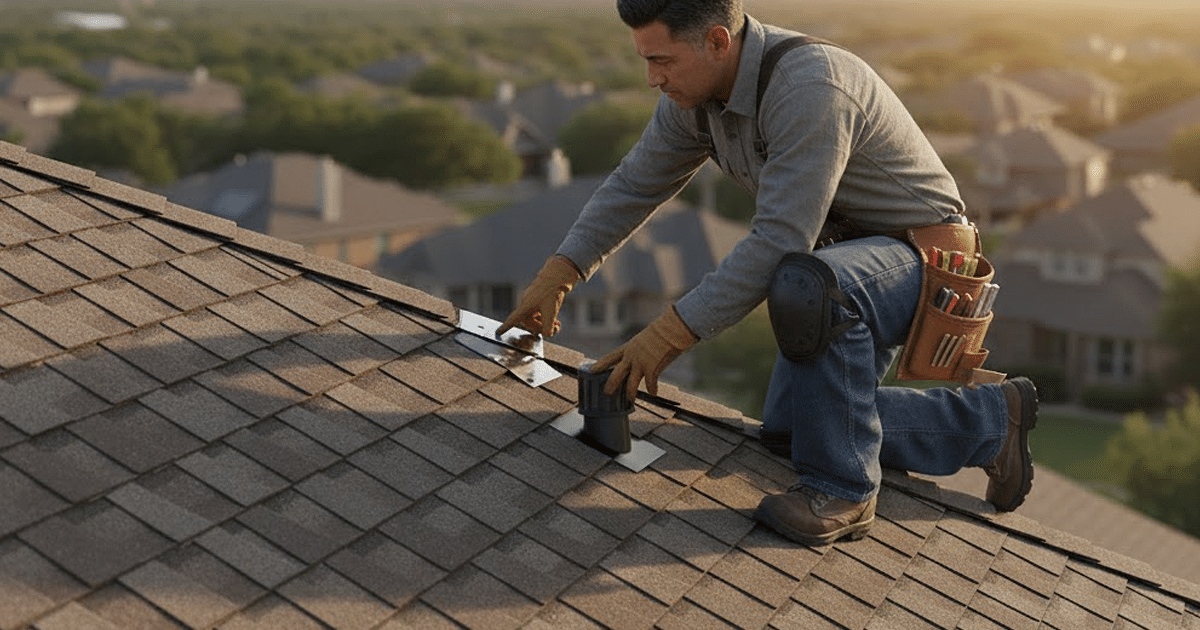
Vent boot materials seal around plumbing vents, electrical penetrations, and other small roof penetrations. Neoprene rubber boots conform to round penetrations but deteriorate from UV exposure and temperature extremes, typically requiring replacement every 8-10 years. Metal boots last longer but cost more and require proper sizing for effective sealing.
Drip Edge and Fascia Protection
Drip edge provides essential protection for roof edges, directing water away from fascia boards and into gutters rather than allowing it to run back under roofing materials. L-shaped profiles work for most applications, while T-shaped drip edge provides enhanced protection for homes with gutters.
Installation requirements vary by roofing material and local building codes. The drip edge should extend beyond the roof sheathing by 1/4 to 3/8 inches, with the vertical leg covering the fascia board. Proper installation places drip edge under the ice and water shield at roof edges but over standard underlayment.
Color matching options allow drip edge to blend with roofing materials or coordinate with gutter systems for enhanced curb appeal. Material gauge specifications typically range from 26-gauge for economy applications to 24-gauge for enhanced durability in harsh weather conditions.
Gutter apron installation becomes necessary for homes with existing gutters to prevent water from running behind the gutter system. This additional flashing component installs over the drip edge and extends into the gutter to ensure proper water direction.
Building code requirements for edge protection continue evolving as understanding of water infiltration problems improves. Many codes now require enhanced edge protection in high-wind areas or regions prone to ice dam formation.
Layer 5: The Airflow System – Ventilation Components
Proper ventilation maintains energy efficiency and prevents moisture damage that can compromise your entire roof system. The airflow system regulates temperature and humidity levels in your attic space, preventing ice dams in winter and reducing cooling costs during summer months.
Effective ventilation requires balanced intake and exhaust components working together. The 1:150 rule provides a starting point for ventilation calculations – you need 1 square foot of net free ventilation area for every 150 square feet of attic space, with intake and exhaust vents split equally for optimal performance.
Intake Ventilation
Soffit vents provide the primary intake for most residential roofing systems, installed under the eaves where roof edges meet exterior walls. Continuous soffit vents offer superior performance compared to individual vents, as they provide unobstructed airflow along the entire eave length.
Perforated soffit materials integrate ventilation directly into the soffit covering, eliminating the need for separate vent components. These systems work well for new construction but may be difficult to retrofit in existing homes without replacing the entire soffit system.
Installation requires careful attention to prevent blockage from proper insulation. Rafter bay spacing must maintain clear air channels from soffit vents to the attic space, often requiring installation of baffles that hold insulation away from the roof sheathing while preserving ventilation pathways.
Eave vent systems provide alternative intake options for homes where soffit installation isn’t practical. These low-profile vents install directly on the roof surface near the eaves, though they’re more visible and may not provide as much ventilation as continuous soffit systems.
Exhaust Ventilation
Ridge vents offer the most effective exhaust ventilation for gable roof and hip roof configurations (and standing seam metal roofs), taking advantage of natural convection currents that draw warm air up and out of the attic space. External baffle designs resist weather penetration better than internal baffle systems, though both provide adequate performance when installed correctly.
Static roof vents, commonly called box vents, provide exhaust ventilation for roof areas where ridge vents aren’t practical, such as on metal roofs. These individual vents require proper spacing and quantity to match intake ventilation capacity. A general rule suggests one 50-square-inch box vent for every 300 square feet of attic space.
Turbine vents use wind power to enhance exhaust ventilation, with rotating tops that create suction to pull air from the attic space. These mechanical vents can move more air than static vents during windy conditions but may not perform as well during calm weather periods. For homeowners interested in combining effective attic ventilation with environmentally conscious roofing choices, eco-friendly alternatives for traditional roof tiles are available, offering both sustainability and compatibility with various venting systems.
Power vents and solar-powered options provide mechanical exhaust ventilation controlled by thermostats or humidistats. These active systems can move large volumes of air but consume electricity and require maintenance of mechanical components. Solar-powered units eliminate electrical costs while providing enhanced ventilation during peak cooling periods.
Gable vents work well for gable roof structures when combined with intake vents, though they’re less effective than ridge vent systems for most applications. These triangular or rectangular vents install in the gable end walls and rely on wind pressure differences to move air through the attic space.
Layer 6: Performance Enhancement – Insulation and Ridge Systems
The performance enhancement layer optimizes your roof system for maximum energy efficiency and longevity. This layer includes attic insulation integration and specialized ridge systems that fine-tune your roof’s thermal and moisture performance.
Attic Insulation Integration
Proper insulation works in partnership with your roof anatomy to maintain energy efficiency and prevent moisture problems. R-value requirements vary by climate zone, ranging from R-30 in mild southern regions to R-60 in northern climates where heating costs dominate energy bills.
Blown-in insulation offers advantages for retrofit applications, as it fills irregular spaces and covers ceiling joists completely. However, installation must preserve ventilation pathways from soffit vents to ridge vents to maintain proper airflow through the attic space.
Batt insulation provides precise R-values and easier installation for new construction, but requires careful cutting around obstacles and proper fitting to prevent thermal bridges. Quality insulation installation significantly impacts roof performance by reducing temperature differentials that can cause ice dams and excessive thermal cycling.
Radiant barriers become beneficial in hot climates where cooling costs exceed heating expenses. These reflective materials install on the underside of roof sheathing or over attic insulation to reduce radiant heat transfer. When combined with proper ventilation, radiant barriers can reduce attic temperatures by 20-30 degrees during peak summer conditions.
Air sealing complements insulation effectiveness by preventing conditioned air from escaping into the attic space. Common leak points include recessed lights, electrical penetrations, and the attic access hatch. Sealing these areas before adding insulation maximizes energy efficiency and prevents moisture problems.
Ridge Cap and Hip Systems
Ridge cap systems provide the final weather seal along roof ridges where two roof planes meet at the highest point of your roof structure. Pre-manufactured ridge caps offer superior weather resistance compared to field-cut shingles, with specialized designs that accommodate thermal movement and wind uplift.
Hip and ridge vent integration allows ridge cap systems to provide ventilation while maintaining weather protection. These hybrid systems eliminate the need for separate ridge vents while providing continuous exhaust ventilation along the entire ridge line.
Wind resistance testing ensures ridge cap systems can withstand harsh weather conditions without lifting or failing. Premium systems include enhanced fastening systems and aerodynamic designs that reduce uplift forces during high-wind events.
Installation requires proper fastener selection and spacing to achieve rated wind resistance. Ridge caps typically require longer fasteners that penetrate through the ridge cap, roofing material, and into the roof sheathing for secure attachment.
Color coordination options allow ridge caps to match or complement the main roofing material for enhanced curb appeal. Many manufacturers offer ridge caps specifically designed to coordinate with their roofing products for optimal performance and appearance.
Warning Signs Your Roof Layers Need Attention
Early detection of roof problems saves money by addressing issues before they escalate into major repairs or complete roof replacement. Each layer of your roof anatomy provides specific warning signs that homeowners can identify through regular observation.
Interior signs often appear first and indicate water infiltration through one or more roof layers. Ceiling stains, especially those that grow larger after rain events, suggest problems with roof flashing, damaged shingles, or failed underlayment. Attic moisture, visible as condensation on roof sheathing or insulation, indicates ventilation problems or air leaks that compromise your entire roof system.
Energy bill increases during heating or cooling seasons may indicate insulation problems or air leaks that force your HVAC system to work harder. Sudden spikes in energy costs often correlate with roof damage that compromises thermal performance.
Exterior indicators require ground-level observation for safety, though some problems become visible from neighboring properties or the street. Granule loss from asphalt shingles appears as bare spots or exposed asphalt areas, indicating UV damage or normal aging that may require attention.
Exposed nails or lifted shingles suggest wind damage or installation problems that allow water infiltration. Missing or damaged roof flashing around chimneys, vents, or wall intersections creates immediate leak risks that require prompt professional attention.
Cracked shingles or curling shingles indicate thermal damage or aging that reduces weather protection. While minor issues may only require individual shingle replacement, widespread problems suggest the need for comprehensive roof evaluation.
Ice dams during winter indicate ventilation or insulation problems that cause uneven roof temperatures. These formations can damage gutters, roof edges, and roofing materials while allowing water infiltration that damages interior spaces.
Documentation becomes important for insurance claims and contractor communications. Photograph any visible damage from multiple angles and note the date and weather conditions when problems first appeared. This information helps roofing professionals diagnose problems and insurance adjusters evaluate coverage.
Professional inspection becomes necessary when multiple warning signs appear or when problems occur in areas that require ladder access. Most homeowner insurance policies require professional documentation for coverage of roof damage, making expert evaluation essential for major problems.
Maintenance Schedule for Each Roof Layer
Preventive maintenance extends the life of each roof layer while preventing expensive repairs that result from neglected problems. A systematic approach to roof maintenance addresses seasonal challenges and focuses attention where problems typically develop.
Spring maintenance should focus on post-winter damage assessment and cleaning. Inspect roof edges and roof valleys for ice damage or debris accumulation. Check roof vents and ridge vents for blockages that can impair ventilation performance. Clean gutters and downspouts to ensure proper drainage away from your roof structure.
Look for loose or damaged shingles that may have been affected by winter storms. Check roof flashing around chimneys and other penetrations for signs of movement or separation. Document any problems with photographs for tracking changes over time.
Summer maintenance emphasizes ventilation system performance and attic temperature monitoring. Verify that soffit vents remain unblocked by insulation or debris. Check that intake vents and exhaust vents work together to maintain reasonable attic temperatures during hot weather.
Inspect the main roofing material for signs of thermal damage such as curling shingles or cracked areas that indicate UV exposure problems. Look for signs of pest intrusion that might compromise roof performance or create entry points for water infiltration.
Fall maintenance prepares your roof anatomy for winter weather challenges. Remove leaves and debris from roof valleys and gutters that can trap moisture and create ice dam conditions. Inspect and clean roof drains to ensure proper water flow away from the roof structure.
Check that all roof vents operate freely and haven’t been damaged by summer storms. Verify that ridge vents remain clear and that turbine vents rotate properly. Address any minor repairs before winter weather makes access difficult and dangerous.
Winter maintenance focuses on snow and ice management while avoiding dangerous roof access. Monitor for ice dam formation and address contributing factors such as inadequate ventilation or air leaks. Clear snow buildup that exceeds structural load limits, but only using safe methods from ground level.
Watch for icicle formation that may indicate ventilation problems or heat loss through the roof system. Document any problems that develop during winter weather for professional evaluation when conditions improve.
Professional inspections should occur every 3-5 years for roofs under 10 years old, with more frequent inspections for older systems or after major weather events. Choose a professional roofing contractor who can evaluate all roof layers and provide comprehensive reporting on system condition.
Many homeowners benefit from annual professional inspections that include gutter cleaning and minor maintenance tasks. These routine services often identify small problems before they require major repairs, saving significant money over the long term while maintaining warranty coverage.
FAQ
How long should each roof layer last before replacement?
Roof decking constructed from plywood or oriented strand board can last 50+ years when properly protected from moisture and installed correctly over adequate structural support. However, exposure to water infiltration from failed upper layers can cause rot and deterioration that requires replacement much sooner.
Synthetic underlayment typically lasts 25-30 years and often doesn’t require replacement during the first roof covering replacement. Traditional felt underlayment may deteriorate after 15-20 years and usually needs replacement whenever the outer roofing material is changed. Ice and water shield can last as long as synthetic underlayment when installed properly.
Asphalt shingles vary widely in lifespan based on quality and climate exposure. Three-tab shingles last 15-20 years in most climates, while architectural shingles can perform for 25-30 years. Metal roofing systems can last 40-70 years, while premium materials like slate may perform for a century or more with proper maintenance.
Can I replace just one damaged layer without touching the others?
Individual layer replacement is possible in many situations, but requires careful evaluation to avoid unnecessary work or missed opportunities for system improvements. Roof flashing and pipe boots can often be replaced independently during routine maintenance without disturbing surrounding materials.
However, accessing underlying layers like roofing underlayment typically requires removing the roofing material above it, making it cost-effective to address multiple layers simultaneously. Professional evaluation helps determine whether partial replacement makes sense or whether comprehensive work provides better long-term value.
Some insurance policies may require replacement of related components to maintain coverage, particularly when water damage has affected multiple layers. Always consult with your insurance provider before proceeding with partial repairs to ensure continued coverage.
What’s the difference between synthetic and felt underlayment, and which should I choose?
Synthetic underlayment costs 25-50% more than felt but offers superior tear resistance, UV stability, and longevity. It maintains integrity even when exposed to weather during installation delays, unlike felt that can deteriorate rapidly when wet.
Felt underlayment remains adequate for many applications and offers cost savings for budget-conscious projects. However, synthetic materials perform significantly better in extreme temperatures, high-wind conditions, and steep roof applications where installation may take several days.
Most roofing professionals recommend synthetic underlayment for premium installations or challenging weather conditions, while felt works well for basic protection in mild climates. The decision often depends on budget, local climate conditions, and the expected lifespan of the overall roofing project.
How do I know if my roof has adequate ventilation between layers?
Calculate your attic’s square footage and divide by 150 to determine the required net free ventilation area in square feet. This total should be split equally between intake vents (usually soffit vents) and exhaust vents (typically ridge vents) for optimal performance.
Monitor attic temperatures during summer months – they shouldn’t exceed outside temperatures by more than 10-15 degrees when ventilation operates properly. Winter ice dams and excessive icicle formation often indicate inadequate ventilation combined with air leaks that allow warm air into the attic space.
Professional evaluation can measure actual ventilation performance and recommend improvements. Many roofing contractors offer ventilation assessments as part of comprehensive roof inspections, helping identify deficiencies before they cause moisture damage or energy efficiency problems.
When should I call a professional versus attempting DIY roof layer maintenance?
Ground-level visual inspections and basic gutter cleaning represent safe DIY tasks for most homeowners with proper ladder safety knowledge. However, any work requiring access above single-story height should be left to professional roofing contractors who have proper equipment and training.
Roof flashing repairs, underlayment issues, and any work involving roofing material removal requires specialized knowledge and tools. Improper repairs can void manufacturer warranties and create new leak points that cause more damage than the original problem.
Most homeowner insurance policies exclude coverage for damage caused by improper DIY roofing work, making professional service essential for maintaining coverage. When in doubt, consultation with a roofing professional costs far less than repairing damage caused by well-intentioned but incorrect DIY attempts.
Contents
- Why Understanding Roof Layers Matters for Homeowners
- Layer 1: The Foundation – Roof Decking and Sheathing
- Layer 2: The Protective Barriers – Underlayment and Ice & Water Shield
- Layer 3: The Weather Shield – Primary Roofing Materials
- Layer 4: The Sealing System – Flashing and Edge Protection
- Layer 5: The Airflow System – Ventilation Components
- Layer 6: Performance Enhancement – Insulation and Ridge Systems
- Warning Signs Your Roof Layers Need Attention
- Maintenance Schedule for Each Roof Layer
- FAQ

