
If you’re trying to understand what drives commercial roof replacement costs in Central Texas, you’re not alone. Most property owners don’t start digging into this until repairs stop working or the roof begins affecting day-to-day operations. And once bids start coming in, the numbers can feel inconsistent.
That’s because every commercial roof replacement project is different. The final price depends on a mix of roofing material, labor costs, roof size, and the condition of the existing roof. These key factors all influence the overall cost, and once you understand how they work together, it becomes much easier to plan and budget.
Key Takeaways
- Most commercial roof replacement costs in Central Texas fall between $6 to $20+ per square foot depending on system and complexity
- Labor costs often make up 40% to 60% of the total cost
- Flat roofs dominate most commercial buildings, but metal roofing continues to grow
- Roof condition, access, and equipment can impact pricing as much as materials
- Weather, demand, and local building codes all influence replacement costs in Texas
Overview of Commercial Roofing Projects in Central Texas
A commercial roofing project is very different from residential roofing.
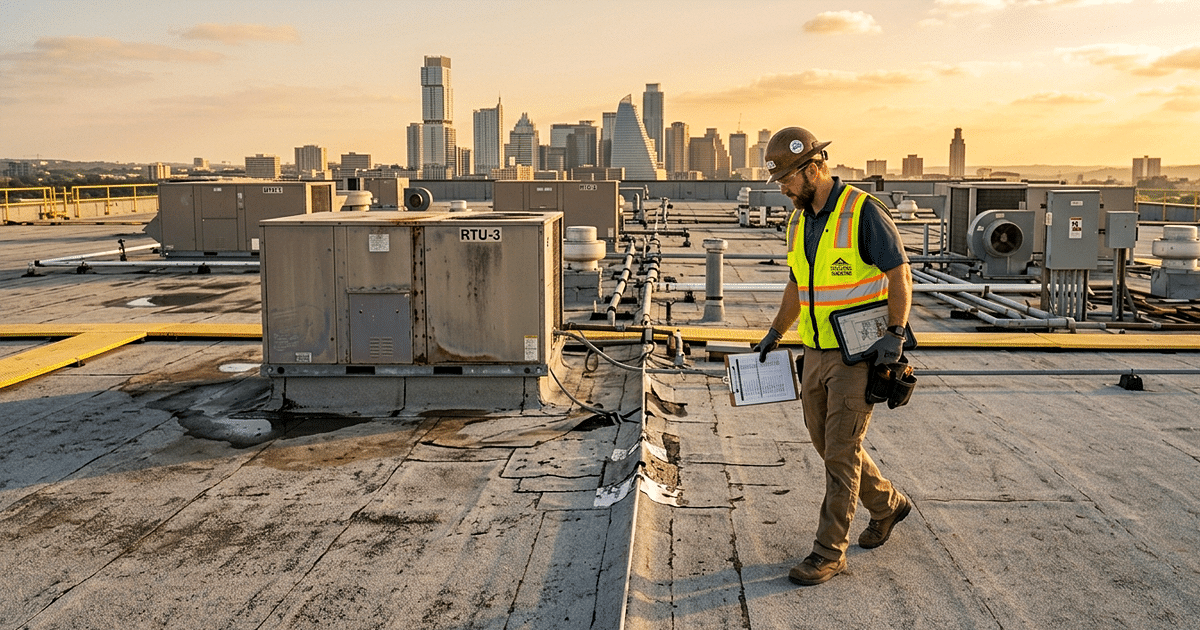
Most commercial buildings rely on flat roofs or low-slope roofing systems, which means water has to be actively managed through drainage systems instead of simply running off. These commercial roofing systems are designed for durability and long-term performance, but they require more planning and precision during installation.
You’re also dealing with more variables than a typical residential roofing job:
- HVAC units and rooftop equipment
- Multiple penetrations and seams
- Larger roof size and square footage
- Complex layouts and transitions
The roof’s square footage matters, but what really drives pricing is what’s happening on top of that space. A clean roof installs much faster than one with multiple layers, heavy equipment, and limited access.
That’s why two buildings with the same square foot measurement can have very different commercial roof replacement costs.
Average Roof Replacement Costs in Central Texas
For most commercial roofs in Central Texas, pricing typically falls within these ranges:
- TPO or EPDM: $6 to $12 per square foot
- Modified bitumen roofing: $6 to $11 per square foot
- Metal roofing systems: $10 to $20+ per square foot
These numbers reflect installed costs, including labor and materials.
Typical total project costs look like this:
- Small commercial buildings: $40,000 to $150,000
- Mid-size commercial property: $150,000 to $750,000
- Large commercial buildings: $500,000 to $1M+
These are realistic average roof replacement costs, but the final number depends on several key factors tied to your building.
Most commercial roof replacement costs are made up of three primary components: materials, labor costs, and preparation. Materials typically account for 30% to 40% of the total cost, while labor costs can reach 50% or more depending on complexity. The remaining portion includes roof removal, disposal, permits, and any structural repairs discovered during the roofing project.
Key Cost Drivers for Commercial Roof Replacement Cost
The roof plays a major role in protecting your building, and the cost reflects that.
Roofing material is usually the first major driver. The type of commercial roofing material you choose affects durability, lifespan, and performance.
Labor costs are another major factor. Commercial roof installation requires skilled crews, safety protocols, and time. More complex projects increase labor costs quickly.
Tear-off and roof removal also impact pricing. If the existing roof has multiple layers, removing those materials adds labor and disposal costs. Old roof removal can significantly increase the total cost.
Permits and inspections vary based on local building codes, which can affect both materials and installation methods.
Warranty coverage and roofing warranties also influence cost. Higher-quality systems often include stronger warranty protection, which adds value over time.
Roofing Materials: How to Choose the Right Roofing Material
Choosing the right roofing material depends on your building, your budget, and your long-term goals.
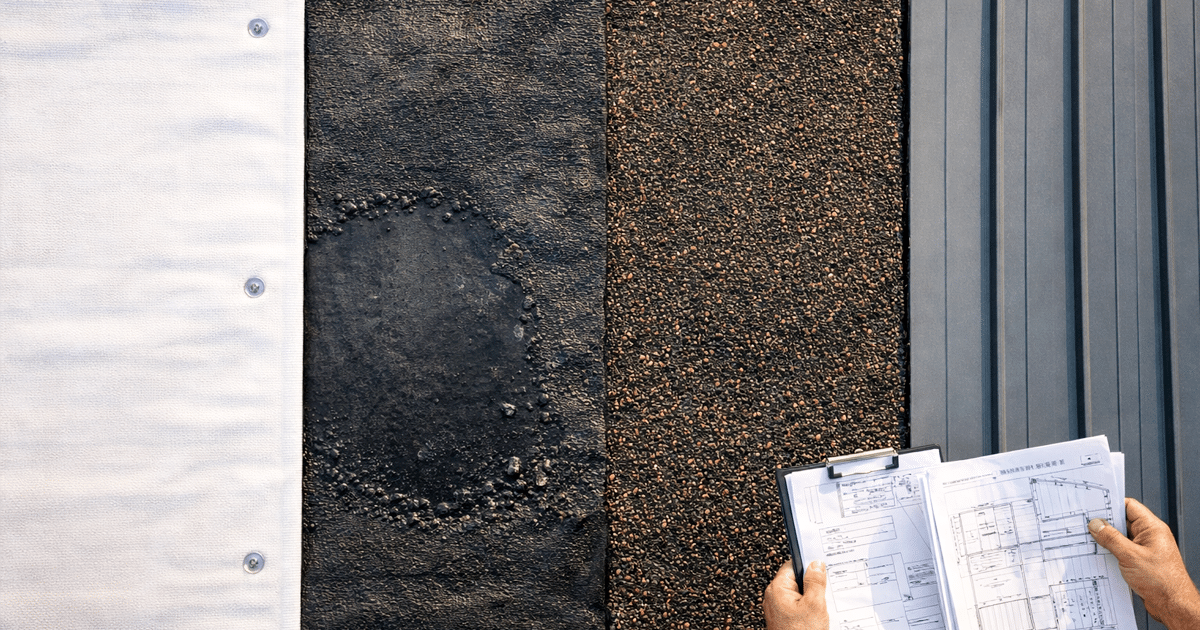
Common commercial roofing materials include:
- TPO
- EPDM
- Modified bitumen roofing
- Built up bituminous roofing
- Metal roofing
- Concrete tiles (in specific applications)
Each system has trade-offs.
TPO offers strong energy efficiency. EPDM is known for durability. Modified bitumen roofing handles foot traffic well. Metal roofing provides long lifespan and strong performance against weather.
Some commercial buildings may also incorporate:
- Asphalt shingles
- Architectural shingles
- Tile roof sections
Material selection should always consider longevity and energy efficiency, especially in Central Texas where heat plays a major role in performance.
Energy efficiency is becoming a bigger factor for many commercial property owners. Choosing energy efficient materials or systems designed to improve energy efficiency can help reduce long-term energy costs, especially in Central Texas where cooling demand stays high throughout the year.
Flat Roof Systems and Membranes
Flat roof replacement is one of the most common commercial roofing projects in the region, especially across Central Texas where most commercial buildings are designed with low-slope or flat roofs.
TPO typically costs $6 to $12 per square foot and is widely used because it helps improve energy efficiency. Its reflective surface reduces heat absorption, which can make a noticeable difference in cooling costs during long Texas summers. Many property owners choose TPO when they want a balance between upfront cost and long-term performance.
EPDM ranges from $5 to $10 per square foot and is valued for long-term performance. It’s a rubber-based system that handles temperature swings well and tends to hold up over time when properly installed. While it doesn’t reflect heat like TPO, it’s often chosen for durability and flexibility.
Modified bitumen roofing costs $6 to $11 per square foot and provides strong multi-layer protection. This system is built to handle foot traffic better than most membranes, which makes it a solid option for roofs that need regular maintenance access. It’s also commonly used in areas where additional durability is needed.
These commercial roofing systems are used across most flat roofs on commercial buildings because they offer a combination of affordability, durability, and adaptability depending on the roofing project.
Metal and Pitched Options for Commercial Buildings
Some commercial buildings include pitched sections where metal roofing is a better fit, especially on structures with visible rooflines or architectural features.
Standing seam metal systems typically range from $12 to $20+ per square foot. They offer long lifespan, strong wind resistance, and minimal maintenance once installed. Many property owners choose this option when they’re planning for a long-term investment and want a high quality commercial roof that can last decades.
Corrugated metal roofing ranges from $8 to $15 per square foot and is a more budget-friendly option. While it doesn’t offer the same lifespan as standing seam systems, it still provides solid durability and performs well in many commercial applications.
Metal roofing is ideal for buildings with steeper roofs or for property owners focused on durability. It also performs well in Central Texas weather, holding up against heat, wind, and hail better than many traditional roofing materials.
Labor Costs and Experienced Roofing Contractors
Labor costs are one of the largest portions of any commercial roof replacement, and they’re often where projects vary the most.
They are influenced by:
- Roof size
- Complexity
- Crew size
- Installation time
More complex roofs require more labor hours, which increases the total cost. But it’s not just about time. Safety requirements, coordination around equipment, and installation precision all factor into labor pricing.
Labor rates are typically higher in metro areas like Austin compared to rural parts of Central Texas. Demand for skilled crews stays high, and that affects availability and scheduling.
This is also where working with a qualified commercial roofing contractor can make a difference. Experienced roofing contractors understand how to manage complex commercial roofing projects, coordinate crews efficiently, and avoid costly delays or mistakes that can impact the overall cost of the project.
Reputable roofing contractors and experienced roofing contractors can often complete projects more efficiently, which can actually help control long-term roofing costs even if their initial bid is slightly higher.
Ja-Mar Roofing & Sheet Metal has extensive experience handling complex commercial roofing projects in Austin and across Central Texas, which helps ensure consistent results and proper installation.
Roof Condition, Old Roof Issues, and Roof Inspection
The condition of the existing roof is one of the biggest cost variables in any commercial roof replacement project.
An old roof often hides issues that aren’t visible from the surface. Moisture damage, deteriorated decking, and structural problems can all exist beneath the top layer.
Once roof removal begins, crews may uncover hidden costs such as decking damage or structural repairs. These issues need to be addressed before a new roof can be installed properly, which can increase both the timeline and total cost.
Roofs with multiple layers tend to be more expensive to replace because each layer has to be removed. That adds labor, disposal, and time to the project.
A professional roof inspection helps identify these problems early. It gives property owners a clearer picture of the roof’s condition and helps provide a more accurate estimate before work begins.
In many cases, issues found during roof removal are tied to long-term moisture exposure or aging materials. Structural repairs may be required before a new roof can be installed, and these repairs can increase both the timeline and the total roof replacement cost if not identified early through a professional inspection.
Project Complexity: Access, Features, and Commercial Building Layout
Not all roofs are easy to work on, and complexity plays a major role in commercial roof replacement costs.
Limited access may require specialized equipment such as cranes, lifts, or additional safety setups. If crews can’t easily move materials on and off the roof, installation takes longer.
Rooftop features like HVAC units, vents, skylights, and other penetrations increase labor time because each one requires detailed flashing and sealing.
Roof geometry also plays a role. More transitions, sections, and elevation changes increase installation time and complexity.
Roof pitch, especially on buildings with steeper roofs, adds another layer of difficulty. Steeper sections require additional safety measures and slow down installation, which directly increases labor costs.
Even small changes in layout can impact labor. Roofs with multiple elevations, tight access points, or heavy rooftop equipment often require additional coordination and time, which increases the complexity of the roof installation process and contributes to higher labor costs.
Local Texas Factors That Affect Replacement Costs
Several regional factors influence replacement costs in Texas, and Central Texas presents its own unique challenges.
Weather is a major factor. Heat, hail, and sudden storms all impact how roofing materials perform over time. These conditions also influence the types of commercial roofing materials property owners choose.
Supply chain changes can affect material availability and pricing. Certain materials may fluctuate in cost depending on demand and manufacturing conditions.
Seasonal demand also plays a role. After major storms, roofing companies become busier, which can impact both scheduling and pricing.
Local building codes vary by city and influence materials, permitting, and installation requirements. Staying compliant with these codes is necessary and can affect both the scope and cost of the project.
The roofing industry across Central Texas continues to shift due to labor availability, material costs, and demand after major weather events. Roofing companies often experience increased workloads after storms, which can affect both pricing and scheduling timelines for commercial roofing services.
Comparing Commercial And Residential Roof Replacement Costs
Commercial roofing and residential roofing operate on different scales, even though they may seem similar at first glance.
Commercial roofs involve larger square footage, different roofing systems, and more complex installation processes. These projects often require more coordination and specialized labor.
Residential roofing typically uses asphalt shingles, architectural shingles, or tile roof systems and is faster to install. The materials and installation methods are generally less complex.
Because of this, commercial roof replacement costs are usually higher overall, even if the cost per square foot may sometimes appear similar depending on the system used.
When a Full Roof Replacement Makes More Sense Than Repairs
In many cases, property owners try to extend the life of an existing roof through repairs. While this can work short term, repeated repairs can quickly add up.
If repair costs begin to approach 25% to 30% of the total roof replacement cost, a full roof replacement often becomes the better long-term investment. This is especially true for older systems or roofs with multiple layers, where ongoing repairs may only provide temporary results.
Budgeting, Financing, and Ways To Reduce Costs
Planning ahead helps reduce the overall cost of a roofing project and prevents unexpected expenses.
Start by understanding your roof’s square footage and evaluating your material options. Build in a contingency for unexpected structural repairs or hidden issues discovered during roof removal.
Financing options may include business loans or home equity loans depending on the property and ownership structure. These options can help spread out the cost of a full roof replacement.
Choosing energy efficient materials can help improve energy efficiency and reduce long-term energy costs, especially in Central Texas where cooling systems run most of the year.
Timing can also make a difference. Scheduling during slower periods may improve contractor availability and help reduce labor costs.
Planning for the overall cost of a commercial roofing project also means thinking beyond the initial installation. A high quality commercial roof designed for longevity and energy efficiency can reduce maintenance needs and help control energy costs over time.
How To Choose the Right Contractor and Plan Your Roofing Project
Choosing the right contractor is critical to the success of your commercial roof replacement.
Work with a reputable commercial roofing contractor who has experience with commercial roofing systems and understands the complexities of large-scale roofing projects.
Get multiple bids and compare scope, materials, and pricing carefully. A lower price doesn’t always mean a better value.
Verify licenses, insurance, and references. Reputable roofing companies should be able to provide documentation and examples of past commercial roofing projects.
A professional contractor will provide a detailed roof replacement estimate and explain the full process clearly, helping you make an informed decision before moving forward. If you’re evaluating options or want a second opinion, working with a team like Ja-Mar Roofing & Sheet Metal can help you better understand your building, your roofing systems, and the most cost-effective path forward.
FAQs
What drives commercial roof replacement costs in Central Texas?
Several key factors determine commercial roof replacement costs, including roofing material, labor costs, roof size, and the condition of the existing roof. Project complexity, local building codes, and accessibility also play a role. In Central Texas, weather exposure and demand after storms can further influence replacement costs.
What is the average cost per square foot for commercial roofs?
Most commercial roofs in Central Texas range from $6 to $20+ per square foot depending on the roofing system and complexity. Simpler flat roof systems like TPO or EPDM tend to be on the lower end, while metal roofing systems and complex installations land on the higher end.
How long does a commercial roof replacement take?
The timeline depends on roof size, layout, and weather conditions. Smaller commercial buildings may take a few days, while larger commercial roofing projects can take several weeks. Delays can occur if structural repairs or weather issues arise during installation.
What are the biggest hidden costs in a commercial roof replacement project?
Hidden costs often come from issues discovered after roof removal. These can include decking damage, moisture intrusion, and structural repairs. Buildings with multiple layers on the existing roof may also require more labor and disposal costs, increasing the total project price.
Can I install a new roof over an existing roof?
In some cases, a new roofing system can be installed over the existing roof, but it depends on local building codes and the condition of the current system. If there are multiple layers or structural concerns, a full roof removal is usually required to ensure proper installation and long-term performance.
What is the most affordable commercial roofing material?
EPDM and TPO are typically the most affordable commercial roofing materials. They offer a lower upfront cost per square foot and are widely used across flat roofs. However, the right roofing material depends on your building and long-term goals, not just initial pricing.
Is metal roofing worth the cost for commercial buildings?
Metal roofing often has a higher upfront cost, but it offers excellent durability, long lifespan, and minimal maintenance. For many commercial property owners, the long-term value outweighs the initial investment, especially in areas with high heat and storm exposure like Central Texas.
How do labor costs impact commercial roof replacement costs?
Labor costs can make up nearly half of the total cost of a commercial roof replacement. More complex roofing systems, limited access, and buildings with multiple penetrations all increase labor time. Hiring experienced roofing contractors can help ensure the work is done efficiently and correctly.
How often should commercial roofs be replaced?
Most commercial roofing systems last between 20 and 40 years depending on the material, installation quality, and maintenance. Regular inspections can help extend the lifespan and identify issues early before a full roof replacement becomes necessary.
How do I get an accurate roof replacement estimate?
The best way to get an accurate estimate is to schedule a professional roof inspection. A qualified commercial roofing contractor can evaluate the existing roof, identify potential issues, and provide a detailed roof replacement estimate based on actual conditions rather than assumptions.
Can commercial roof replacement improve energy efficiency?
Yes, modern commercial roofing systems can significantly improve energy efficiency. Reflective materials like TPO and certain metal roofing systems reduce heat absorption, which helps lower energy costs. Upgrading insulation and ventilation during a roof replacement project can also improve overall building performance.
What is the difference between commercial and residential roofing costs?
Commercial roofing costs are typically higher overall because of larger square footage, more complex roofing systems, and increased labor requirements. Residential roofing projects are usually simpler and faster, often using asphalt shingles or tile roof systems.
What role do local building codes play in roofing costs?
Local building codes affect materials, installation methods, and inspection requirements. In Central Texas, codes may require specific wind ratings, energy efficiency standards, or installation practices. These requirements can influence both the scope and total cost of a commercial roof replacement project.
Can I reduce commercial roof replacement costs without sacrificing quality?
Yes, costs can be managed by choosing the right roofing material, planning ahead, and working with reputable roofing contractors. Scheduling during slower seasons and addressing minor issues early can also help reduce overall costs without cutting corners.
Contents
- Overview of Commercial Roofing Projects in Central Texas
- Average Roof Replacement Costs in Central Texas
- Key Cost Drivers for Commercial Roof Replacement Cost
- Roofing Materials: How to Choose the Right Roofing Material
- Flat Roof Systems and Membranes
- Metal and Pitched Options for Commercial Buildings
- Labor Costs and Experienced Roofing Contractors
- Roof Condition, Old Roof Issues, and Roof Inspection
- Project Complexity: Access, Features, and Commercial Building Layout
- Local Texas Factors That Affect Replacement Costs
- Comparing Commercial And Residential Roof Replacement Costs
- When a Full Roof Replacement Makes More Sense Than Repairs
- Budgeting, Financing, and Ways To Reduce Costs
- How To Choose the Right Contractor and Plan Your Roofing Project
- FAQs

