

When homeowners start thinking about a budget for new roof in Austin, Texas, the conversation usually begins with a mix of sticker shock, uncertainty, and a lot of unanswered questions. Roofing costs in Austin and Central Texas can vary widely depending on materials, roof design, and what’s hiding underneath the old system, which makes planning ahead essential. Setting a realistic budget for a new roof isn’t just about picking shingles—it’s about understanding where the money actually goes, how local weather impacts long-term value, and how to avoid surprises once tear-off begins.
This guide walks through what Austin-area homeowners need to know before committing to a roof replacement, from real-world cost ranges to smart planning strategies that keep projects on track and within budget.
Key Takeaways
- Most Austin and Central Texas roof replacements in 2025 fall roughly between $8,000 and $18,000 for a typical 1,700–2,200 sq. ft. home, with asphalt shingles at the lower end and metal roofing or tile toward the higher end.
- The main budget drivers in Austin are roof size, material choice, roof complexity, existing damage requiring repair, and local labor rates combined with permit costs.
- A solid planning process includes assessing your existing roof, defining goals and timeline, getting 2–3 detailed quotes from local contractors, and building a realistic budget with a 10–15% contingency for surprises.
- Austin’s intense UV exposure, 100°F+ summers, hail events, and occasional high winds directly affect material performance and long-term roofing costs—making climate-appropriate choices essential.
- Smart money management means using insurance where applicable, exploring financing options, scheduling work in shoulder seasons, and choosing value-driven bids rather than simply the cheapest option.
Why Planning and Budgeting Matter for a New Roof in Austin
Austin roofs face brutal conditions year-round. Between the relentless summer sun, spring hailstorms, and occasional high-wind events, your roof takes more punishment here than in most American cities. This makes a planned roof replacement a critical long-term investment rather than a last-minute emergency scramble.
A new roof in Austin or Central Texas is often the largest home maintenance expense you’ll face in a 10–20 year period. We’re talking about a significant investment that can easily reach $15,000 or more for an average home. Without clear budgeting, homeowners end up making rushed decisions, overpaying, or choosing materials that underperform in our climate.
Careful planning helps you accomplish several things at once:
- Choose roofing materials that actually perform well against Central Texas heat and storms
- Control energy bills by selecting energy efficient options for our climate
- Potentially reduce future roof repair and insurance costs
- Avoid the stress of surprise costs mid-project
This guide walks you through costs, timelines, materials, and funding strategies specific to Austin and nearby communities like Round Rock, Cedar Park, Georgetown, and San Marcos. Consider it your roadmap to making smart decisions about one of your home’s most important protective systems.
Step 1: Assess Your Roof’s Condition and Timing
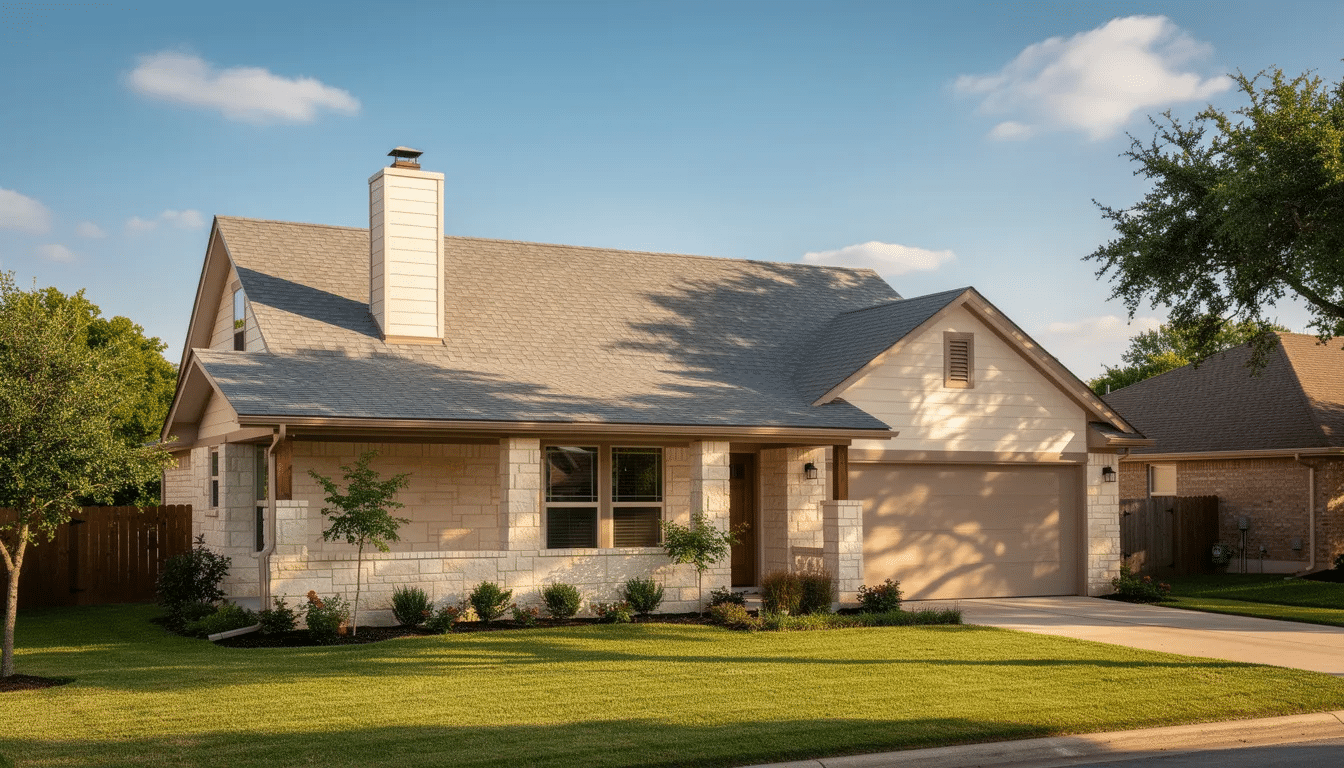
Before you start gathering quotes or comparing different roofing materials, you need to answer one fundamental question: do you actually need a full replacement, or can targeted repairs extend your current roof’s life?
This decision directly impacts your budget. A few isolated repairs might run $500–$3,500, while a complete roof replacement project for a typical Austin home often lands between $12,000–$20,000. That’s a significant difference worth investigating.
Signs Your Austin Roof Is Near the End
For homes built between 1980 and 2010 (which describes a huge portion of Austin’s housing stock), here are the warning signs that a replacement is on the horizon:
- Curling or buckling shingles – Heat damage from years of 100°F+ summers causes shingles to warp and lift
- Missing granules – Check your gutters; excessive granule loss means your shingles are breaking down
- Frequent shingle loss after storms – If every spring thunderstorm means calling for repairs, the roof is telling you something
- Ceiling stains or attic moisture – Active leaks indicate underlying problems that often extend beyond simple patching
- Age approaching 15–20 years – Most asphalt shingle roofs in Central Texas reach functional end-of-life around this mark
Many Austin roofing companies use a straightforward rule: if repair costs exceed 30–40% of what a new roof would cost, replacement becomes the smarter financial move.
Timing Your Replacement
Many Central Texas roofers prefer scheduling replacements between October and April when temperatures are milder. Working on a roof in 100°F+ heat affects both crew productivity and material handling (asphalt shingles can become overly pliable in extreme heat, affecting installation quality).
That said, don’t wait for the “perfect” time if your roof has active problems. Water damage compounds quickly.
Recommended first step: Schedule a free roof inspection with a reputable Austin roofing contractor. Ask them to provide photo documentation of wear patterns, hail impact marks, and any decking problems they can observe. This gives you concrete information for planning your budget.
Before that inspection, gather any paperwork you have: original installation date, warranty documents, and past roof repair invoices. This information helps the roofer assess remaining lifespan and becomes essential if you’re pursuing an insurance claim.
Step 2: Understand Typical New Roof Costs in Austin & Central Texas
Those generic “average roof replacement cost” numbers you find online can be misleading. Most assume a 1,700–2,000 sq. ft. roof with basic asphalt shingles and straightforward geometry, and often overlook important factors like insurance deductibles. Your Austin home might be quite different.
Let’s break down realistic 2025 pricing for the austin market.
Ballpark Ranges for Central Texas
For a typical 1,800–2,000 square foot roof in Austin:
| Material Type | Estimated Total Cost Range |
|---|---|
| Basic 3-tab asphalt shingles | $8,000–$13,000 |
| Architectural asphalt shingles | $11,500–$16,500 |
| Premium/impact-rated shingles | $15,000–$20,000 |
| Standing seam metal | $16,000–$25,000+ |
| Tile roofing (concrete or clay) | $16,000–$30,000+ |
These ranges assume a single-story home with moderate complexity. Two-story homes, steep pitched roofs, and properties with multiple dormers, skylights, or chimneys will push toward the higher end—or beyond.
Understanding Cost Per Square Foot
A more accurate way to estimate your roof cost is calculating by square foot rather than relying on “per home” averages. Here’s how Austin prices typically break down:
- Architectural shingles: $5.75–$8.25 per square foot installed
- Standing seam metal: $8.00–$12.00 per square foot installed
- Concrete tiles: $6.50–$10.00 per square foot installed
Multiply your roof’s square footage by these ranges for a rough estimate. Keep in mind that roof area isn’t the same as your home’s floor plan—roof pitch increases surface area, sometimes significantly.
Why Austin Sits at the Top of Texas Pricing
According to Modernize’s data, Austin’s average roof replacement cost in Austin runs around $22,800, placing it at the very top of Texas markets alongside Dallas. The average cost here exceeds Houston and San Antonio by over $1,000.
Why? Several factors:
- High construction demand keeps local labor rates elevated
- Preference for premium materials among Austin homeowners
- Complex modern rooflines common in newer developments
- Labor accounts for roughly 50% of total cost in this market
Here’s something critical to understand: Central Texas labor and material prices often spike after major hail or wind events in Travis, Williamson, and Hays counties. If a significant storm hits the region, demand surges, contractor availability shrinks, and prices can temporarily jump. This makes early planning and securing quotes before storm season valuable.
Step 3: Choose Roofing Materials that Fit Austin’s Climate and Your Budget
The biggest single budgeting decision you’ll make is selecting your type of roofing material. And in Austin’s hot, sunny climate with significant storm risk, this choice should be driven by performance and long-term value rather than short-term savings alone.
The most common roofing material in Central Texas remains asphalt shingles, but that doesn’t mean it’s automatically the right choice for every homeowner.

Architectural Asphalt Shingles
This is the default choice for most Austin homeowners, and for good reason. Architectural shingles (also called dimensional shingles) offer:
- Budget-friendly pricing at $5.75–$8.25 per square foot installed
- Solid wind ratings suitable for Central Texas conditions
- Wide color and style options to match any home aesthetic
- 15–25 year realistic lifespan in our climate
The downside? Standard architectural shingles are vulnerable to large hail and will show wear from UV exposure faster than premium materials. In Austin’s conditions, expect replacement closer to the 18–22 year mark rather than the 30-year manufacturer claims.
Impact-Resistant (Class 4) Shingles
If you live in a hail-prone area of Central Texas (north Austin suburbs, Williamson County, parts of Bell County), impact-resistant shingles deserve serious consideration. They cost more upfront—roughly $7.50–$10.00 per square foot—but offer two significant advantages:
- Better hail performance with ratings specifically designed to resist impact damage
- Insurance premium discounts of 10–30% on the roof portion of your policy from many Texas insurers
Run the math: if your annual insurance savings are $300 and you plan to stay in the home 15 years, that’s $4,500 in savings that can offset the higher upfront cost.
Standing Seam Metal Roofing
Metal roofing represents a higher upfront cost ($8.00–$12.00 per square foot for steel) but delivers exceptional durability and energy efficiency. For Austin’s climate, metal offers:
- 40–70 year lifespan with proper installation
- Superior wind and hail resistance
- Strong solar reflectance that can meaningfully reduce attic temperatures and AC loads
- Modern aesthetic popular in Hill Country and contemporary Austin homes
The higher price tag makes sense for homeowners planning to stay long-term or those prioritizing energy efficiency. Metal roofs on west-facing slopes can significantly reduce cooling costs during brutal August afternoons.
Tile Roofing
Clay and concrete tiles bring a premium look with a higher price tag ($8.00–$15.00 per square foot for clay). They’re excellent at handling heat and offer exceptional durability (40–80 years for clay), but come with considerations:
- Heavier weight may require structural assessment
- Vulnerable to breakage from large hail impacts
- Repairs require skilled labor that can be harder to find
- Best suited for higher-end homes originally engineered for the weight
Energy and HOA Considerations
Austin’s climate makes energy efficiency particularly valuable. Lighter-colored shingles and reflective metal roofs can lower attic temperatures by 20–30 degrees on hot summer days. For homes with minimal attic insulation or on single-story ranch layouts, this translates directly to reduced AC run-time.
Before finalizing your material choice, check HOA rules in Austin suburbs like Pflugerville, Leander, Buda, and master-planned communities. Some associations limit colors, prohibit metal roofs, or require specific profiles. This affects both your options and your budget.
Step 4: Factor in Design, Size, and Special Features of Your Roof
Two Austin houses with identical square footage can have dramatically different roof replacement costs. The difference comes down to roof design, roof pitch, and special features that add complexity.
Roof Complexity Matters
A simple, low-slope gable roof on a single-story South Austin ranch home costs significantly less per square foot than a steep, cut-up roof with multiple valleys and dormers on a Westlake or Lakeway property.
Here’s how complexity affects labor costs:
| Roof Feature | Impact on Budget |
|---|---|
| Steep slopes (8/12 pitch or higher) | +20–30% labor costs |
| Multiple valleys and dormers | More cutting, flashing, and custom work |
| Skylights | $500–$2,000+ each for new flashing |
| Chimneys | $500–$2,000 for proper flashing work |
| Complex roof lines | More materials, more labor |
Steeper roofs require additional safety measures, slow down work pace, and demand more specialized equipment. A 10/12 pitch roof that might look beautiful from the street can add several thousand dollars to your roof installation costs.
Examples Across Central Texas
Consider these scenarios:
2,000 sq. ft. single-story in Round Rock with a simple hip roof and 4/12 pitch: This straightforward roof design keeps labor efficient. Expect pricing toward the lower-middle of material ranges.
3,000 sq. ft. two-story in Dripping Springs with steep 8/12 pitch, two skylights, and a stone chimney: Despite the larger home, the roof area might be similar to the single-story (two-story homes often have smaller footprints). However, the steep pitch and features push costs toward the higher labor costs end of the spectrum.
Special Features That Add Cost
Beyond basic roof design, several features increase roofing project complexity:
- Skylights and solar tubes require precise flashing and potential frame repairs
- Roof-mounted HVAC equipment needs temporary removal and careful reinstallation
- Multiple roof penetrations (vents, pipes, satellite dishes) each require proper sealing
- Solar panel arrays require coordination with a solar contractor for removal and reinstallation
When getting quotes, make sure contractors specifically address how they’ll handle each special feature on your roof.
Many Austin homeowners budget for shingles but forget related items that can add several thousand dollars to the final invoice. Understanding these costs upfront prevents budget shock when your roofing contractor uncovers problems during tear-off.
Tear-Off and Disposal
Roof removal isn’t free. Removing old roofing layers, hauling debris, and paying landfill or recycling fees around Austin typically costs $1.50–$3.25 per square foot. For a 2,000 sq. ft. roof, that’s $3,000–$6,500 just for tear-off.
Some contractors include tear-off in their per-square-foot quotes; others list it separately. Always clarify what’s included before comparing bids.
Decking Repair or Replacement
Here’s where budgets often blow up. Once the old roof comes off, contractors frequently discover damaged decking (the plywood or OSB sheathing beneath your shingles). Common causes:
- Past leaks that caused rot
- Old cedar shake roofs that damaged underlying wood
- Builder’s original decking from the 1990s/early 2000s reaching end-of-life
- Poorly ventilated attics causing moisture damage
Decking repairs in Austin typically add $1,200–$4,500 to a project. For older homes or those with known leak history, budget toward the higher end of this range. Many experienced homeowners set aside per-sheet allowances for decking replacement as part of their contingency.
Flashing and Underlayment Upgrades
Proper metal flashing, drip edge, and synthetic underlayment are vital for Central Texas storm resistance. While these may slightly increase upfront cost compared to minimum-code materials, they significantly reduce future leak risk.
Modern synthetic underlayments cost more than traditional felt but handle our heat better and last longer. For metal and tile roofing systems, specialized high-temperature underlayments are often required.
Gutter Work
Your new roof installation may require removing, rehanging, or replacing gutters and downspouts. Older Austin homes frequently have undersized gutter systems that don’t meet current best practices. This can add a separate line item ranging from a few hundred to over a thousand dollars depending on scope.
Solar Panel Removal and Reinstallation
For homes in Austin’s solar-friendly neighborhoods, panels must be temporarily removed by a qualified crew during roof replacement. This isn’t something your roofing contractor typically handles directly—it requires coordination with a solar company.
Costs vary widely based on system size and complexity, but expect anywhere from $1,000 to $3,000+ for removal and reinstallation. Ask about this early in your planning process if you have panels.
Step 6: Plan for Permits, Codes, and Inspections in Austin & Central Texas
Local building codes and permit requirements in Austin and surrounding Central Texas cities add modest costs to your roofing project but are crucial for safety, insurance compliance, and resale value.
How Permits Work in Austin
In Austin proper, your roofing contractor typically pulls the permit with the city. Permit fees generally run $200–$600 depending on project scope. Processing typically takes 3–7 business days, though this can vary.
Perimeter cities have their own permit rules:
- Round Rock, Georgetown, Cedar Park: Similar permit requirements to Austin
- Kyle, Buda, San Marcos: May have slightly different fee structures
- Unincorporated areas of Travis and Williamson counties: Permit requirements may be less stringent
Always confirm permit requirements with your contractor before work begins. A reputable local contractor will be familiar with permits and inspections in your specific jurisdiction.
Inspection Requirements
Inspections may occur during or after new roof installation to confirm code-compliant:
- Decking thickness and condition
- Underlayment installation
- Ventilation systems meeting current requirements
- Proper nailing patterns for wind resistance
These inspection fees should be clearly shown in your roof estimate. Don’t skip this step—it’s your verification that work meets code.
Why This Matters Long-Term
Skipping permits or using out-of-area contractors who ignore local regulations creates serious problems:
- Resale issues: Unpermitted work can derail home sales or require expensive remediation
- Insurance claims: Insurers may deny claims on unpermitted roofs
- Warranty problems: Manufacturer warranties may be voided by improper installation
- Legal liability: Unpermitted work can create liability issues if problems arise
The small cost of permits and inspections provides significant protection.
Step 7: Work with Insurance and Storm Damage Claims
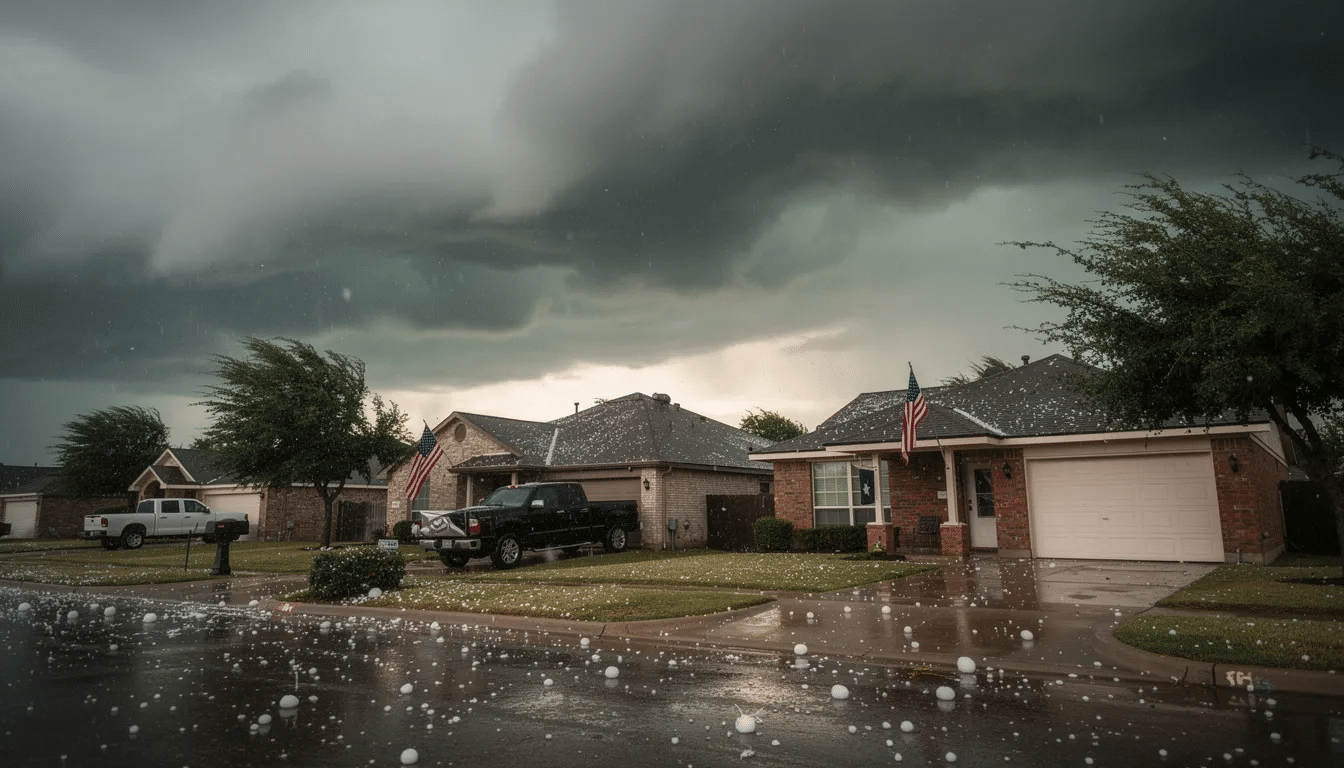
In Austin and Central Texas, many roof replacements result from hail or wind damage rather than simple age. Understanding how insurance works can dramatically change your out-of-pocket costs.
Planned Replacement vs. Storm Damage Claim
There’s a critical distinction:
Age-related replacement: Your roof is simply old and worn out. This is typically 100% out-of-pocket unless you have rare coverage for wear and tear.
Storm-related replacement: A specific hail or wind event caused damage. This is often partially or fully covered by homeowners insurance, minus your deductible.
The difference between these scenarios can be $10,000+ in your pocket.
Steps for Storm-Related Replacement
If you suspect storm damage:
- Document damage immediately with dated photos after any significant hail or wind event
- Review your policy to understand roof and hail coverage, deductible structure, and whether you have Actual Cash Value (ACV) or Replacement Cost Value (RCV) coverage
- Contact your insurer before authorizing major work to open a claim
- Get a professional inspection from a reputable Austin roofer who can provide a detailed inspection report
A quality roofing contractor can meet with the insurance adjuster on-site, help identify all damage (some is subtle), and ensure the scope approved by the insurance company matches what’s actually needed.
Common Insurance Pitfalls
Watch out for these issues:
- High deductibles: Many Texas policies have percentage deductibles (1–2% of dwelling coverage). On a $400,000 home, that’s $4,000–$8,000 out of pocket before insurance pays anything.
- ACV vs. RCV policies: Actual Cash Value policies pay only the depreciated value of your roof, leaving you to cover the gap. Replacement Cost Value policies pay full replacement cost (usually after completion).
- Code upgrade exclusions: Costs for bringing your roof up to current code may not be covered unless you have Ordinance or Law coverage.
- “We’ll eat the deductible” contractors: This is a red flag. It’s potentially illegal in Texas and often signals a contractor willing to cut corners elsewhere.
Step 8: Get and Compare Detailed Quotes from Austin Roofing Contractors
Homeowners should get at least 2–3 written estimates from established, insured Central Texas roofers. Never rely on a single bid—you need comparison points to evaluate both pricing and scope.
What a Detailed Quote Should Include
A professional roof estimate should clearly show:
- Material type and brand (specific product name, not just “architectural shingles”)
- Underlayment type (synthetic, felt, peel-and-stick in valleys)
- Number of tear-off layers and disposal method
- Flashing plan (replacing all, reusing any, materials used)
- Ventilation plan (existing adequate or upgrades needed)
- Estimated decking repairs or per-sheet pricing for repairs discovered during tear-off
- Permit costs and who pulls them
- Cleanup procedures and debris removal
- Warranty terms (both manufacturer and workmanship)
If a quote is vague on any of these items, ask for clarification before comparing.
Comparing More Than Price
The overall cost matters, but so do these factors:
| Factor | What to Look For |
|---|---|
| Workmanship warranty | 5–10 years minimum; longer is better |
| Manufacturer certifications | GAF Master Elite, CertainTeed ShingleMaster, etc. |
| Local reviews | Check Google, BBB, and neighborhood forums |
| Time in Austin market | Established local presence vs. out-of-area |
| Communication quality | Responsive, answers questions clearly |
A rock-bottom price from an unknown contractor rarely delivers the value it promises.
Timing and Scheduling Advantages
Some Austin roofing companies can offer better pricing or more scheduling flexibility during slower months (late fall and winter) versus peak hail-season workload in spring and early summer.
If your roof isn’t actively leaking, scheduling for a shoulder season can sometimes provide advantages in both price and contractor availability.
Verification Before Signing
Before signing any contract:
- Verify proof of insurance (general liability and workers’ comp)
- Check references in neighborhoods similar to yours (North Austin, Steiner Ranch, Hutto, etc.)
- Confirm local business address and longevity in the market
- Review contract carefully including payment terms, change order procedures, and cancellation policies
After major hailstorms, out-of-town contractors often descend on Central Texas with aggressive pricing. Many leave before warranty or service issues can be addressed. Stick with established local contractors.
Step 9: Create a Realistic Roof Budget and Payment Plan
Once you understand scope and have quotes in hand, it’s time to turn estimates into a written budget and payment plan. This prevents surprises and keeps your roofing project on track.
Building Your Line-Item Budget
Create a simple spreadsheet or document covering:
| Budget Item | Estimated Range |
|---|---|
| Base roof cost (per quote) | $X – $X |
| Expected decking repairs | $1,200 – $3,000 |
| Gutter work (if needed) | $200 – $1,500 |
| Skylight flashing/upgrades | $500 – $2,000 |
| Permits and inspections | $200 – $600 |
| Solar panel removal/reinstall | $1,000 – $3,000+ |
| Contingency (10–15%) | $X |
| Total Budget | $X |
That contingency is critical. Problems discovered during tear-off—rotted decking, hidden damage, ventilation deficiencies—are common. A 10–15% buffer keeps surprises manageable.
Funding Options for Austin Homeowners
Several approaches work for different situations:
- Cash/savings: Most cost-effective; no interest costs
- Home equity loan or HELOC: Often lower interest rates than other financing; interest may be tax-deductible for home improvements (consult a tax advisor)
- Contractor financing: Convenient but typically higher total cost than HELOC or cash
- Insurance proceeds + out-of-pocket upgrades: If insurance covers a basic replacement, you can often pay the difference to upgrade to impact-resistant shingles or metal
Payment Schedule Best Practices
A typical payment structure with reputable roofing companies:
- Deposit at signing: Usually 10–30% or matching your insurance deductible if applicable
- Progress payment: After material delivery or mid-project
- Final payment: After passing inspection and completing a walkthrough with the contractor
Avoid paying the full amount upfront. If a contractor requires this, it’s a significant red flag.
Coordinating Related Projects
Consider whether other exterior work makes sense to bundle:
- Solar installation: Coordinate with roof timing to avoid future removal costs
- Gutter upgrades: Often easiest while old roof is off
- Attic insulation: Access is easier during roof work; can improve energy efficiency
Bundling can sometimes save money and reduce overall expense from multiple contractor mobilizations.
Step 10: Plan for Long-Term Maintenance and Future Costs
Planning and budgeting for a new roof in Austin doesn’t end when the crew drives away. Protecting your significant investment over the next 15–30 years requires ongoing attention—though far less than you might think.
Routine Inspections
Schedule professional inspections every 1–2 years and after any large hail or wind event. This is especially important in storm-prone corridors north and east of Austin where hail frequency is highest.
These inspections catch small problems (a lifted shingle, deteriorating flashing) before they become expensive repairs or premature replacements.
Low-Cost Maintenance Tasks
Most roof maintenance is straightforward:
- Clean gutters at least twice yearly (spring and fall)
- Remove debris from valleys where leaves and branches accumulate
- Trim overhanging branches that scrape shingles or drop debris
- Monitor attic ventilation and address any blocked soffit or ridge vents
- Check attic insulation levels and address if inadequate
These simple tasks extend roof life significantly and cost little to nothing.
Document Everything
Keep all paperwork in a safe, accessible place. For expert roofing advice and solutions, consider consulting a professional roofer at Ja-Mar Roofing & Sheet Metal.
- Contracts and invoices
- Warranty documents (both manufacturer and workmanship)
- Permit documentation
- Photos of completed installation
- Inspection reports
These documents help with future resale (buyers love seeing proof of recent work), warranty claims, and insurance claims for future storm damage.
Planning the Next Cycle
Understanding the likely replacement cycle for your material helps you plan future budgets:
- Quality asphalt shingles in Central Texas: 18–25 years realistically
- Impact-resistant shingles: 20–30 years
- Metal roofing: 40–50+ years
- Tile roofing: 40–60+ years (though underlayment may need replacement sooner)
For repairs after storm damage, contact Austin emergency roofers.
If you install architectural shingles at age 45, expect to address the roof again around age 65–70. Knowing this allows you to plan rather than react.

FAQ: Planning and Budgeting for a New Roof in Austin, Texas
How far in advance should I start planning a roof replacement in Austin?
Start the planning process 3–6 months before you want work completed, especially if you’re aiming for cooler months (October–April). This gives adequate time for inspections, gathering multiple quotes, insurance discussions if applicable, and scheduling with a reputable Central Texas roofer. Rushing this process often leads to either overpaying or compromising on contractor quality.
Does the neighborhood I live in around Austin significantly change my roof cost?
Material and local labor rates are largely similar across Austin, Round Rock, Georgetown, Buda, and other Central Texas communities. However, costs may shift based on roof access difficulty, specific HOA requirements that limit material options, and local permit fees. These variations are typically minor compared to the impact of roof size, material choice, and complexity. A steep, complex roof in Kyle costs more than a simple roof in Westlake—location matters less than the roof itself.
Can I stay in my home during a roof replacement?
Most Austin homeowners remain in the home during roof work. However, expect significant noise and vibrations throughout the house—it sounds like someone is hammering directly above you all day (because they are). Plan to move pets to a quieter location, cover items in the attic with plastic sheeting, and expect 1–3 days of disruption depending on roof size and complexity. Working from home during roof replacement is challenging.
Is a metal roof worth the extra money in Central Texas?
Metal roofs cost more upfront than asphalt shingles but offer longer lifespan (40–50+ years vs. 18–25 years), superior hail and wind resistance, and can reflect significant heat—particularly valuable in Austin’s climate. Whether it’s “worth it” depends on how long you plan to stay in the home and your priorities around energy efficiency and long-term maintenance. If you’re planning to sell in 5 years, the premium may not pay back. If it’s your forever home, the math often favors metal.
How do I know if a quote is too cheap to be reliable?
If one bid is significantly below others (say, 25%+ less), that’s a warning sign. Rock-bottom pricing often indicates unlicensed labor, inadequate insurance coverage, skipping permits, using lower-grade materials than specified, or planning to cut corners on installation quality. When evaluating competitive pricing, weigh the complete picture: warranties, references, manufacturer certifications, time in the Austin market, and how thoroughly the contractor explained their process. The cheapest new roof cost often becomes expensive when problems emerge.
Contents
- Why Planning and Budgeting Matter for a New Roof in Austin
- Step 1: Assess Your Roof’s Condition and Timing
- Step 2: Understand Typical New Roof Costs in Austin & Central Texas
- Step 3: Choose Roofing Materials that Fit Austin’s Climate and Your Budget
- Step 4: Factor in Design, Size, and Special Features of Your Roof
- Step 5: Account for Hidden and Often Overlooked Costs
- Step 6: Plan for Permits, Codes, and Inspections in Austin & Central Texas
- Step 7: Work with Insurance and Storm Damage Claims
- Step 8: Get and Compare Detailed Quotes from Austin Roofing Contractors
- Step 9: Create a Realistic Roof Budget and Payment Plan
- Step 10: Plan for Long-Term Maintenance and Future Costs
- FAQ: Planning and Budgeting for a New Roof in Austin, Texas

