
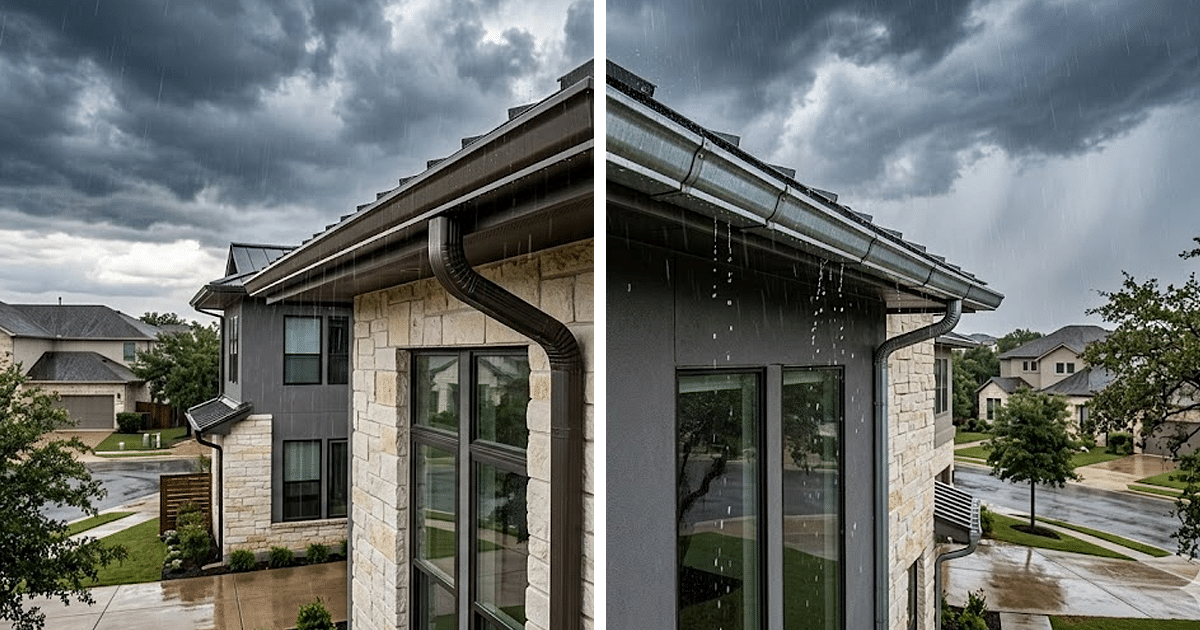
When homeowners start comparing Seamless vs Sectional Gutters, the conversation usually begins with cost. But in Austin, it should really start with longevity and performance. Your gutter system is not just there to catch rain. It directs thousands of gallons of water away from your roofline, siding, and foundation every year. Choosing the right type can mean the difference between decades of reliable drainage and a steady cycle of repairs.
In Central Texas, gutters deal with intense summer heat, sudden downpours, and the occasional hailstorm that seems to come out of nowhere. Those weather swings test every seam, joint, and fastener. If you are weighing your options, understanding how these two systems perform over time can help you avoid foundation issues, siding damage, and unnecessary replacement costs later on.
Key Takeaways
- Seamless gutters in Austin typically last 20 to 30 years, while sectional gutters average 10 to 15 years due to seam wear and sealant failure.
- Fewer joints mean fewer leak points. Seamless systems significantly reduce the risk of water intrusion, siding damage, and foundation issues during Central Texas storms.
- Sectional gutters cost less upfront, but repeated resealing, joint repairs, and earlier replacement often increase long-term ownership costs.
- Austin’s extreme heat and rapid temperature swings accelerate expansion and contraction at sectional seams, shortening their lifespan.
- During heavy downpours common in Travis and Williamson County, seamless gutters provide smoother water flow and better overflow resistance.
- Homes with properly pitched seamless systems experience fewer clogs and less debris buildup compared to sectional systems with multiple connection points.
- Over a 20-year period, seamless gutters often deliver stronger ROI through lower maintenance, fewer repairs, and improved foundation protection.
Seamless vs Sectional Gutters: Key Longevity Differences
The numbers tell a compelling story. Seamless gutters typically last 20-30 years with proper maintenance, while sectional gutters generally need replacement after 10-15 years. That’s potentially double the lifespan from choosing the right system.
Three main factors drive this longevity gap:
| Factor | Seamless Gutters | Sectional Gutters |
|---|---|---|
| Joint failures | Minimal risk (corners only) | High risk (multiple seams) |
| Leak susceptibility | Very low | Moderate to high |
| Maintenance requirements | Low maintenance | Higher maintenance |
| The construction differences between seamless and sectional gutters directly impact how long each system protects your home. Seamless gutters are custom formed on site from a single sheet of material, creating a continuous piece that spans your entire roofline. Sectional gutters rely on pre cut lengths joined together with connectors and sealants. |
These structural differences ripple through every aspect of performance, from weather resistance to repair frequency. Let’s examine each factor in detail.
Structural Integrity and Weak Points
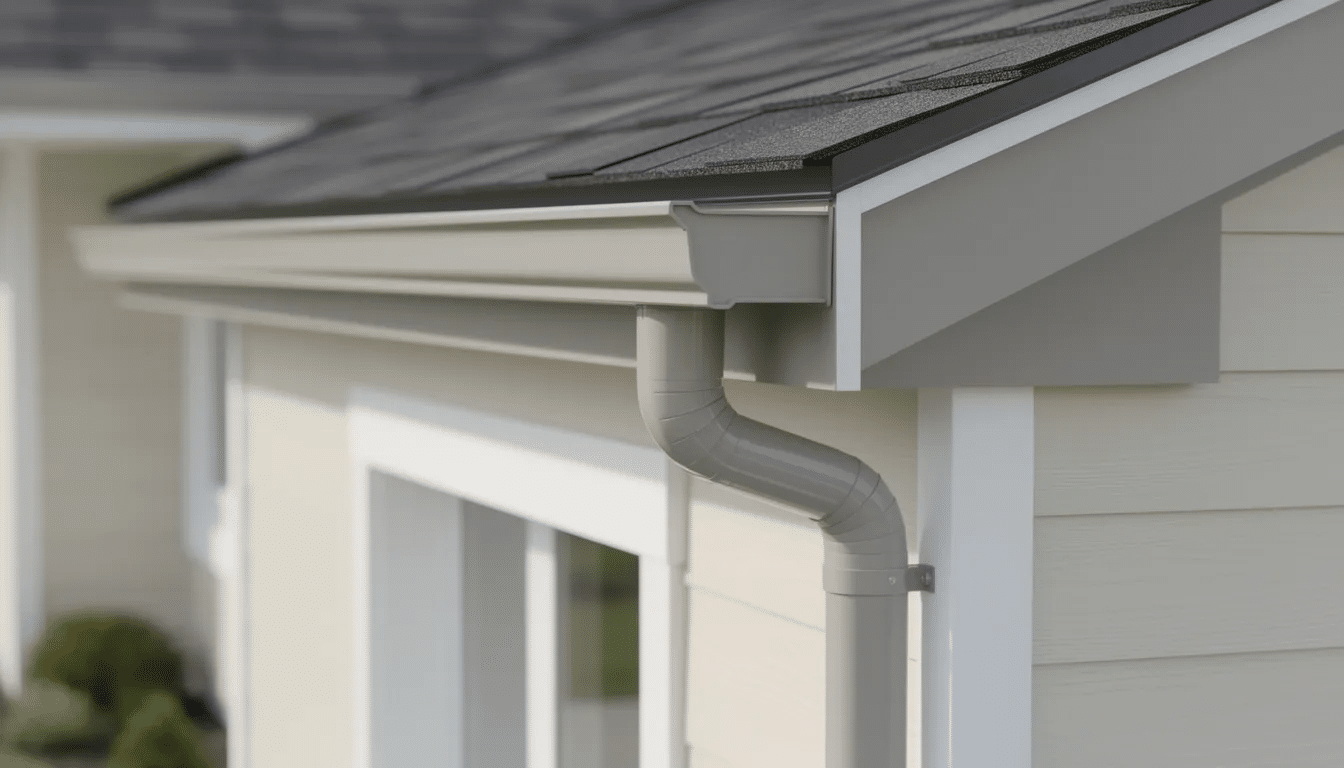
How a gutter is constructed determines how many weak points exist in the system. More weak points mean more opportunities for failure over the system’s lifetime.
Seamless Gutter Construction
Seamless gutters offer a fundamentally different approach to gutter design. The system consists of a single continuous piece of material, with joints only appearing at:
- Corner connections
- Downspout outlets
- End caps
This design means a typical 50-foot gutter run might have only 2-4 connection points total. Because the gutter is custom cut on site to match your home’s exact dimensions, installers achieve a precise custom fit that distributes weight and stress evenly across the entire length.
The result is a structurally superior system with far fewer joints where problems can develop. Seamless gutters eliminate the multiple connection points that plague sectional systems, creating what many contractors describe as a virtually leak-proof design.
Sectional Gutter Construction
Sectional systems take the opposite approach. They use pre-manufactured pieces, typically 10 or 20 feet long, that installers join together during installation. A 50-foot gutter run might require 3-5 sections connected with:
- Connectors and couplings
- Mitered joints at angles
- Sealants at every connection point
Each of these multiple joints represents a potential weak point where the system can fail. The seams and joints don’t just create leak risks—they also act as debris traps and stress concentration points.
Standard sectional sizes may not provide a perfect fit for all homes, potentially creating areas where water pools rather than flowing properly toward downspouts.
Weather Resistance and Durability
Different weather conditions test gutter systems in unique ways, and combining durable gutters with DIY steps to waterproof and protect your roof in Central Texas can significantly extend your home’s overall weather resistance. How well your gutters handle these challenges directly affects how long they’ll last.
Seamless Gutter Weather Performance
Seamless gutters provide superior weather resistance due to their continuous design. Here’s how they handle common weather challenges:
Freeze-thaw cycles: With fewer expansion joints, seamless systems experience less stress during temperature swings. The continuous material can expand and contract uniformly rather than pulling apart at seams.
Ice dam prevention: Smooth water flow through the system reduces the likelihood of ice dams forming. Water can flow freely toward downspouts without catching on seams or joints.
Storm performance: Seamless gutters handle heavy rain more effectively because there are no seams to slow water movement or create overflow points. In high winds, the continuous design holds up better than systems with multiple seams that can separate.
Thermal stress: While all materials expand in heat (aluminum expands approximately 1/8 inch per 10 feet in warm conditions), seamless systems distribute this stress more evenly rather than concentrating it at multiple joints.
Sectional Gutter Weather Performance
Sectional gutters face significant challenges from weather exposure:
- Seam vulnerability: Every joint becomes a potential failure point during freeze-thaw cycles
- Sealant degradation: Temperature changes cause sealants to expand, contract, and eventually crack
- Wind damage: Multiple joints are more susceptible to separation during storms
- Frequent repairs: Weather-related damage occurs more often, leading to more frequent repairs throughout the system’s life
The sealants used at sectional gutter joints typically need resealing every 1-5 years, depending on climate conditions. In regions with extreme temperatures, this maintenance requirement can be even more demanding.
Leak Development and Water Damage Prevention
Leaks don’t just reduce your gutter’s effectiveness—they accelerate deterioration of the entire system and can cause serious damage to your home’s foundation and exterior.
Seamless Gutter Leak Resistance
Seamless gutters eliminate most leak opportunities through their continuous design. With fewer seams to fail, the system maintains its water flow integrity for much longer periods.
Key advantages include:
- Minimal leak points: Only corners and downspouts require joints
- Isolated incidents: When leaks do occur, they’re typically single-point problems rather than system-wide failures
- Better water management: Continuous channels maintain proper drainage without interruption
- Foundation protection: Reliable performance prevents soil erosion and water infiltration around your home’s foundation
The leak resistance of seamless systems directly translates to longer effective lifespan. A gutter that keeps water flowing properly protects your home better and requires fewer repairs.
Sectional Gutter Leak Susceptibility
Sectional gutters may develop leaks through multiple mechanisms:
- Sealant breakdown: Joint sealants deteriorate from UV exposure, temperature changes, and age
- Mechanical separation: Thermal expansion and contraction can pull sections apart over time
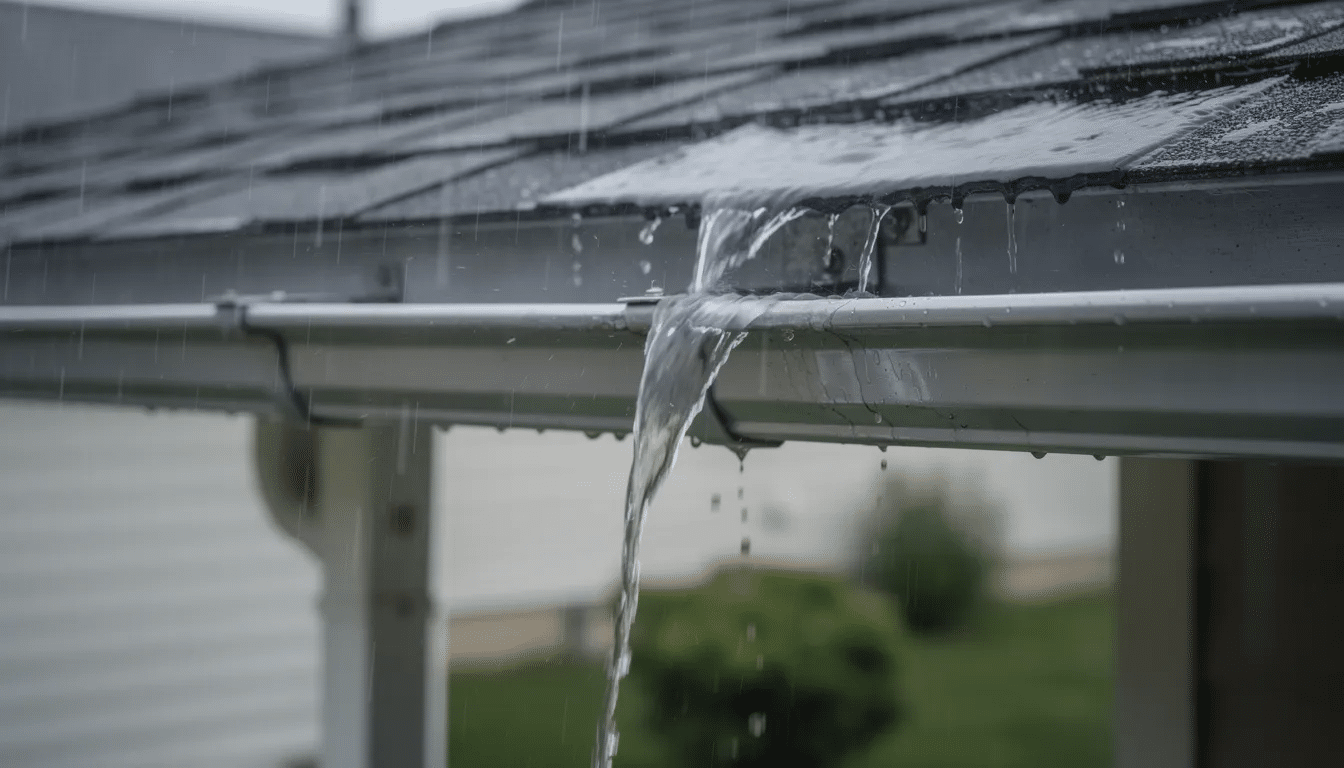
- Debris accumulation: Material trapped at seams creates dams that force water through gaps
- Cascading failures: One leak can stress adjacent joints, leading to additional failures
The presence of visible seams throughout sectional systems creates visible joints where water can escape. Over time, even well-installed sectional gutters will develop leaks that require attention.
Perhaps most concerning is the cascading failure effect. When one seam begins leaking, water infiltration can accelerate corrosion at nearby joints, turning a single problem into a system-wide issue. This is why sectional systems often need complete replacement sooner than expected.
Maintenance Requirements and System Longevity
How much maintenance a gutter system needs—and how that maintenance affects lifespan—varies dramatically between seamless and sectional options.
Seamless Gutter Maintenance
Seamless systems qualify as a low maintenance option for most homeowners. The reduced number of joints means:
- Less frequent cleaning: Fewer debris-catching points means less accumulation
- Simpler inspections: Fewer potential problem areas to examine
- Targeted repairs: Issues are typically isolated rather than system-wide
- Effective prevention: Regular cleaning actually extends lifespan significantly
Most seamless gutter owners can maintain their systems with twice-yearly cleaning. This straightforward maintenance routine helps the system reach or exceed its expected lifespan.
With proper care, seamless gutters can last well beyond the 20-year mark. The key is addressing minor issues before they become major problems—something that’s much easier when there are fewer potential problem areas to monitor.
Sectional Gutter Maintenance
Sectional systems require more maintenance to achieve their maximum lifespan:
| Maintenance Task | Frequency | Purpose |
|---|---|---|
| Debris removal | 2-4 times yearly | Prevent joint clogging |
| Seam inspection | Annually | Check for separation or damage |
| Sealant reapplication | Every 1-5 years | Maintain water resistance |
| Joint tightening | As needed | Prevent mechanical failure |
| More frequent cleaning is necessary because joints act as debris collection points. Without regular cleaning, debris buildup at seams accelerates deterioration and can lead to water overflow during heavy rain. |
The maintenance requirements for sectional gutters often accumulate to significant expenses over time. Between more frequent repairs, regular seam resealing, and earlier replacement, the total cost of ownership can approach or exceed the higher upfront cost of seamless installation.
Material Performance Over Time
While material choice matters for both gutter types, the way materials age differs significantly between seamless and sectional construction.
Seamless Gutter Material Longevity
Seamless construction allows materials to perform at their best because stress is distributed evenly and corrosion-accelerating joints are minimized.
Seamless aluminum gutters: These are the most commonly used gutters, known for their durability and lasting 20 to 30 years when properly cared for. Aluminum naturally resists corrosion, and having fewer joints helps maintain the protective coatings, reducing the chances of wear and leaks over time.
Copper seamless gutters: Premium option lasting 50+ years. Copper develops a natural patina that actually protects the metal over time. With minimal joint stress, copper seamless systems can outlast the homes they protect.
Steel seamless gutters: Typically 20-40 years depending on coating quality and climate. Galvanized or painted coatings last longer on seamless systems because there are fewer joint areas where coatings can chip or wear.
Material integrity is maintained better in seamless systems because there’s no joint stress causing localized wear, no sealant chemistry interacting with the gutter material, and no seam areas where moisture can collect and accelerate corrosion.
Sectional Gutter Material Longevity
The same materials perform differently in sectional construction:
- Aluminum sectional: 10-15 years typical lifespan
- Vinyl sectional: 10-15 years, often less in extreme climates
- Steel sectional: 10-15 years with regular maintenance
Joint areas experience accelerated wear and corrosion because:
- Dissimilar metals at connections can create galvanic corrosion
- Moisture trapped in seams accelerates rust formation
- Sealants can interact chemically with certain materials
- Mechanical stress concentrates wear at connection points
Even with gutter guards, sectional aluminum systems rarely exceed 20 years—and that’s with diligent maintenance throughout their service life.
Installation Quality Impact on Longevity
How gutters are installed affects performance as much as the materials themselves. The installation process differs substantially between seamless and sectional systems, and working with an Austin-based gutter installation and replacement specialist helps ensure either option performs to its full potential.
Seamless Gutter Installation
Seamless gutters require professional installation with specialized equipment. Installers bring portable roll-forming machines to your property and create gutters custom cut to your home’s exact dimensions on site.
This approach offers several longevity benefits:
- Precise measurements: Custom sizing ensures proper slope for water flow
- Fewer variables: Single-piece construction eliminates joint installation errors
- Expert execution: Professional installers understand proper hanging and support
- Quality correlation: Expert installation directly extends system lifespan
Installation costs for seamless systems run higher than sectional, but the quality advantage compounds over time. Properly installed seamless gutters often exceed their expected lifespan.
Sectional Gutter Installation
Sectional gutters support diy installation with off-the-shelf parts from home improvement stores. While this lowers the upfront cost, it creates significant quality variation:
- Skill dependent: Installation quality varies enormously based on experience
- Complex connections: Multiple connection points increase error opportunities
- Fit compromises: Standard sizes may not match your home perfectly
- Reduced lifespan: Improper installation can cut expected lifespan in half
Even with professional installation, sectional systems can’t overcome their inherent joint vulnerabilities. Professional installers improve outcomes but don’t eliminate the fundamental challenges of multiple seams.
For homeowners on a tight budget, diy projects using sectional gutters may seem appealing. However, the lower upfront cost often disappears when factoring in more frequent repairs and earlier replacement.
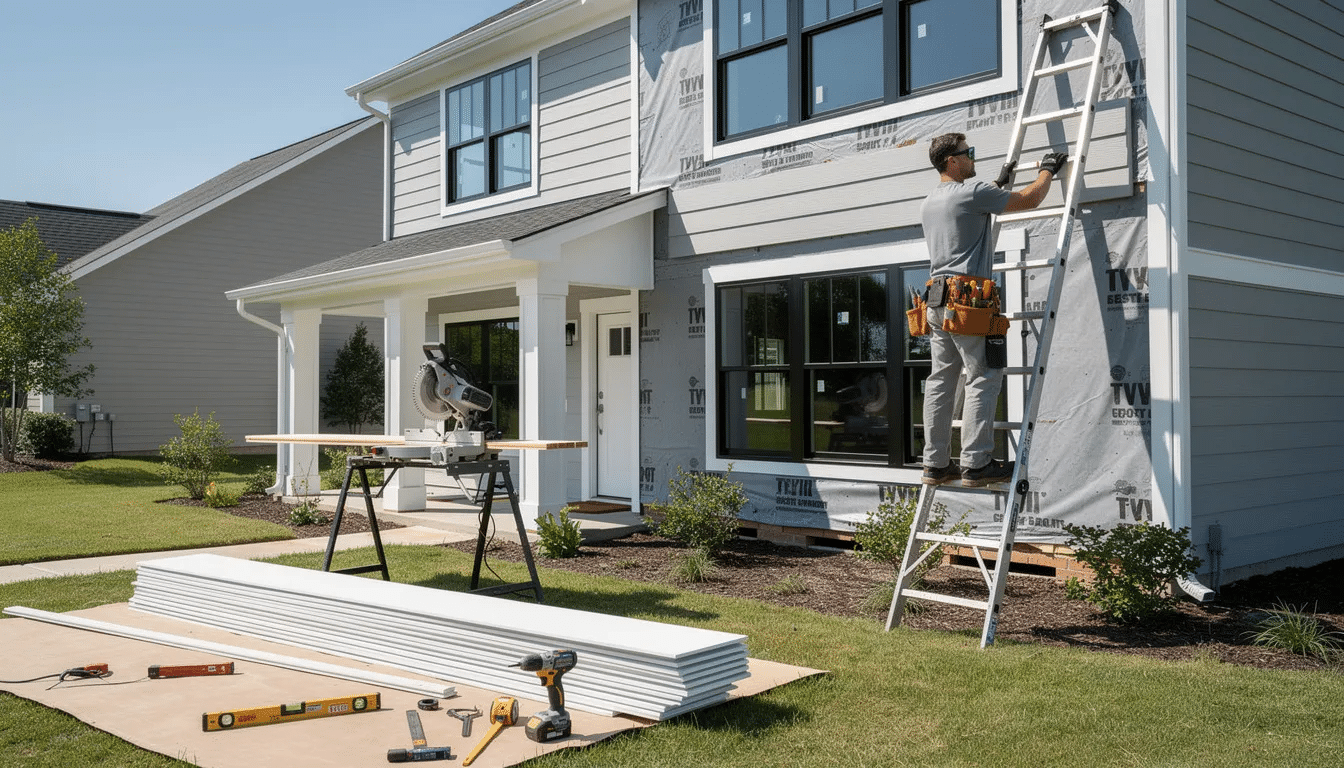
Climate Considerations for Gutter Longevity
Your local climate plays a major role in how long either gutter system will last. Different regions create unique challenges that affect seamless and sectional gutters differently.
Cold climates: Areas with freeze-thaw cycles are particularly hard on sectional gutters. Ice expansion stresses joints, and ice dams form more easily where water flow is interrupted by seams. Seamless systems perform significantly better in these conditions.
Hot climates: Extreme heat accelerates sealant deterioration in sectional systems. Texas weather conditions, for example, can degrade joint sealants faster than moderate climates. Seamless gutters handle thermal expansion more gracefully.
High rainfall regions: Areas with heavy rain demand efficient gutter systems with maximum flow capacity. Seamless gutters handle high volumes better because there are no seams restricting water flow.
Coastal areas: Salt air accelerates corrosion, particularly at joints where protective coatings may be compromised. Seamless systems with fewer exposed connection areas fare better.
| Climate Type | Seamless Advantage | Sectional Challenge |
|---|---|---|
| Cold/freezing | Fewer ice dam points | Joint stress from freezing |
| Hot/dry | Even thermal expansion | Sealant deterioration |
| Wet/rainy | Uninterrupted flow | Overflow at seams |
| Coastal | Fewer corrosion points | Accelerated joint rust |
| Regional maintenance timelines also differ. In harsh climates, sectional gutters may need replacement in as few as 8-10 years, while seamless systems in the same conditions often reach 20+ years. |
Seamless vs Sectional Gutters: Which Lasts Longer?
The evidence points clearly in one direction: seamless gutters last significantly longer than sectional systems.
Here’s the summary of longevity advantages:
- Fewer weak points mean fewer opportunities for failure
- Better weather resistance through continuous construction
- Lower maintenance burden that homeowners actually follow through on
- Superior leak resistance protecting both the gutters and your home
- Material integrity maintained longer without joint stress
The cost-benefit analysis favors seamless installation for most homeowners. While the higher upfront cost is real—professional installation plus custom fabrication—the math works out favorably over time:
| Cost Factor | Seamless | Sectional |
|---|---|---|
| Initial investment | Higher | Lower |
| Annual maintenance | Lower | Higher |
| Repair frequency | Fewer repairs | More frequent |
| Replacement timeline | 20-30 years | 10-15 years |
| Lifetime cost | Often lower | Often higher |
| For a cost effective investment that maximizes protection, seamless gutters deliver better value despite their higher initial price. Homeowners focused on aesthetic appeal will also appreciate the polished appearance and enhanced curb appeal of seamless systems, which lack visible joints breaking up the visual line. |
The recommendation is straightforward: If longevity and long-term home protection are priorities, seamless gutters are the cost effective choice. The continuous design prevents mold growth from leaks, protects against soil erosion and foundation damage, and delivers decades of reliable performance with less maintenance headache.
When properly maintained, seamless gutters provide protection that justifies their investment many times over. For homeowners planning to stay in their homes long-term, the choice becomes even clearer—fewer problems, fewer repairs, and better protection for your most valuable asset.
Frequently Asked Questions: Seamless vs Sectional Gutters in Austin, TX
Do seamless gutters really last longer in Austin’s heat?
Yes. Austin summers are no joke. Long stretches of 100-degree days cause expansion and contraction in metal. Seamless gutters handle that movement better because there are fewer joints pulling apart. Sectional systems tend to separate at the seams over time, especially after years of Texas heat cycles.
How long do sectional gutters typically last in Central Texas?
In the Austin area, sectional aluminum gutters usually last around 10 to 15 years. That number can shrink if they are not cleaned regularly or if they take repeated storm hits. Heavy rain, wind, and hail speed up wear at the seams.
Are seamless gutters worth the higher upfront cost?
For most Austin homeowners, yes. While seamless gutters cost more at installation, they often last nearly twice as long. That means fewer repairs, fewer resealing appointments, and less risk of foundation damage from leaks. Over 20 to 30 years, the math usually favors seamless.
4. Do seamless gutters help prevent foundation problems in Austin’s clay soil?
They can absolutely help. Austin’s expansive clay soil shifts when it gets too wet or too dry. If sectional gutters leak at the seams, water can pool around the foundation. Seamless systems move water away more efficiently, which helps protect your slab and landscaping.
Which gutter type handles Austin hailstorms better?
Both can dent if hail is large enough. The difference is in the joints. After a hailstorm, sectional seams are more likely to loosen or crack. Seamless gutters do not have those mid-run connection points, so there are fewer places for damage to begin spreading.
Do seamless gutters require less maintenance in Austin neighborhoods with heavy tree coverage?
Generally, yes. In areas like Westlake, Circle C, or parts of North Austin where live oaks drop leaves year-round, seams in sectional gutters collect debris. Seamless gutters have a smoother interior channel, so leaves and twigs move through more easily when properly pitched.
Can I install sectional gutters myself to save money?
You can, and many homeowners try. But improper slope, weak joints, or poorly sealed seams often lead to leaks within a few seasons. In Austin’s storm climate, small installation mistakes tend to show up fast. Professional installation usually extends lifespan significantly.
What material works best for seamless gutters in Austin?
Aluminum is the most common choice because it resists rust and handles heat well. Copper is another option and can last 50 years or more, though it comes at a premium price. For most homes in Central Texas, aluminum seamless gutters strike the right balance of durability and cost.
How do I know when my gutters need replacement instead of repair?
If you are resealing seams every year, seeing multiple leaks, or noticing sagging sections, it may be time to upgrade. In Austin, frequent storm activity can accelerate wear. When repair costs start stacking up, replacement often makes more sense long-term.
Do seamless gutters improve curb appeal in Austin neighborhoods?
They do. Seamless systems have a clean, continuous look without visible joints breaking up the roofline. In competitive real estate markets like Austin, Round Rock, or Lakeway, small exterior details can influence resale value. Clean lines and proper drainage help your home look well maintained.
If you are unsure which gutter system makes the most sense for your Austin home, a professional inspection can give you clear answers, and scheduling an Austin roof inspection with detailed reporting and moisture scans can help identify related issues before they become serious. Choosing the right system now can save you from leaks, repairs, and foundation concerns down the road.
Contents
- Seamless vs Sectional Gutters: Key Longevity Differences
- Structural Integrity and Weak Points
- Weather Resistance and Durability
- Leak Development and Water Damage Prevention
- Maintenance Requirements and System Longevity
- Material Performance Over Time
- Installation Quality Impact on Longevity
- Climate Considerations for Gutter Longevity
- Seamless vs Sectional Gutters: Which Lasts Longer?
- Frequently Asked Questions: Seamless vs Sectional Gutters in Austin, TX

