
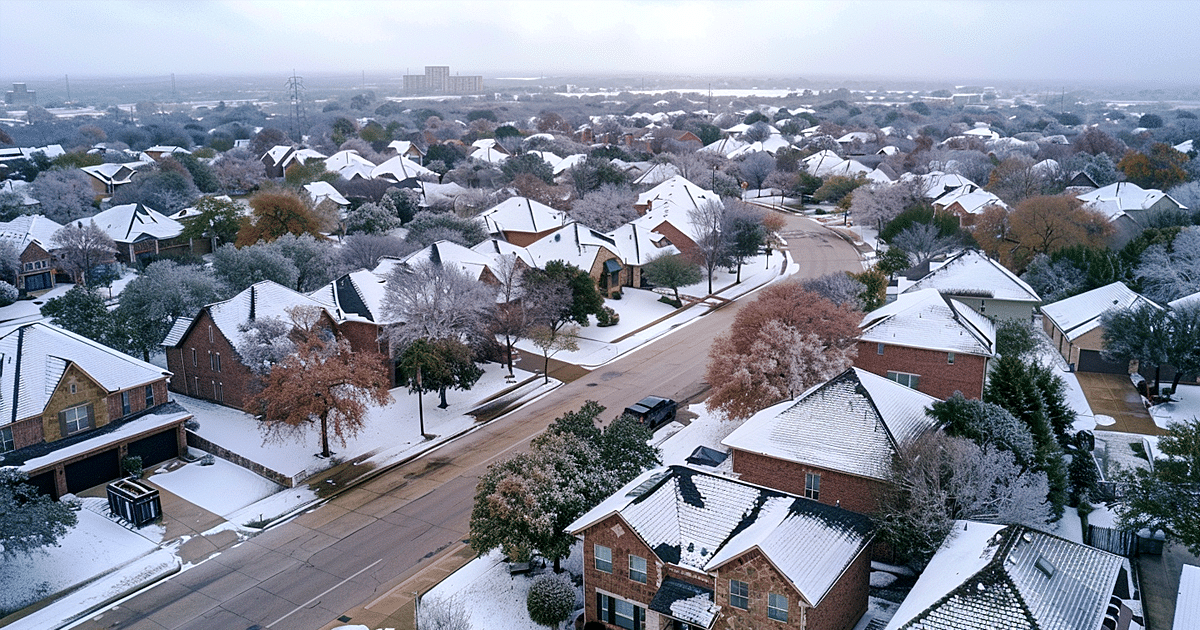
Central Texas homeowners don’t usually think about winter roof damage—and most years, they don’t have to. But when prolonged freezes do hit, costly ice dams in central Texas homes can turn what feels like a rare weather fluke into a fast-moving, expensive problem. Unlike northern states where roofs are built with snow and ice in mind, homes across Austin, San Antonio, and the Hill Country are designed to shed heat, not manage melt-and-refreeze cycles. That mismatch is exactly why a single multi-day freeze can overwhelm attics, back up water under shingles, and cause damage that often isn’t discovered until ceilings stain or insulation is already soaked. This guide breaks down why ice dams happen here, why Central Texas homes are more vulnerable than most people realize, and what you can do to prevent a rare winter event from turning into a major repair bill.
Key Takeaways
- Ice dams are rare in Central Texas but can cause thousands of dollars in damage during a single storm, especially to asphalt shingles on roofs built before 2010.
- The February 2021 Texas freeze proved that multi-day sub-freezing events can and do happen across Austin, San Antonio, Waco, and Hill Country communities.
- Most Central Texas attics lack the insulation and proper ventilation needed to prevent ice dams, making even a 1–3 inch snow or ice event risky.
- Prevention through air sealing, proper insulation, attic ventilation, and gutter care is far cheaper than emergency repairs and interior water mitigation.
- Homeowners should have a local roofing pro inspect the attic and roof before each winter season following a major freeze year—especially heading into 2024–2025 after strong El Niño/La Niña forecasts.
Central Texas enjoys mild winters most years. Average highs hover in the 50s and 60s °F from December through February. Austin residents swap light jackets for t-shirts by noon. San Antonio rarely sees ice on windshields for more than a few mornings per year. However, even with milder winters, it’s important for homeowners in these areas to be vigilant about how to avoid roofing scams after storms.
But “most years” isn’t every year. If you want to ensure your roof is ready for even the harshest conditions, check out these 7 DIY steps on waterproofing your roof.
The February 2021 Winter Storm Uri rewrote assumptions about what Central Texas weather can do. Temperatures plunged into the single digits. Snow and ice covered roofs in Austin, San Marcos, New Braunfels, and North San Antonio for days. Subsequent cold snaps in 2022 and 2023 reinforced the lesson: Arctic outbreaks can stall over the region, bringing freezing conditions that last 48 to 72 hours or longer.
Because these severe freezes only hit every few years, most builders didn’t design roofs or attics in Central Texas with ice dams in mind. Homes were optimized to stay cool during brutal summers, not to handle heavy snowfall or extended freezing rain events.
Here’s the problem: even though ice dams are rare, they can cause sudden, high-cost damage. Soaked insulation. Ruined drywall. Buckled hardwood floors. Mold growth can begin in as little as 24–48 hours when trapped water seeps into wall cavities.
A single multi-day freeze can do more roof damage than years of normal Texas thunderstorms and ice storms combined—if ice dams form and go unnoticed.
What Exactly Is an Ice Dam?
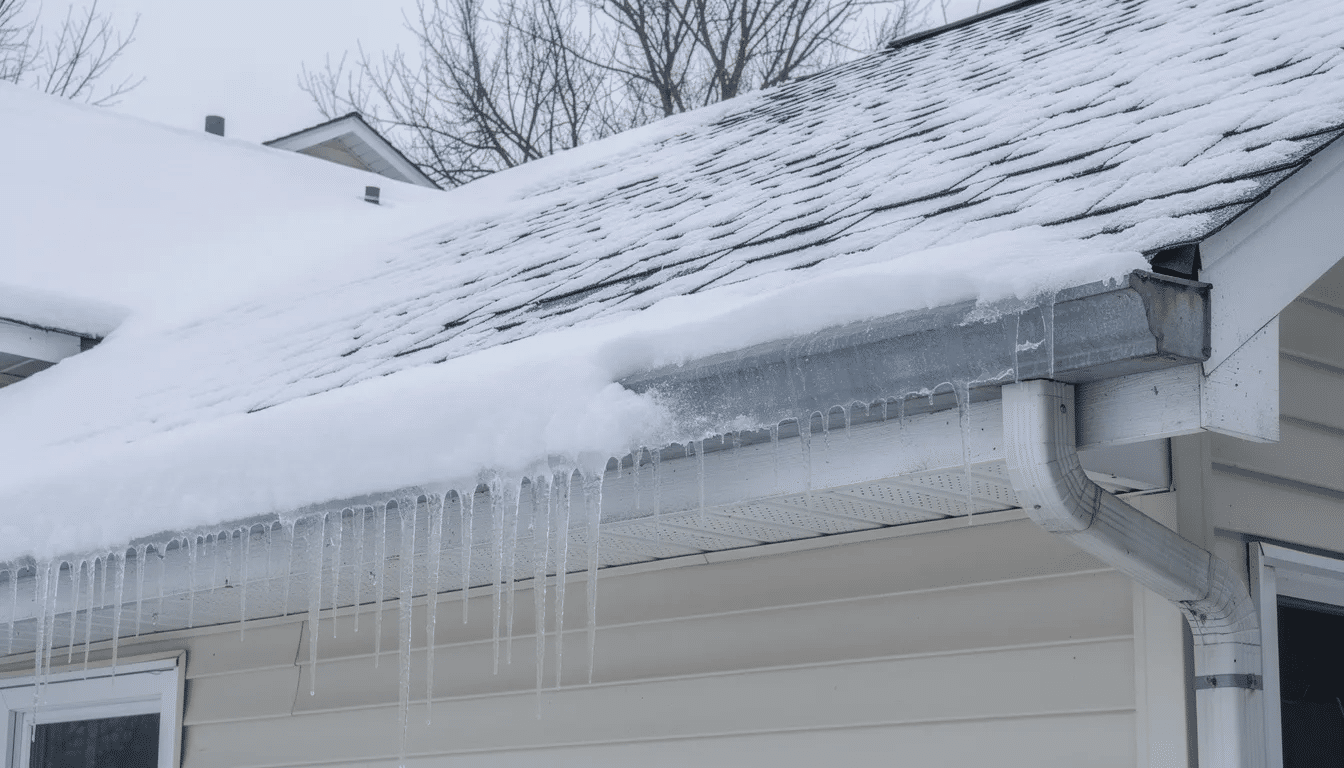
An ice dam is a ridge of ice that forms along the edge of a roof, typically at the eaves and gutters. This ice barrier blocks melted water from draining off the roof, causing leaks and water intrusion into your home.
How ice dams form—step by step:
- Snow, sleet, or freezing rain accumulates on the roof surface
- Warm air escaping from the house heats the attic, which warms the roof deck from below
- This heat causes the snow or ice on the upper portions of the roof to melt
- Melted water flows downward toward the eaves
- The roof edges remain much colder because they extend beyond the heated living space
- When meltwater reaches these cold eaves, it refreezes and ice builds into a solid ridge
- This dam traps liquid water higher up on the roof, where it can work under shingles, around nails, and into the roof deck
Central Texas doesn’t need deep snow for ice dams to occur. Even a half-inch of sleet or light snow, followed by a sunny but sub-freezing afternoon, can set up the same melt–refreeze cycle.
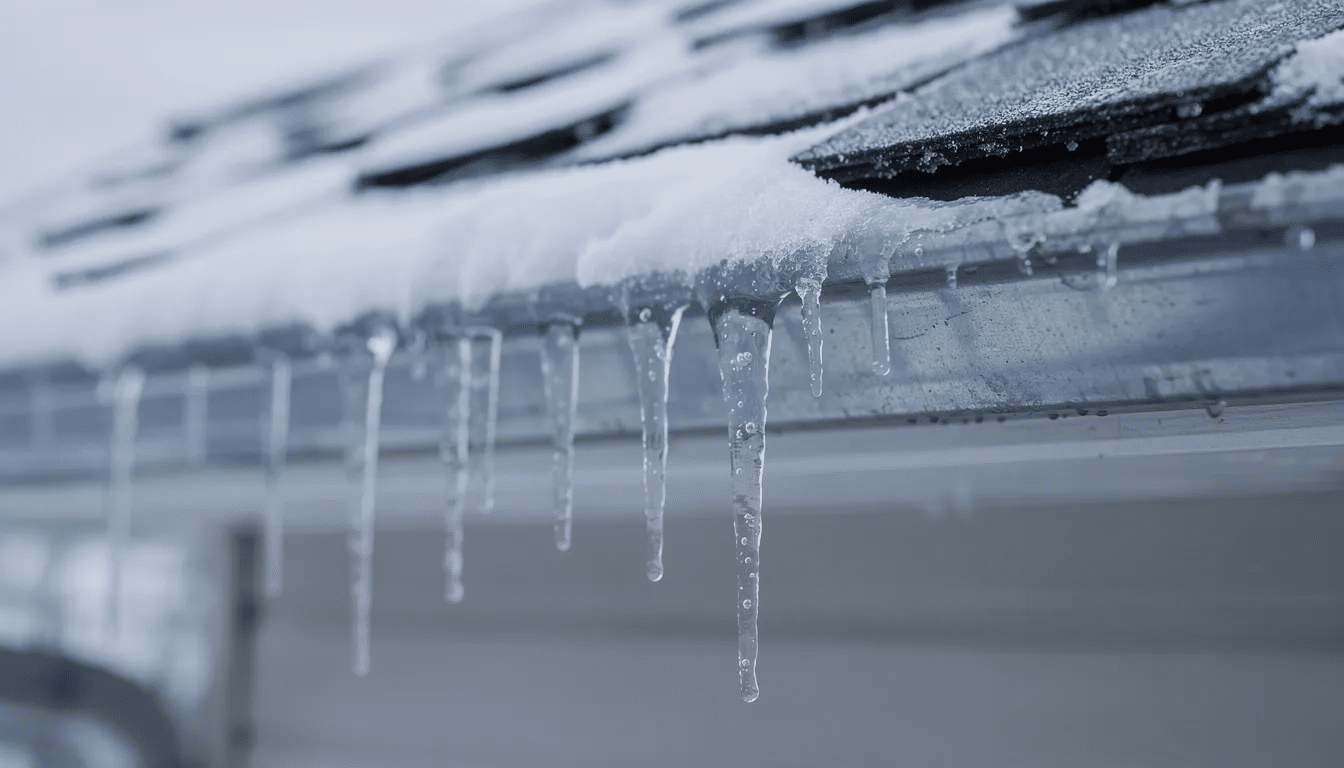
Icicles vs. ice dams: Pretty icicles hanging from your eaves might look harmless, but lots of long, thick icicles near roof edges often signal a serious issue. They indicate water is being blocked and backing up behind ice rather than flowing off the roof normally.
Why Central Texas Homes Are Surprisingly Vulnerable
Homes from San Antonio to Temple were built to handle heat, not extended cold. This fundamental design reality raises the odds of ice dam damage whenever Arctic fronts stall over the region.
Common construction practices in Central Texas subdivisions from the 1980s through 2010s created perfect conditions for ice dam problems:
- Minimal attic insulation (typically R-19 to R-30, well below the Department of Energy’s recommended R-38)
- Numerous recessed lights that punch holes through the ceiling plane, allowing warm air to leak into the attic
- Complex rooflines with valleys, dormers, and multiple roof planes that create temperature variations
These features allow indoor heat to escape into the attic, warming the roof deck unevenly and melting roof snow even when outside air stays below freezing.
Many homes also lack continuous soffit-to-ridge ventilation. Blocked soffit vents, inadequate ridge vents, or reliance on only gable vents creates patchy roof temperatures—ideal conditions for ice dams.
Homes at highest risk include those with:
- Dark asphalt shingles that absorb solar heat during the day
- Shallow roof pitches (common in Central Texas ranch and tract homes)
- Unheated garages with living space above
- Bay windows with roof overhangs
- Older construction with settled or compressed attic insulation
When snow or sleet sits for more than 24 hours on these roofs, the ice dam clock starts ticking.
How Ice Dams Form on Central Texas Roofs
Picture a realistic scenario: overnight lows drop to 15–20°F after a day of snow and sleet. By midday, the sun warms the roof surface, and heat leaking from the attic melts part of the roof snow. But the eaves stay below freezing.
Melted water flows toward the cold edges. It refreezes in gutters and starts building a solid ridge of ice, sometimes completely covering downspouts—especially along north-facing sides of the house that get little direct sunlight.
Central Texas roof trouble spots where ice dams commonly form:
| Location | Why It’s Vulnerable |
|---|---|
| Valleys over garages | Unheated garage below keeps roof deck cold while surrounding sections stay warm |
| Low-slope porch sections | Poor drainage + proximity to warm house walls |
| Overhangs above bay windows | Extended eaves beyond heated space stay freezing cold |
| North-facing roof planes | Limited sun exposure keeps ice frozen longer |
| Areas with recessed lights below | Heat from lights warms roof deck unevenly |
After 1–2 days of this melt–refreeze cycle, standing water backs up behind the ice dam. It finds nail holes, small flashing gaps, and shingle overlaps. Once water gets past your roofing materials, it begins leaking into the attic and wall cavities—often in places you can’t see until damage is already done.
Warning Signs: Is an Ice Dam Damaging Your Home?
Whenever a freeze with snow or ice lasts more than 24 hours, check both the exterior and interior of your home for signs of trouble.
Exterior warning signs:
- Thick icicles concentrated over one section of the roof (not evenly distributed)
- Gutters completely filled with ice while upper sections look clear
- A visible “ridge” of ice along the eaves while upper roof sections appear bare or snow-free
- Ice extending down from gutters to the ground in solid sheets
- Poor drainage from downspouts even after temperatures rise slightly
Indoor warning signs:
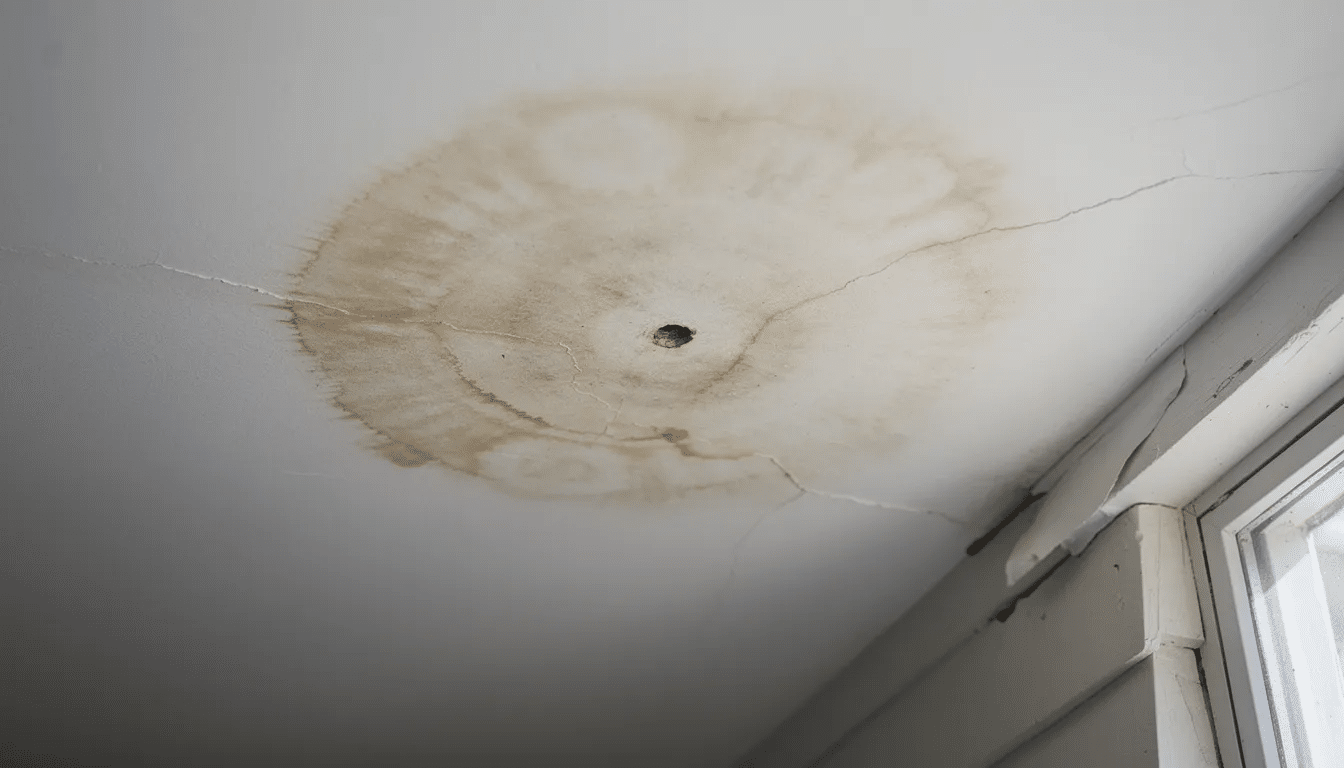
- New water stains on ceilings or upper walls, especially around exterior walls
- Damp, sagging, or soft ceiling drywall
- Sudden dripping at light fixtures, ceiling fans, or recessed lights
- Paint bubbling or peeling on ceilings below the attic
- Musty smell in upper rooms or near exterior walls
Attic-specific checks:
- Wet insulation, especially near eaves
- Dark spots or discoloration on the underside of roof decking
- Visible frost on nails or rafters that later melts and drips when temperatures rise
- Light visible through gaps in the roof deck (rare but serious)
- Debris or pest evidence near soffit vents indicating blocked airflow
Any of these signs during or immediately after a freeze warrants immediate action. Call a local roofing or restoration professional rather than waiting for warmer weather. The longer water sits in your attic or crawl spaces, the more damage it causes.
Real Costs: How a ‘Rare’ Ice Dam Becomes a Big Repair Bill
Because Central Texas homes aren’t designed for repeated freezes, damage escalates quickly. What starts as a small drip can become costly repairs affecting multiple systems in your home.
Typical cost categories from ice dam damage:
| Damage Type | Realistic Cost Range |
|---|---|
| Minor roof patching + interior paint | $800–$1,500 |
| Moderate attic wetting + drywall repair | $2,000–$5,000 |
| Widespread attic damage + ceiling collapse | $5,000–$15,000+ |
| Full mold remediation (if moisture lingers) | $3,000–$10,000+ additional |
| Insulation replacement | $1,500–$4,000 |
These ranges don’t include secondary costs unique to Central Texas: hotel stays during major repairs (contractor availability is limited during regional freeze events), emergency service premiums when everyone needs help at once, and potential spikes in homeowner’s insurance premiums after filing a large claim.
Storm damage from ice dams often triggers insurance claims, but coverage varies by policy. Some policies treat water damage from ice dams like other sudden events; others have exclusions. Review your policy before winter sets in.
The bottom line: A few hundred dollars spent proactively on attic improvements and gutter work can prevent a multi-thousand-dollar ice dam claim. Prevention isn’t just cheaper—it’s dramatically cheaper.
Preventing Ice Dams Before the Next Freeze Hits
Prevention in October through December is far easier than emergency response in the middle of a January cold outbreak. Central Texans should focus on these practical steps before heavy rain and freeze events arrive.
Air Seal the Ceiling Plane
Warm air rising into the attic is the primary cause of uneven roof temperatures. Seal these common leak points:
- Recessed lights (use IC-rated covers designed for insulation contact)
- Attic hatches and pull-down stairs (add weatherstripping)
- Plumbing and electrical penetrations (use expanding foam or caulk)
- HVAC ducts and returns in the attic (ensure connections are sealed)
- Chimney chases (use fire-rated materials)
Even the best insulation won’t work properly if cold air infiltrates through gaps.
Upgrade Attic Insulation
Bring attic insulation up to at least current energy-code levels for Texas:
- Target R-38 to R-49 for most stick-framed homes
- This typically means 10–14 inches of blown-in fiberglass or cellulose
- Ensure insulation is evenly distributed, not compressed or settled
- Don’t block soffit vents when adding insulation—use baffles to maintain airflow
Proper attic insulation keeps heat in your living space instead of melting snow on your roof.
What to Do if You Already Have an Ice Dam
Safety first: no one should walk on a slick, icy roof or try to chip ice with sharp tools from a ladder. Ice dams look manageable but cause serious injuries every winter.
Immediate Indoor Steps
- Place buckets or containers under active drips
- Move furniture, electronics, and valuables away from affected areas
- If ceiling paint is bulging with trapped water, carefully poke a small hole at the edge to relieve pressure (not in the center where water weight is greatest)
- Take photos of damage for potential insurance claims
- Turn off electrical circuits to any fixtures with active water intrusion
Safer Exterior Actions for Homeowners
From the ground, you can take limited action:
- Use a long-handled roof rake on low single-story sections to gently remove snow from the first 2–3 feet of roof above the eaves
- Remove snow only—don’t try to chip or break ice
- Stay ahead of accumulation by raking after each snow event if freezing temperatures continue
- Never use rock salt on roofing materials (it damages shingles and metal)
Professional Mitigation Options
Roofing professionals have safer methods to address active ice dams:
- Creating melt channels using calcium chloride (in mesh tubes, not loose)
- Steaming ice off gutters and eaves without damaging roofing materials
- Installing temporary heat cables in problem areas
- Carefully removing ice with professional tools designed not to damage shingles
Stress that any active leak requires follow-up: a professional roof inspection and, if interior materials got wet, a moisture assessment to prevent hidden mold growth in the weeks after the storm.
Long-Term Strategies to Winter-Proof Central Texas Roofs
Climate data suggests more frequent extreme temperature swings in coming years. Events that once seemed like 20-year anomalies may become more common in the Austin–San Antonio corridor. Building long-term resilience makes sense.
Periodic Roof Evaluations
Schedule a roof evaluation every 2–3 years, focusing on:
- Valleys and transitions between roof planes
- Eaves over unheated garages or porches
- Low-slope additions and bump-outs
- North-facing roof planes that stay cold longest
- Affected areas from previous leaks or storm damage
Upgrade Options During Roof Replacement
When it’s time for a new roof, consider upgrades that protect against ice dams:
- Self-adhering ice and water barrier membrane along eaves (extends 2–3 feet past exterior wall)
- Improved underlayment in valleys and other vulnerable zones
- Better eave overhang details that reduce ice buildup
- Adequate flashing at all penetrations and transitions
These upgrades add modest cost during a roof replacement but provide decades of protection.
Integrate Prevention Into Other Projects
Think about ice dam risk when tackling other home improvements:
- When replacing HVAC, ensure ductwork in the attic is well sealed and insulated
- When remodeling, insulate and air-seal any newly opened ceiling or wall cavities
- When adding recessed lights, choose IC-rated fixtures and seal penetrations
- When finishing attic space, maintain ventilation pathways above new insulation
Build Relationships Before the Emergency – Storm damage roof repair services from Ja-Mar Roofing & Sheet Metal can help you be prepared for unexpected severe weather.
Don’t wait until frozen pipes and roof leaks hit every home in your neighborhood. Build a relationship with a reputable local roofing and restoration contractor before the next big Texas freeze. When everyone needs help at once, existing customers get priority.
FAQ: Ice Dams in Central Texas Homes
How often do ice dams really happen in Central Texas, and should I be worried if my home never had one before? If you own a commercial building, it’s wise to schedule a commercial roof inspection to prevent potential issues like ice dams and catch hidden damage early.
True ice dams remain infrequent in Central Texas, but events like the 2021 freeze demonstrated they can occur whenever snow or sleet stays on the roof for more than a day in sub-freezing weather. Even if your home has never had an ice dam, changes like added recessed lights, aging insulation, or a roof replacement with different shingles can increase risk. A one-time attic and roof-edge checkup is worthwhile for any home built before current insulation standards became common.
Are ice dams covered by my homeowner’s insurance policy in Texas?
Many policies treat interior water damage from ice dams similarly to other sudden and accidental water events, but coverage varies significantly by insurer and policy form. Some policies have specific exclusions for ice-related damage or require certain maintenance standards. Homeowners should review their declarations page and water-damage exclusions, then talk with their agent about how ice-related roof leaks would be handled before the next winter season. Document any damage thoroughly with photos and videos for insurance claims.
Do I need heat cables on my roof in Central Texas to prevent ice dams?
In most cases, no. Heat cables are more common in snowy northern climates and represent a last resort even there. In Central Texas, air sealing, insulation upgrades, and proper ventilation improvements almost always provide better, longer-term protection than electric heat cables. Heat cables can fail, add to energy costs, and sometimes create localized roof damage if installed incorrectly. They’re rarely necessary when underlying thermal problems are addressed.
Can replacing my roof alone eliminate the risk of ice dams?
A new roof with modern underlayment and proper flashing reduces leak risk if an ice dam forms, but it doesn’t eliminate the underlying cause. Ice dams result from heat loss from your home warming the roof deck—a problem that exists below the roofing materials. Without attic air sealing and insulation upgrades, even a brand-new roof can develop ice dams during prolonged freezes. Address the attic first, then consider roof upgrades during your next replacement.
When is the best time of year in Central Texas to tackle ice dam prevention projects?
The ideal window is late fall—October through early December—before the first strong Arctic front of the season. Temperatures are comfortable for attic work, contractors are less backlogged than during peak storm and hail season (typically March through June), and you’ll have improvements in place well before any January or February cold wave. If you missed the fall window, schedule work for early spring so you’re prepared for the following winter.
Contents
- Unusual Central Texas Winters: Why Ice Dams Are a Hidden Threat
- What Exactly Is an Ice Dam?
- Why Central Texas Homes Are Surprisingly Vulnerable
- How Ice Dams Form on Central Texas Roofs
- Warning Signs: Is an Ice Dam Damaging Your Home?
- Real Costs: How a ‘Rare’ Ice Dam Becomes a Big Repair Bill
- Preventing Ice Dams Before the Next Freeze Hits
- What to Do if You Already Have an Ice Dam
- Long-Term Strategies to Winter-Proof Central Texas Roofs
- FAQ: Ice Dams in Central Texas Homes

