
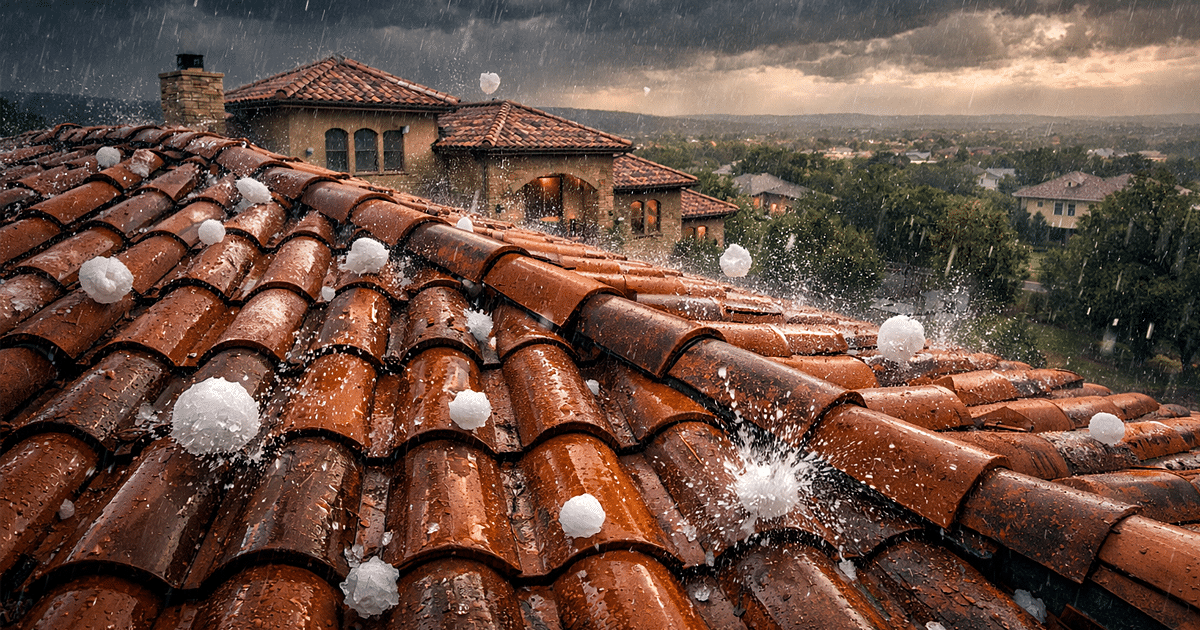
When severe storms sweep across Texas, hail is often the biggest concern homeowners have about their roof. The truth is, tile roofs stand up to hail better than many people expect. Built from dense clay or concrete, these roofing systems are designed to absorb and disperse impact rather than fracture under pressure. In areas like Central Texas where golf ball sized hail is not uncommon, that strength can make a meaningful difference in how well your home holds up during a storm.
Homeowners across the state are increasingly choosing tile not just for its appearance, but for its durability and long service life. A properly installed tile system can last 50 to 100 years while resisting damage that might destroy other roofing materials in a single storm. At companies like Ja-Mar Roofing & Sheet Metal, which has served Texas homeowners for more than five decades, tile roofs are often recommended for their ability to handle the state’s intense weather cycles that include heat, wind, and hail. Austin Roof Replacement
This guide explains what actually happens when hail hits a tile roof, how clay and concrete systems absorb impact, and what real-world testing tells us about their performance. You’ll also learn how tile compares to other roofing materials in hailstorms, what signs of damage to watch for after severe weather, and how proper installation and maintenance help these roofs perform for decades.
Key Takeaways
- Clay and concrete tile roofs routinely withstand hail up to 1.5–2 inches in diameter, often outperforming asphalt shingles and some metal roofs in real-world storm conditions.
- Many modern tile systems carry UL 2218 Class 3–4 and FM 4473 ratings, meaning they survive lab-tested steel balls or ice ball impacts without cracking through.
- When tile roofs do suffer isolated broken tiles in extreme storms, the underlying underlayment typically prevents leaks and widespread structural damage.
- Proper installation, strong decking, and routine inspections after hail events are critical to maintain a tile roof’s hail performance over its 50+ year lifespan.
- If you live in a high-risk region like Texas, with its frequent severe hailstorms especially along the I-35 corridor and North Texas, have your existing tile roof inspected after any storm with 1”+ hail to catch damage early.
Why Hail Is Such A Threat To Roofs
Hail forms inside strong thunderstorms when updrafts carry raindrops into freezing upper atmosphere layers, where they accumulate ice layers before falling. Texas experiences frequent hail events every spring and summer due to its location in a prime atmospheric zone for severe storms, particularly in North and Central Texas. NOAA recorded thousands of hail events in Texas in recent years, making this an annual reality for millions of homeowners.
The amount of damage hail causes depends on three main factors:
- Hailstone size — ranging from pea-sized to baseball-sized or larger
- Fall speed — large hailstones can reach terminal velocities of 70–80 mph
- Storm duration — longer events mean more cumulative impacts on every square foot
Roofing materials fail from hail impact in three primary ways. First, surface bruising leaves cosmetic marks without compromising waterproofing. Second, loss of protective layers (like granules on asphalt shingles) exposes underlying materials to UV rays and moisture. Third, full cracking or puncture allows water directly through to the roof deck.
- A 1.5” hailstone that only scuffs a concrete tile surface might completely destroy the granule layer on a 10-year-old asphalt shingle roof, shortening its remaining lifespan by years.
Hail remains a leading cause of insured roof losses in Texas, with total residential roof repairs and replacements exceeding billions annually according to industry data. Understanding how different materials perform under these conditions can save you from costly repairs down the road.
How Clay And Concrete Tiles Resist Hail
Both clay and concrete tiles are rigid, dense products that spread out impact forces instead of concentrating them at a single point. This fundamental property is what makes tile roofs so effective against hail compared to other materials that flex or compress under impact.
Tile thickness plays a major role in hail resistance. Most clay and concrete roof tiles measure 1/2” to 3/4” thick, and this mass reduces surface flexing when struck. Less flexing means lower chances of through-cracks that would compromise waterproofing.
The installation method adds another layer of protection. Most tile roofs are installed in overlapping courses, so even if one tile chips at the edge, neighboring tiles and the underlayment continue to shed water effectively. This redundancy is built into the system.
Modern tiles are engineered with internal ribbing or curved profiles that act like miniature arches. These shapes distribute impact energy across the entire tile surface rather than allowing it to concentrate at the strike point. The dense composition of both materials helps absorb and dissipate the kinetic energy from falling hail.
A single broken tile on a tile roof is usually a localized repair that takes an hour or two to fix. Compare this to shingle hail damage, which often affects entire slopes and requires wholesale replacement of large sections, making it important to work with trusted Austin roof repair services that understand local storm conditions.
Clay Tile Performance Under Hail
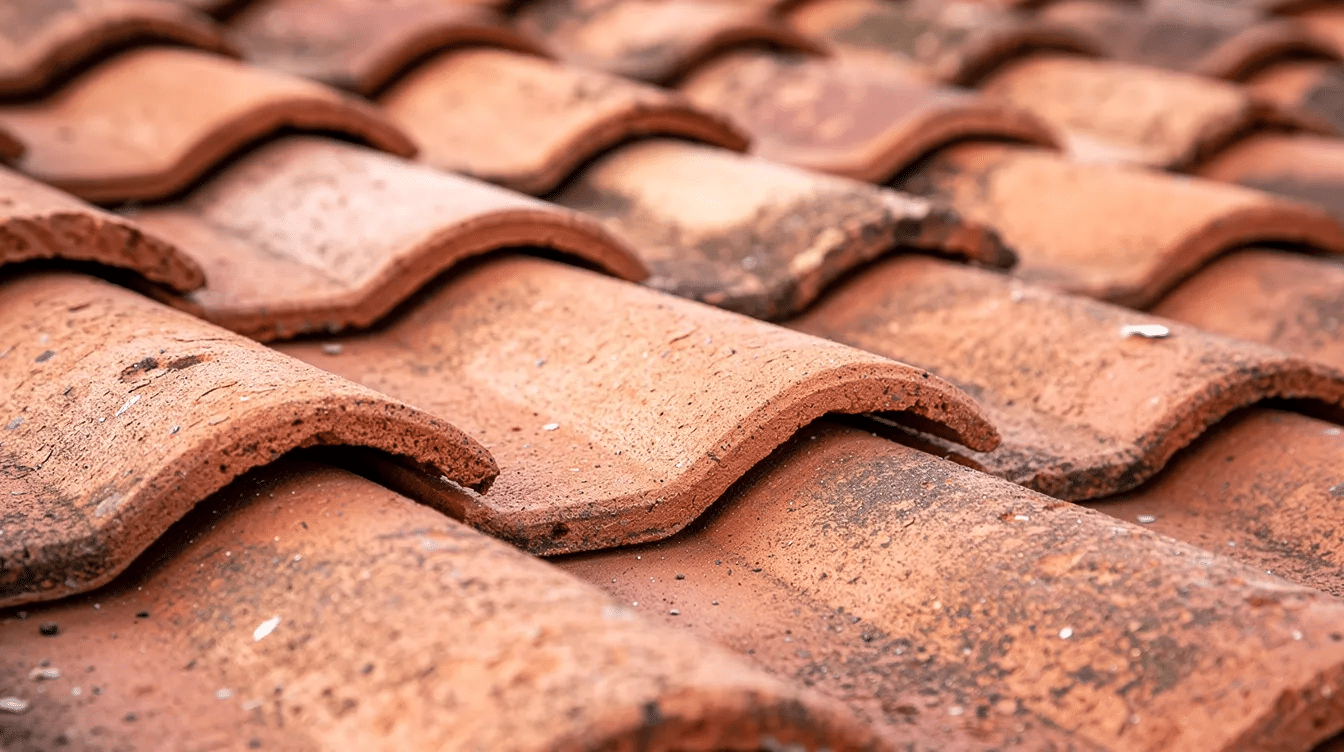
Fired clay tiles are essentially ceramic building materials, hardened at temperatures often exceeding 1,800°F. This firing process creates a very dense, hard surface with high compressive strength that stands up remarkably well to hail impact.
Properly manufactured Grade 1 clay tiles commonly withstand hail up to golf ball size (around 1.75”) with minimal functional damage in field conditions. Research from UT Arlington found that the threshold for functional damage on clay tiles in perpendicular impacts is roughly 1.5” diameter hailstones — anything smaller typically causes only cosmetic effects.
Clay’s hardness provides excellent durability against surface pitting and wear. This means repeated small hail events over decades rarely affect the tile’s weather-shedding ability. You won’t see the gradual degradation that happens with asphalt shingles losing granules storm after storm.
The tradeoff is that clay tile is more brittle than concrete. Very large hailstones (2”+) can cause cracks or edge chipping, especially on older tiles or improperly fastened installations. Corner fractures are particularly common because corners lack the support of the tile’s main body.
Cracked clay tiles are typically replaced individually, and hidden damage is rare if tiles are inspected within a week or two after a hail storm. The key is prompt repairs before UV exposure begins degrading the exposed underlayment beneath any broken tiles.
Concrete Tile Roofs In Serious Hailstorms
Concrete tiles are manufactured from Portland cement, sand, and water pressed into molds and then cured to achieve their strength. This process creates a dense aggregate matrix that resists damage from hail impact exceptionally well.
The higher overall mass of concrete tile roofing makes it one of the best roofing options for resisting impacts from 1.5–2” hailstones. Lab testing shows that concrete tiles handle closer to 1.75” diameter hailstones before experiencing significant cracks or breaks — slightly better than clay in this regard.
Many branded concrete tile lines are tested to both FM 4473 and UL 2218 standards at Class 3 or Class 4 levels. For example, Eagle Roofing’s Capistrano concrete tile was validated to FM 4473 Class 4 in late 2022, surviving 2” nominal ice balls at 117 ft/sec (approximately 80 mph) with no visible cracking.
Even when surface chips occur on concrete tiles, the tile beneath usually remains structurally sound and maintains full water-shedding performance. The functional integrity stays intact despite cosmetic damage.
- Reinforced roof deck construction and quality fasteners help concrete roof tiles stay intact during combined high winds and hail events, where wind-driven hail hits at angles rather than straight down.
Impact Ratings: UL 2218, FM 4473 And What They Really Mean
Impact ratings exist to give homeowners and insurers an objective measure of how various roofing materials perform under hail conditions. Without standardized testing, comparing products would be nearly impossible.
UL 2218 is the primary standard for steep-slope roof coverings. The test involves dropping steel balls of defined diameters (1.25”, 1.50”, 1.75”, and 2.00”) from heights that simulate hailstone terminal velocities. Class 4 is the highest rating, meaning the material survived a 2” steel ball drop without cracking or rupturing on the underside.
FM 4473 takes a different approach by using calibrated ice balls instead of steel. These are fired at test panels at specified speeds to more closely simulate actual hailstones. A tile rated FM 4473 Class 4 withstood 2” ice ball impacts under test conditions without cracking.
| Rating System | Test Method | Class 4 Requirement |
|---|---|---|
| UL 2218 | Steel balls dropped from height | Survives 2” ball with no underside fracture |
| FM 4473 | Ice balls fired at specified velocity | Survives 2” ice ball without cracking |
| Many modern clay and concrete tiles meet or exceed Class 3–4 ratings under both systems, while many standard 3-tab asphalt shingles test at only Class 1–2. |
- Insurers in hail-prone Texas sometimes offer 5–30% premium discounts for Class 4-rated tile roofs, which can significantly offset the higher initial material cost over time.
How Tile Roofs Compare To Other Materials In Hail
Understanding how tile stacks up against other roofing materials helps put its hail resistance in proper context.
Asphalt Shingles: These dominate the market but are highly vulnerable to hail damage. Shingles often lose protective granules from hail as small as 1”, exposing the underlying asphalt mat to UV damage and accelerated aging. Verisk data shows asphalt shingle roofs bear nearly 80% of hail claim frequency despite accounting for a similar market share.
Metal Roofs: Metal panels and shingles rarely crack or puncture, keeping water out effectively. However, they show cosmetic dents from larger hailstones, which can affect aesthetic appeal and resale value even when waterproofing remains intact. Some stone-coated steel products achieve UL 2218 Class 4 ratings.
Wood Shakes: Wood shakes can split along the grain when struck by large hailstones. The natural fiber structure makes them vulnerable to cracking in ways that tile simply isn’t.
Slate Roofs: Natural slate is very dense but also brittle. Large hail or impacts at angles can crack or even shatter individual pieces, requiring expensive replacement with increasingly scarce matching material.
Synthetic Materials: Quality synthetic slate or cedar lookalikes can flex under impact, which helps them avoid cracking. However, properly rated concrete and clay tile still provide superior long term value, combining hail durability with fire resistance that synthetics often lack.
Common Signs Of Hail Damage On Tile Roofs
Tile damage from hail events is usually localized rather than affecting entire roof slopes. Often, you can spot significant damage from ground level using binoculars without climbing onto the roof.
Visible signs to look for:
- Cracked tiles with fractures running through the surface
- Corners broken off (often crescent-shaped or triangular chips)
- Chips on exposed edges of tile surfaces
- Entire tiles that have shifted out of alignment
- Star-shaped fracture patterns radiating from impact points
Small surface scuffs or light chips that do not penetrate through the tile typically remain cosmetic and do not affect waterproofing. These are more concerning for aesthetic appeal than for storm protection.
Indirect clues after a storm:
- Tile fragments in gutters, downspouts, or splash blocks
- Broken pieces on patios, decks, or landscaping beds
- Unusual debris around the foundation perimeter
Interior warning signs should not be ignored. New water stains on ceilings, damp attic insulation, or light visible through the roof deck from inside the attic can indicate that underlayment has been compromised beneath broken tiles. These subtle damage signs warrant immediate professional inspection.
How To Inspect A Tile Roof After A Hailstorm
Safety comes first. Avoid walking on tile yourself, as improper weight distribution can crack tiles that may have already been weakened by hail. Even undamaged tile roofs require special walking techniques that most homeowners haven’t been trained on.
Ground-level inspection steps:
- Use binoculars to scan each roof slope systematically
- Look for missing tiles, visible breaks, or misaligned rows
- Pay extra attention to valleys, ridges, and edges where damage concentrates
- Check different angles as light changes throughout the day
Gutter and perimeter inspection:
- Examine gutters and downspouts for concrete or clay fragments
- Walk the foundation perimeter looking for tile debris
- Note any new granular material (could indicate damage to ridge caps with protective coatings)
Attic inspection within 24–48 hours:
- Look for damp insulation or new moisture on rafters
- Check for water spots on the underside of the roof deck
- Watch for unexpected light coming through gaps that weren’t there before
If hail larger than about 1.25–1.5” fell for more than 5–10 minutes, schedule a professional roof inspection. Licensed emergency roofers in Austin can perform close-up photo documentation for insurance claims and identify damage invisible from the ground.
Maintenance Practices That Preserve Hail Resistance
While tile itself is remarkably durable, the entire installed system — including underlayment, flashings, and fasteners — must be maintained for best hail performance over the roof’s lifespan, which is why partnering with experienced residential roofing specialists in Central Texas can be so valuable.
Inspection frequency recommendations:
| Climate Zone | Recommended Inspection Interval |
|---|---|
| Moderate hail risk | Every 2–3 years |
| High hail regions in Texas (I-35 corridor, Dallas-Fort Worth area) | Annually |
| After any storm with 1”+ hail | Within 1–2 weeks |
| Keep valleys, gutters, and roof surfaces free of debris so water drains quickly away from any tiles that might have minor chips. Standing water or trapped moisture can accelerate deterioration of damaged areas. | |
| Prompt repairs matter enormously for underlayment quality preservation. When cracked or displaced tiles are replaced quickly, the underlayment beneath them avoids prolonged UV exposure that can trap moisture and cause premature failure. | |
| Always use compatible sealants and manufacturer-approved replacement tiles. This ensures your roof keeps its original impact ratings and manufacturer warranties remain valid. Mixing in non-rated tiles can create weak spots that fail first in future storms. |
Upgrading Or Reinforcing For Better Hail Protection
You don’t always need a complete tear-off to significantly boost your roof’s hail resilience. Strategic upgrades during repairs or partial replacements can make a substantial difference, especially for businesses that rely on commercial roofing services in Austin to protect their properties.
Deck reinforcement options:
- Upgrade to thicker sheathing (5/8” or 3/4” plywood instead of 1/2”)
- Add additional fastening when re-tiling to limit flex under impact
- Consider solid decking over battens for more uniform support
Underlayment improvements:
Modern high-temperature synthetic underlayments and self-adhered membranes provide a robust secondary water barrier far superior to traditional felt. These products resist UV degradation better if tiles are damaged and offer improved moisture protection even under extreme conditions with heavy rain.
Tile selection for replacements:
When replacing older, untested tiles, choose products specifically tested and labeled as UL 2218 Class 4 or FM 4473-compliant. This ensures your repaired sections offer the same hail protection as modern impact resistant products.
Flashing upgrades:
Don’t overlook penetrations. Upgrading flashings around chimneys, skylights, and valleys reduces leak risks if tiles around these vulnerable areas sustain hail damage. These junction points often fail before the tiles themselves do.
Costs, Insurance, And Long-Term Value Of Hail-Resistant Tile
Tile roofs cost more upfront than basic asphalt shingles — there’s no way around that reality. However, the long term value calculation looks very different when you factor in lifespan and ongoing replacement costs.
Expected lifespans by material:
| Roofing Material | Typical Lifespan | Replacements Over 75 Years |
|---|---|---|
| Asphalt shingles (hail-prone area) | 15–25 years | 3–5 replacements |
| Concrete tile | 50–75+ years | 0–1 replacement |
| Clay tile | 75–100+ years | 0 replacements |
| Many insurers in Texas hail belts offer insurance discounts when homeowners install Class 4-rated tile. These premium discounts typically range from 5–30% depending on the carrier and location, which can offset some of the initial cost difference over time. | ||
| During large regional hail events, tile roofs often require only spot repairs while entire asphalt roofs need full replacement. Verisk data shows that while tile roof claims have higher severity when they occur (averaging over $21,000), the frequency is far lower than for asphalt. This translates to less disruption and fewer deductible payouts over the roof’s lifetime. | ||
| Keep detailed records of your tile type, impact ratings, installation date, and any manufacturer specifications. This documentation streamlines future claims and helps insurance appraisers verify your roof’s hail resistance capabilities. The cost effective choice isn’t always the cheapest upfront — it’s the one that protects your home through decades of severe weather without constant replacement costs. |
FAQ
Can a tile roof be completely hail proof?
No roofing system is truly completely hail proof. Extremely large hailstones (2.5–3”+) driven by hurricane force winds or high winds can break even the highest-rated tile products. The realistic goal is hail resistant performance, meaning the roof typically avoids significant damage and major leaks in most storms common to your region. Homeowners in the most extreme hail corridors in Texas should combine Class 4 tile with robust underlayment and strong deck fastening for the best practical hail protection. Tile is the only roofing product that consistently survives large hailstones while maintaining its structural integrity, but no material is invincible.
Does walking on a tile roof after hail make damage worse?
Walking on tile always carries risk, especially if tiles were already weakened by hail impacts. Weight applied to a cracked tile can cause complete failure. Only trained roofing professionals should walk on tile roofs, using proper foot placement on the lower, supported portions of tiles or designated walk pads. Homeowners should rely on ground-level checks and professional inspection rather than climbing onto the roof themselves. This protects both you and your roof from additional damage.
How do I know if small chips on my tiles need repair?
Shallow edge chips that do not expose the underlayment or compromise the full thickness of the tile are usually cosmetic and don’t require immediate action. However, schedule a professional evaluation if chips are deep, located in valleys or near flashings, or accompanied by interior moisture signs like water stains on ceilings. Replace any tile where the break runs fully through the tile body or where the tile has become loose or shifted from its original position.
Will replacing a few broken tiles affect my roof’s impact rating?
Replacing damaged tiles with the same or equivalent impact-rated roofing product typically maintains the overall system rating. However, mixing in non-rated or mismatched tiles may complicate future insurance claims and reduce hail resistance in those specific areas. Keep purchase documentation for all replacement tiles and ensure installers follow manufacturer specifications for fastening. This protects both your coverage and your roof’s performance against future storms.
Is it worth upgrading to tile just for hail protection?
The answer depends on your regional hail frequency, current roof age, and budget. In Texas, prone to regular hail events especially along the I-35 corridor and North Texas, tile often pays off over decades through reduced replacements and lower cumulative repair costs. Homeowners considering new construction or major renovation can factor tile’s long lifespan, fire resistance, and hail durability into total cost-of-ownership calculations. Concrete and clay tile roofs also meet current seismic load requirements and resist damage from UV rays, heat transfer, and severe storms beyond just hail. Consult with a local roofing professional to compare lifecycle costs, potential insurance savings, seismic loading requirements, and structural needs before making the switch.
Can tile roofs be installed in areas prone to extreme hail events outside Texas?
Yes, tile roofs are suitable for many regions prone to severe hailstorms beyond Texas. Their dense composition and impact resistance make them an excellent choice for hail prone areas across the U.S. and internationally. Proper installation and maintenance remain key to maximizing hail protection regardless of location.
How does regular maintenance affect the hail resistance of tile roofs?
Regular maintenance is crucial to preserving a tile roof’s hail resistance. Seasonal inspections help identify and repair minor damage before it worsens, preventing moisture intrusion and underlayment degradation. Clearing debris and ensuring proper fastening also contribute to long-term hail protection.
What are the typical costs involved in repairing hail damage on tile roofs?
Repair costs for tile roofs after hail damage usually involve replacing a few broken tiles and inspecting the underlayment. Because damage tends to be localized, repairs are often less costly than full roof replacements common with asphalt shingles. However, costs vary by region, tile type, and severity of damage.
Are there specific underlayment materials recommended to enhance hail protection under tile roofs?
Yes, modern synthetic underlayments and self-adhering membranes are recommended for their superior tear resistance and water barrier properties. These materials protect the roof deck if tiles are cracked or displaced during hail events, enhancing overall storm protection.
How soon after a hailstorm should I schedule a professional roof inspection?
It is best to schedule a professional roof inspection within 1–2 weeks after a hailstorm, especially if hail was 1” or larger. Early inspection helps detect subtle or hidden damage, allowing prompt repairs that preserve the roof’s integrity and manufacturer warranties.
Contents
- Why Hail Is Such A Threat To Roofs
- How Clay And Concrete Tiles Resist Hail
- Clay Tile Performance Under Hail
- Concrete Tile Roofs In Serious Hailstorms
- Impact Ratings: UL 2218, FM 4473 And What They Really Mean
- How Tile Roofs Compare To Other Materials In Hail
- Common Signs Of Hail Damage On Tile Roofs
- How To Inspect A Tile Roof After A Hailstorm
- Maintenance Practices That Preserve Hail Resistance
- Upgrading Or Reinforcing For Better Hail Protection
- Costs, Insurance, And Long-Term Value Of Hail-Resistant Tile
- FAQ

