
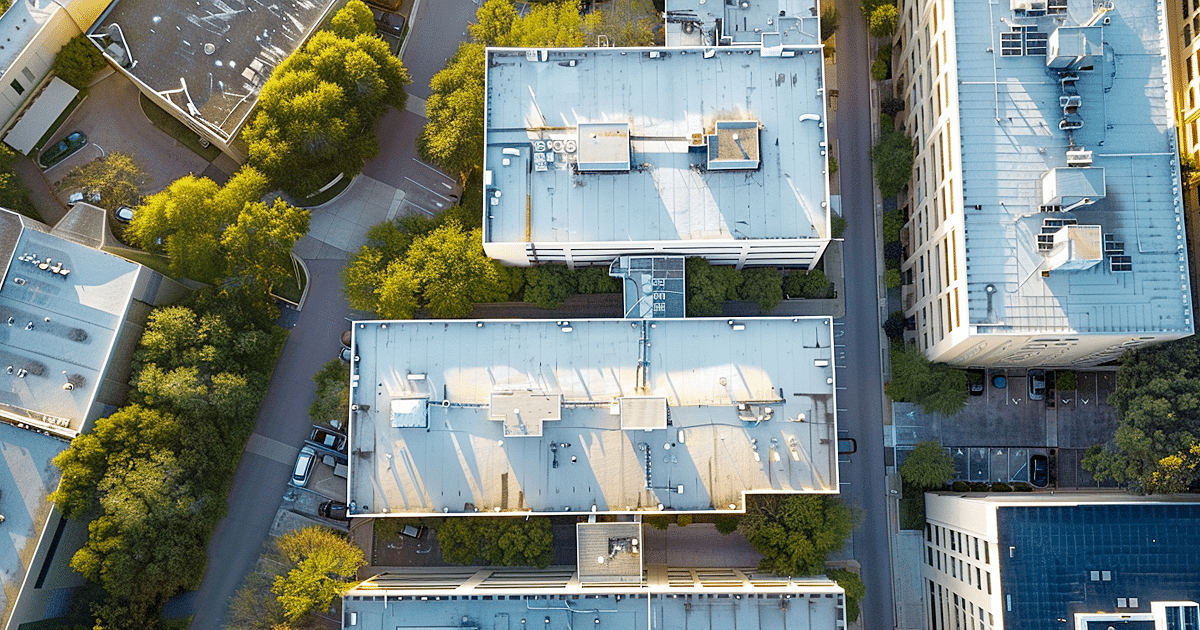
If you’re planning a project this year, understanding Commercial roof costs in Austin, Texas is one of the first steps toward making a smart, informed decision. Prices can swing quite a bit depending on your building size, roof type, and how much wear your current system has taken from Central Texas heat, storms, and daily exposure. It’s not always obvious what drives those numbers until you start digging into materials, labor, and code requirements. When considering costs in Texas, it’s important to note that expenses can vary significantly between urban centers like Austin and rural areas, with rural areas often seeing lower labor rates than cities.
For many property owners, the real challenge isn’t just the price tag, it’s figuring out what you’re actually paying for and how to avoid surprises halfway through the job. A simple warehouse off SH-130 might come in at one price, while a multi-tenant building near downtown Austin could land much higher due to access, complexity, and scheduling demands. That gap can feel frustrating if you’re not expecting it.
This guide breaks down what’s really behind those costs in 2026, so you can budget with a clearer picture and avoid getting caught off guard when bids start coming in.
Key Takeaways
- Most Austin commercial roof replacement projects in 2026 range from $5.50–$10.50 per square foot, with basic systems starting near $4.00 and premium systems exceeding $12.00, with total costs spanning $50,000 for small retail buildings to $750,000+ for large industrial facilities.
- Flat and low slope roofs using TPO, PVC, EPDM, and modified bitumen dominate Austin commercial properties, each with distinct price tiers and 15–40 year lifespans.
- Primary cost drivers include roof size, material selection, insulation upgrades to meet Texas energy codes, tear off versus overlay decisions, and Austin’s elevated labor rates.
- Planning ahead with 2025 assessments, competitive bids from multiple roofing contractors, and proactive maintenance can reduce surprises and extend roof life by 5–10 years.
2026 Commercial Roof Cost Snapshot in Austin, TX
Here’s what you need to know right now: commercial roofing costs in Austin for 2026 vary significantly based on system type, building complexity, and project scope. These ballpark figures give property owners a starting point for budget planning.
Per-square-foot replacement ranges:
| System Type | Cost per Sq Ft |
|---|---|
| Basic single-ply (TPO/EPDM) | $4.00–$7.50 |
| Upgraded TPO/PVC or modified bitumen | $6.00–$10.00 |
| Standing seam metal or premium systems | $8.00–$12.00+ |
| Example project totals for common building sizes: |
- ~10,000 sq ft retail center: $60,000–$120,000 for basic systems, with full tear-off and code-compliant replacements typically ranging from $70,000–$150,000 in Austin, Texas
- ~25,000 sq ft warehouse: $110,000–$250,000
- ~75,000 sq ft industrial or office complex: $375,000–$750,000+
When considering the average roof replacement and average roof replacement costs, it’s important to note that residential roof replacement costs in Texas typically range from $10,000 to $30,000 depending on roof size, materials, and installation complexity. Smaller commercial roof replacement projects in Texas can range from $15,000 to $75,000, while most commercial buildings in Austin exceed this range due to larger roof size, square footage, and system complexity. Costs in Texas can vary based on location, labor costs, and roofing materials. For example, the cost of a standard 10,000-square-foot roof project in Austin typically falls between $70,000 and $150,000.
These estimates assume Austin’s 2026 labor rates, standard tear off, new insulation meeting current code, and basic safety setup. Rooftop HVAC units, multiple existing layers, or limited access can push your final cost above these ranges. Material pricing, labor costs, and supply chain conditions in Austin can shift quickly, so commercial roofing quotes may only hold for a limited time before adjustments are needed.
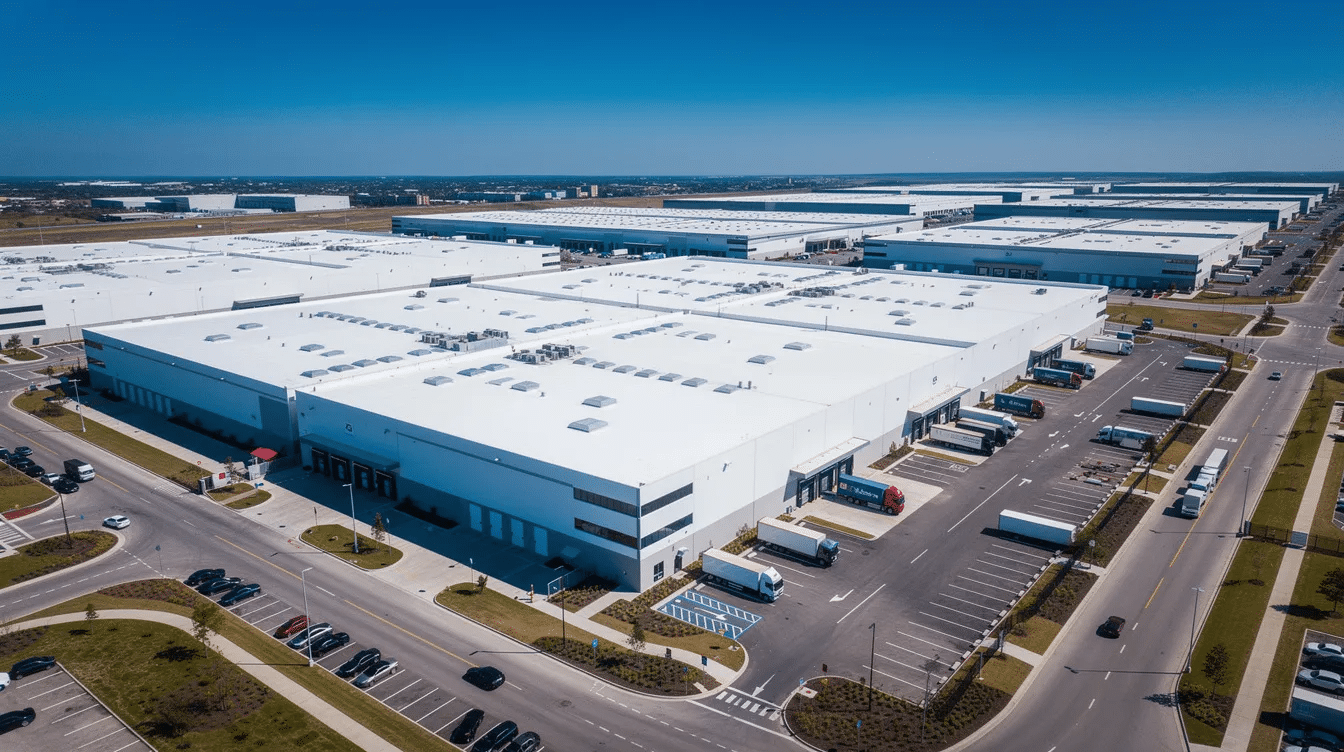
Average Commercial Roof Replacement Costs by System (Austin 2026)
Rather than relying on national averages, the figures below reflect Austin’s specific labor market, updated Texas energy codes, and recent material inflation. Flat roofing systems are commonly used in commercial buildings due to their ability to efficiently cover large areas, making them a popular choice for many property owners. Flat roof replacement is a frequent project type in Austin, and selecting the right system for a new roof or replacement can significantly impact long-term costs and performance, especially when comparing different commercial roofing systems in Texas. All costs are installed prices including labor, roofing materials, and typical accessories for straightforward low slope roofs.
TPO and PVC Single-Ply Roofing Costs
TPO and PVC remain the dominant white, reflective membranes on Austin commercial buildings in 2026—and for good reason. These commercial roofing systems reflect heat effectively, helping offset cooling costs during Austin’s brutal summers.
2026 Austin installed costs:
- TPO: $4.25–$8.50 per sq ft (45–80 mil thickness depending on system design and installation complexity)
- PVC: $5.00–$9.00 per sq ft (higher chemical resistance)
Roofs with minimal penetrations trend toward the low end. Complex layouts with HVAC curbs and parapets push costs higher.
Example: A 30,000 square foot TPO replacement on a South Austin distribution center runs approximately $165,000–$225,000 in 2026, assuming full tear off and R-value brought to code. Expect 15–25 year lifespans with proper installation and maintenance.
EPDM and Modified Bitumen Roofing Costs
EPDM (black rubber) and modified bitumen still serve certain Austin commercial and institutional properties well, particularly where puncture resistance matters.
2026 Austin installed costs:
- EPDM: $4.00–$7.00 per sq ft
- SBS/APP modified bitumen: $5.50–$9.50 per sq ft
Example: A 15,000 square footage modified bitumen roof replacement on an older central Austin school building falls in the $95,000–$135,000 range. Note that darker membranes absorb more Texas heat unless paired with reflective coatings, adding $1.00–$2.00 per sq ft.
Commercial Roof Coating and Restoration Costs
When your existing roof remains structurally sound, coatings offer a cost effective solution to extend service life without complete roof replacement.
2026 Austin coating costs:
- Acrylic or silicone coatings: $2.50–$6.50 per sq ft depending on preparation, coating type, and roof condition
- Foam + coating systems: $4.50–$8.00 per sq ft
Example: Restoring 40,000 sq ft of aging but dry TPO on a North Austin flex industrial park with silicone coating runs $140,000–$210,000. Surface preparation, repairs, and cleaning requirements often have a greater impact on final coating costs than the coating material itself. Warranties typically range 10–20 years—different from full system replacement warranties, so factor this into your long term value calculations.
Standing Seam Metal and Specialty Commercial Roofing Costs
Metal roofing appears frequently on Austin retail plazas, office entries, and mixed commercial designs where aesthetic appeal matters.
2026 Austin installed costs:
- Standing seam metal: $8.00–$12.00+ per sq ft
- Specialty systems (PMMA, fluid-applied): $10.00–$15.00+ per sq ft
Example: Replacing 8,000 sq ft of standing seam metal on a North Austin medical office totals $80,000–$110,000. While initial costs run higher, these premium materials deliver 30–40+ year lifespans with minimal maintenance—appealing for class-A properties in The Domain or along MoPac where curb appeal drives tenant expectations.
Understanding What Impacts Commercial Roofing Costs in Austin
Before getting into specific pricing, it helps to understand why commercial roof costs in Austin can vary so much from one project to the next.
For most commercial properties, the final number isn’t tied to just one factor. Roof size plays a role, but so do layout complexity, material selection, insulation requirements, and how accessible the building is for crews and equipment. In Austin, labor demand and scheduling constraints can also shift pricing compared to surrounding areas.
The type of roofing system you choose matters just as much. Low-slope systems like TPO, PVC, EPDM, and modified bitumen are common across Austin commercial buildings, each with its own cost range and performance characteristics. Metal roofing is also used in certain applications where long-term durability or appearance is a priority, particularly when considering standing seam and other metal roofing options in Austin.
Austin’s climate adds another layer to the equation. Extended heat, UV exposure, and frequent storm activity all impact how roofing systems perform over time. That’s why material selection and installation approach can influence not just upfront cost, but long-term maintenance and energy performance as well.
Understanding these variables upfront makes it easier to compare bids, plan budgets, and avoid surprises once a project is underway.
Key Factors Driving Commercial Roof Costs in Austin (2026)
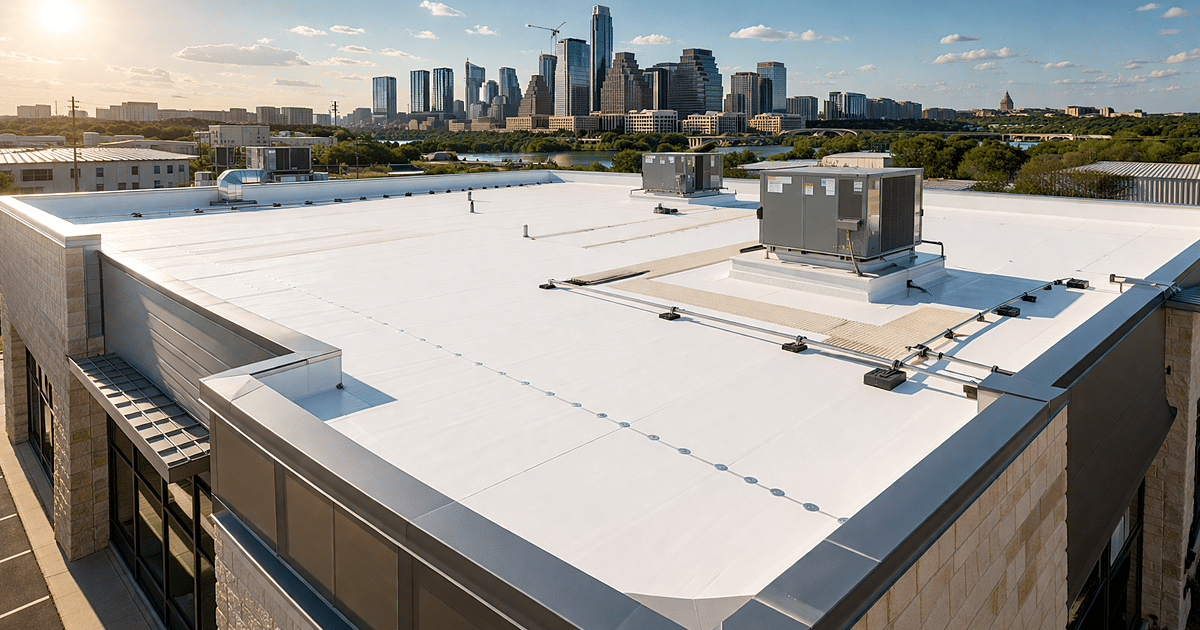
Material choice is only part of the equation. Labor costs typically account for 40-60% of the total roof replacement cost in Texas. Austin’s local conditions, code requirements, and labor market significantly influence your total roof replacement cost in 2026. Understanding these factors helps explain why quotes may differ by 15–30% even when specifying identical roofing systems, especially when comparing costs in Texas to other regions.
Roof Size, Layout, and Access
Commercial roofs are priced per “square” (100 sq ft), making roof size the biggest driver of overall cost. However, two buildings with identical square footage can have dramatically different prices.
A simple, rectangular warehouse along SH-130 with wide staging areas might cost $6.50 per sq ft ($130,000 total for 20,000 sq ft). Meanwhile, a multi-story urban office downtown requiring crane access and street permits could run $9.50 per sq ft ($190,000) for the same coverage area.
Limited access, tight urban sites, and material hoisting for taller commercial buildings all increase labor costs and show up in higher bids.
Insulation, Energy Codes, and Austin’s Climate
Austin 2026 projects must meet current Texas energy code requirements, often demanding R-25 to R-30 continuous insulation for low slope roofs. This significantly affects your roofing project budget.
Adding tapered insulation to correct ponding water increases per-square-foot costs but prevents premature roof damage. Higher-R assemblies with reflective membranes can reduce HVAC loads by 10–20% in Texas weather, potentially justifying higher upfront investment through energy savings.
Cost comparison: Code-minimum insulation versus above-code R-35 assembly adds roughly $0.75–$1.50 per sq ft—but may qualify for rebates.
Tear-Off vs. Overlay and Existing Conditions
Full tear off typically costs more than overlay but becomes necessary when multiple layers exist or moisture has damaged your old roof.
Typical Austin costs:
- Tear-off and disposal: $1.00–$3.00 per sq ft depending on roof layers, material type, and site conditions
- Deck replacement (when damaged): $3.00–$8.00+ per sq ft in affected areas
Infrared scans and moisture surveys conducted before your 2026 project can reveal hidden saturation and reduce expensive surprises. Budget a 5–15% contingency for unforeseen substrate repairs, especially on aging roof systems.
Labor, Scheduling, and Market Conditions in Austin
Labor accounts for 40–60% of typical commercial roofing bills in Austin. The metro’s construction boom, skilled crew shortages, and summer heat restrictions push wages 15–20% above national averages.
Night work, weekend scheduling, or phased construction to keep tenants operating will increase bids due to overtime premiums. Supply chain fluctuations—particularly 8–12 week lead times for TPO—can impact both cost and timing.
Tip: Locking in contracts and material orders early in 2026 often secures better pricing and preferred scheduling.
Austin commercial roof costs are typically 15–20% higher than the Texas average, driven by higher labor costs, strong market demand, and stricter building code requirements across Austin TX.
Signs You Need a Commercial Roof Replacement
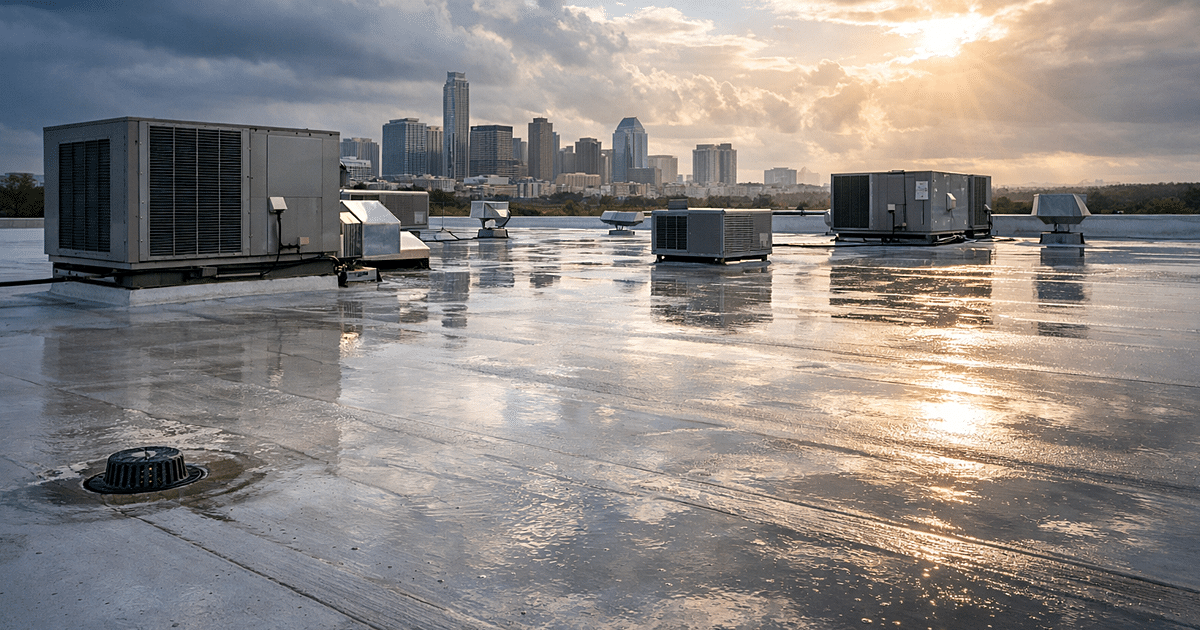
Knowing when it’s time to replace a commercial roof can make a big difference in how much you end up spending. Catching the problem early can keep a manageable project from turning into a much larger and more expensive one.
On commercial buildings, the warning signs usually show up differently than they do on residential roofs. Instead of missing shingles, you’re more likely to see issues like membrane cracking, open seams, punctures around rooftop equipment, or areas where water is starting to pond and not drain properly. Those are often early indicators that the system is beginning to fail.
Leaks are another clear signal, but by the time water is showing up inside, the problem has usually been developing for a while. Water stains, damp insulation, or recurring leak locations often point to deeper issues within the roofing system that simple repairs won’t fully solve.
In Austin, weather plays a big role in how quickly these problems show up. Hail, high winds, and long stretches of heat can break down roofing materials faster than expected. It’s not uncommon for a roof that looks fine at a glance to have underlying damage that only shows up during a detailed inspection, which often requires help from trusted Austin roof repair services.
If repairs are becoming more frequent, or if multiple areas of the roof are starting to show wear at the same time, it’s usually a sign that you’re nearing the point where replacement becomes the more cost-effective option. At that stage, continuing to patch problem areas often ends up costing more than planning a full replacement.
When you’re budgeting for a project, most of the focus goes to the base bid. But with commercial roof costs in Austin, the numbers that catch people off guard usually show up after the project gets started.
One of the first is tear-off and disposal. Removing the existing roof typically runs between $1.00 and $3.00 per square foot, depending on how many layers are up there and how easy it is to access the building. If crews run into multiple layers or heavy saturation, that number can climb quickly.
Decking is another major factor. Once the old system is removed, any damaged substrate has to be replaced before the new roof goes on. If sections of plywood or metal decking are compromised, repairs can add $3.00 to $8.00+ per square foot in those areas. On older commercial buildings in Austin, it’s not unusual to uncover more damage than expected.
Insulation upgrades also show up mid-project. Many commercial buildings don’t meet current energy code requirements, so bringing the roof up to code can increase the overall cost. That added expense can improve long-term performance, but it still needs to be accounted for upfront.
Permits, inspections, and site-specific logistics can add to the total as well. Projects in tighter areas or buildings that require special access, staging, or coordination with tenants tend to carry additional costs that don’t always stand out in an initial estimate.
The key is understanding that the first number you see isn’t always the final number. Planning for these variables ahead of time helps keep your project on track and avoids the kind of surprises that can throw off both budget and timeline.
Commercial Roof Repair vs. Full Replacement in 2026
Not every issue requires a complete roof replacement, but understanding when to shift from roof repair to full replacement is critical when evaluating total commercial roof costs in Austin TX. The decision directly impacts your roof replacement cost, long term performance, and overall cost of maintaining commercial buildings in Austin TX.
In many cases, minor repairs can still be the most cost effective solution, especially when damage is limited and the existing roof is still structurally sound. Typical repair work across commercial roofing systems in Austin includes flashing repairs, punctures, seam failures, and damage caused by storm damage from Texas weather, especially on flat roof and low slope roofs, where timely emergency roof repair services in Austin can prevent more serious damage.
2026 Austin repair cost ranges:
- Common roof repair (flashing, punctures, seam work): $750–$5,000+
- Section repairs or partial replacement: $5,000–$40,000
Repair is often the right approach when the roofing system has not reached the end of its life cycle and moisture has not spread throughout the system. In these situations, repairs can help control roof costs per square foot and delay a full commercial roof replacement, allowing property owners to budget accurately.
Where things start to shift is when the condition of the existing roof begins to decline across multiple areas. If leaks are widespread, insulation is saturated, or there are multiple layers requiring a full tear off, repair costs can increase quickly without resolving the root issue. This is especially common after repeated storm damage events in Austin’s climate. At that point, ongoing repairs begin increasing total commercial roof costs in Austin TX rather than reducing them.
Other factors also influence the decision. Roof size, square footage, and system complexity all impact cost, especially on larger roofs that require more materials and labor. The type of flat roof replacement system selected also plays a major role in determining the final cost.
A complete roof replacement or new roof installation involves higher initial costs, but it resets the entire roofing system. With updated roofing materials, including options like metal roofing, modified bitumen, or other commercial-grade systems, property owners benefit from improved durability and energy savings. While metal roofing costs more upfront, it often provides better long term value due to its lifespan and ability to help reduce cooling costs by reflecting heat.
Even though this article focuses on commercial roofing, it’s worth noting that materials like asphalt shingles, architectural shingles, and tile roofing are more common in residential applications. However, the same principle applies—cheaper materials may reduce upfront costs, but premium systems typically provide better performance over time.
It’s also important to consider that labor costs typically account for 40–60% of the total roof replacement cost, meaning repeated repair visits can quickly add up. In many cases, investing in a full replacement becomes the more predictable and cost effective solution for commercial properties.
Commercial roofing projects in Austin TX typically take several days to a few weeks depending on roof size, square footage, access, and weather delays. Larger commercial projects or buildings with restricted access can extend timelines, so working with experienced Austin commercial roofing contractors who plan for phasing and tenant coordination is critical.
When comparing options, it’s important to look beyond just the lowest bid. The lowest price does not always reflect the best value, especially when differences in roof installation, roofing materials, and contractor experience come into play. Property owners should request quotes from at least three licensed roofing contractors and verify credentials through the Texas Department of Licensing and Regulation.
A professional evaluation comparing roof repair costs versus total roof replacement cost provides the clearest path forward. The goal is not just to fix the immediate issue, but to determine which option delivers the most stable and cost effective solution over time while helping you save money and avoid repeated repairs.
Budgeting and Planning for a 2026 Commercial Roofing Project
Starting your planning in 2025 helps avoid rushed decisions, emergency pricing, and weather delays that inflate your final price.
Practical budgeting steps:
- Commission a condition assessment (drone/infrared: $2,000–$10,000)
- Define scope: repair, restoration, or full replacement
- Build a 3–5 year capital plan for commercial properties with multiple buildings
- Collect competitive bids evaluating contractor reputation alongside price
Getting Accurate Commercial Roofing Quotes in Austin
Request detailed bids from at least three established Austin roofing contractors. A thorough 2026 quote should include roof measurements, core sample findings, specified system and thickness, insulation R-value, tear off scope, safety plan, and warranty terms, similar to what you’d expect from professional Austin commercial roofing specialists.
Ask for unit pricing on deck replacement and additional insulation to anticipate change orders. Verify manufacturer certifications and whether 15–30 year NDL warranties are available.
Financing, Cash Flow, and Tax Considerations
Many Austin homeowners and commercial property owners use a mix of capital reserves, conventional loans, or property improvement financing for larger roofs. Some Austin roof replacement projects qualify for accelerated depreciation or energy-related incentives—consult a tax professional about current 2026 rules.
Scheduling projects during slower business periods or splitting phases across fiscal years can ease cash flow. Factor in reduced emergency repair bills and energy efficiency gains when analyzing long term value.
How to Extend the Life of Your Commercial Roof in Austin
Consistent maintenance adds 5–10 years of service life, substantially lowering your annualized costs in Austin’s climate, especially for large facilities that benefit from industrial roof maintenance best practices.
Key practices:
- Biannual inspections (spring and fall)
- Post-storm checks after hail events
- Prompt leak repairs and careful flashing work
- Keeping drains and gutters clear
Formal maintenance agreements with reputable contractors preserve warranty coverage. Partnering with providers that specialize in commercial roofing services in Austin can streamline this process. Document all inspections, repairs, and photos—valuable for warranty claims, fire resistance certifications, and future resale.
FAQ: Commercial Roof Costs in 2026
How often should I budget for full commercial roof replacement in Austin?
Most modern commercial roof systems last 15–25 years for single-ply membranes and 25–40+ years for quality metal roofing with proper maintenance. Start detailed budgeting 5 years before anticipated end of life. Texas homeowners and commercial property managers should note that harsh hail seasons or neglected maintenance can shorten these timelines significantly, and that commercial and industrial roofs have different lifespans and requirements.
Are 2026 commercial roofing costs in Austin expected to go up compared to 2025?
Based on recent trends, expect modest 5–10% year-over-year increases in both labor costs and materials. Supply issues or major storms can cause sudden spikes. Early planning helps you save money by locking contracts before peak season pricing hits.
Can I install solar panels at the same time as a commercial roof replacement?
Absolutely—2026 is ideal for coordinating roof installation and solar on Austin commercial projects. Designing the roof structure and membrane to support solar loads from the start can reduce future mounting costs by $2–$4 per sq ft compared to adding solar later.
Is an overlay (recover) a good idea for my commercial roof in Austin?
Overlays can save 20–30% on total cost when there’s only one existing layer, the deck is sound, and moisture surveys confirm the system is dry. However, Austin codes limit roof layers and require specific R-values. While overlays use cheaper materials upfront, they may complicate future replacements.
What’s the best time of year in Austin to schedule a commercial roof project?
Spring and fall offer favorable Texas weather but tend to be peak seasons with busier contractor schedules. Summer heat requires additional safety planning and may reduce daily production. Book projects several months in advance to secure preferred dates and request a free estimate early in your planning process.
How much does labor contribute to commercial roof replacement costs in Austin?
Labor typically accounts for 40-60% of the total roof replacement cost in Austin. Skilled crews, local market demand, and safety requirements related to Texas heat influence these rates.
What roofing materials are most cost-effective for commercial roofs in Austin?
TPO and EPDM single-ply membranes are among the most cost-effective options, with prices ranging from $4.00 to $7.50 per square foot. Asphalt shingles are the most affordable roofing option for residential properties in Texas, while most commercial buildings rely on flat or low slope roofing systems such as TPO, PVC, or modified bitumen. For commercial properties, higher-performance systems such as PVC, modified bitumen, or metal roofing offer improved durability and long-term value compared to basic membrane systems, though they come at a higher upfront cost. Metal roofing costs more upfront but lasts significantly longer than asphalt shingles, providing better long-term value.
How does roof complexity affect the overall replacement cost?
Complex roofs with multiple penetrations, HVAC units, or steep pitches require more labor and materials, increasing the total cost by 10-30% compared to simple flat roofs.
Are there financing options available for commercial roof replacements in Austin?
Yes, many contractors offer financing options including home improvement loans and equipment financing. Planning early can help property owners budget accurately and manage cash flow.
How can I ensure I get a fair price from roofing contractors in Austin?
Request detailed written estimates from at least three licensed and insured contractors. Verify contractor reputation, warranty coverage, and licensing with the Texas Department of Licensing and Regulation to avoid low-quality or risky bids.
Contents
- 2026 Commercial Roof Cost Snapshot in Austin, TX
- Average Commercial Roof Replacement Costs by System (Austin 2026)
- Understanding What Impacts Commercial Roofing Costs in Austin
- Key Factors Driving Commercial Roof Costs in Austin (2026)
- Signs You Need a Commercial Roof Replacement
- Hidden Costs to Consider for Commercial Roofing
- Commercial Roof Repair vs. Full Replacement in 2026
- Budgeting and Planning for a 2026 Commercial Roofing Project
- How to Extend the Life of Your Commercial Roof in Austin
- FAQ: Commercial Roof Costs in 2026

